Commercial Roof Inspection in Burbank, CA
A facility director needs more than a roof marked good or bad. The inspection should show which sections can stay in service, where water has entered, and what work must happen before the next budget or tenant window. In Burbank, that review can involve production buildings in the Media District, retail and office properties downtown, or a mixed-use operation near Magnolia Park. We walk the roof, connect visible conditions to the building below, and leave you with a repair boundary you can price and schedule. Inspection routes can include commercial properties in Burbank's Media District.
High summer temperatures are part of the local operating picture. Burbank's long-term averages midsummer daily highs in the upper 80s. A roof inspection uses that climate fact as context, then checks the actual membrane, seams, flashing, edges and drainage instead of assuming heat alone explains a leak. You receive photographs and notes that make the next roof decision clear.
Map Each Roof Section Before Pricing Work
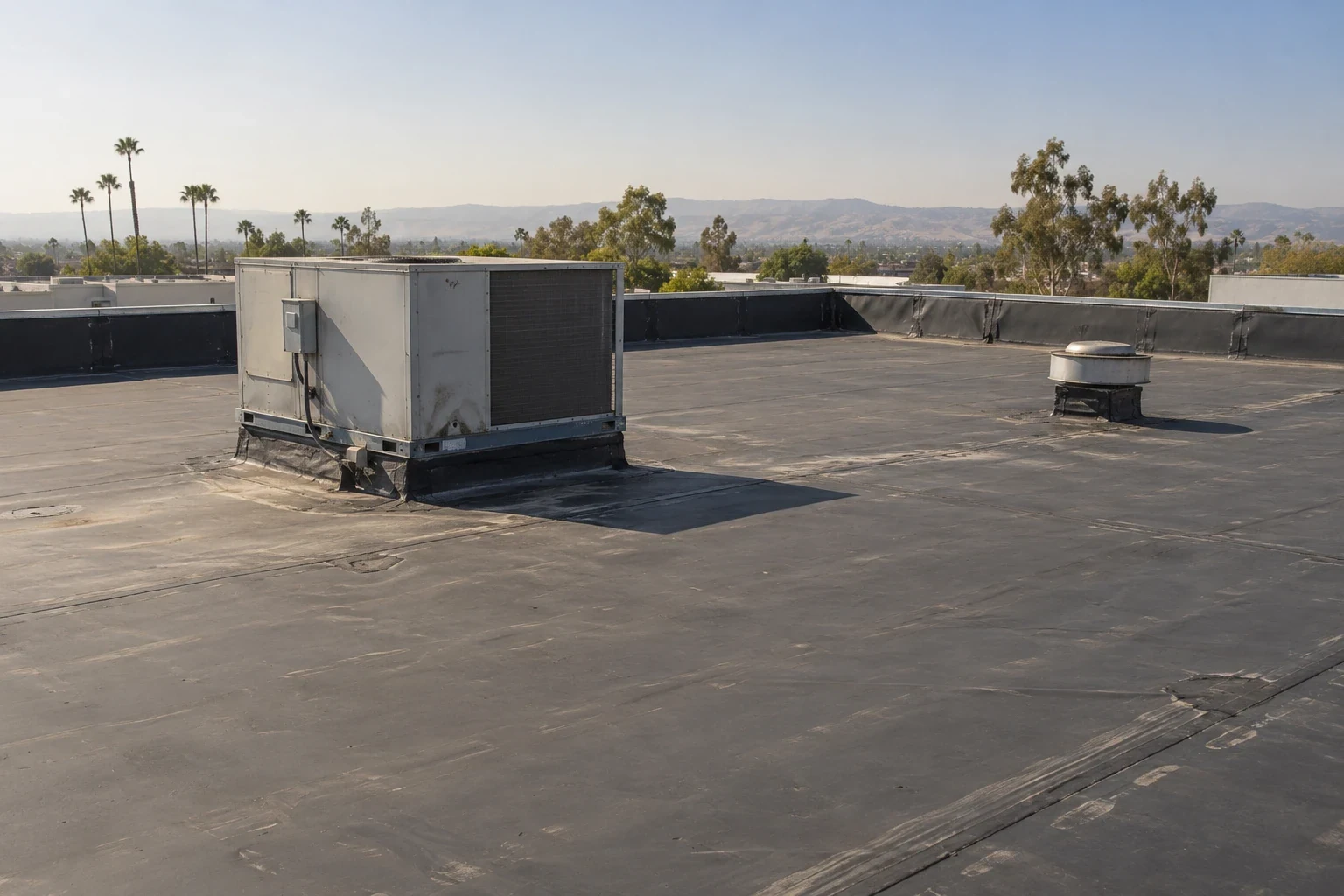
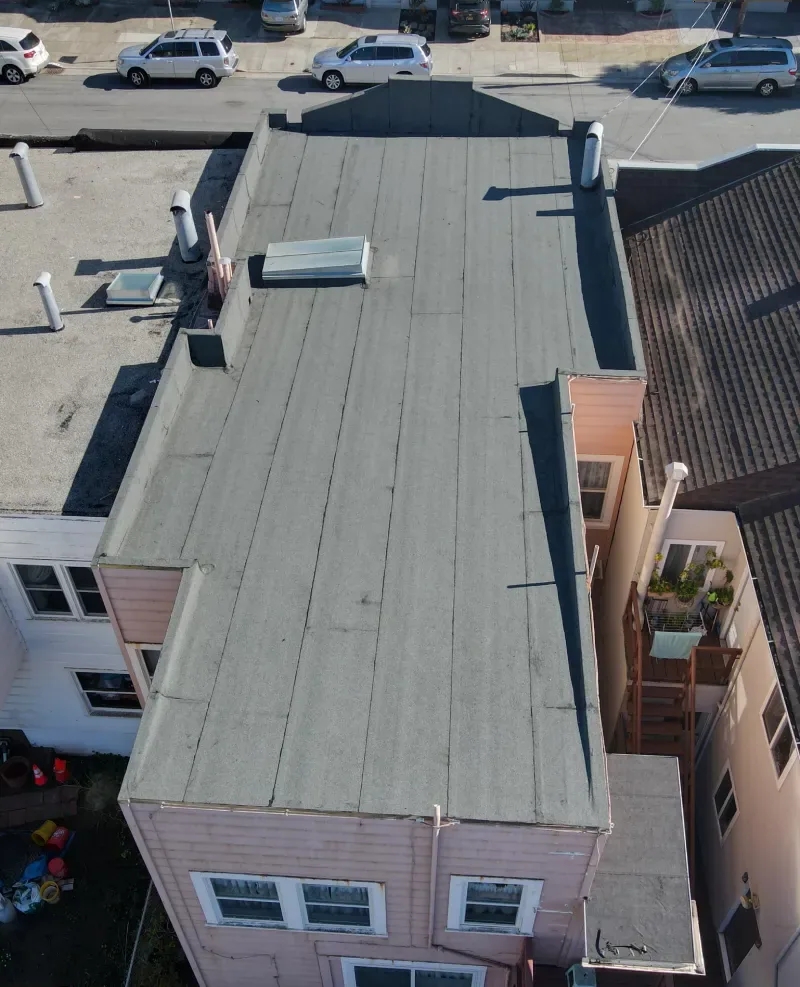
We start by dividing the roof into workable zones: field membrane, perimeter, drains, equipment areas, expansion joints and transitions. That map matters on a building with several additions or roof elevations because a repair in one section does not automatically settle the condition of another. We note surface type, changes in slope, visible ponding, open seams, soft areas and details that deserve closer review. The result is a practical route through the roof, not a single grade assigned to the entire building.
For a facility near the Media District, production and office schedules may differ by building zone. A retail roof near Magnolia Park may need an access plan that keeps loading or customer areas clear. Those district facts help us frame the visit, but they do not tell us what any particular roof contains. We confirm access with your staff, then connect each photograph to a roof zone so that a later repair proposal has a defined boundary. If we find an active leak, our leak tracing and repair work can follow the same location record.
Check Moisture Evidence Against the Roof Assembly
A dark mark, blister or soft surface deserves a closer look, but its appearance alone does not establish how far moisture has traveled. We compare the visible condition with seams, penetrations, nearby drains and the interior report. Where a non-destructive survey may help, we can use infrared readings as a screening tool and identify locations for verification. A core cut is a separate, permission-based step. It can confirm what is inside the assembly at a selected point, but the opening must be repaired as part of the inspection scope.
That distinction keeps a small symptom from turning into an unsupported replacement recommendation. The Burbank inspection record should identify what we observed, what remains uncertain and what additional check would settle the next decision. For a low-slope system, we may compare the existing surface with options such as TPO membrane work or EPDM membrane repair only after the assembly and condition are known. Material selection follows the roof evidence, not the label on a report.
Separate Immediate Repairs From Capital Work
Inspection findings need an order. We identify conditions that should be addressed promptly, repairs that can be coordinated with an upcoming access window, and broader renewal questions that deserve a budget comparison. A split seam or failed penetration can have a narrow correction. Widespread wet insulation, repeated patching across adjacent sections or deteriorated edge details may call for a larger scope. We explain what we saw and why it affects the next choice, without presenting one roof condition as proof of another.
A replacement decision should also account for tear-off, insulation, deck condition, drainage and code review. Burbank adopted the 2025 California Building Standards Code with local amendments for applications submitted on or after January 1, 2026. Our inspection does not substitute for permit review, but it can help your team identify questions to resolve before work is priced. If the survey finds a repairable section, a defined commercial roof repair may preserve more of the current assembly while you plan capital work elsewhere.
Schedule Access Around the Building in Use
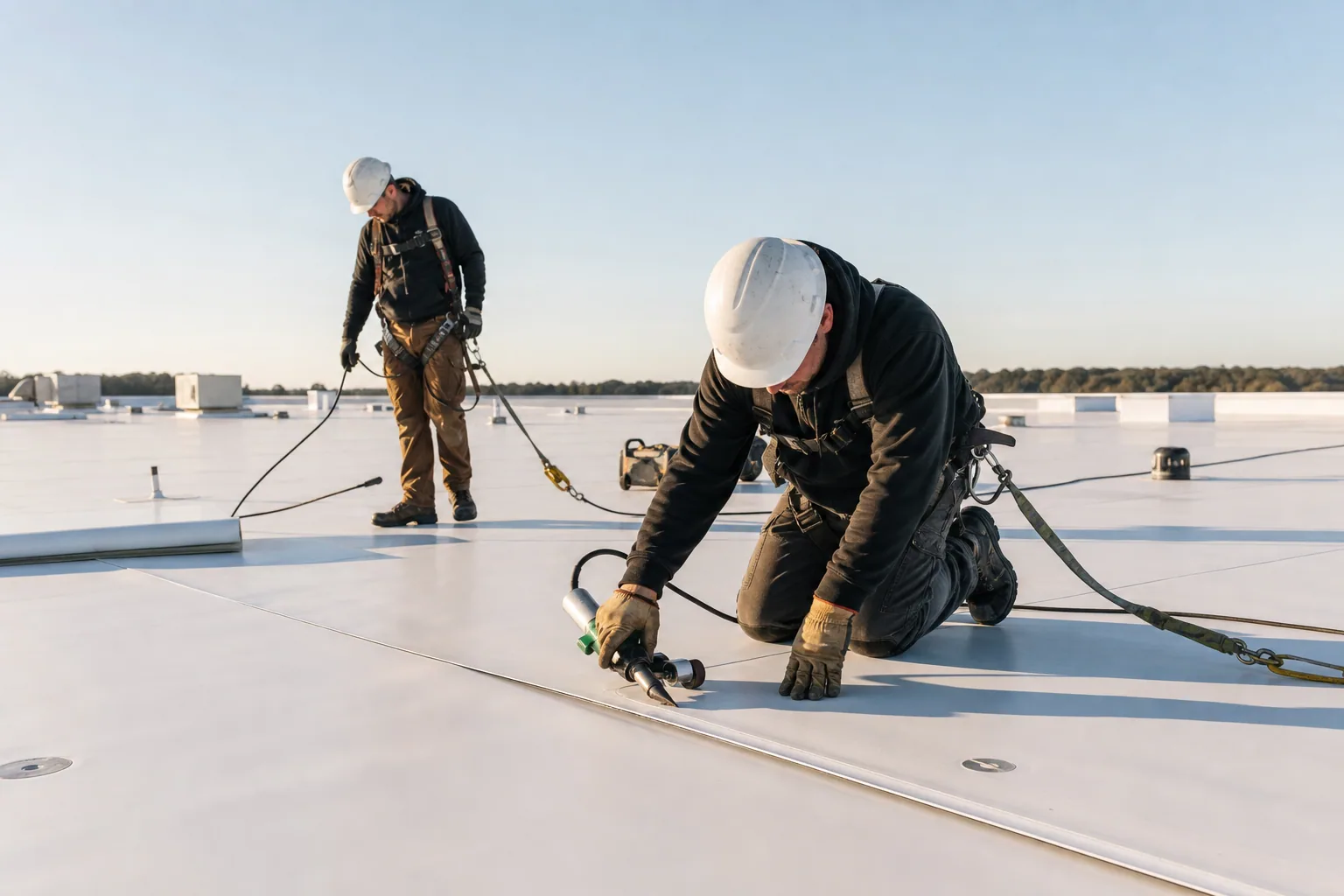
Roof access is part of the inspection scope. We confirm the safe route, ladder or hatch location, rooftop equipment, fall-protection needs and areas that should remain clear. A production property, hotel or occupied office may have different access rules for each zone. We record those constraints before proposing follow-up work so the facility director can compare a daytime visit, a quieter operating window or a phased sequence. If a roof includes several tenants, the inspection plan should also show which areas need notice.
The Airport District has a broad mix of technology, hospitality and retail uses, while Downtown Burbank contains a dense set of shops, restaurants and businesses. Those patterns make scheduling a useful part of the roof conversation, but we do not assume how an individual property operates. Your team provides the operating limits; we match them to the documented roof sections. For offices and similar properties, our office-building roof planning can frame the access and phasing questions alongside the inspection record.
Turn Findings Into a Defensible Work File
A useful inspection package ties each condition to a location, a photograph and a recommended next step. We can provide a roof-zone summary, marked photos, a repair-versus-renewal comparison and a list of items that need verification before scope is final. If you manage several properties, keeping the same categories across buildings makes later comparisons easier. The report should make clear what was visible during the visit, what was tested and what could not be confirmed without opening the roof assembly.
For a building near Burbank's commercial districts, that file can help align the repair schedule with operating hours, tenant notice, procurement and the annual capital plan. Our condition reporting can organize findings for internal review, while a separate maintenance scope can address drains, seams and penetrations before the next wet season. The purpose is not to add paperwork. It is to make the approved scope match the condition that the inspection actually found.
Set the Next Review Around a Decision Date
Tell us what decision the inspection needs to support: stop a leak, estimate a near-term repair, compare recover with replacement, prepare a reserve request or document a roof before a transaction. We will scope the walk to that question and note which information should be ready at the roof hatch. Useful items include prior repair records, warranty documents, leak dates and a roof plan, if available. If an issue is already active, describe when it appears and which interior area is affected.
We then schedule the visit, inspect the roof zones, and deliver findings that distinguish immediate work from planning items. A call about a property in Burbank, CA should leave you with a clear next step, not a broad promise about the life of the roof. Use the inspection to set a practical repair limit, coordinate access and decide what belongs in the current operating window. If the record points to a focused correction, we can price that work separately from a future replacement option.
Commercial Roofing Questions
What should the inspection report separate for our capital meeting?
We separate immediate repairs, monitoring, and potential renewal. Each finding identifies its roof zone, photo, observation, and any follow-up test, so your team can compare urgency without conflating conditions.
Can an infrared scan confirm that insulation is wet?
Infrared patterns can flag areas for follow-up, but do not prove moisture. Compare the scan with roof details and interior signs; an approved core cut may offer stronger confirmation.
How do you inspect a roof while production is running?
We agree on roof access, protected areas, equipment conflicts, and restricted periods first. The inspection then follows planned zones, with any disruptive repair work scheduled separately.
Does a roof inspection decide between recover and replacement?
The report documents moisture, existing layers, drainage, deck concerns, and details that may limit a recover. It identifies evidence supporting repair or renewal and items needing confirmation.
What information should our team send before the visit?
When available, send leak dates, repair invoices, warranty papers, roof plans, and access instructions. Note affected interiors and hours that must remain open so the visit fits operations.