Commercial Roofing in Magnolia Park, Burbank, CA
A shop can keep its doors open while a roof repair moves through a separate work zone, but only when access and staging are settled first. Magnolia Park is a Burbank retail district known for independent shops and food businesses. We inspect the roof section above the reported condition, then confirm how materials, workers and debris can move without crossing the business's operating route. The owner receives a repair boundary and schedule to review before approving work. A commercial roof inspection gives the property manager a record to use with tenants and the next capital decision.
Plan Around Deliveries and Open Doors
Retail and food operations may depend on deliveries, customer entry, trash pickup and equipment service at different hours. We ask the property manager which paths must remain open, where the crew can stage and which roof access point is approved. We do not infer a storefront's schedule from the district label. Instead, we write the site-specific limits into the work plan, including barriers, material lifts and the time each route is expected to reopen. If several tenant spaces share an entry or service alley, the property contact identifies who must receive notice.
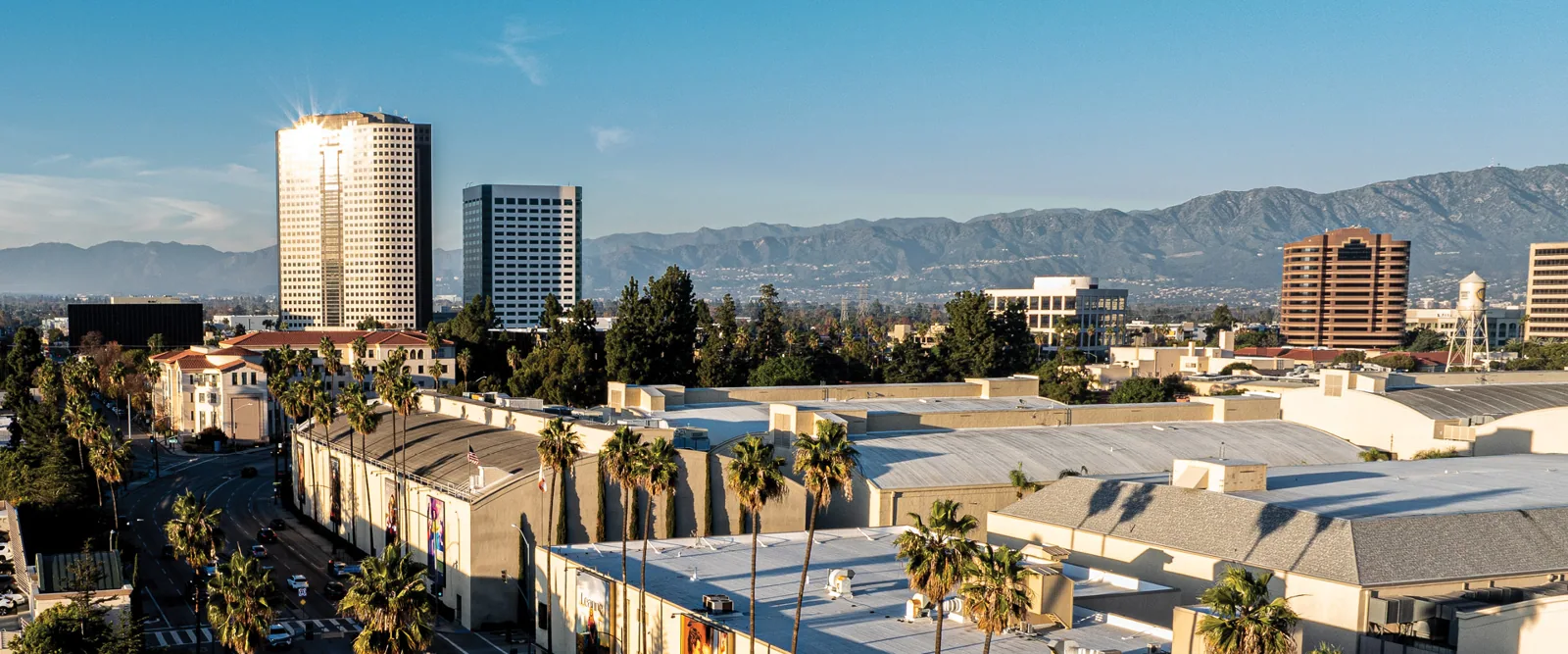
The city's zoning portal lists Magnolia Park Commercial Zones, confirming that this is a designated commercial land-use area. That planning context does not establish the roof type or access conditions at a particular address. The inspection has to record the actual assembly, drains, edge details, penetrations and any past repair. Downtown Burbank is another commercial district with pedestrian-oriented streets and outdoor dining, while the Media District has production, office, healthcare and education employers. Those differing uses make a written access plan more useful than a generic work-hour assumption.
Connect the Interior Report to the Roof
A ceiling mark, odor or recurring drip points toward a roof area but does not identify every failed component. We compare the report with the roof plan, then check nearby seams, flashing, penetrations, drains and wall transitions. The record distinguishes visible defects from concealed conditions and notes which surfaces could not be reached. If moisture mapping or a test cut is needed, the scope states the method and the approval required. An owner can then decide whether to authorize the test before accepting a permanent repair limit. A leak investigation keeps that sequence clear.
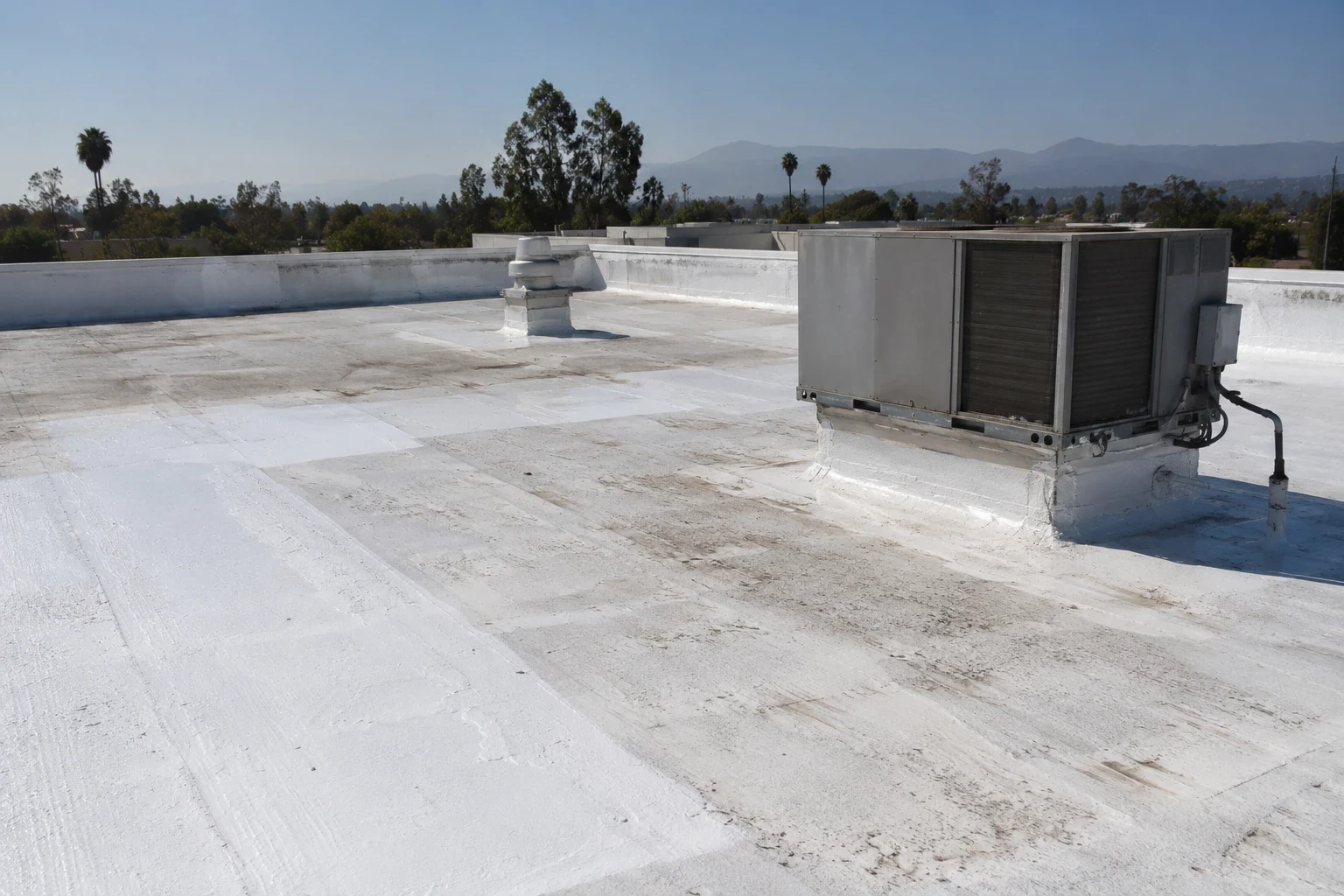
Because Burbank sees hot summer afternoons, we review surface temperature before assigning adhesive, membrane or coating work to a shift. The product instructions govern the acceptable installation conditions; if the roof has absorbed too much heat, preparation or application may need another window. We also check that cleaning has removed dust or residue from the tie-in area. A sound bond starts with that surface check, not with the size of the visible patch. The inspection record notes the material and conditions assumed for the repair.
Price What Is Confirmed and Separate the Unknown
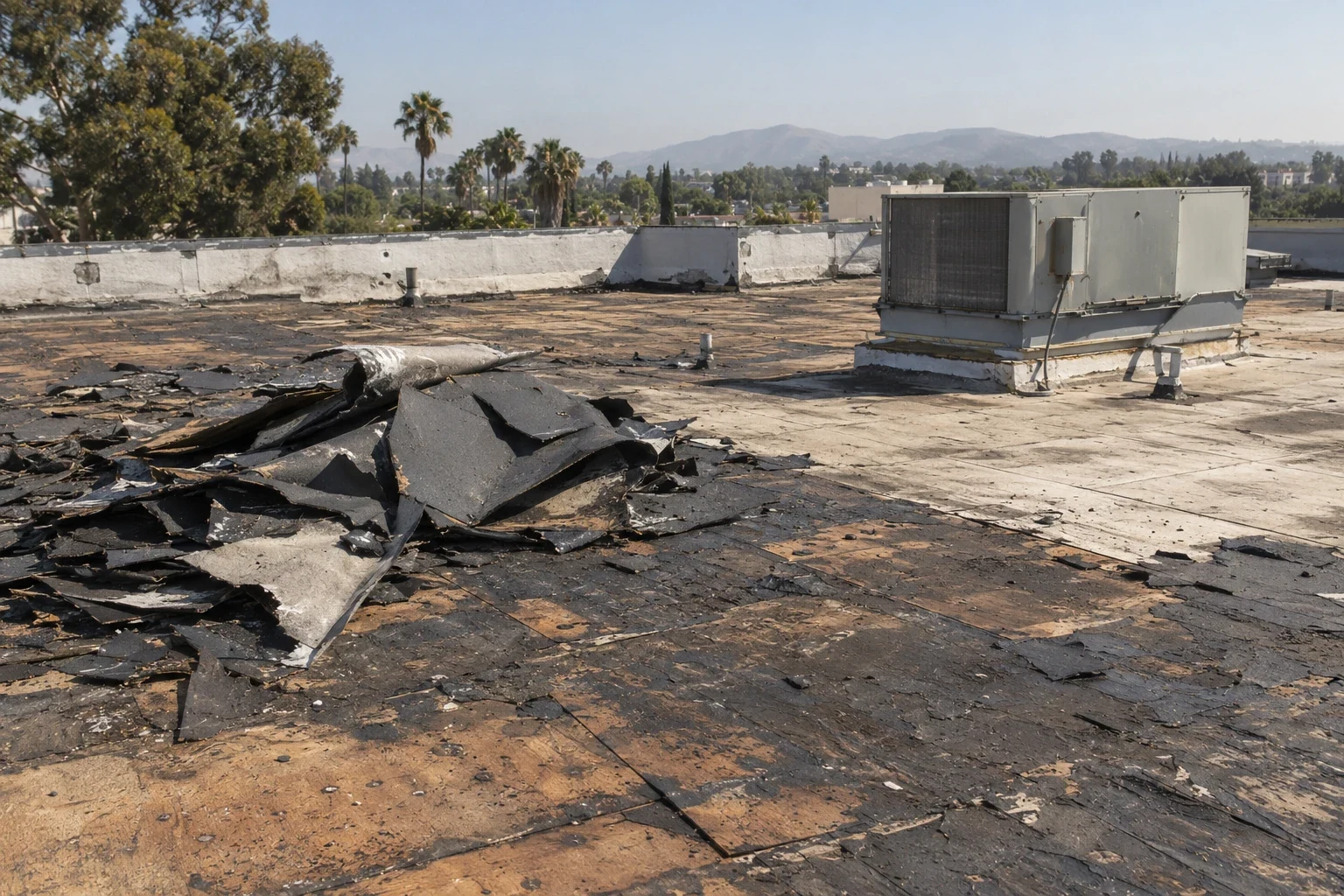
The estimate should show which membrane, flashing or insulation will be removed and what remains. If the roof has isolated damage with sound material around it, a focused repair may fit. If several areas show separation, wet insulation or repeated patch failure, the owner may compare broader renewal. We identify the confirmed condition, any allowance tied to concealed material and the cost drivers that change with access or disposal. That boundary helps ownership compare bids on the same roof sections rather than on different assumptions.
Magnolia Park's economic-development page reports office, office-class and retail market indicators from CoStar for the second quarter of 2026. Those indicators describe the district market, not the roof at an individual property. We use the owner's maintenance records, inspection photographs and actual assembly to discuss capital timing. A replacement comparison can state tear-off, insulation, edge work and tenant protection as separate items. If a restoration option is being considered, a coating assessment should first establish moisture, adhesion and drainage conditions.
Review Drainage and Perimeter Details
Water should move from the roof field toward a functioning drain or scupper without crossing a failed seam or flashing detail. We check outlets for debris and visible restriction, then look at the membrane transition, drain bowl and nearby low areas. At the perimeter, we inspect edge metal and wall terminations for movement, open laps or loose attachment. A drainage concern may require cleaning, a detail repair or a broader correction; each is described separately. The drain and scupper scope explains what can be confirmed during the visit and what requires a closer opening.
Annual normal precipitation at the Burbank station is 16.50 inches, yet a single storm can still expose a weak transition or blocked outlet. We review the roof after the reported event and preserve photos before temporary work changes the condition. The repair should restore the water path and close the affected detail, not merely cover the stain below. If water has reached insulation, we document its confirmed extent and separate replacement from the membrane tie-in. The owner's file can then distinguish a surface repair from a correction to the underlying assembly.
Keep Each Tenant Area in the Sequence
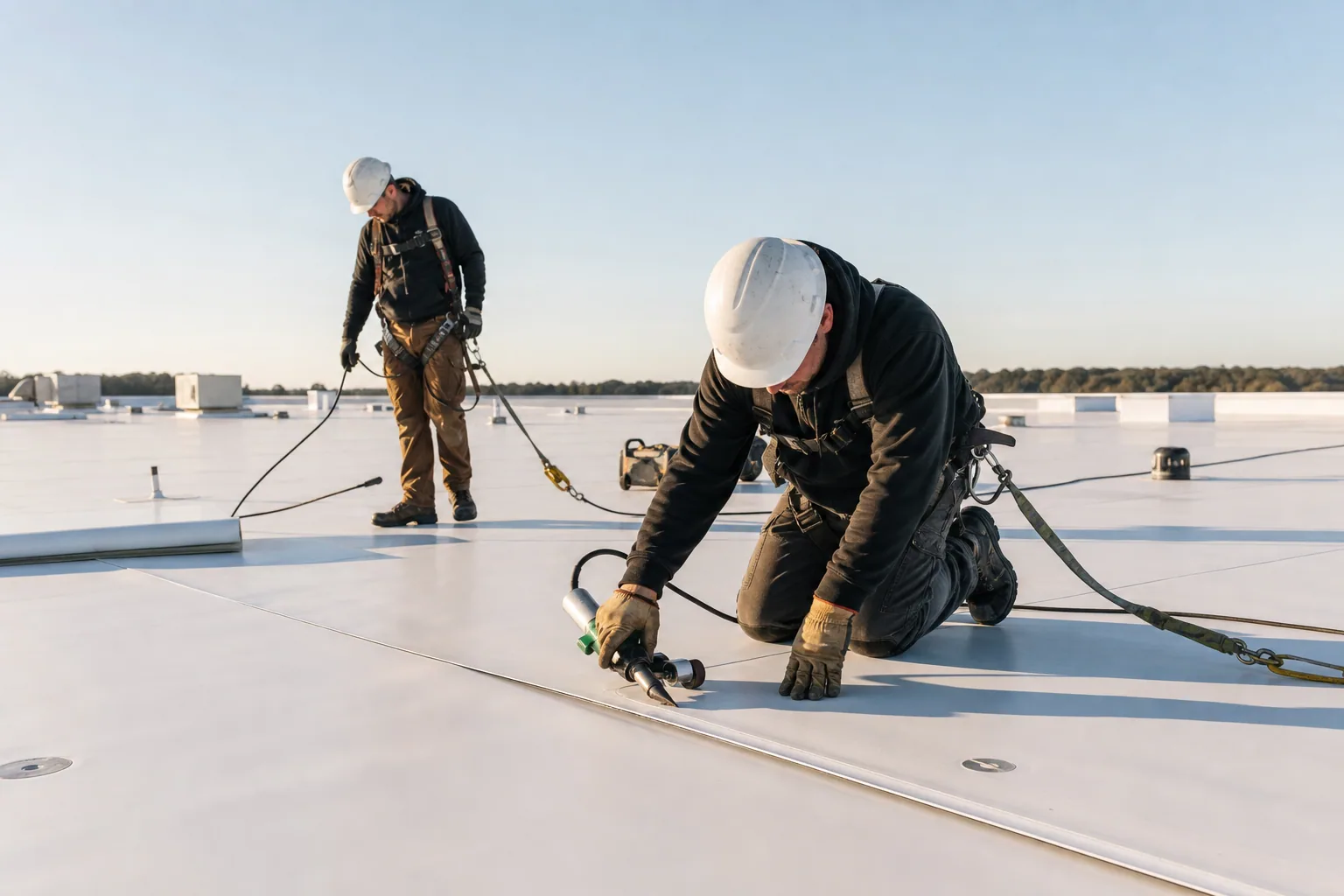
Where food service or retail remains active, the crew needs clear rules for noise, odor, hot work, loading and overhead protection. We confirm which operations cannot pause, then phase removal and installation by roof section. A shop's customer door may need a temporary route while debris moves; a kitchen exhaust or refrigeration unit may require a service contact. The roofing scope names coordination items and the trade responsible for equipment work. It also records when a section is watertight and available for the next stage, so tenants are not asked to rely on an informal update.
The sequence should be specific enough to review before mobilization. We identify start and stop points, material storage, debris handling, daily closeout and the person who approves reopening an affected space. If heat limits the application window for a coating or adhesive, we plan that work for a suitable period and keep the protection in place until the assembly is ready. A phased reroofing plan can show how separate sections proceed while businesses continue below. That schedule is based on the site calendar, not the general retail label.
Leave Clear Repair and Follow-Up Records
At closeout, we match finished work to the roof plan and include dated photographs, materials and any change approved during installation. We list open items, areas not reached and conditions that need another trade or test. If a patch was temporary, its review date remains visible. A roof condition report can help a property manager carry the repair history into the next inspection or budget cycle. Keep the record with tenant notices, equipment contacts and the work order so a future manager can see what the crew completed.
Downtown Burbank includes pedestrian-oriented street activity and outdoor dining; Magnolia Park's profile centers on independent retail and food businesses. These facts guide coordination with occupants, while the field review determines what roof work is needed. Bring drawings, prior service logs, leak dates and tenant delivery windows. We will mark each observation to a roof section, identify a test if concealed material could change the recommendation, and lay out a phased work boundary for approval. The manager can pass those details to shop operators before the crew arrives.
Commercial Roofing Questions
Can roof repairs proceed while a shop stays open?
We confirm the active entrances, delivery windows and work area with management, then phase the job around those limits. If protection or an alternate route is needed, it appears in the access plan.
Will a leak report show the exact repair limit?
The interior report narrows the roof search. We inspect the assembly above it and nearby details, then record confirmed damage, blocked areas and any test needed to set the permanent boundary.
What makes a retail roof estimate change?
Access, material handling, occupied-area protection, disposal and concealed substrate condition can change the scope. We list those items separately so the owner can see which are confirmed and which remain allowances.
What belongs in the roof closeout file?
Keep the roof map, dated photos, materials, repair limits, tenant coordination and unresolved items together. We provide the roofing record and identify any follow-up visit or test still needed.