Commercial Roof Coating in Burbank, CA
We recommend restoration only after inspection confirms sound attachment, dry materials and details that can be prepared for the selected coating. We start with the membrane, seams, flashing, drainage and repair history, then check whether moisture or movement would undermine the new surface. That evidence tells the owner whether a coating is a candidate, whether repairs need to come first or whether replacement is the more reliable scope. Burbank summers bring sustained heat, so reflective properties and product limits may be part of the conversation. They do not settle the roof condition. The facility director needs a condition record, compatible system and work plan before approving restoration over an occupied building.
Verify the Surface Before Pricing a Coating
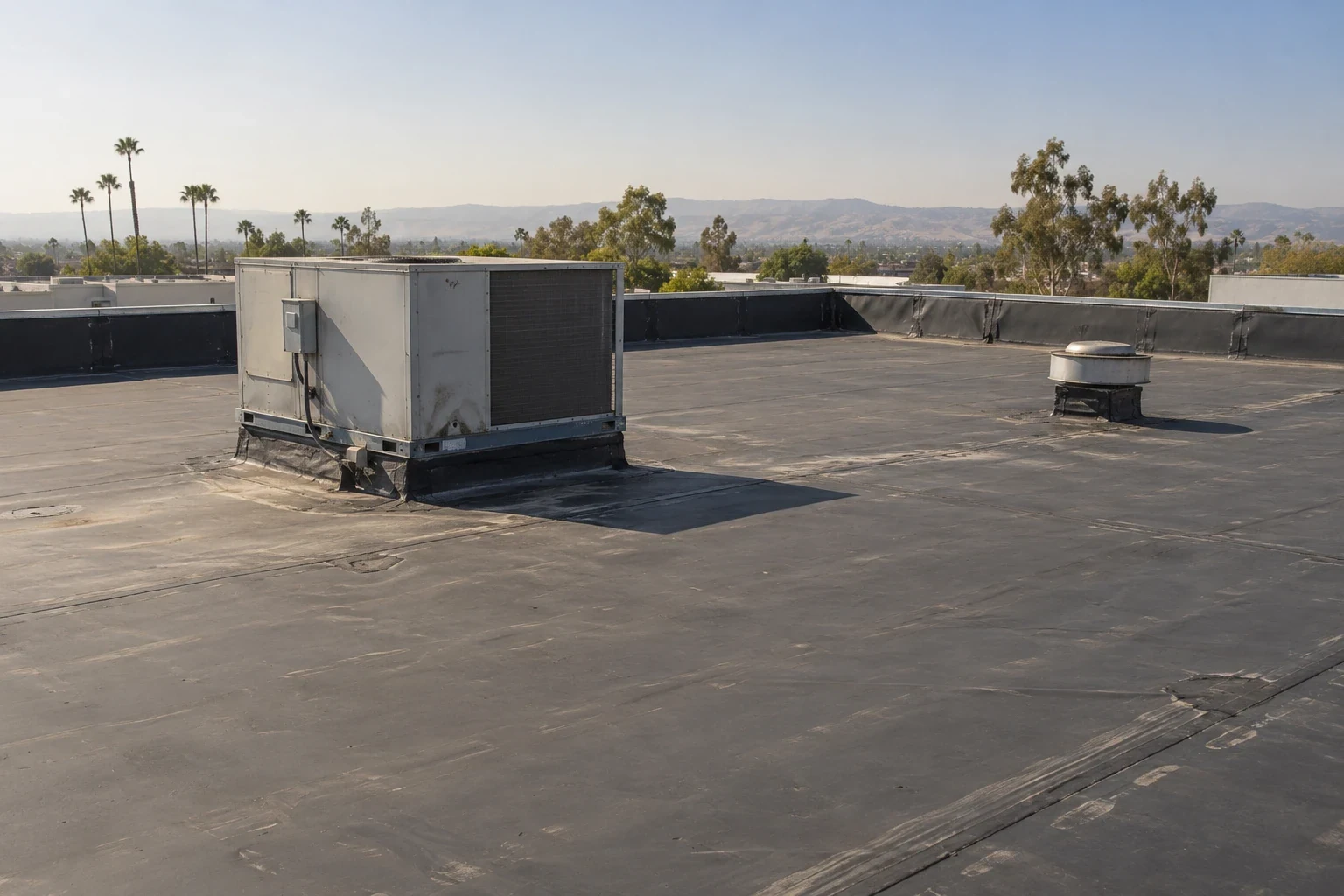
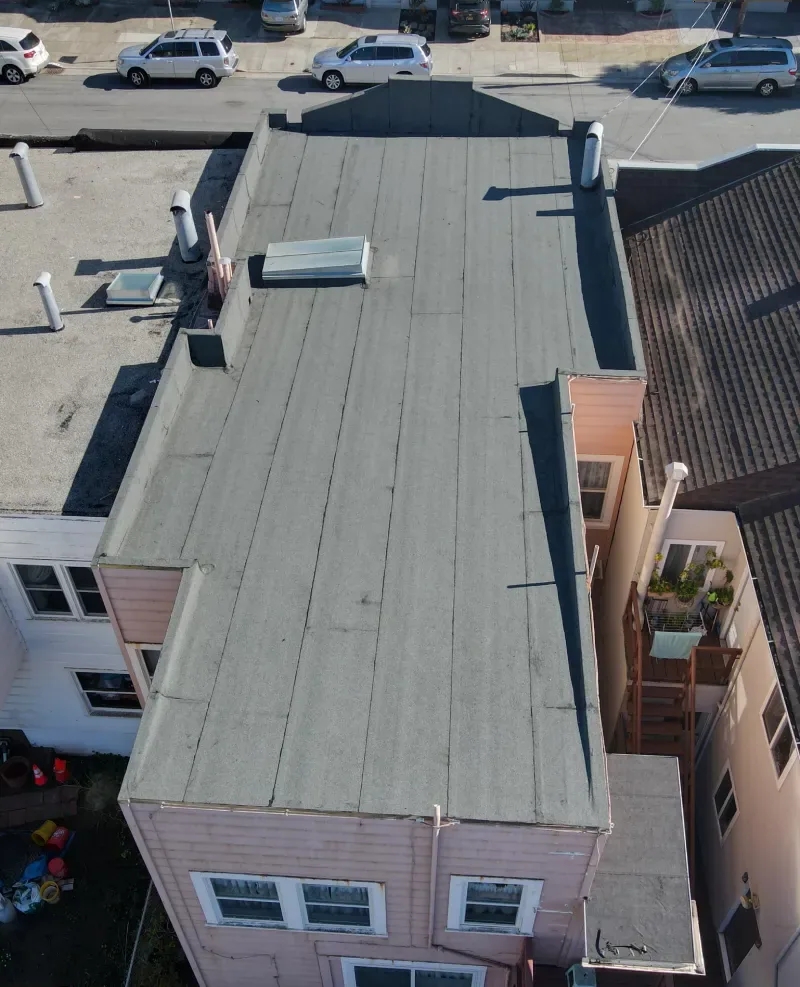
We identify the existing roof type, surface condition, previous coating layers, seam movement and areas of repair. A coating needs a substrate that can support adhesion and remain stable through service. Loose, wet, blistered or contaminated areas may require removal or correction before application. We look at representative zones rather than treating one clean patch as evidence for the full roof. If the membrane is unidentified or an older coating may be incompatible, the next step can include a test patch or manufacturer review. The report records the areas tested and the acceptance criteria used. This gives ownership a clear basis for deciding whether restoration can proceed across the planned scope. A coating review also checks whether prior repairs use compatible materials, whether the surface can be cleaned without damage, and whether the substrate has sufficient strength for the proposed application. We note loose seams, chalking, exposed reinforcement, blisters and areas where coating thickness could vary. A representative adhesion test can show whether the preparation and primer perform on a selected sample, but the report identifies exactly where that sample was taken. The owner receives the result before a larger area is priced as ready for restoration.
Resolve Open Repairs and Moisture Findings First
A coating follows the surface; it does not remove trapped moisture or close every failed detail automatically. We map cracks, open seams, failed flashings, punctures and areas with recurring leaks, then distinguish repairs that can be completed before coating from concerns requiring broader evaluation. Thermal patterns may help flag areas to inspect, but field verification establishes whether insulation is wet. If a test opening is approved, we record its roof zone and restoration method. Infrared moisture survey work can help select follow-up locations, while a hands-on commercial roof inspection checks seams and transitions. The scope should state what evidence remains unresolved.
Match the Restoration System to the Roof
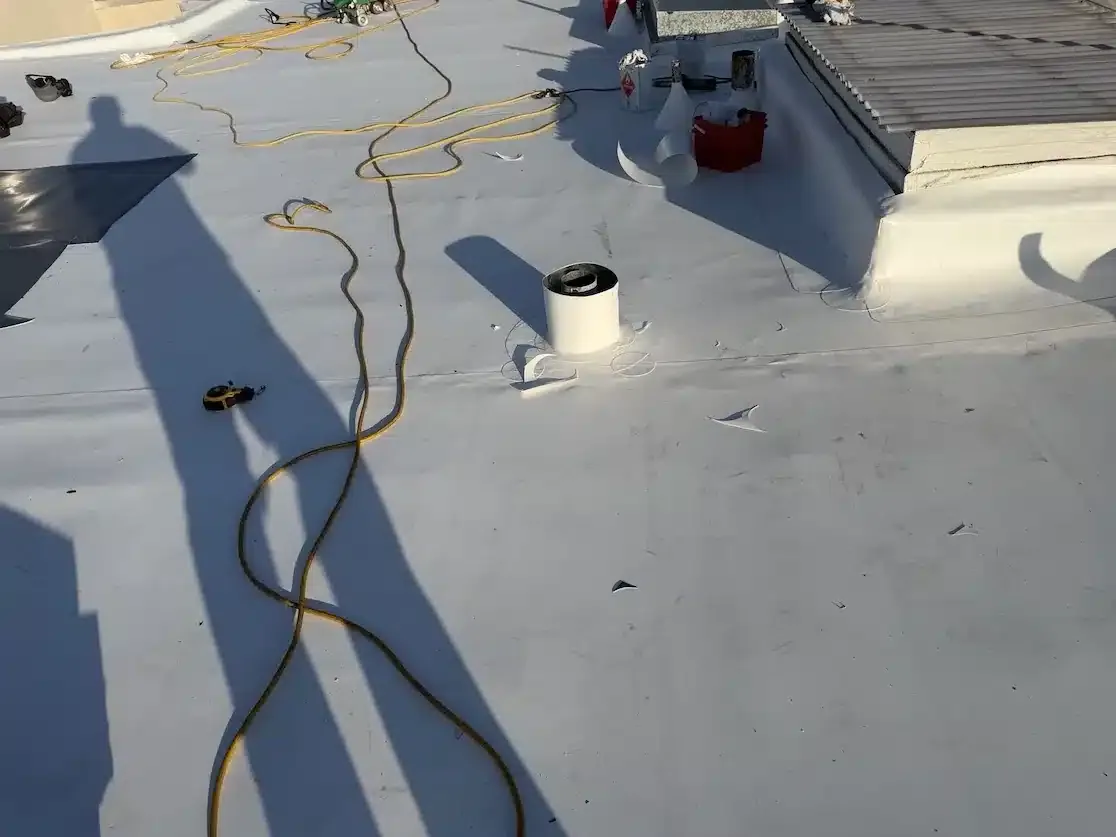
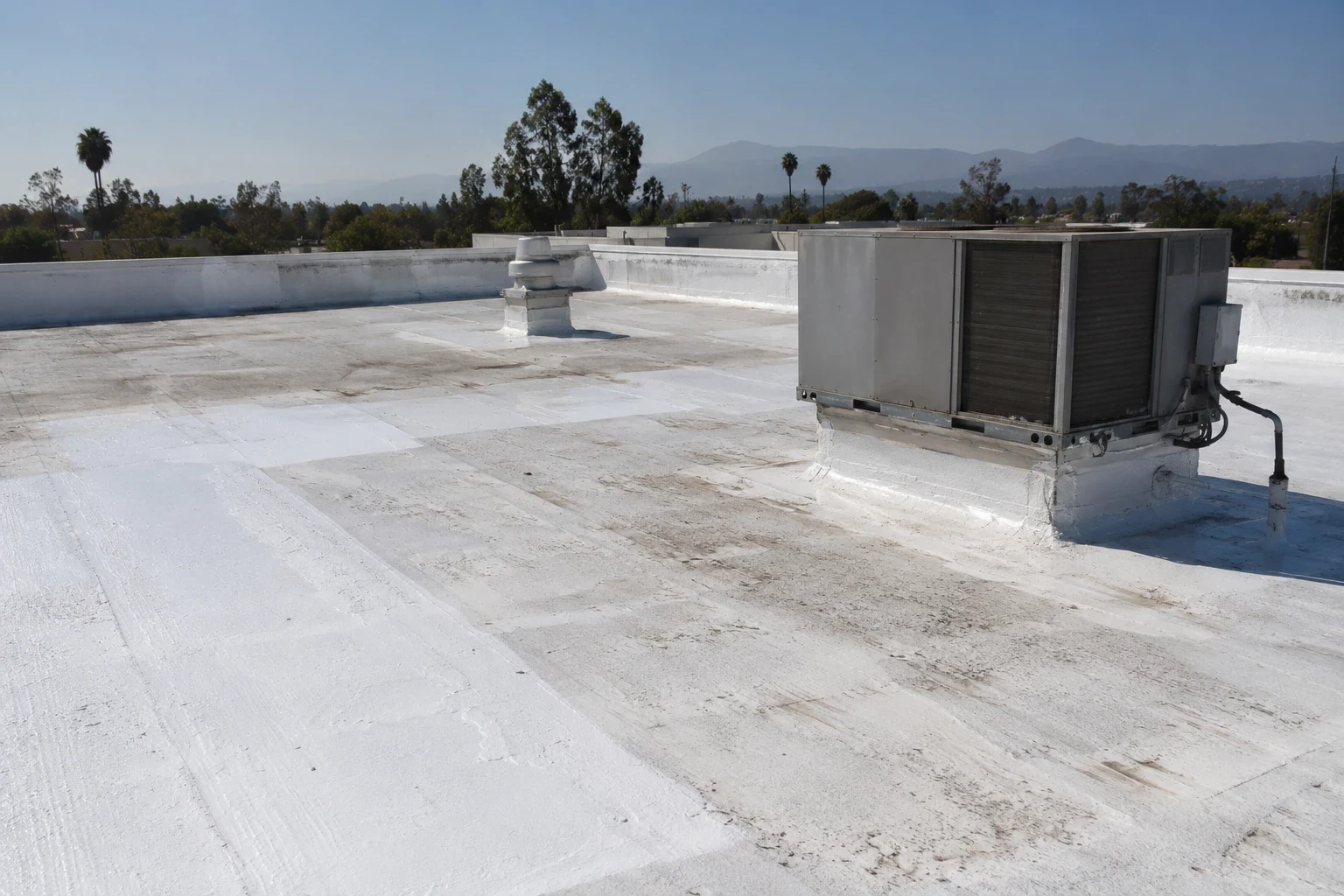
Coatings differ by chemistry, reinforcement, thickness, application conditions and compatibility with the existing membrane. A system appropriate for one surface may fail on another. We review manufacturer requirements, surface preparation, primers, reinforcing fabric at details, cure conditions and the warranty path before setting the specification. Silicone and acrylic systems have different strengths and limits, especially where ponding or frequent foot traffic is present. We do not select a product by color or reflectance alone. The owner should receive a written assembly description that identifies substrate, preparation and detail work. If the roof is a TPO assembly or EPDM roof, the coating manufacturer must confirm compatibility for that exact condition.
Include Drains, Edges and Penetrations in the Scope
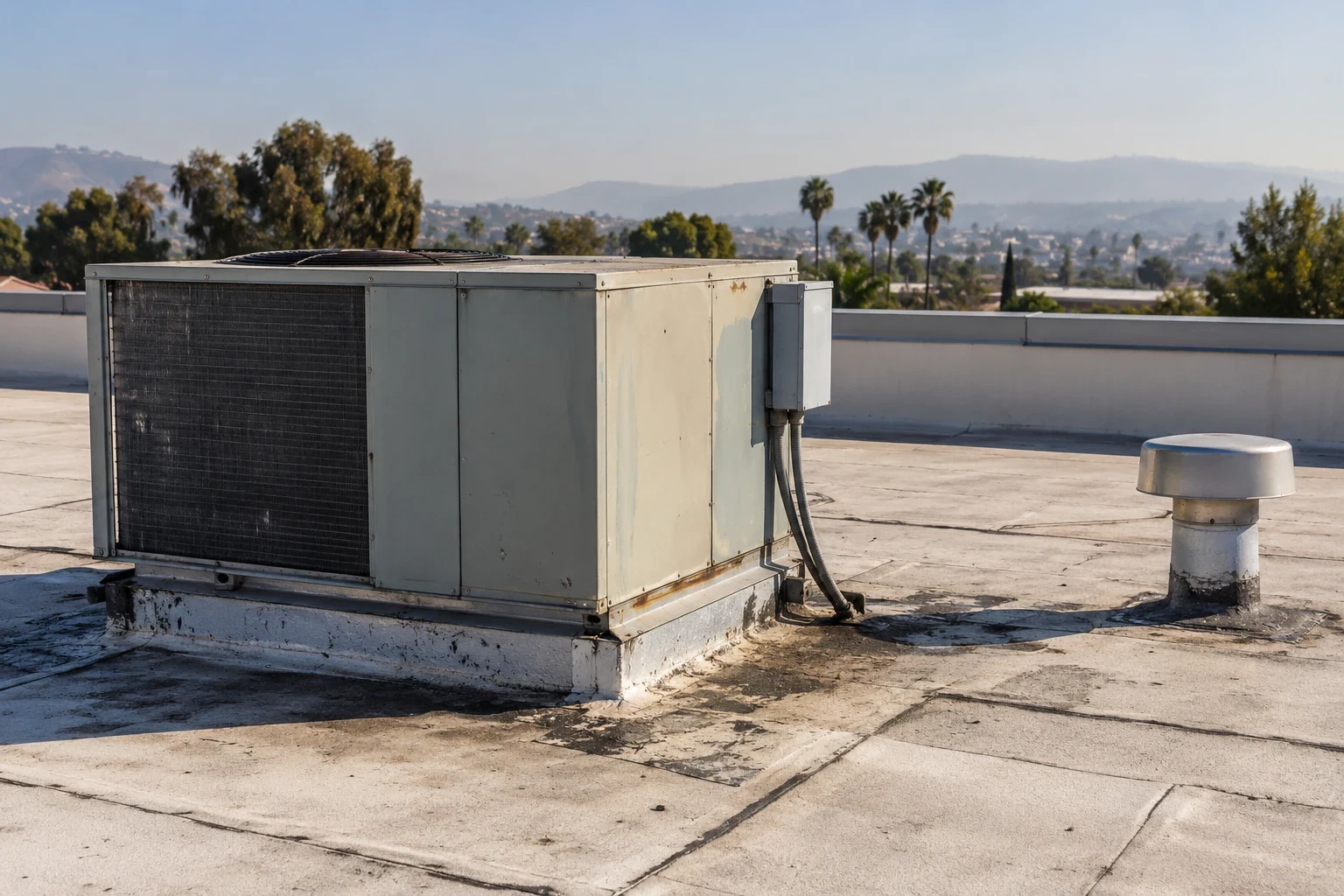
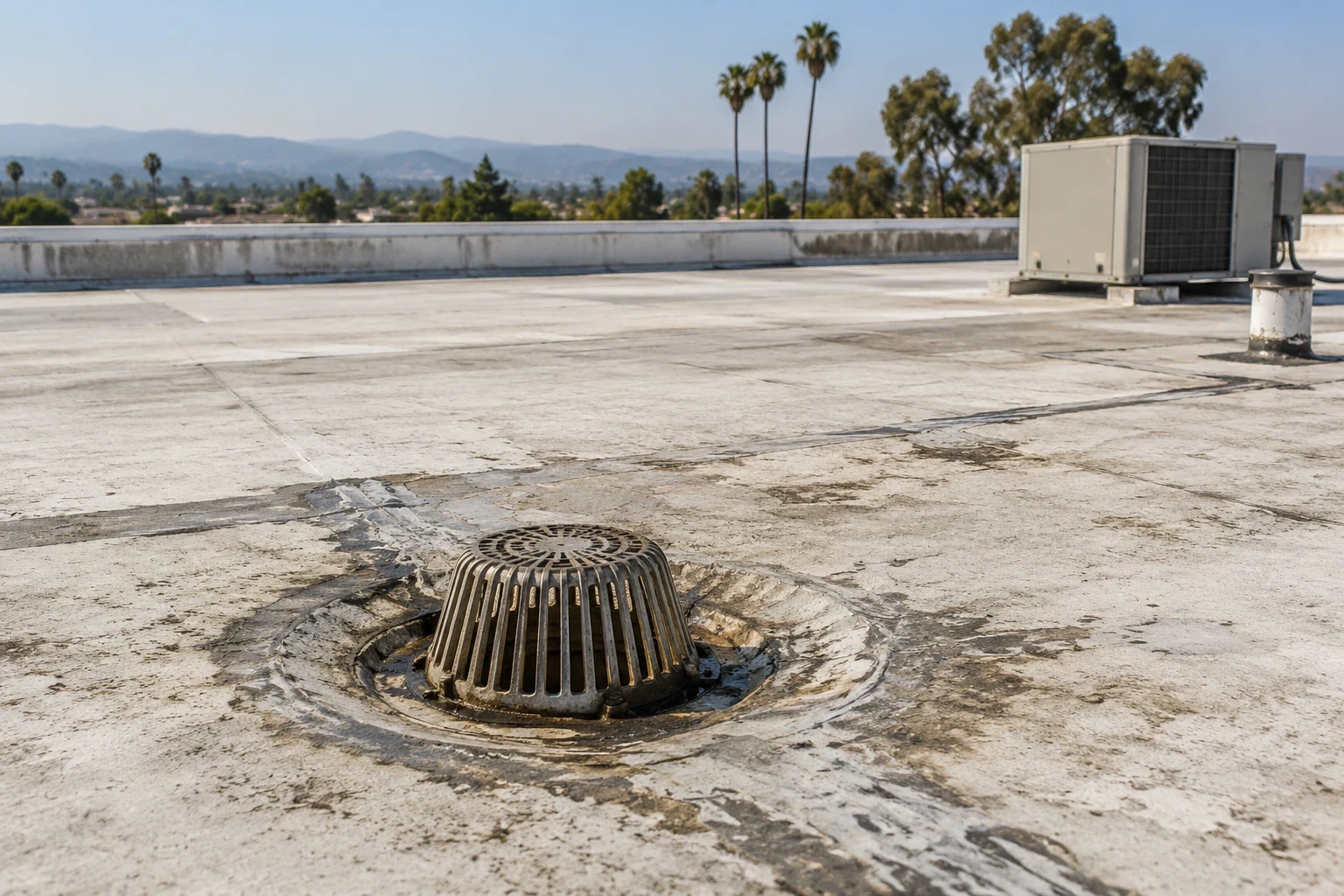
Drain bowls, scuppers, curbs, skylights, wall transitions and edge metal need detail work that follows the selected system. A field coating alone may not correct a low spot, loose termination or leaking curb. We map these interfaces, note where reinforcement is required and identify whether another trade needs to reset equipment or complete metal work. Drainage paths must remain open during preparation and application; debris or wet coating can interfere with flow. For a building with multiple roof elevations, transitions between coated and uncoated areas need an intentional termination. A focused drain and scupper review or edge detail scope can define this work before materials are ordered. The drain check includes access to primary and overflow outlets, visible debris, and any repair that could affect water discharge. We identify roof sections where equipment, walls or low points interrupt flow, then distinguish cleaning from work that changes the slope. If coating reaches an outlet, the detail must preserve the opening and avoid narrowing its throat. The scope should state how drains are protected during preparation and checked again before the crew leaves. These steps make drainage review part of the restoration work, not an afterthought when water collects.
Set Work Windows for Burbank Conditions
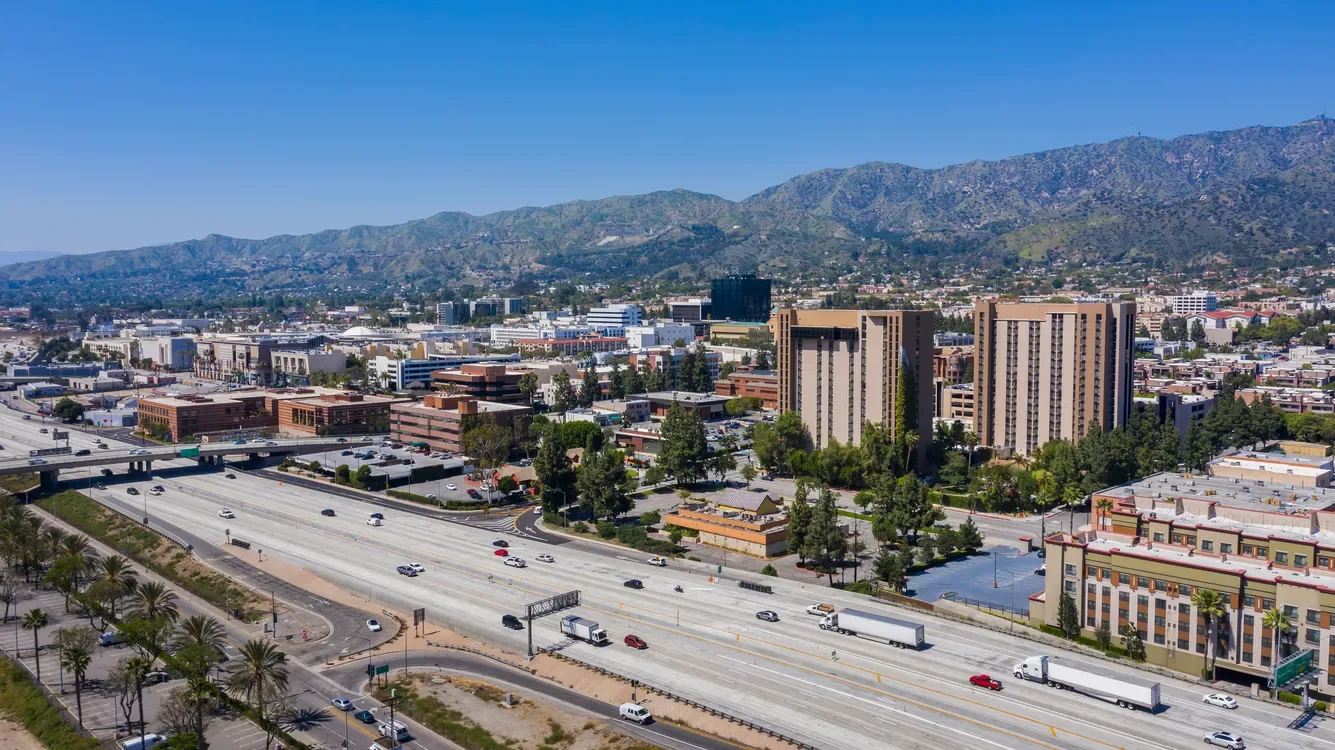
Application conditions depend on product requirements, substrate temperature, humidity, dew point and forecast. Burbank's long-term averages the mean August high at 88.3°F and July's at 85.8°F. Monthly averages frame seasonal planning; measured substrate conditions, humidity, dew point and the day's forecast govern product limits. We coordinate the crew's route, staging area, equipment access, occupied floors and temporary protection with the facility lead. A production property in the Media District may have different quiet periods and roof access rules than a storefront in Magnolia Park. The schedule should identify which sections can be closed, how open edges are protected at shift end and who can approve a weather delay or change in sequence. The facility lead should also know which zone will be unavailable, how the crew will move through the roof, where wet materials can be staged and what happens if a forecast changes. We set end-of-day limits so open edges, penetrations and transitions are secured. For a building with production or guest schedules, a staged sequence can keep the most sensitive roof area out of the work window until authorized. We record any weather delay and the next step required before coating resumes. That protects both the roof surface and the operating plan while the system cures.
Compare Restoration With Repair and Replacement
A coating proposal should identify surface preparation, repairs, primer, reinforcement, application rate, test areas, access, cleanup and exclusions. Cost changes with substrate condition, roof geometry, penetrations, staging and required removal of failed material. We separate those drivers from optional upgrades so ownership can compare a coating with localized roof repair or replacement. A coating may add service life when the assembly is suitable, but it does not reset every roof component or eliminate inspections. The facility manager should consider expected maintenance, warranty conditions and capital timing together. Our roof capital planning process can place the restoration decision beside other building needs.
Record the Finished Surface and Maintenance Needs
Closeout should include product and lot information, preparation records, weather conditions, wet-film or dry-film checks where required, detail photographs, test results and warranty documents. We mark the completed areas and any sections excluded from the work. The facility team should know what cleaning or inspection schedule applies and which damage requires prompt attention. The Magnolia Park commercial area and the Media District have different access patterns, but each building needs a roof-specific maintenance record. We can provide condition reporting that ties the coating work to roof zones and future observations. The next review should verify details and drainage before small defects widen.
Commercial Roofing Questions
When is a coating a reasonable alternative to replacement?
ent? Start by confirming the membrane is firmly attached, relevant layers are dry, and roof details can be repaired to accept the specified system. A test may be needed before approval.
Will coating stop a roof leak by itself?
Not reliably. We locate and repair leak paths, prepare the surface and address transitions before coating. Concealed moisture needs separate evaluation.
How do you check coating adhesion?
A test patch can assess preparation and compatibility on representative areas. We record the location, materials and acceptance criteria before extending the scope.
Does a reflective coating reduce heat inside the building?
Reflectance can affect solar absorption, but indoor results depend on insulation, ventilation, equipment and operation. We evaluate the roof assembly and product data.
What happens if ponding remains after coating?
We assess the drainage geometry and outlet condition before the scope. Coating alone does not correct slope; a designed drainage change may be required.