EPDM Roofing in Burbank, CA
A west-facing office roof and a studio roof can receive the same afternoon sun but serve different schedules below. In Burbank, the Media District includes production, healthcare and office uses; Magnolia Park has independent retail and dining. When an EPDM roof leaks, we identify the section, inspect its seams and transitions, and compare the roof-side condition with interior reports.
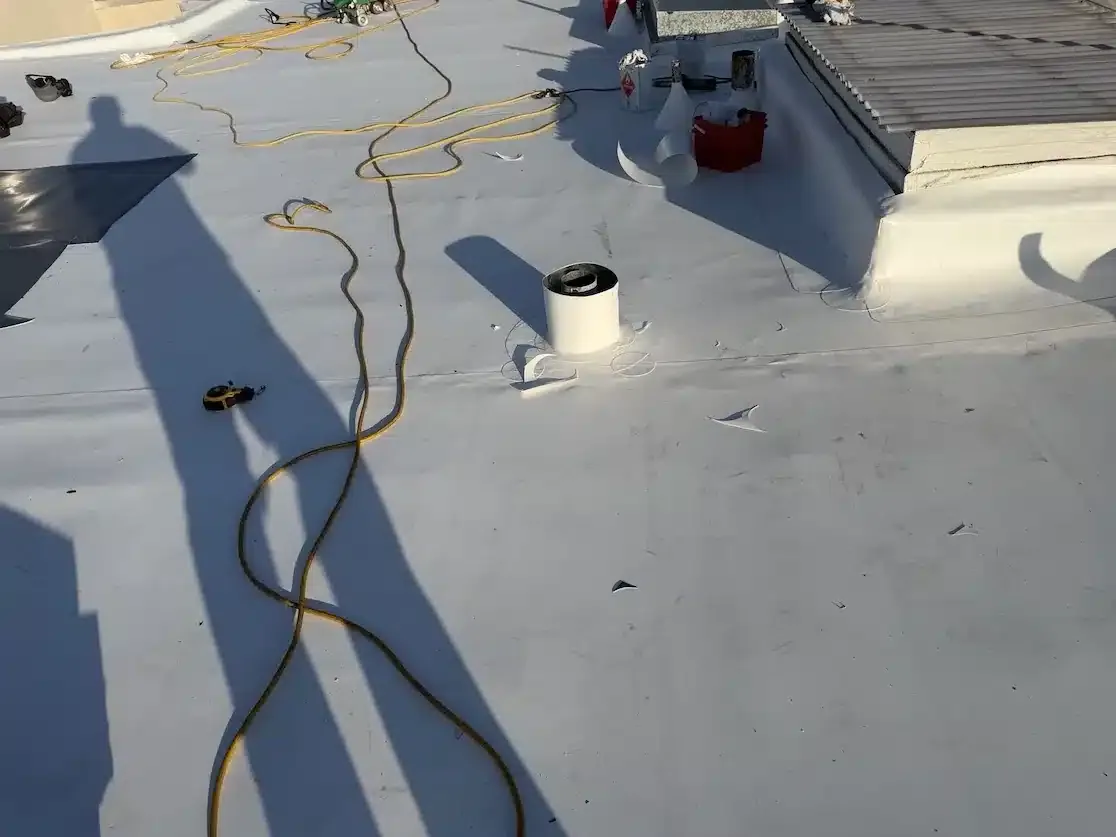
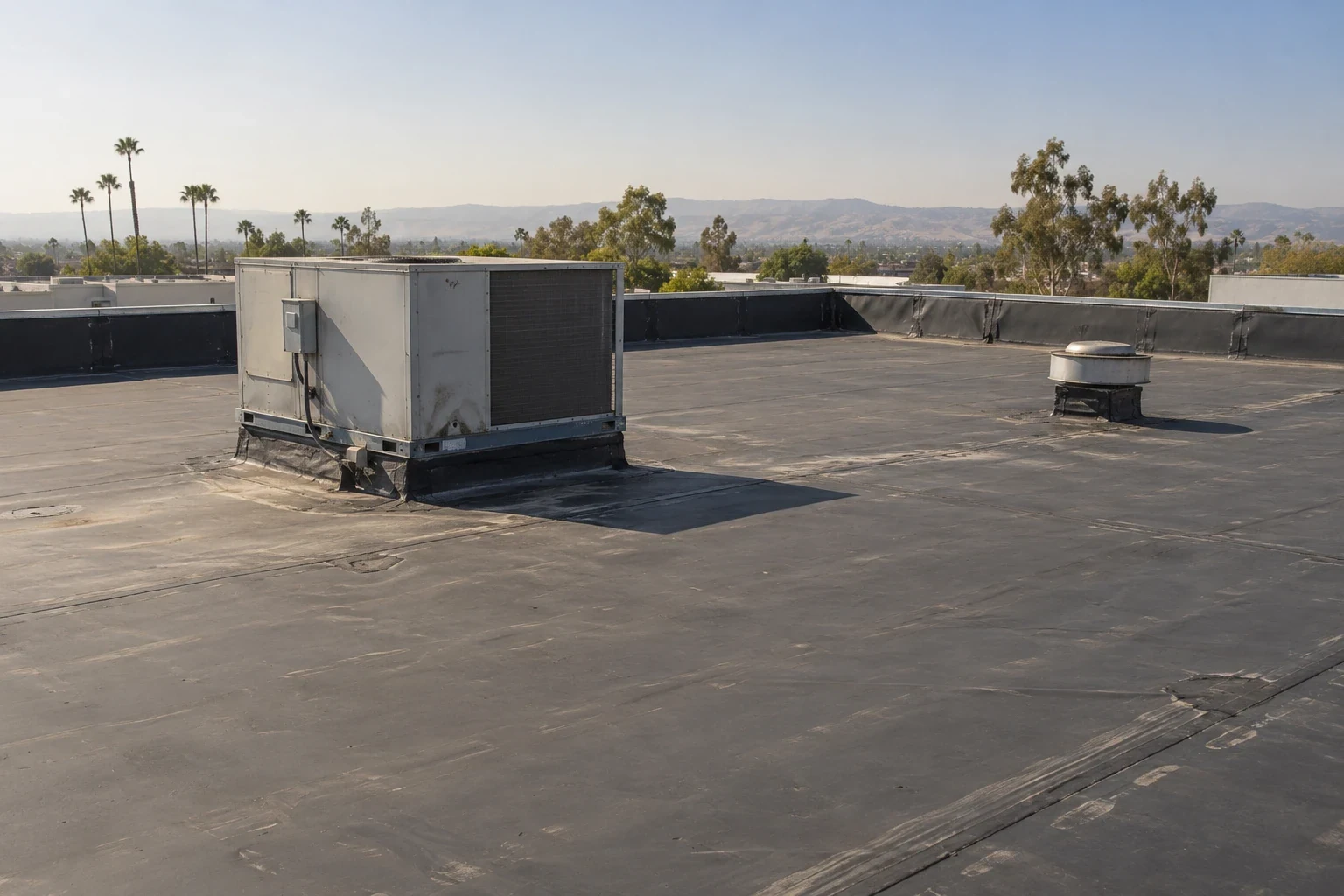
EPDM is a flexible rubber membrane, and its field seams and flashing details use system-compatible materials and methods. Repairs can involve cleaning, priming and applying a patch or accessory, but a patch does not address wet insulation or failed substrate. Our roof inspection records what is visible, what needs testing and how the building can remain in operation during the review.
Trace the Seam, Not Just the Interior Report
A ceiling mark is a starting location, not a roof repair map. EPDM water can travel along a slope, seam or insulation joint before it appears inside. We inspect field laps, perimeter terminations, penetrations and prior patches in the roof zone above the reported area. The inspection record compares those conditions with the interior location and recent repair history, then marks any area that needs a test opening before a larger scope is priced.
A seam repair depends on clean, dry surfaces, an accessory compatible with the existing membrane, and a firm boundary around the confirmed defect. If similar failures recur across roof zones, review the broader assembly before extending a patch.
Use Repair Materials That Fit the Membrane
EPDM and thermoplastic membranes do not share the same repair method. A repair material selected for TPO roofing cannot be assumed to bond to EPDM, and a proposed tie-in to PVC roofing needs a designed transition. We identify the existing sheet, surface condition and previous coatings before choosing a patch or flashing detail. The work record names each roof section so a later service call can tell original membrane from an added repair.
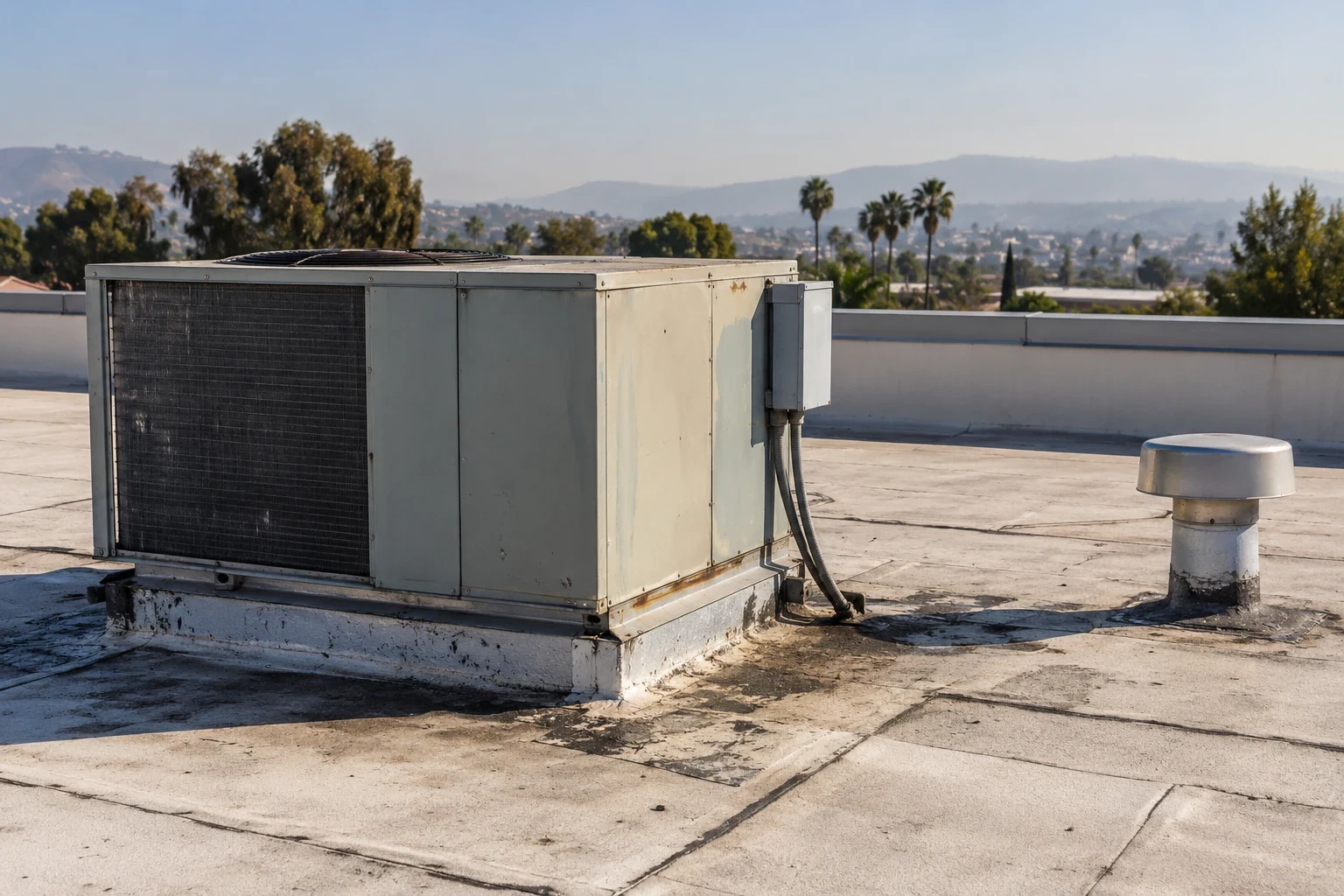
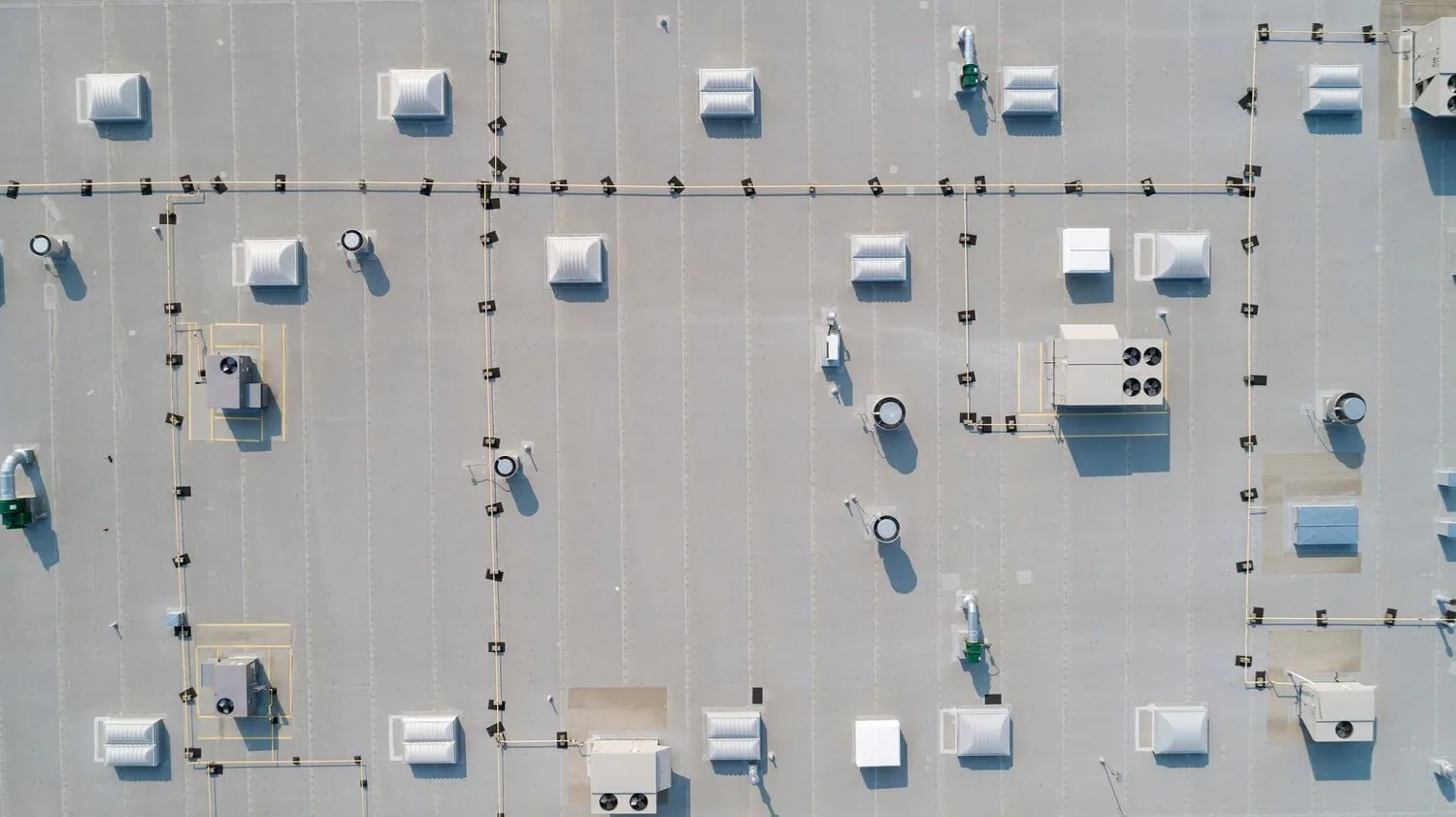
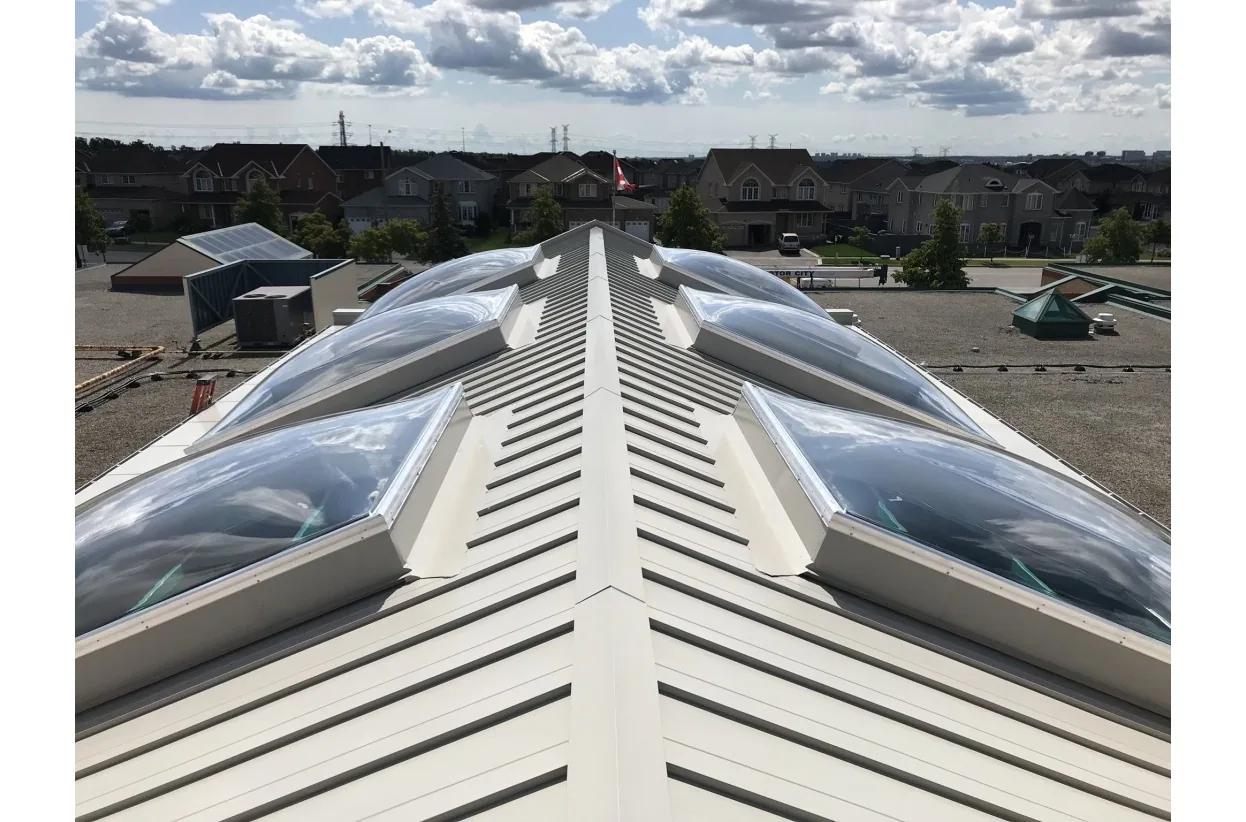
At curbs, skylights and pipe penetrations, flashing must rise and terminate so water cannot follow the opening beneath the field sheet. We check the vertical transition, corners, clamps, counterflashing and adjacent seams. If equipment discharge or another trade changed the surface, we record that condition without assuming its cause. The penetration flashing review helps define roof-side work while a mechanical or glazing trade remains responsible for its equipment.
Keep the Water Path in the Repair Boundary
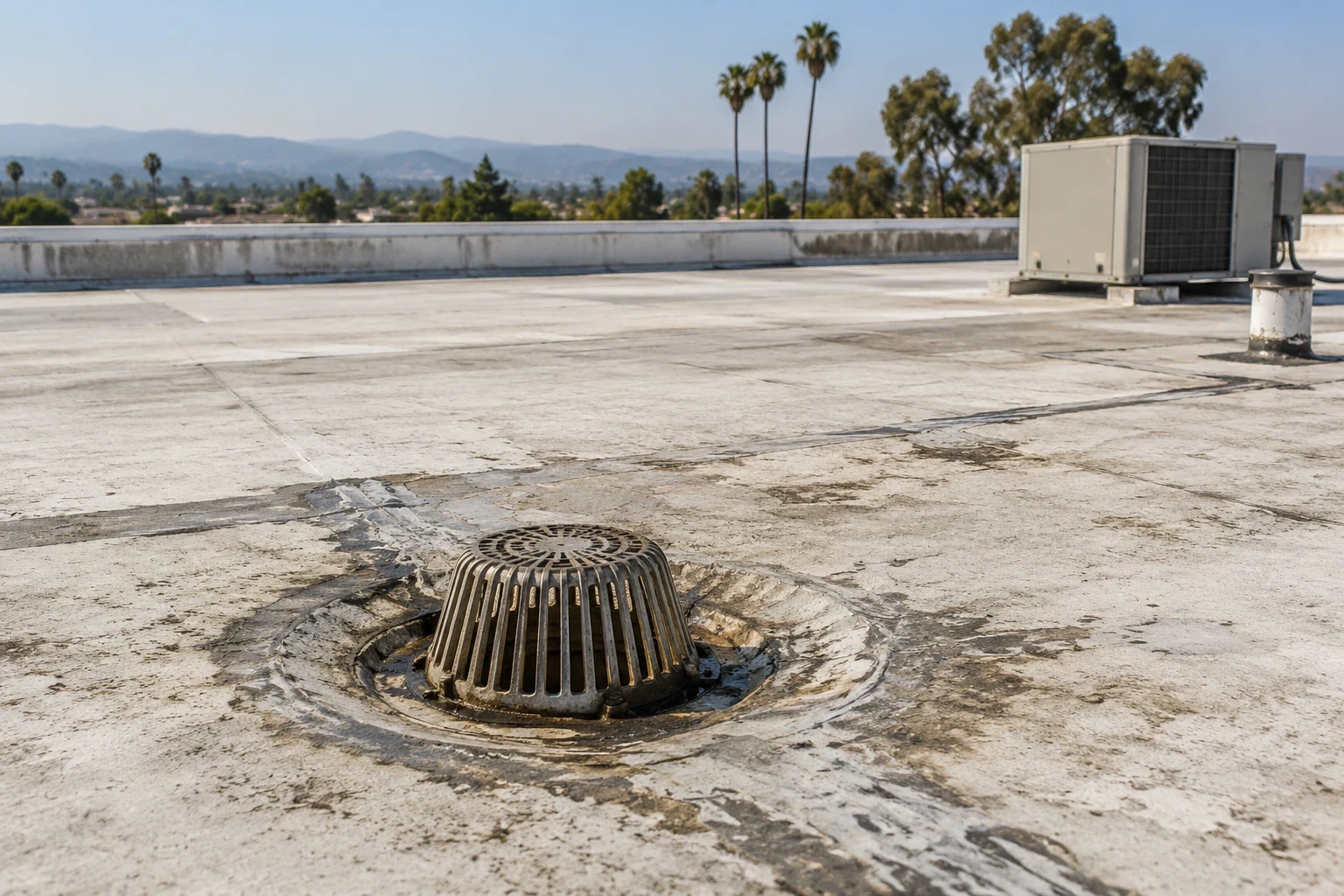
EPDM repairs fail when the scope stops at a visible tear and leaves the drainage condition untouched. We trace low points, outlets, scuppers and overflow routes, then check whether laps and flashing details direct water toward them. A replacement can change insulation height or the transition at an edge, so the drain and perimeter details need to be included in the assembly plan. We note any blocked or damaged outlet separately from the membrane condition.
Downtown Burbank is a mixed-use district with office and retail activity, while the Airport District includes hotels, technology and big-box retail. Access and loading may differ by property, but neither district label tells us what roof is installed. We coordinate drain and scupper work with the repair boundary, and add an edge and coping review when the membrane termination or perimeter condition is part of the leak path.
Confirm Moisture Before Expanding the Scope
Dark staining, surface softness and recurring interior reports can justify closer investigation, but none alone proves the extent of wet insulation. We compare visible signs with roof records and may use a moisture survey to prioritize checks. An infrared image can help identify thermal differences; selected areas still need field confirmation. If testing finds wet materials or an unsound deck, we map the limits before deciding whether removal is required.
That distinction matters when an EPDM roof is a candidate for recover. A new layer should not conceal moisture, weak attachment or a substrate that cannot support the proposed system. The survey process distinguishes screening from confirmation.
Phase Repairs Around the Occupied Building
Roof access, material staging and interior protection affect the schedule as much as the patch itself. We ask which entrances, rooms, equipment and tenant activities must remain available, then set a work zone that can be protected at the end of each shift. A repair should leave no untracked temporary cover or open seam. The facility director receives a defined access sequence, planned interruption and point of contact before the crew arrives.
Media District production spaces may need quiet periods or controlled roof access; retail areas in Magnolia Park may need a clear delivery route. We confirm the actual property rules instead of treating these local patterns as universal. For larger work, we set daily protection and closeout steps by roof section.
Compare Patch History With the Capital Window
Repeated repair invoices can help show where EPDM problems recur, but they do not replace a current roof inspection. We map past patches, identify seam or flashing changes and examine the surrounding material for movement or moisture. A localized repair may remain appropriate when the field is sound beyond a limited defect. If damage crosses several sections or details continue to reopen, the owner can compare a larger renewal with continued service work.
A recover may reduce removal only after the number of existing layers, attachment, deck, moisture and transitions are checked. The recover review lists the assumptions for that option separately from a tear-off scope. For a full replacement, insulation and cover board can affect curb and edge heights; the insulation review should resolve those interfaces before the assembly is ordered.
Keep the EPDM Record Useful
Closeout photos should identify the seam, curb or perimeter detail and the roof section where the repair ended. We note materials used, adjacent conditions, temporary protection removed and any follow-up inspection that remains. This lets a property manager distinguish an old patch from a new condition when the next leak is reported.
We review EPDM roofs across Burbank’s commercial areas, including the Media District and Airport District. The Downtown Burbank service area describes a broad mixed-use district rather than one business or building. Schedule the review around roof access and the renewal date, and have plans, prior repair records and current interior reports ready. We can then map the roof condition and state what work fits the evidence.
Commercial Roofing Questions
Can an EPDM roof be patched after a leak?
A patch can work when the membrane is compatible with the repair material and the failure is confined to a sound area. We inspect seams, flashing and substrate around the reported location, then map the repair limit. If water has reached insulation or the same detail has failed repeatedly, we investigate before patching so the visible opening does not become the only scope.
How do you confirm moisture below an EPDM sheet?
We combine visual review, repair records and appropriate testing. Infrared patterns can help choose where to investigate, but they do not confirm wet insulation by themselves. We verify selected areas through suitable field methods and mark confirmed limits on the roof plan. Concealed areas that were not opened remain identified as unknown rather than included as fact.
Can EPDM be recovered with another membrane?
Only after the existing layers, moisture, deck, attachment, transitions and the new system requirements are checked. The membrane types and fastening methods differ, so the proposal needs a detailed separation or tie-in plan. We document conditions that support a recover and identify any reason removal should be compared before the owner selects an assembly.
What causes a recurring leak near an EPDM curb?
Possible sources include the curb flashing, termination, adjacent seam, equipment discharge or water traveling from another roof detail. We inspect the curb and surrounding drainage path instead of assigning cause from the interior stain. A written record maps the observations and separates roof work from equipment repairs handled by another trade.
How can roof repair fit a studio or retail schedule?
We set access, staging, noise limits and daily protection with the property team. Media District production needs and Magnolia Park delivery patterns can differ, but the actual building schedule controls. We divide work into zones, coordinate any interior access and document the closeout condition before releasing the area.