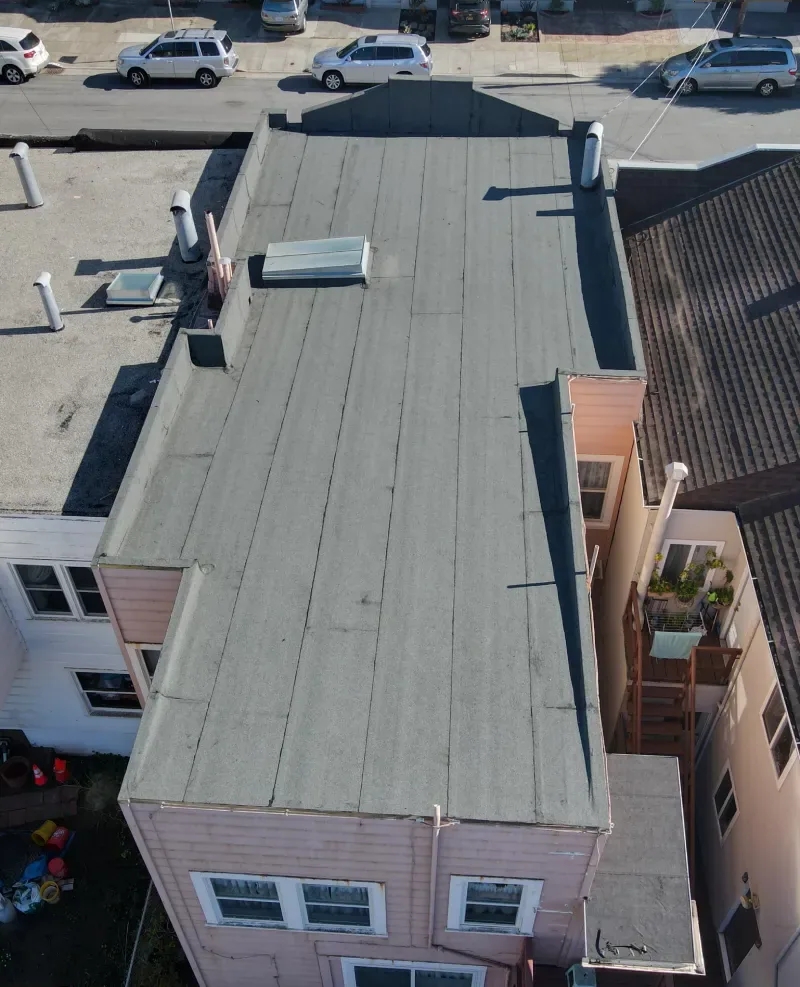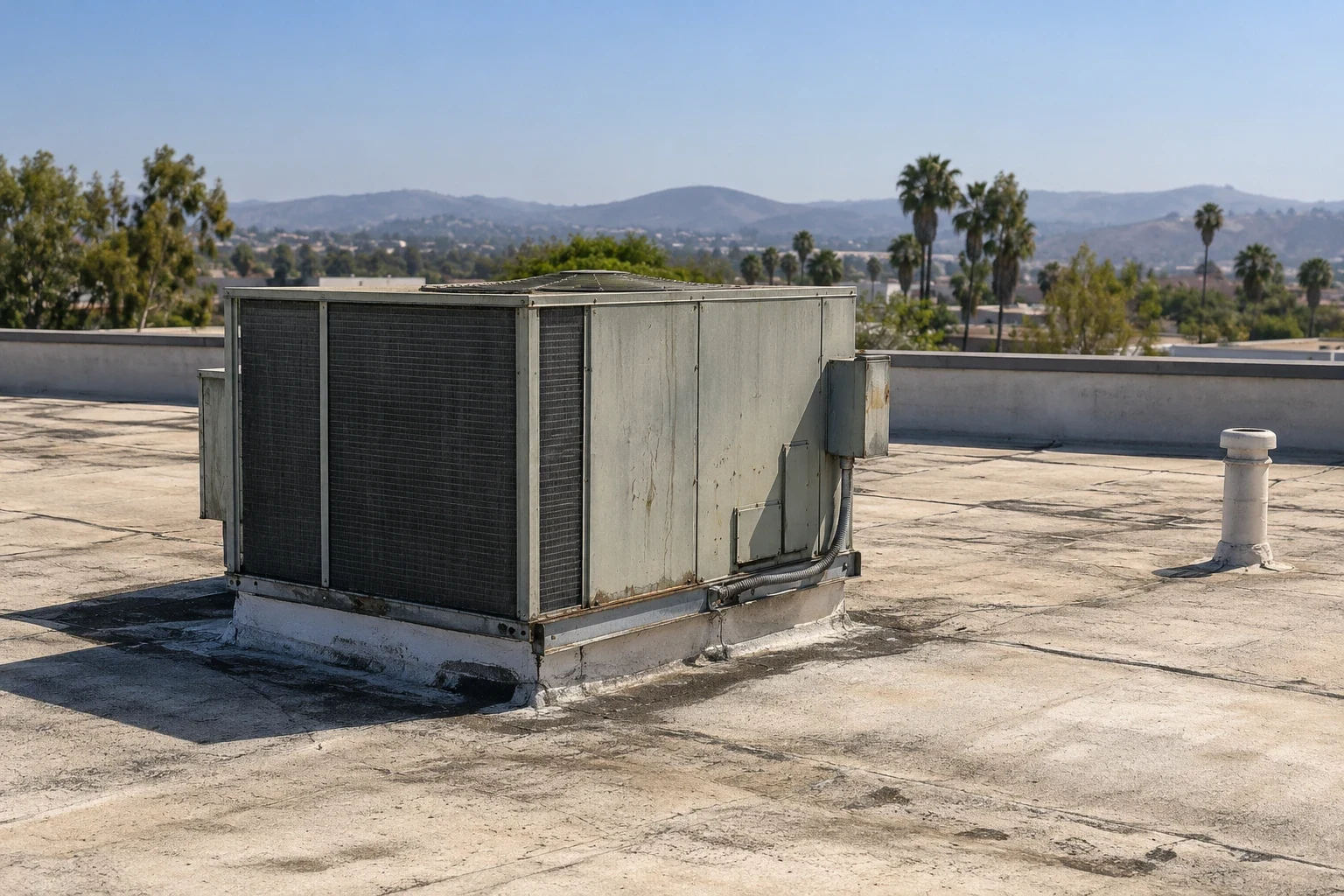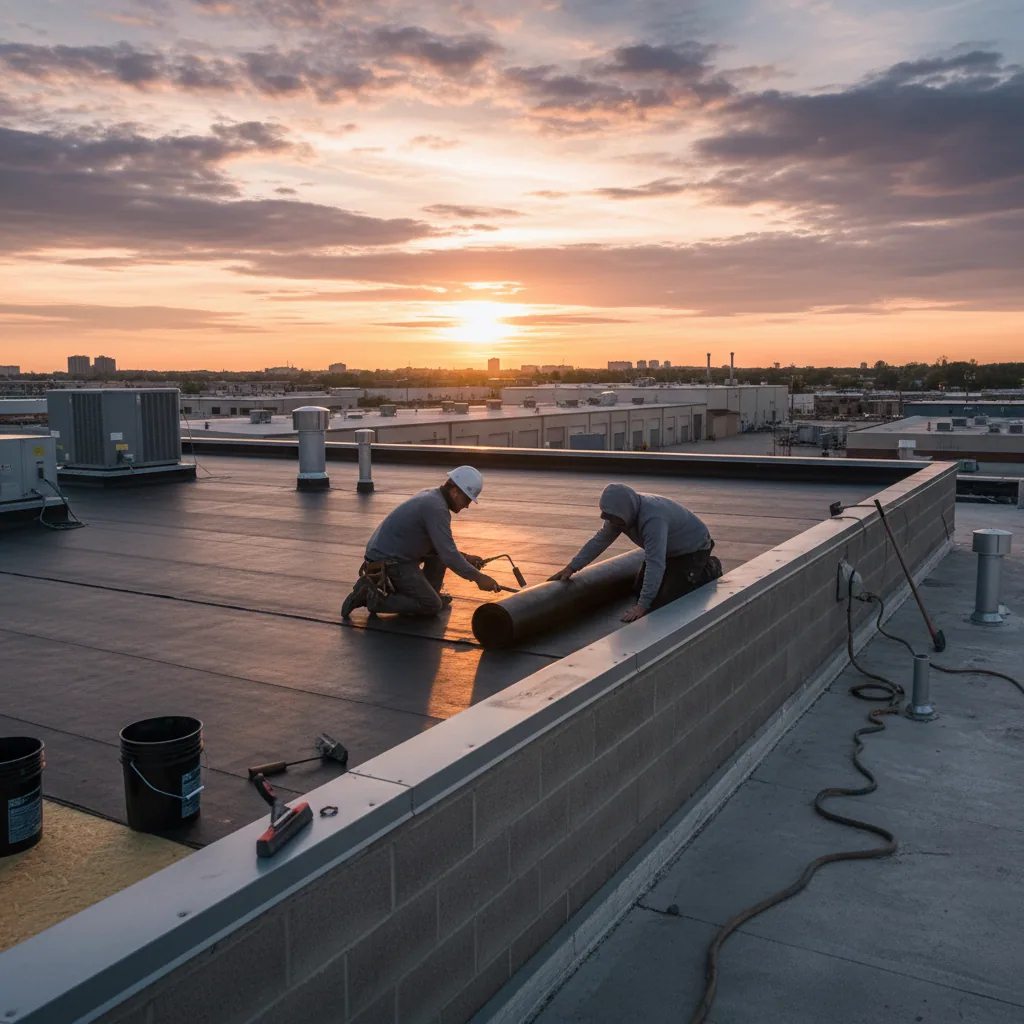
Infrared Commercial Roof Moisture Survey in Burbank, CA
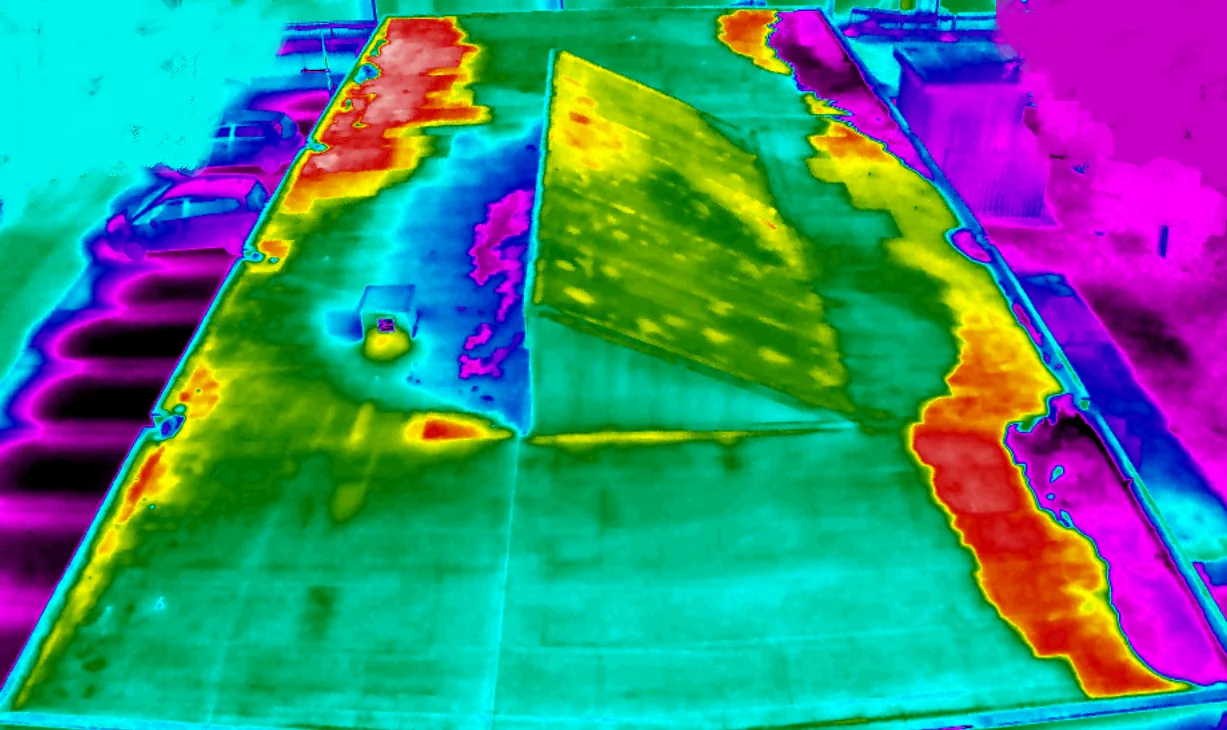
Infrared imaging records surface temperature differences under suitable conditions. A pattern may help identify an area for additional review, but it does not directly see water or prove that insulation is wet. Roof material, sun exposure, wind, shade, equipment, surface repairs and interior heat can influence the image. We discuss the assembly and the decision the survey needs to support before recommending a scan. The survey report should distinguish a thermal anomaly from confirmed moisture and state when testing or another inspection is needed. This boundary matters when ownership is deciding whether to repair a section, remove material or fund replacement; the scan should make the next step more precise, not overstate certainty.
Check whether the roof and timing suit a survey
A meaningful scan depends on the roof surface, access, weather history, temperature contrast and available conditions for imaging. Some assemblies or coatings may not produce interpretable results. We review roof plans, membrane type, insulation, leak records and planned work before scheduling. The technician notes recent rain, rooftop equipment operation and areas under shade or unusual heat. The survey may need an evening or early-morning window based on the method and conditions; timing is determined for the actual building. If the weather or surface conditions are unsuitable, rescheduling may produce better evidence than forcing a survey. The owner receives a clear explanation of those limits before using results in a capital or insurance decision.
Map anomalies to roof zones and records
Thermal images are more useful when matched with a roof plan, drainage layout, repair history and interior observations. We label likely zones, compare thermal and visual images, and note nearby curbs, seams, drains, edges, penetrations or rooftop equipment that could affect the pattern. A broad color area is not enough to define a repair boundary. The inspector should identify where field verification is warranted and how the location was transferred to the roof. If ownership has prior scan data, consistent zone names can help compare observations, while differences in equipment, conditions or image settings must be considered. Good mapping lets a facility manager direct a follow-up inspection without assuming that every anomaly represents moisture.
Verify selected areas with appropriate methods
After the scan, selected areas may need a close visual examination, probe or owner-approved core opening. We identify the reason for each test and how the opening will be patched and recorded. Core samples can provide direct information about roof layers and moisture at the sample location, but a single sample does not represent every roof zone. Results need to be interpreted with visible conditions, roof history and system details. A location we cannot safely access or test is listed separately from the areas observed. A commercial roof inspection can compare thermal impressions with direct roof-side conditions, while leak repair planning should wait until the entry path is supported by field findings.
Separate thermal anomalies from repair scope
A repair boundary should be based on verified conditions and the roof-system detail involved, not solely on a thermal image. We organize findings by zone and state whether evidence is visual, thermal, invasive or reported by occupants. The proposal may include a test allowance or alternates for areas not yet verified. Wet insulation can affect recover suitability, but material removal should follow an approved scope and appropriate testing. A false positive may lead to unnecessary work; a missed area may leave a condition unaddressed. The owner should receive enough information to compare the consequence of additional testing with the risk of acting on incomplete evidence. We can prepare a repair-versus-replacement review when the pattern extends beyond a localized detail.
Coordinate access and protect the operating building
Survey access includes roof entry, fall protection, rooftop equipment, restricted areas and any interior spaces needed for comparison. We coordinate the visit with the facility contact and document whether equipment was operating, rooms were occupied or access was limited. In Burbank, warm summer conditions are common; Burbank's long-term averages mean highs at 88.3°F in August and 85.8°F in July. That seasonal baseline informs equipment and scheduling plans; it cannot stand in for readings taken on the survey date. We schedule based on actual weather and the chosen method. The property team should know which areas will be visited and whether any core openings or follow-up tests require separate approval.
Deliver a record that shows evidence and uncertainty
A useful report identifies the survey method, date, conditions, roof zones, equipment or obstructions, thermal observations, corresponding visible images, tests and limitations. We distinguish anomalies that merit follow-up from moisture confirmed by an approved opening. Each finding receives a practical next step, such as monitor, inspect, test, repair or include in a capital review. The record should identify who needs to approve invasive testing and how each opening will be restored. If no further work is recommended for a zone, state why. A consistent roof condition report can connect survey results to budgeting and future inspections without treating one scan as a condition warranty.
Use the findings to select the next action
Thermal results can support a focused replacement assessment, a localized repair or continued monitoring. We explain what the survey established and what it did not, then recommend only the next investigation that answers an open question. If drainage or seam concerns are visible, a maintenance visit may be appropriate. A TPO roof assembly and another membrane type may respond differently to temperature and moisture, so interpretation depends on the actual system. For facilities in Downtown Burbank, we keep the report tied to the building’s roof map, access limits and capital decision rather than generic neighborhood assumptions.The owner should use survey findings in proportion to the evidence. A thermal anomaly can justify another look, but replacement quantities and budgets should wait until the suspected condition is checked with an appropriate method. We can provide a marked plan with candidate zones and separate confirmed findings from areas that remain uncertain. If testing is approved, each opening or probe should be tied to the map and restored according to the selected assembly. The report also states what conditions could have affected image interpretation, such as recent weather, shading or rooftop equipment. Keeping those qualifications with the images prevents a later reviewer from treating a color pattern as proof of moisture. The facility team can then choose a limited repair, additional testing or broader condition assessment with clearer expectations. A Burbank owner can keep the plan with separate notes for Downtown Burbank and the Media District without assuming that geography proves a roof condition. The surveyor should identify which zones had suitable surface and weather conditions, then explain why an anomaly was selected for verification. Testing points should be agreed with the owner, photographed before and after, and restored using appropriate materials. A final review records who received the data and which findings remain open, making the report practical for budgeting and maintenance follow-up.
Commercial Roofing Questions
Does infrared imaging confirm wet insulation?
No. It identifies temperature differences that can flag areas for follow-up. A thermal scan can flag a zone for field review, but moisture must be established through a suitable opening or another approved diagnostic method.
When should an infrared roof survey take place?
Timing depends on roof materials, weather, temperature contrast and the chosen method. We review conditions and may reschedule when the image would not be reliable.
Will the survey show exactly where to replace roofing?
Not by itself. Thermal observations help focus investigation; repair or replacement boundaries require interpretation with roof details, physical inspection and testing.
Does one core sample represent the full roof?
No. A core gives direct information at its sample location. The inspector selects locations based on the roof map and other evidence, then states the limits.
What records should we provide?
Share roof plans, system details, leak logs, prior repairs, past scan data, equipment notes and intended decisions. This helps the survey team interpret results.