Commercial Roof Maintenance in Burbank, CA
A roof inspection can find a condition. A maintenance plan gives the facility director a way to track it before the next repair decision. We map the roof into sections, record drains, seams, edges and penetrations, then note which items need cleaning, repair or monitoring. That record matters on an occupied building where access windows and tenant schedules may limit when work can happen. Burbank's warm season and seasonal rainfall make timing part of the review, but the roof's actual condition sets the work list. The maintenance ledger should assign each open condition, its priority and the person responsible for clearing it before the next visit.
Keep a Roof-Zone Record
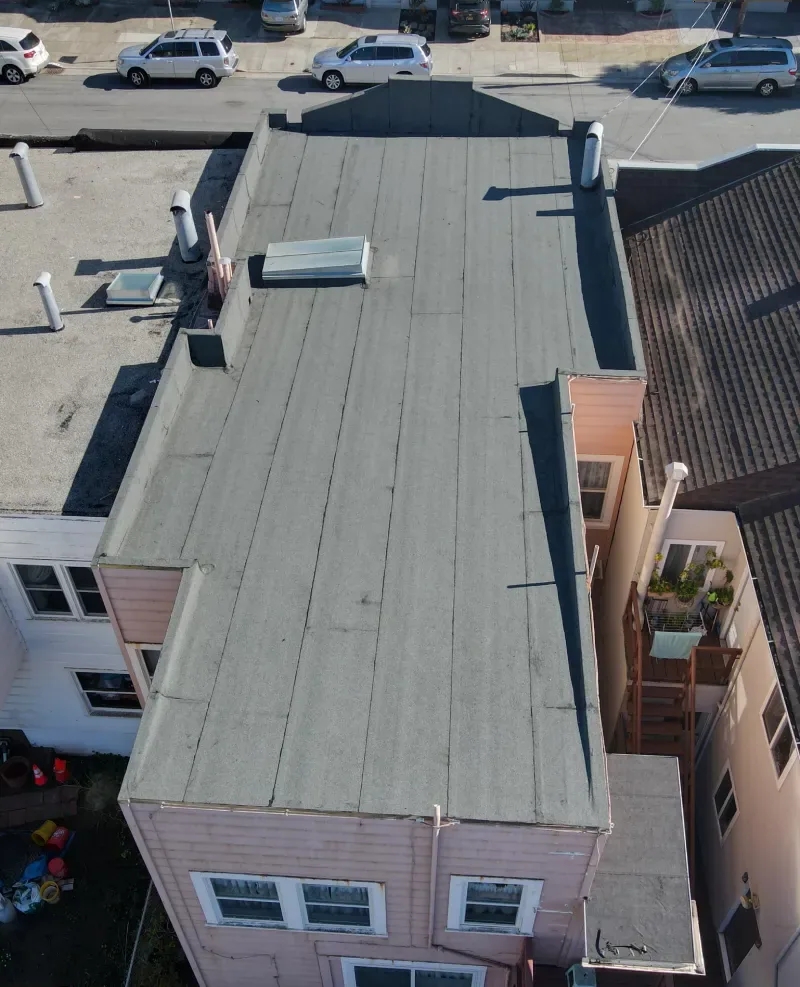
We organize maintenance by roof section instead of leaving a collection of unlocated photos. Each entry can identify the membrane, drain, curb, transition or edge observed, with the date, condition and recommended action. If a prior leak or patch is known, we place it on the same map so the next visit can compare what changed. A facility manager can then distinguish an item to watch from one that needs repair authorization. Where several buildings are managed together, consistent labels make records easier to review without assuming their systems match. For a Burbank property, the map can reflect the building itself while noting nearby district access patterns, such as the office and production uses in the Media District. A roof-zone log should also distinguish inspected surfaces from areas that could not be reached safely. We mark the hatch or ladder route, note fall-protection needs, and identify rooftop equipment that blocked a clear view. If a crew finds loose debris, it records whether removal was completed or deferred because the item requires another trade. That distinction matters when the facility team reviews an invoice or schedules follow-up. We can include a short owner-priority field for each item, such as keeping a tenant area dry, maintaining access to equipment or preparing a renewal budget. The report then supports the next approval instead of leaving maintenance staff to translate photos into a work order.
Clear Drainage Paths Before They Become Work Orders
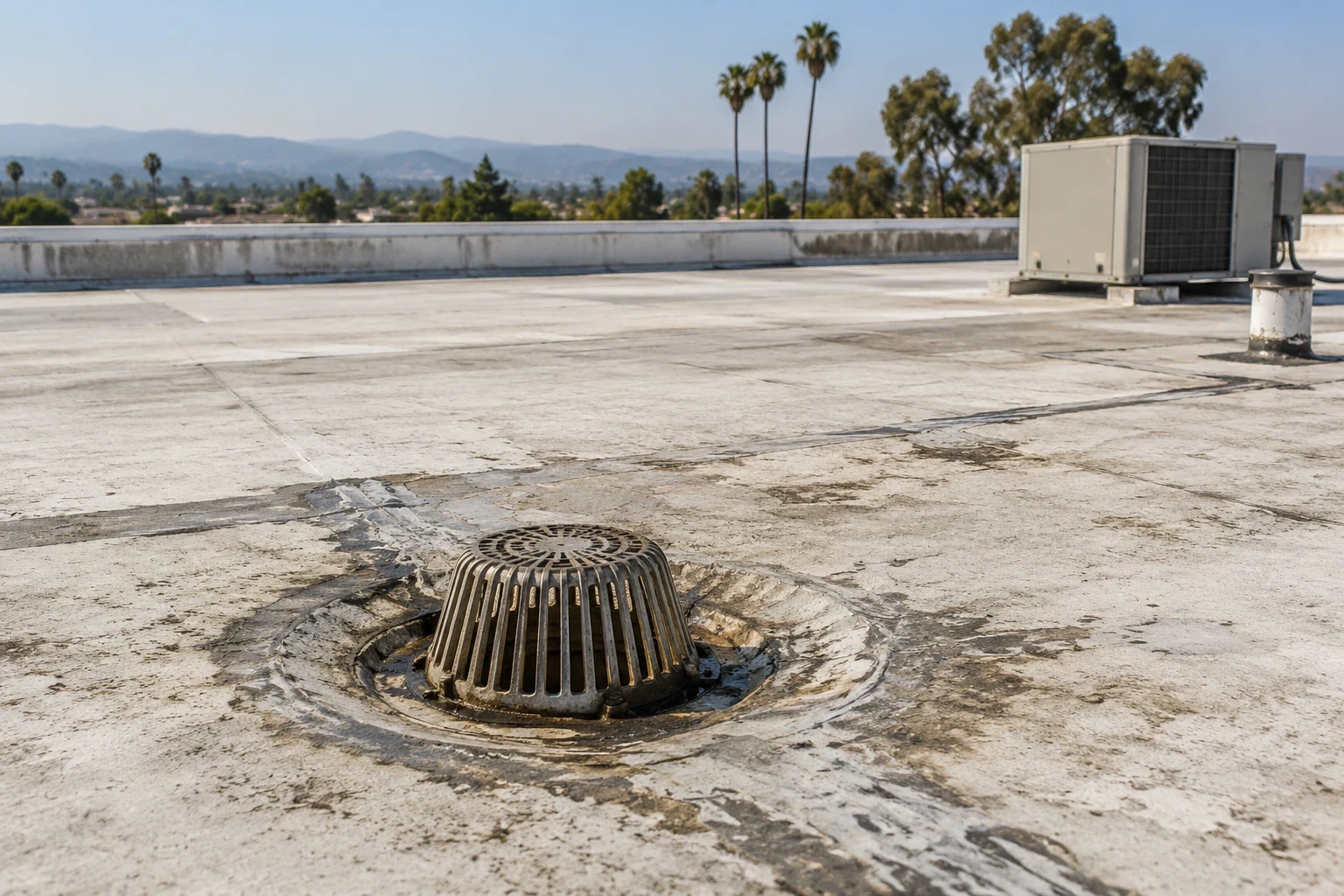
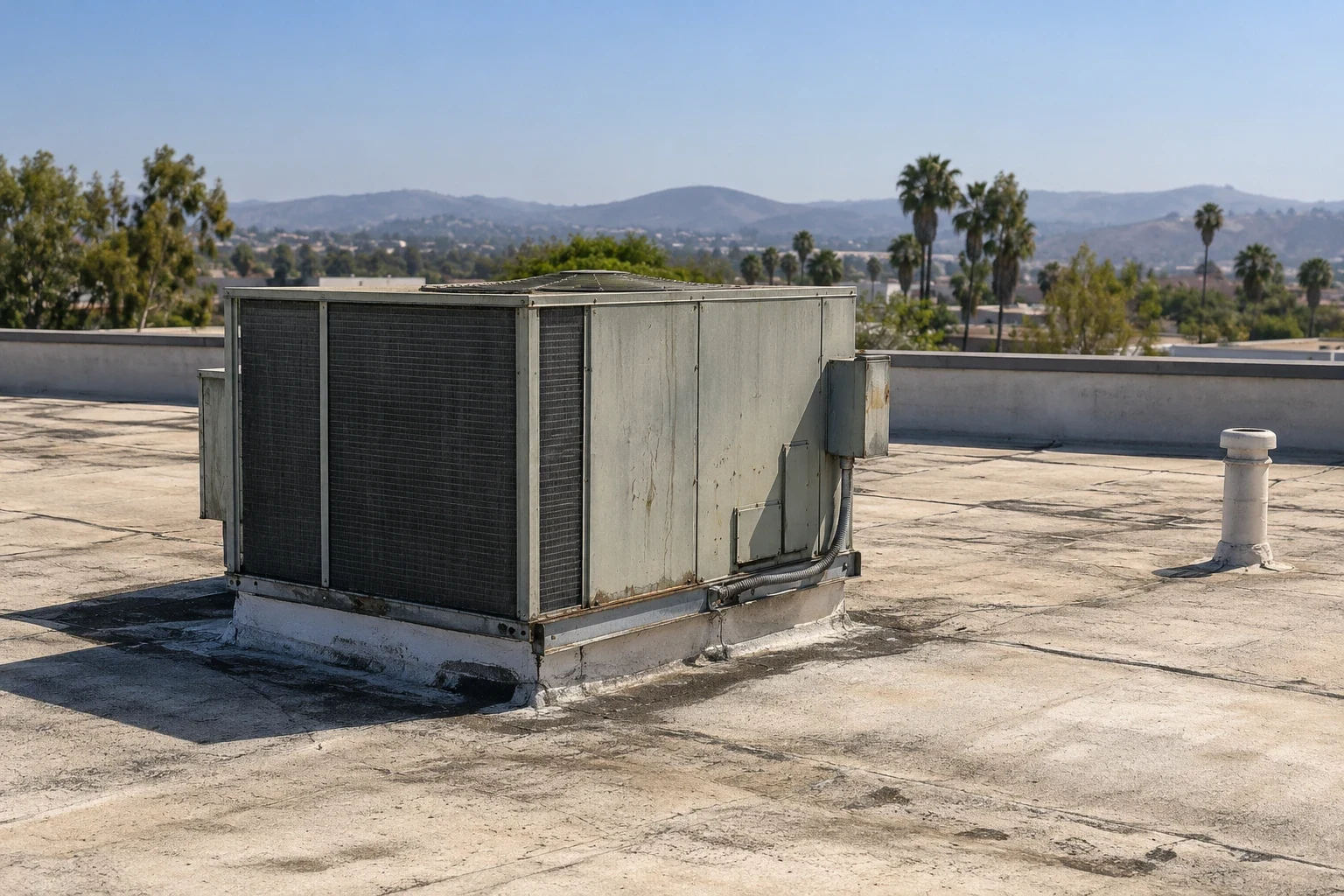
Leaves, packaging, dirt and rooftop debris can restrict water flow at drains and scuppers. During a maintenance visit, we check visible inlets, strainers, overflow provisions and the route to discharge, then record conditions that need cleaning or repair. Ponding should be evaluated with the roof's slope, membrane and drain layout in mind; a photograph alone does not establish a correction method. If we find standing water or a blocked outlet, we note its location and whether the obstruction can be safely cleared during the visit. A separate drainage and scupper review may be appropriate when the detail or slope needs a broader look. Keeping the path clear can reduce avoidable service calls after rainfall.
Inspect the Details That Carry the Repair Scope
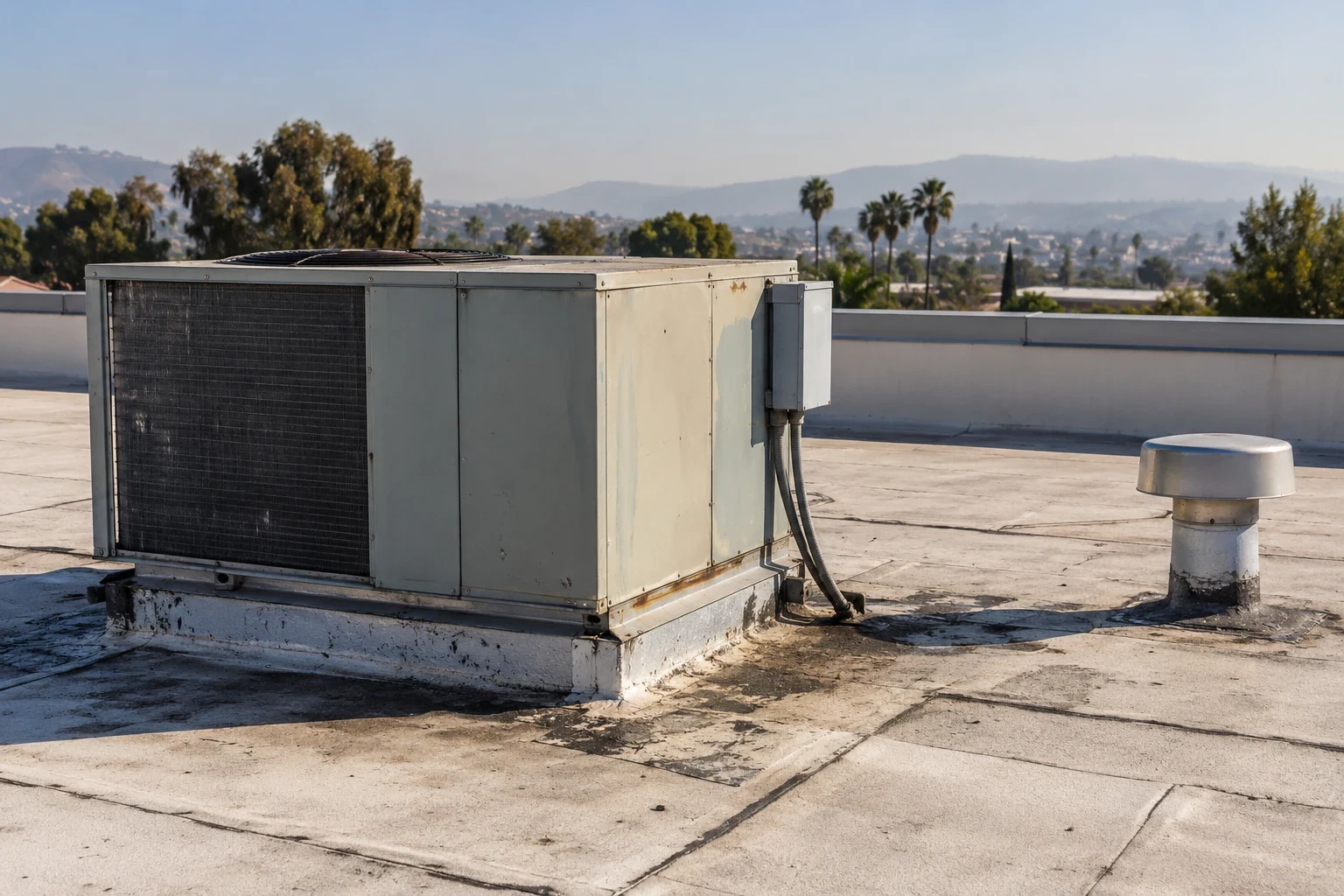
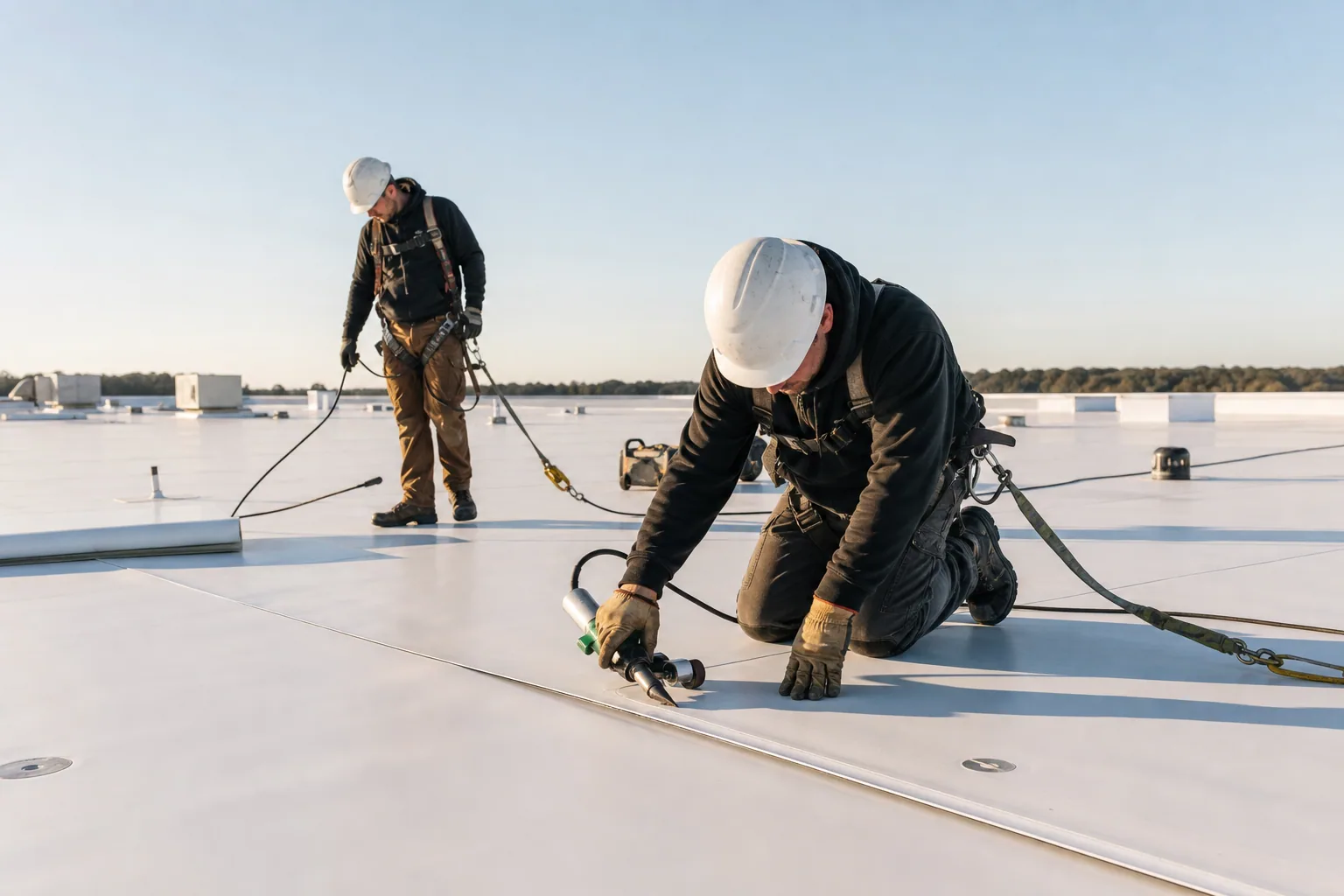
Seams, penetrations, curbs, skylights, wall transitions and edge metal need different checks from the open field membrane. We look for separation, cracking, loose securement, damage, prior patches and conditions that could let water move beneath the surface. A maintenance walk can flag a seam for repair, but system type and substrate condition still guide the method. When the roof system is known, we record it so the repair uses compatible materials. If a condition is unclear, we mark the roof section for closer inspection rather than expanding work without approval. Facility teams that want a complete condition file can pair the visit with photo-based roof condition reporting and a focused commercial roof inspection.
Set the Visit Around Heat and Occupancy
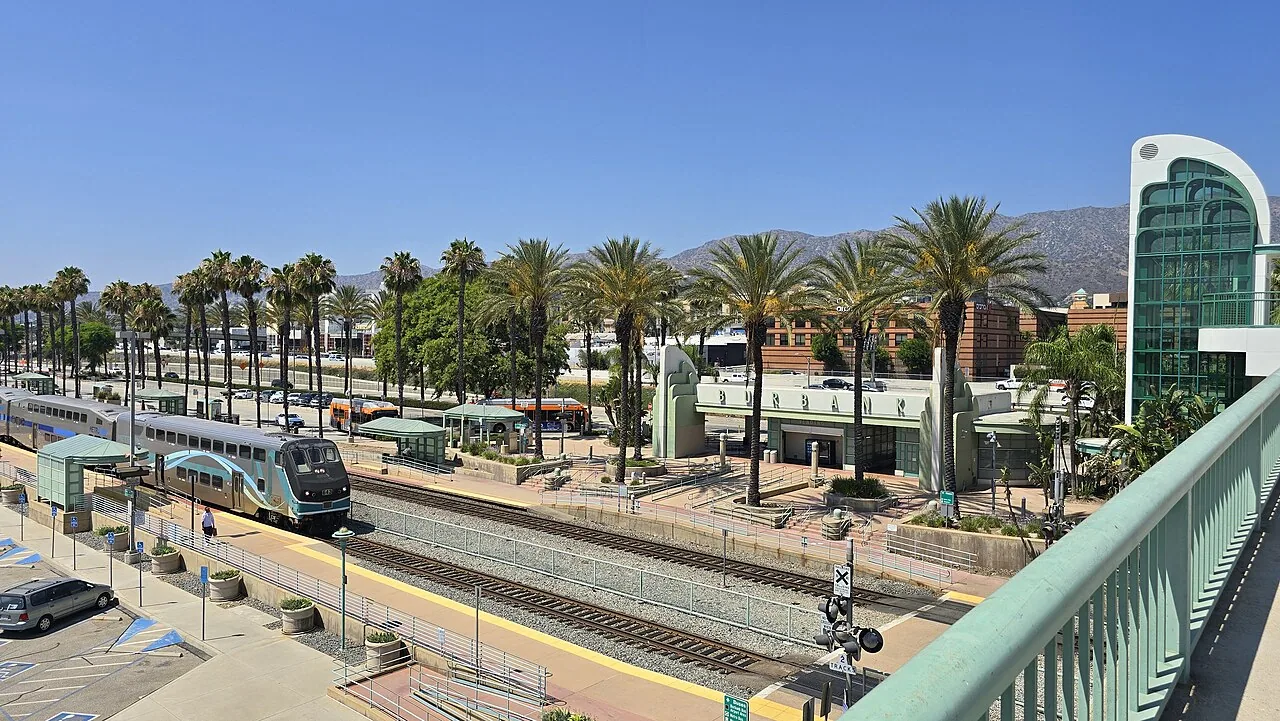
Roof surfaces and adhesives can respond to temperature, so the maintenance schedule should follow the selected product's requirements and conditions on the day. Burbank's long-term averages August's mean daily high at 88.3°F and July's at 85.8°F. Treat that seasonal context as a planning aid, then check the forecast and roof-surface conditions before maintenance. We coordinate access, rooftop equipment, escort needs, restricted areas and operating hours with the facility contact. Retail or office work near Downtown Burbank may use a different access window than production work near the Media District. Record the approved route and time with the property contact before dispatch. A visit plan should state the expected duration, where the crew may stage tools, and which access point should stay available to building users. We confirm whether rooftop equipment must remain energized and whether a tenant representative needs advance notice. Where maintenance work can be completed in stages, the facility lead can choose a window that protects normal operations. If heat or weather limits a task, the technician records the unfinished item and the condition needed for return. This is more useful than listing a generic seasonal schedule because it ties the service date to the roof condition and property calendar. The next inspection can then focus first on unresolved details rather than repeat the full initial review.
Separate Maintenance From Repair and Renewal
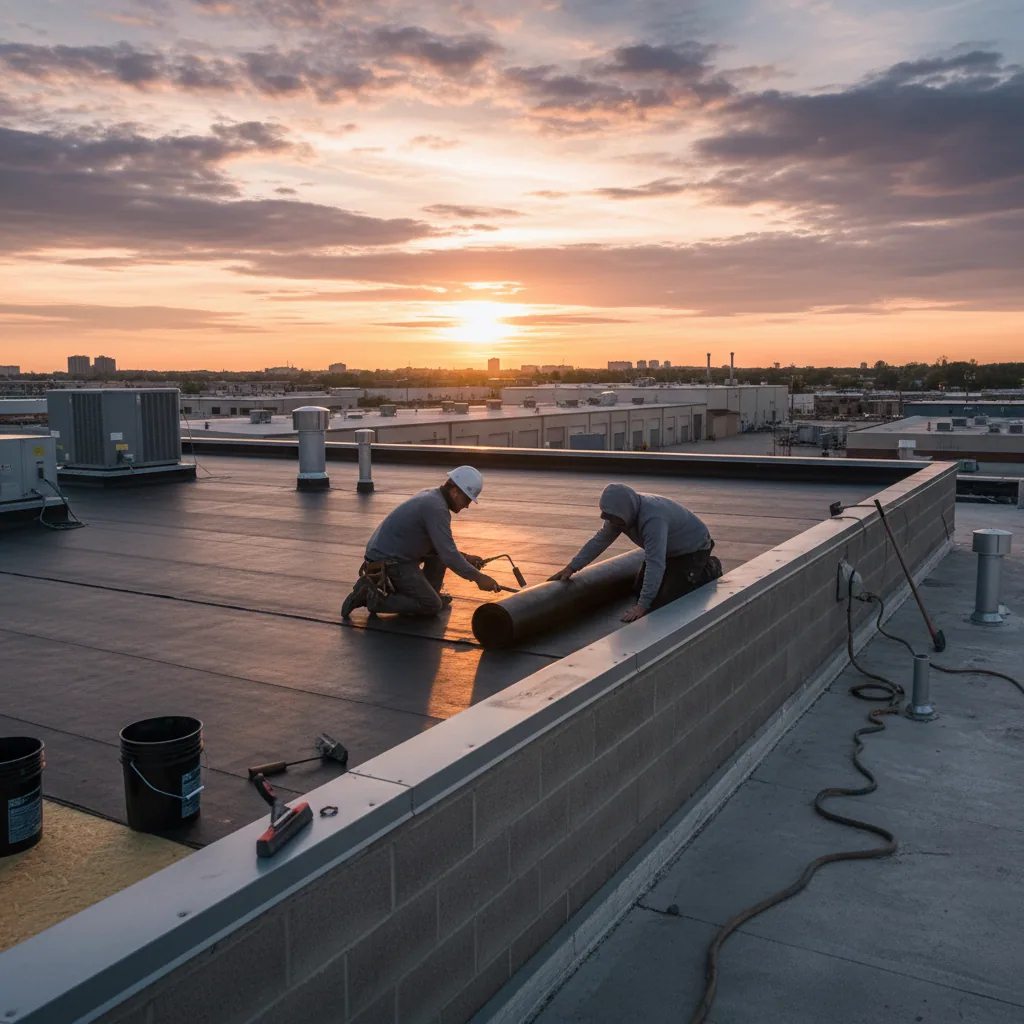
Cleaning and condition tracking do not resolve a failed seam, damaged flashing or saturated insulation. We sort recommendations into routine maintenance, localized repair, further testing and capital review, with a roof-zone reference for each item. That separation helps the owner approve a manageable service visit without treating every observation as a replacement trigger. If a leak has returned, the leak investigation process can connect interior reports to roof evidence. A compatible commercial roof repair can address a confirmed defect. When conditions extend across sections, capital planning helps compare repair timing with renewal needs. Each recommendation should state what evidence moves it forward.
Carry Findings Into the Next Review
At closeout, the facility director should receive the completed checklist, roof map, photos, work performed and items that remain open. We identify which drains were cleared, which details need a separate scope and whether weather or access limited the inspection. The next review date can follow the roof condition, warranty requirements, building schedule and owner priorities rather than a generic calendar alone. In a multi-property portfolio, the service record can inform roof asset management while preserving each building's unique assembly history. At a Downtown Burbank property, confirm access with the designated contact and keep the maintenance record attached to that building's roof plan. A maintenance record should also identify the decision owner and any date by which a repair estimate or capital request is needed. If a condition requires design review, we note that separately from the field repair so the facility director can route it to the right person. For work affecting several roof sections, a marked plan helps compare exposure without assuming that each section has equal risk. The owner can decide whether to authorize limited repair, request more testing or carry the item into the next budget cycle. We keep the recommendation tied to an observation and a specific action, with no implied warranty extension or promise that routine service prevents every future leak.
Commercial Roofing Questions
What should the maintenance report show after a visit?
It should identify checked roof zones, photos, drainage conditions, repairs completed, areas not accessed and recommendations grouped by urgency and scope.
Can a maintenance visit include minor repairs?
Yes, when the condition, access, materials and approval fit the work order. We separate additional repairs that require a new scope or authorization.
How do you plan roof access for an occupied building?
We confirm the entry route, escorts, restricted areas, operating windows and any tenant notice with the facility contact before scheduling.
Does a clear drain mean the roof has no drainage issue?
No. We also review visible slope, outlet condition, overflow provisions and observed ponding, then note when design or repair review is warranted.
What records help set the next maintenance date?
Prior inspection reports, leak calls, repair invoices, system information, warranty documents and the building's operating calendar help shape the next review.