Commercial Roof Recover in Burbank, CA
Adding a new roof layer can avoid some tear-off work, yet it also conceals existing conditions. The first question is not how quickly a new membrane can be installed. It is whether the existing roof, deck, drainage and attachment can support another assembly and provide a reliable substrate. We review roof records, visible layers, repair history, moisture findings, perimeter details and equipment conditions. A recover remains a candidate only when the evidence supports it and applicable system requirements allow it. Where the record is incomplete, we identify the inspection or test needed to reduce uncertainty. This approach helps owners compare a recover with selective repair or replacement without treating cost savings as proof of suitability.
Confirm the number and condition of existing layers
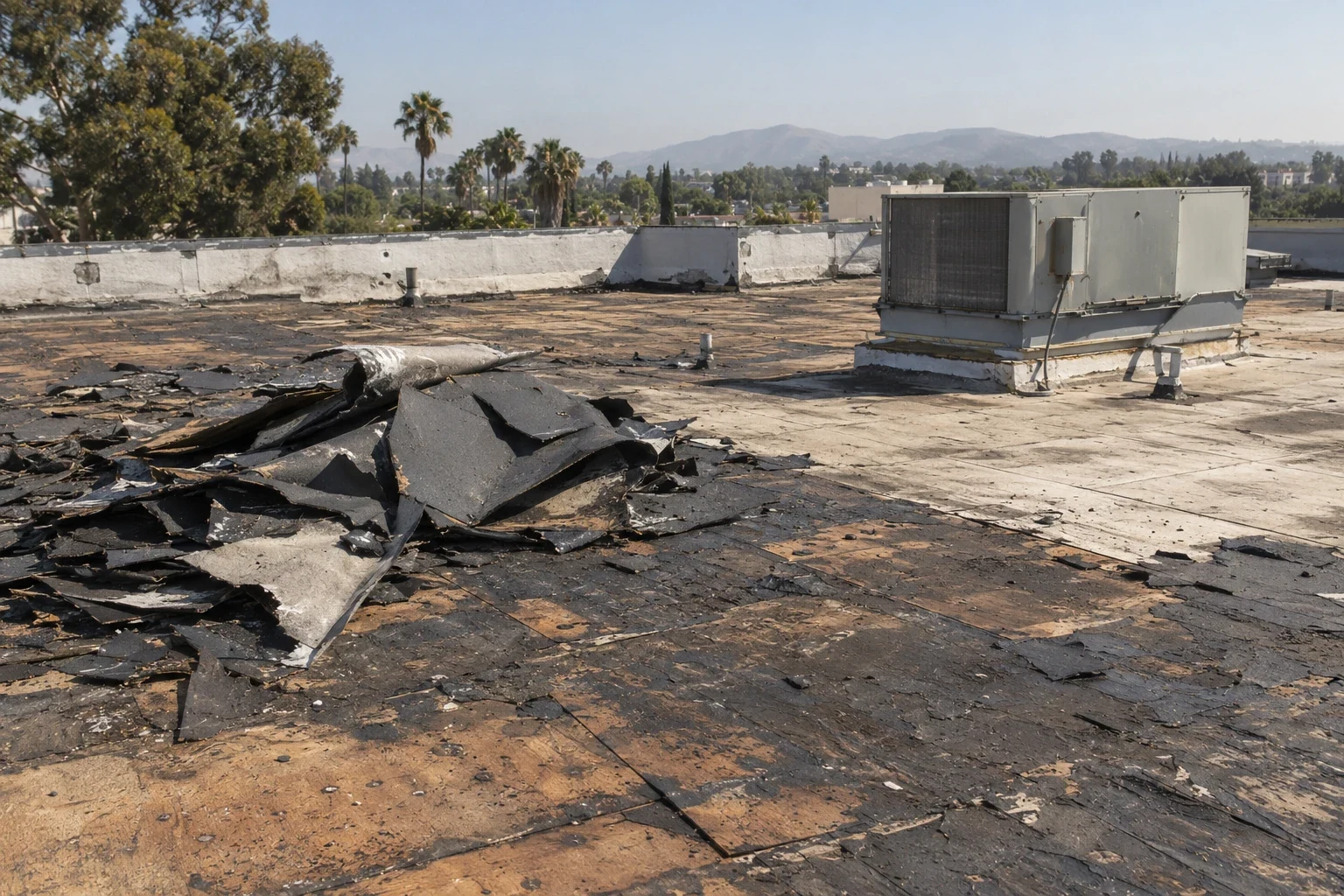
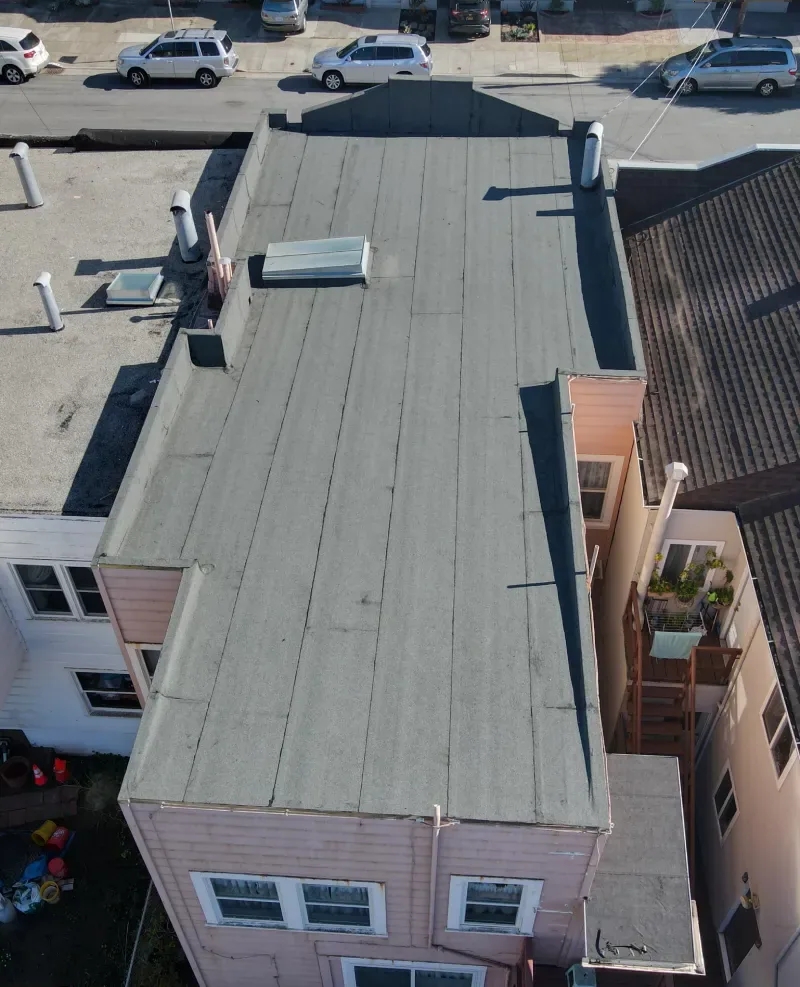
Existing roofs may include multiple membranes, insulation, coatings and prior repairs. Layer count and attachment influence dead load, fastener reach, drainage transitions and code or manufacturer limits. We examine accessible edges, curbs, drains and openings, compare them with plans and note where the assembly cannot be confirmed visually. If a core sample or other intrusive test is appropriate, we define its location, approval, patch detail and interior coordination before work. Findings should be recorded by roof zone so one sample is not generalized to the entire building without support. A written layer assessment gives the design team a more dependable basis for selecting insulation, fastening and perimeter details.
Look for moisture and weak substrate before covering
Trapped water can compromise insulation, increase movement and make a new roof unstable. We review staining, soft areas, blisters, open seams, previous leak reports and any available scan or test results. An infrared pattern can flag areas for follow-up but does not alone confirm moisture. Selected core cuts, probes or other checks may be needed after owner approval. We document the limits of each method and the condition found at each opening. Wet or deteriorated material should be removed or addressed according to the designed scope before a new layer closes access. If evidence points to broad moisture or weak attachment, replacement may be the better path. A commercial roof inspection can establish the condition map first.
Check slope, drains and transitions
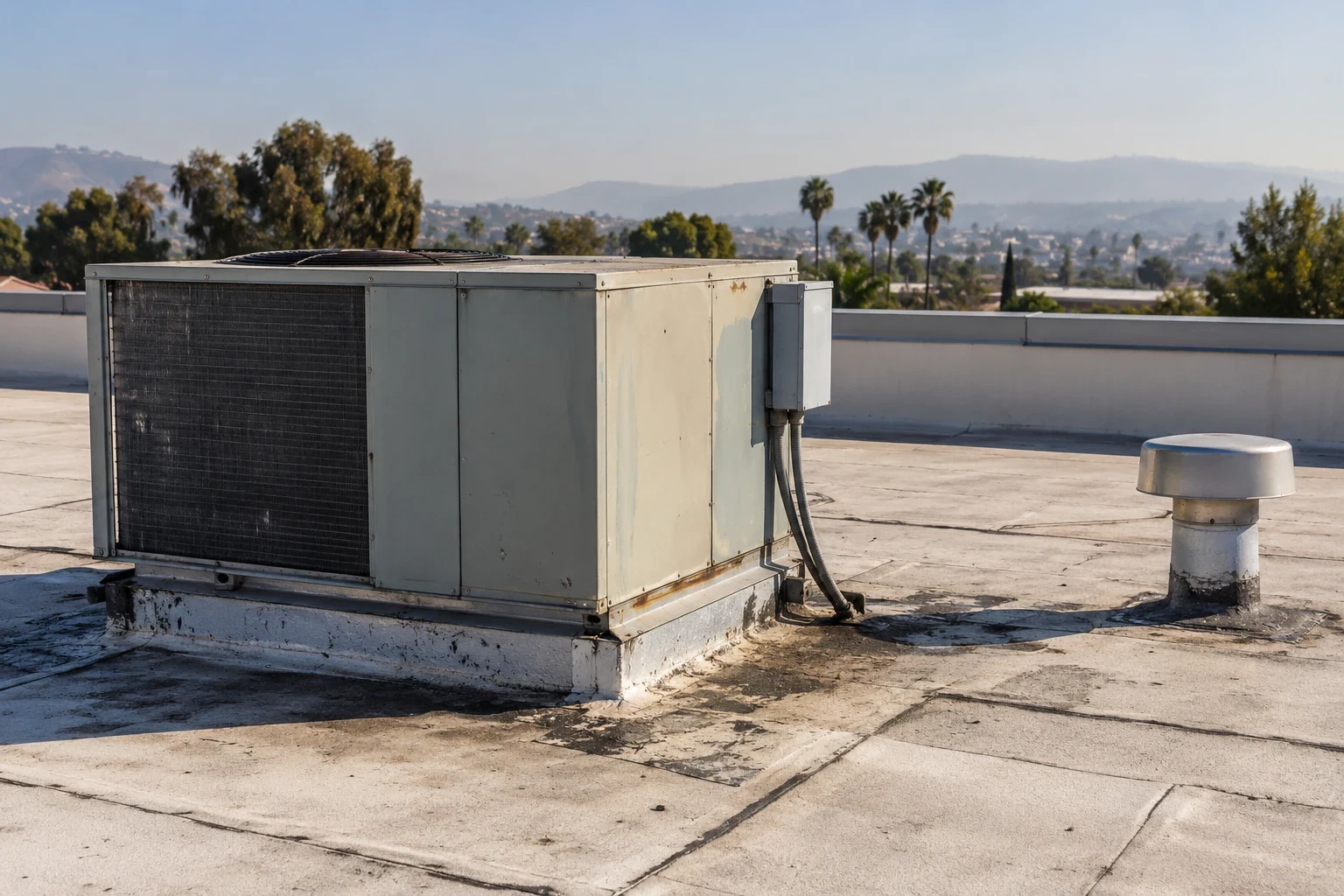
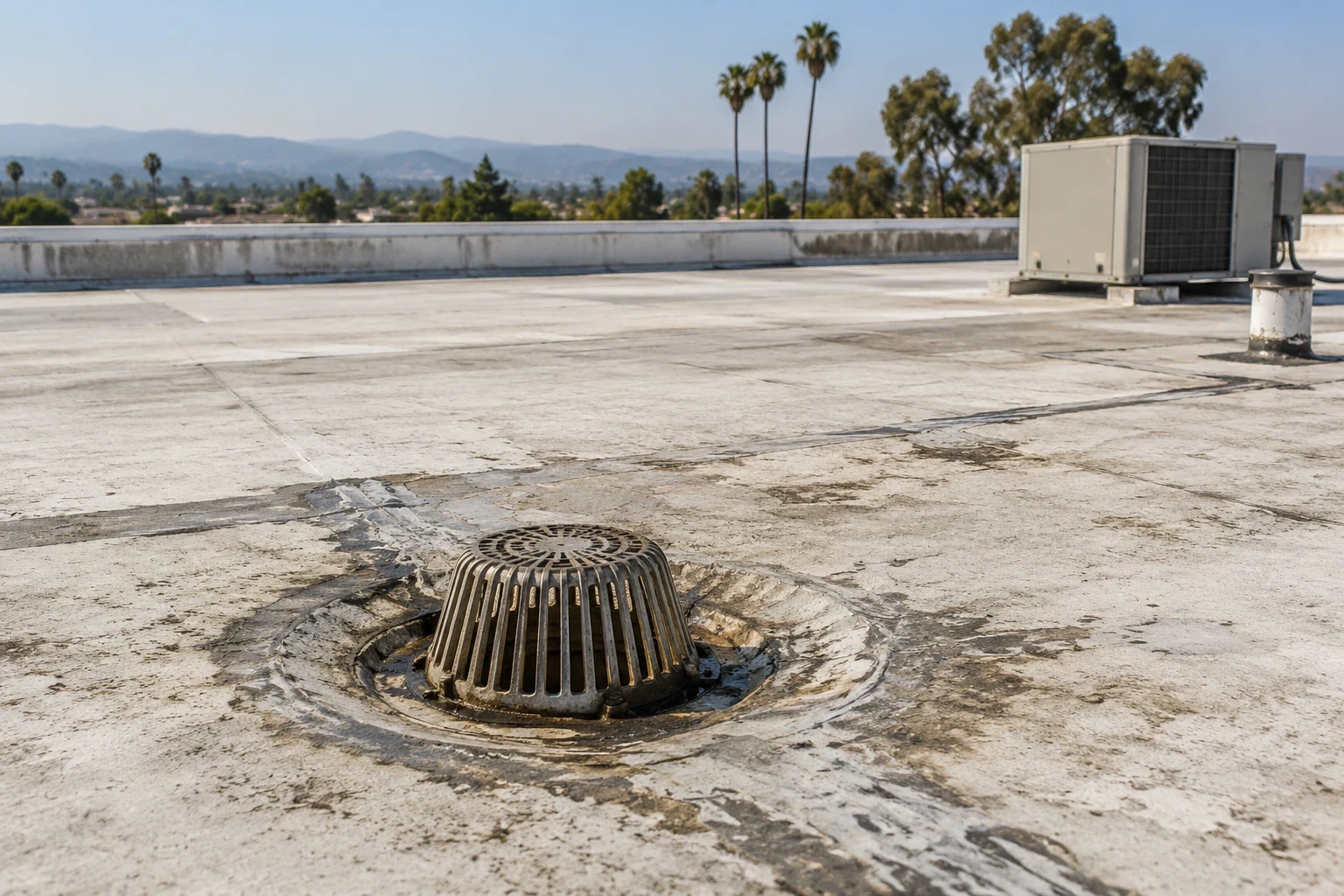
A recover changes roof height. That affects drain bowls, scuppers, overflow provisions, doors, walls, curbs, edge metal and adjacent roof elevations. We identify these interfaces before pricing so the proposed detail does not leave a low point or unprotected transition. Drainage review should consider existing slopes and observed ponding, not just the new membrane thickness. If drain modifications or tapered insulation are proposed, the design needs to show how water reaches primary and secondary outlets. We also note where added thickness could affect rooftop equipment service, access ladders, fire pathways or door thresholds. These conditions are especially important when tying a recover into an existing roof section that will remain.
Match the new system to the verified roof
The new assembly must be compatible with the substrate and project requirements. We compare membrane type, attachment method, cover board, insulation, wind criteria, perimeter securement, warranty conditions and anticipated service access. A recover over a stable substrate may use a mechanically attached or adhered system; selection depends on building-specific design and manufacturer guidance. For example, TPO membrane options are one possible system, not a universal answer. We review details at penetrations, joints, curbs and edges before installation methods are finalized. When the conditions fail a system’s limits, the owner should receive that finding before procurement instead of discovering it after material arrives.
Plan work so the existing building stays protected
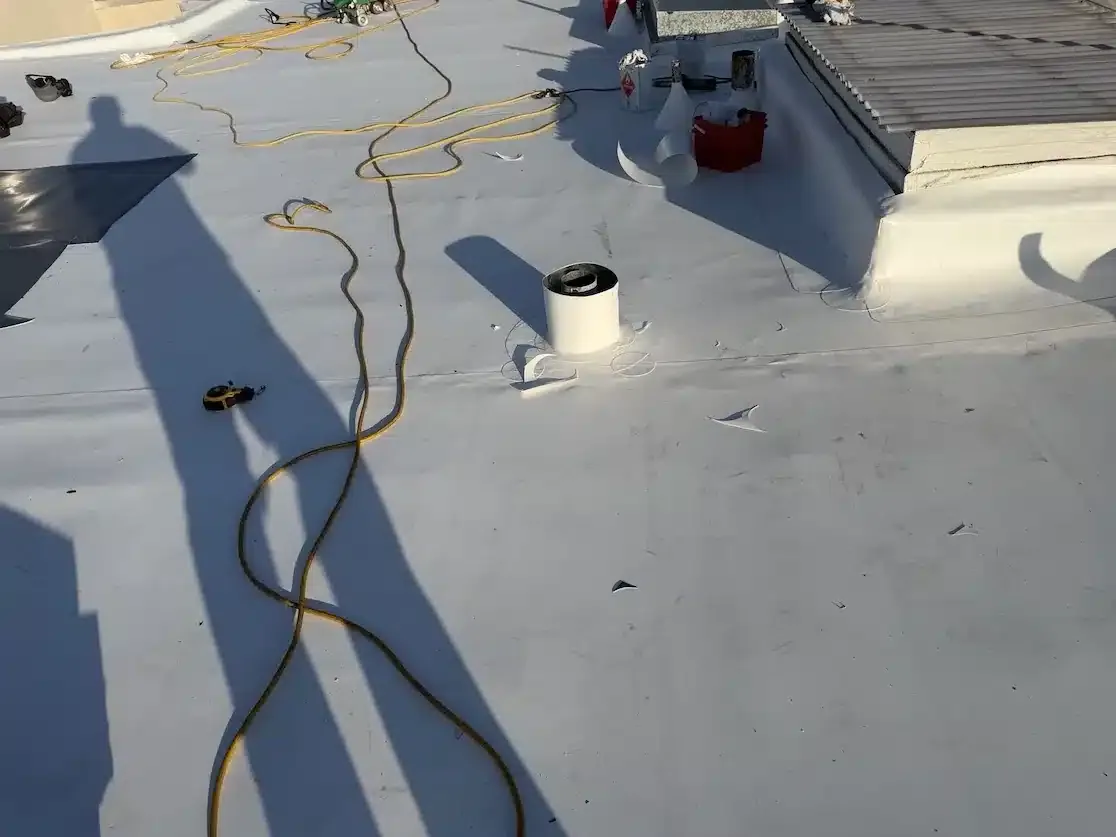
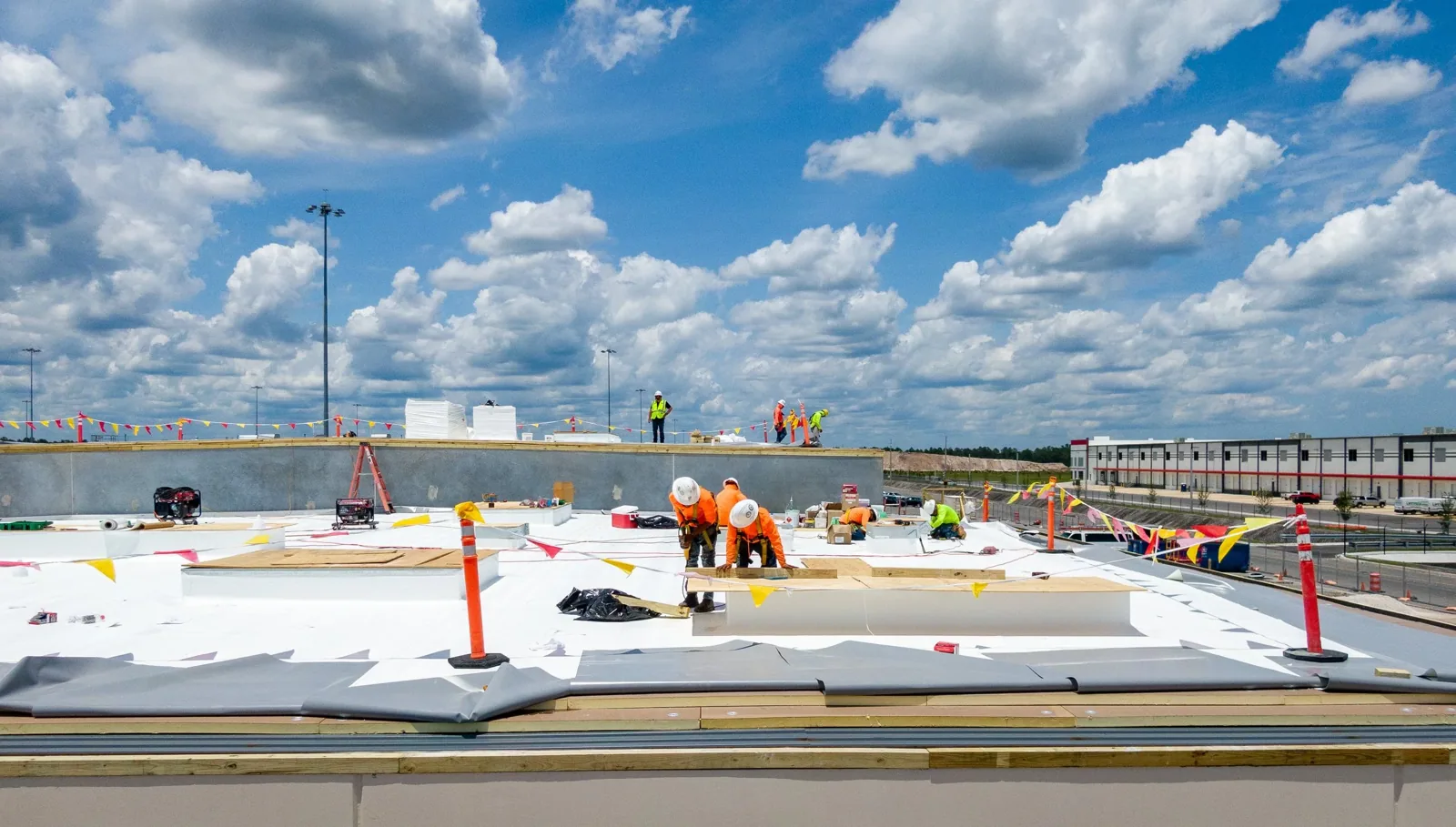
A recover still requires safe access, material staging, hot-work or adhesive controls where applicable, and a weather plan. We set roof zones, daily start and stop points, equipment routes, protected areas and inspection hold points. The crew must know how new material will be stored without blocking drains or overloading an area, and how unfinished edges will be secured before leaving. For occupied buildings, access notices and interior protection should be coordinated with facility staff. The work sequence should account for forecast conditions and temporary dry-in. Burbank’s warm summer conditions can affect installation windows and material handling, but the job plan should follow product requirements and actual site conditions rather than assume one standard schedule.
Define the limits, allowances and change approvals
A clear proposal states which existing layers may remain, what conditions trigger tear-off, how many openings or tests are included, and how concealed damage will be priced. It should identify assumed insulation thickness, deck type, attachment, edge work, drains, curb modifications, disposal and temporary protection. Owners should know who can authorize a change, how evidence will be recorded and whether work pauses at a discovery point. Separate base scope from alternate pricing for replacement or added testing. Do not rely on a generic statement that the roof is suitable for recover if no inspection supports it. A documented comparison with full roof replacement gives finance and operations a transparent decision record.
Carry the recover decision into closeout
Before covering each area, verify that required repairs and substrate preparation are complete and documented. Photograph concealed details, record material and attachment information, and retain test or manufacturer inspection records. Closeout should include final roof plans, warranty documents, maintenance instructions and any exclusions or monitoring needs. A new layer does not eliminate the need for inspections, drain cleaning or prompt repair of later damage. For a Burbank facility in Downtown Burbank or the Media District, we tie recommendations to the actual roof zones, entrances and active uses instead of assuming that similar building types have identical access needs. Before bid release, the owner should decide which conditions need a test opening, who can approve extra work, how temporary protection is recorded, and whether an alternate replacement scope should be priced. On award, we translate those assumptions into a daily work plan and keep a photo record of details before they are covered. After completion, the manager receives the material and attachment information needed for maintenance, plus a list of unresolved items and the party responsible for each follow-up. If the roof is part of a multi-year program, add the assembly and its conditions to capital planning. We can also coordinate drain and scupper details, insulation and cover board, localized repair and the building context in Burbank Center before the owner releases a final scope.Before an owner authorizes a recover, we can prepare a simple matrix that lists each roof zone, observed condition, supporting record, test status and open design question. That makes it possible to price qualified options separately and see where uncertainty remains. We also note whether the existing system can receive the proposed attachment without damaging concealed services or creating a conflict at roof edges. The matrix is an evaluation aid, not a structural certification or warranty decision; the responsible designer and manufacturer still need to confirm their requirements.
Commercial Roofing Questions
How do you know if a roof can be recovered?
Review layer count, moisture, deck and attachment, drainage, edges, penetrations, system limits and local requirements. The inspection should state what is verified and what still needs testing.
Can infrared testing approve a recover by itself?
No. Infrared can identify patterns for follow-up, but additional inspection or approved openings may be required. Interpret results alongside roof details, records and observed conditions.
Does a recover eliminate tear-off?
It may leave eligible existing layers in place, but wet, loose or incompatible materials may need removal. The scope should define the conditions that require tear-off.
Will added roof height affect drains or doors?
It can. The design should check drain bowls, overflow paths, walls, curbs, thresholds, edge metal and tie-ins before installation thickness is selected.
What belongs in a recover proposal?
Request layer assumptions, testing, repairs, attachment, insulation, edge and drain details, temporary protection, concealed-condition allowances, change approvals, inspection steps and closeout records.