Commercial Roofing in Airport District, Burbank, CA
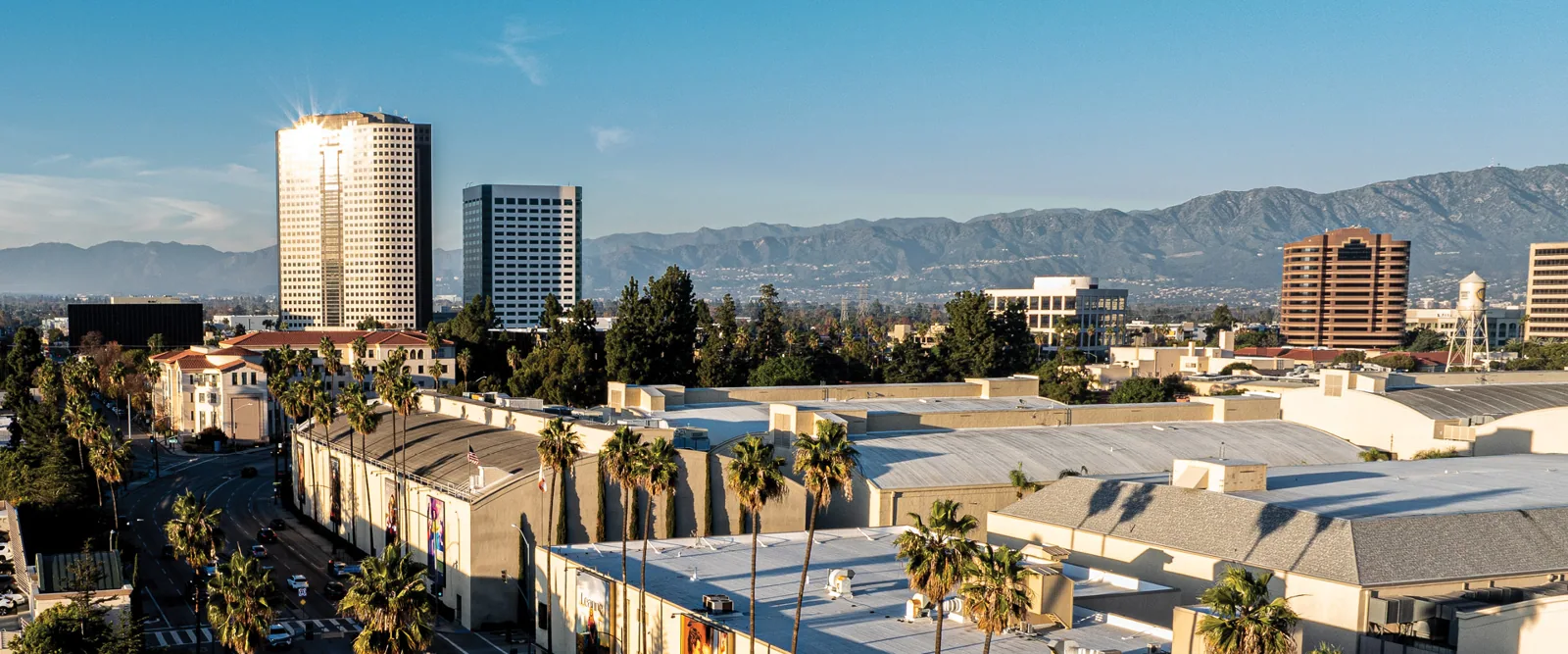
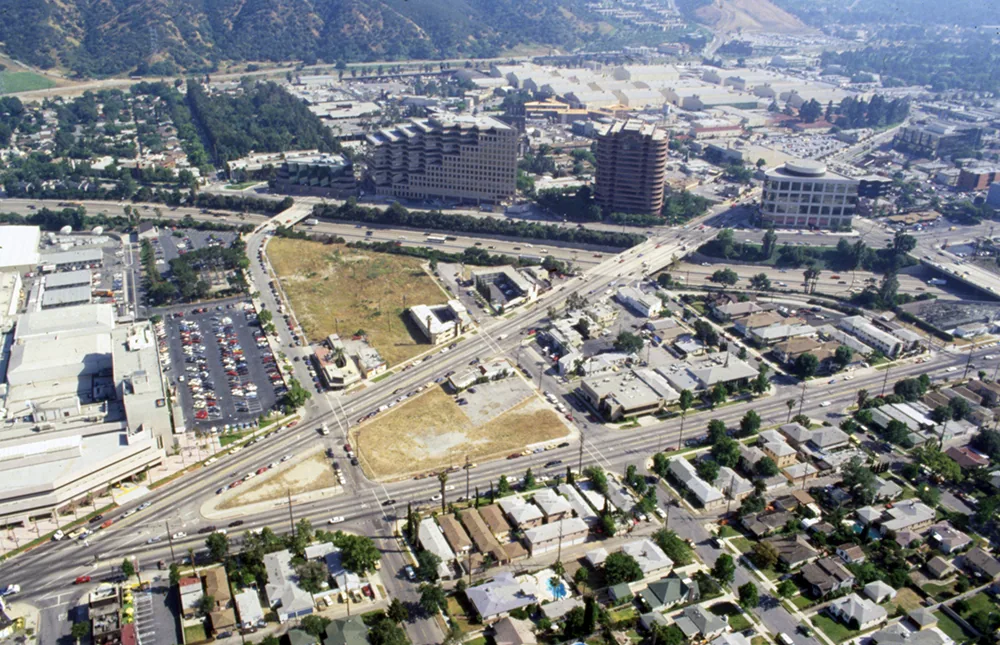
A delivery schedule, a guest arrival and a rooftop service call can all compete for the same access route. In the Airport District, Burbank, CA, technology companies, conference hotels and big-box retail share a broad commercial area around the airport. We begin with the roof condition and the property's actual operating limits, then set the route for inspection, staging and repair. The district map places the area within the I-5 and State Route 134 access network, but a safe roof plan still depends on the individual property. A commercial roof inspection records the condition and the approvals needed before work is priced.
Set the Entry and Delivery Sequence
We confirm where a crew can enter, how materials reach the roof and which loading or guest areas must stay clear. A hotel may have event periods; a retail property may need delivery lanes open; a technology building may restrict access to sensitive equipment. Those are possibilities to verify with the site contact, not assumptions about every address. The access plan names the actual route, staging boundary, work hours and person responsible for opening restricted areas. If a lift or material drop crosses another tenant's space, we identify that handoff before mobilization.
The Empire Center is a major retail power center in the Airport District. Burbank Center is a separate area with retail, professional and general-business designations. Those references show why roof work must be mapped to a real property and its use. We ask which loading areas, entrances and rooftop systems are active during the planned work. A phased roofing plan can separate noisy removal from lower-impact preparation, giving the property manager a sequence to compare with the operating calendar.
Check the Water Path Before the Patch
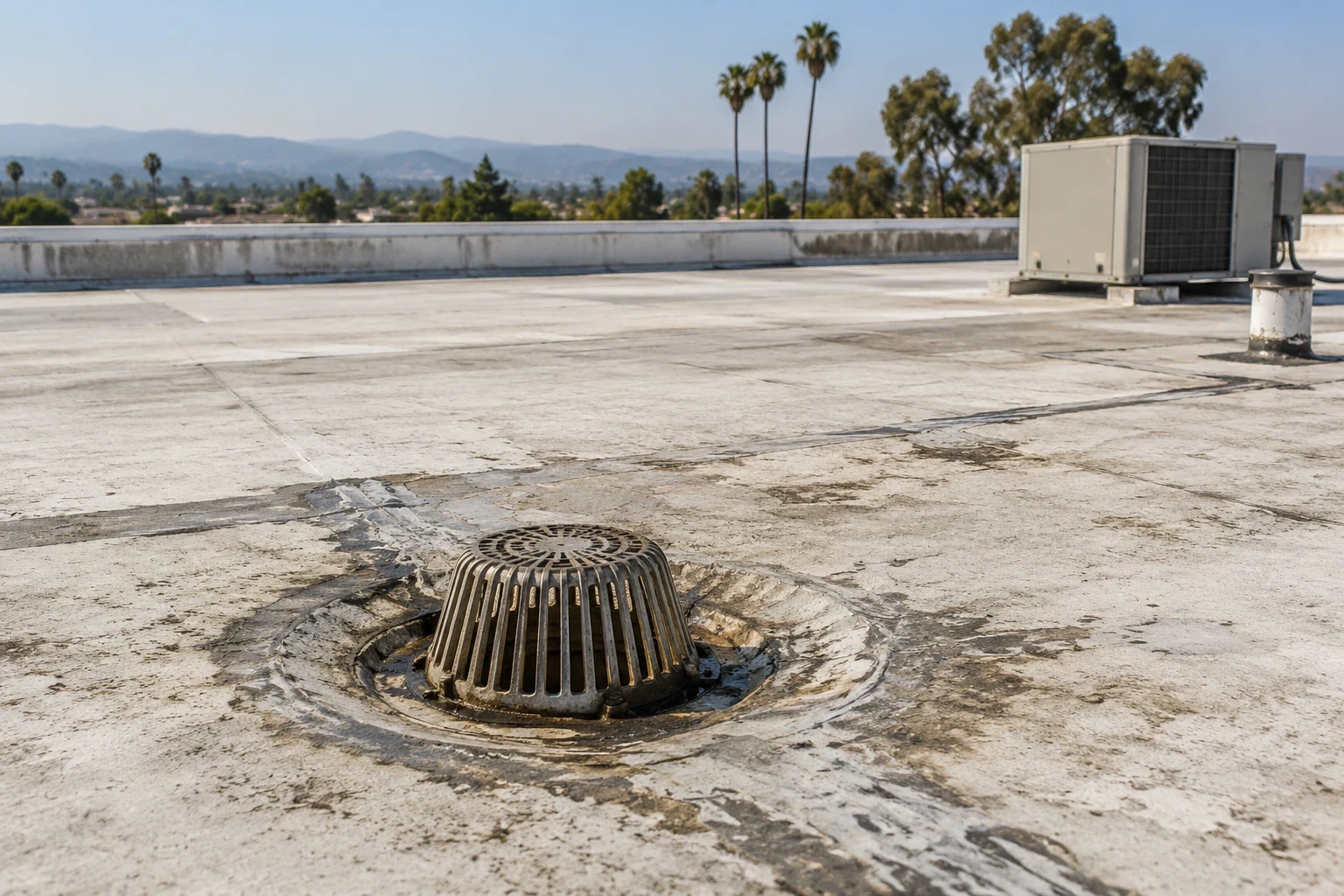
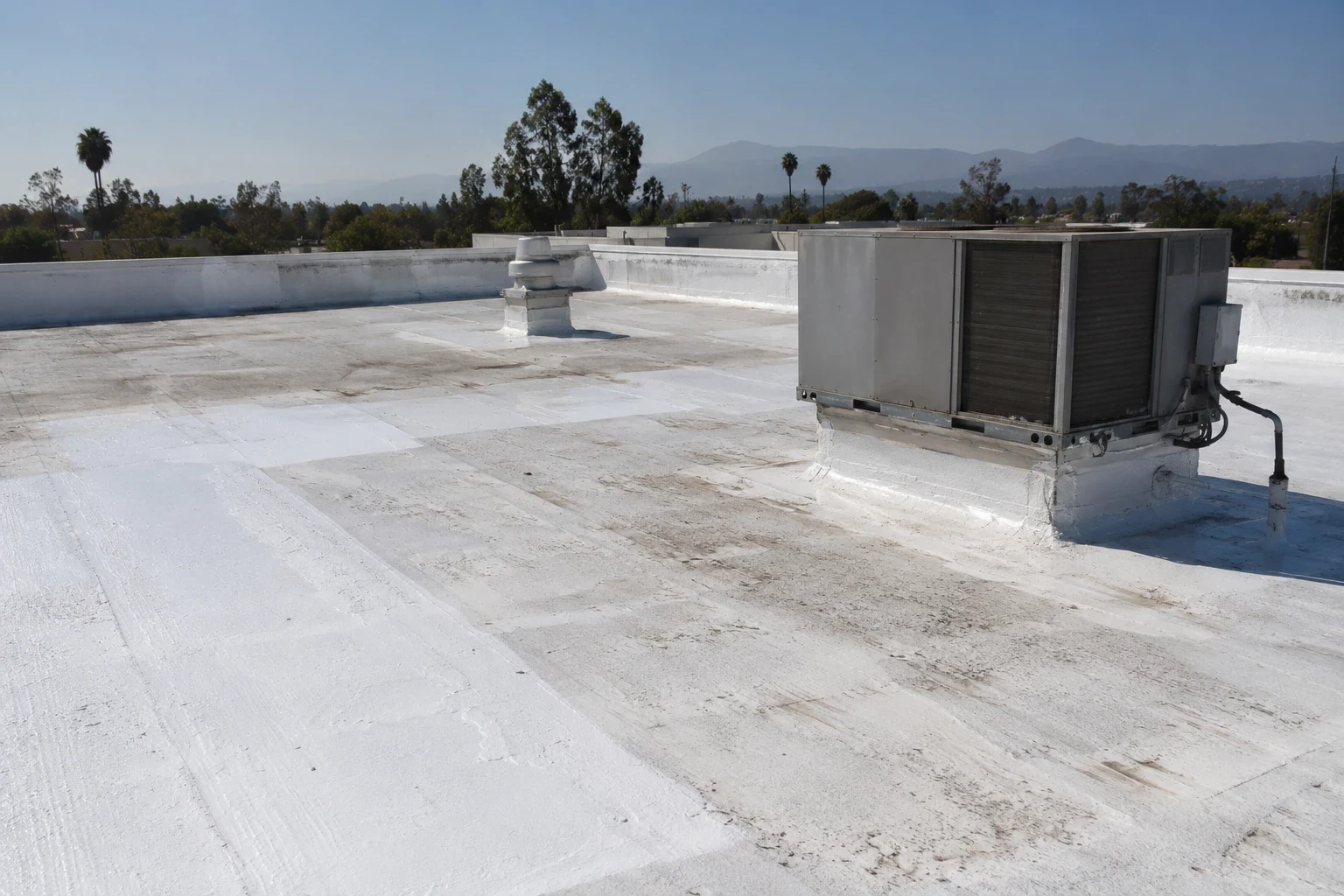
We trace a reported leak from the interior location to the roof section above it, then inspect drains, scuppers, seams, penetrations and perimeter metal. A blocked view stays marked as an inspection limit. Ponding, a split lap or loose edge metal may require different work, even when the stain below looks similar. We photograph the observed condition and note whether water is moving toward an outlet or sitting at a low point. A drainage review can document outlet condition and the route water takes across the assembly before repair limits are set.
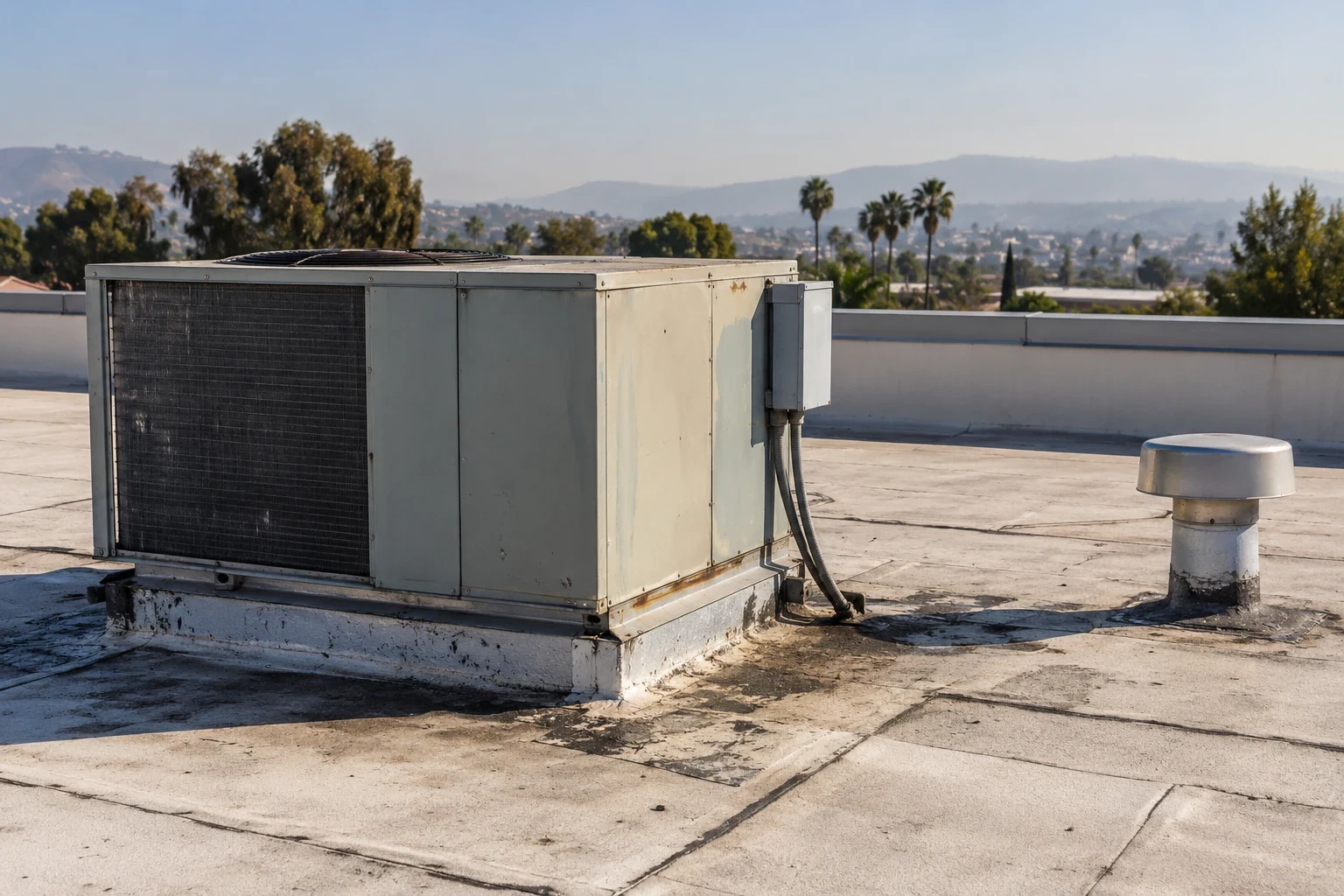
Heat can affect both the inspection window and the installation sequence. Burbank long-term averages for the Burbank list average daily highs of 85.8 degrees in July and 88.3 in August. We use the roof surface, crew access and product directions to decide which work can proceed during a shift. A coating requires a prepared surface and conditions within its application limits; a membrane repair needs compatible materials and sound tie-in points. The estimate states the conditions assumed, so a weather or substrate change can be reviewed before it changes the scope.
Compare a Local Repair with Broader Work
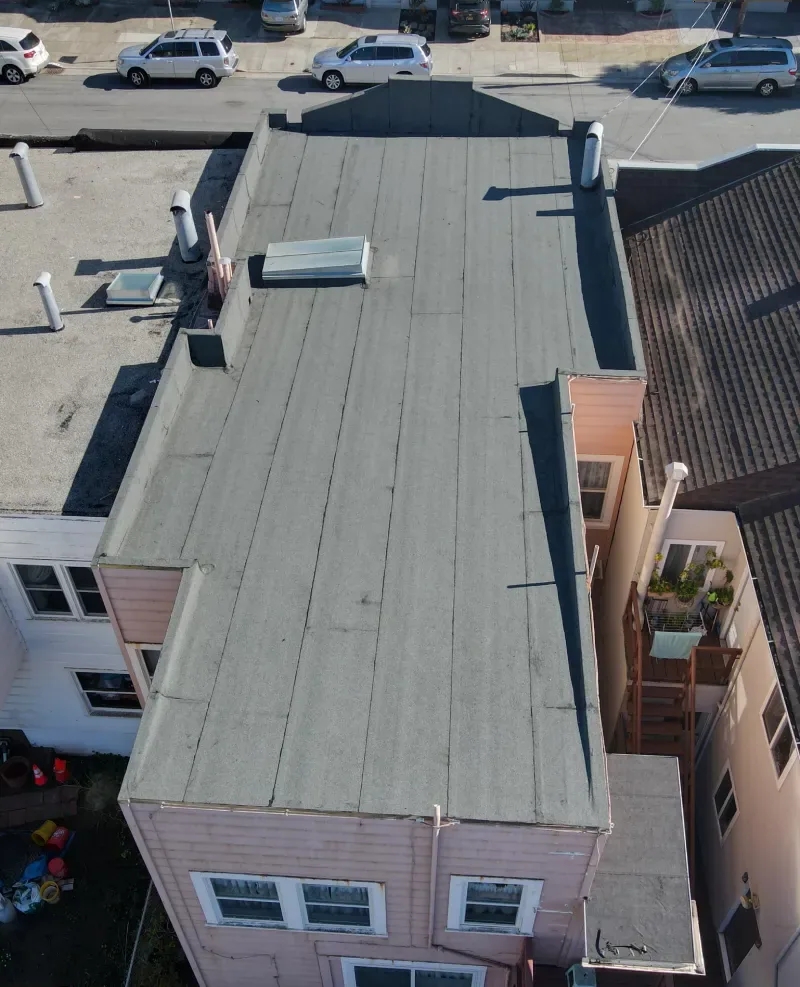
A repair can be limited to one failed seam, flashing or puncture when the surrounding membrane and substrate support that boundary. We inspect adjacent details and note prior patches, wet material or repeated separation. If the defect extends across connected sections, the owner may need a separate replacement or recover comparison. We list what is confirmed, what needs a test opening and which assumptions affect the estimate. That lets a facility director approve a defined roof repair without treating every nearby condition as part of the same job.
For a larger renewal, we describe removal limits, insulation, cover board, edge work and protection for operations below. Equipment moves, disposal, lift access and tenant coordination can affect cost and schedule, so each appears as a scope item or stated assumption. Where the existing assembly remains suitable for a recover or restoration, the inspection must establish that suitability before it becomes an option. A roof restoration review separates surface preparation and detail repairs from the coating application itself. The owner can then compare service life expectations stated by the system manufacturer with the property's capital timing.
Protect Active Areas During Installation
Staging needs a marked boundary for materials, debris and pedestrian movement. We confirm whether retail customers, hotel guests, vendors or employees share a path below the roof work, then identify barriers and a safe alternate route when needed. If equipment must stay online, its contact and service window belong in the plan. We do not disconnect or adjust systems outside the roofing scope; the estimate names any trade handoff. Before each phase starts, the property lead can confirm that the work zone is open and the adjacent area is protected.
The district's access network may help a delivery reach the property, but roads do not establish where a lift can set up or how a crew enters a roof. We verify curb access, loading rules, site permits and any restricted route with management. The work sequence can move from one roof section to another only after the previous area is closed, checked and photographed. A TPO system review can address seams and flashing in one phase, while Media District properties and Magnolia Park retail buildings may have different access windows to coordinate. Each plan follows its own building schedule.
Leave a Record the Next Manager Can Use
Closeout should tie the original condition to each completed repair, material and roof section. We provide photographs, note any approved changes and identify areas that remained inaccessible. If concealed insulation was found wet or a drain could not be cleared, the record states the follow-up needed rather than marking the question resolved. The property manager can use that file for a future condition review or a capital request. It should travel with equipment notes, prior scopes and the roof plan, not sit in a work order with no location reference.
Burbank's Airport District includes technology, hotel and retail uses, while Magnolia Park is described by the city as a retail district with independent shops and food businesses. The operating patterns differ, and a district label cannot tell us how an individual building is occupied. Before approval, share the roof plan, leak locations, system records, access constraints and desired decision date. We will set out the repair limit, alternatives, staging sequence and unresolved items so ownership can make the next call with the evidence attached. If an urgent opening needs temporary protection, that action and its return visit stay separate from permanent work.
Commercial Roofing Questions
Can a roof inspection happen during a hotel's event schedule?
We coordinate the visit around the hotel's access rules and the event blocks supplied by management. The inspection record notes areas that could not be reached and whether another window is needed.
What information changes the staging estimate?
Roof access, lift placement, loading hours, debris route and occupied areas can change labor and equipment needs. We confirm each condition at the property and list the assumptions in the scope.
Does a leak near a drain require drain replacement?
The inspection checks the outlet, surrounding membrane and drainage path before setting the repair boundary. We price a drain change separately when its condition supports that work.
Can a roof coating be applied to an existing assembly?
The assembly, adhesion, moisture condition and surface preparation determine whether restoration is appropriate. We record those checks and separate repair work from the coating option.
How do you keep a repair from disrupting nearby businesses?
We map material movement, barriers and work hours with the property contact, then phase the roof by section. Any route or area that must remain open is written into the access plan.