Roof Systems in Burbank, CA
A system label begins the review; it does not resolve the repair. Before comparing membranes, coatings, metal or built-up options, we confirm the existing deck and insulation, attachment, drainage and the condition of edges and penetrations. Burbank's summer warmth makes surface condition and application timing part of the field review, but the assembly and observed roof conditions still control the recommendation.
More About Our Roof Systems
Identify the Assembly Before Specifying Work
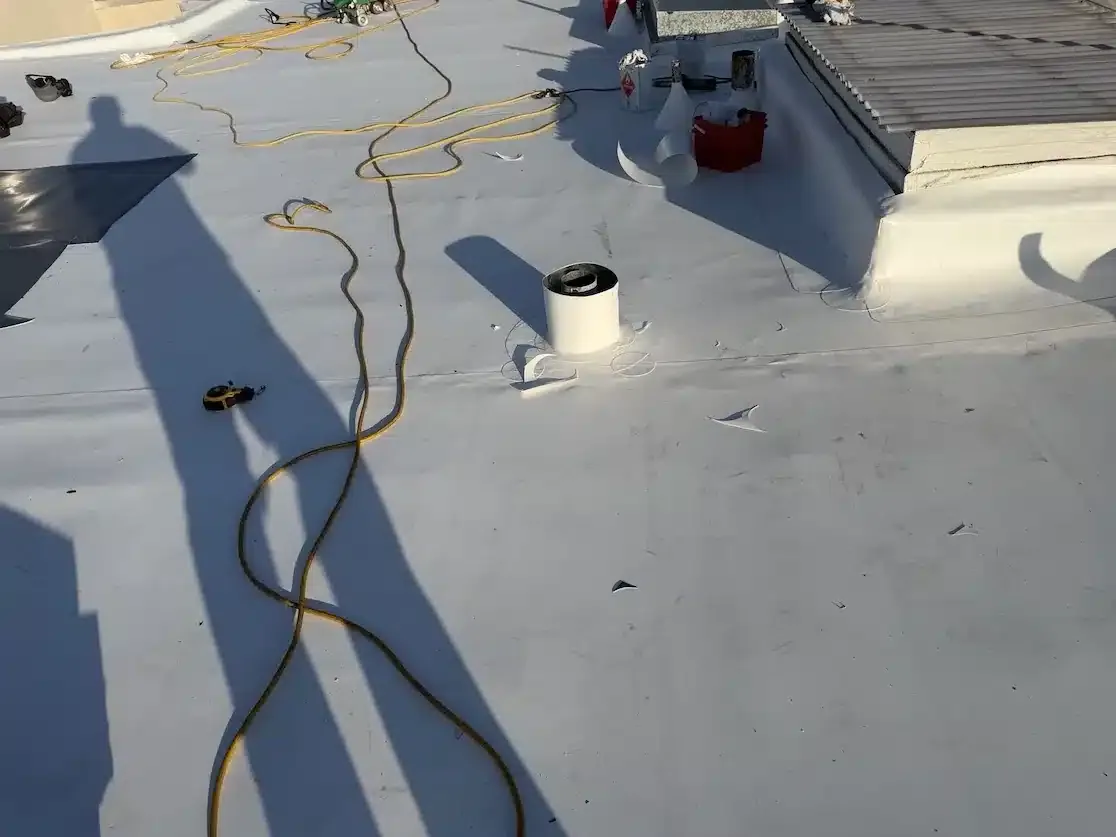
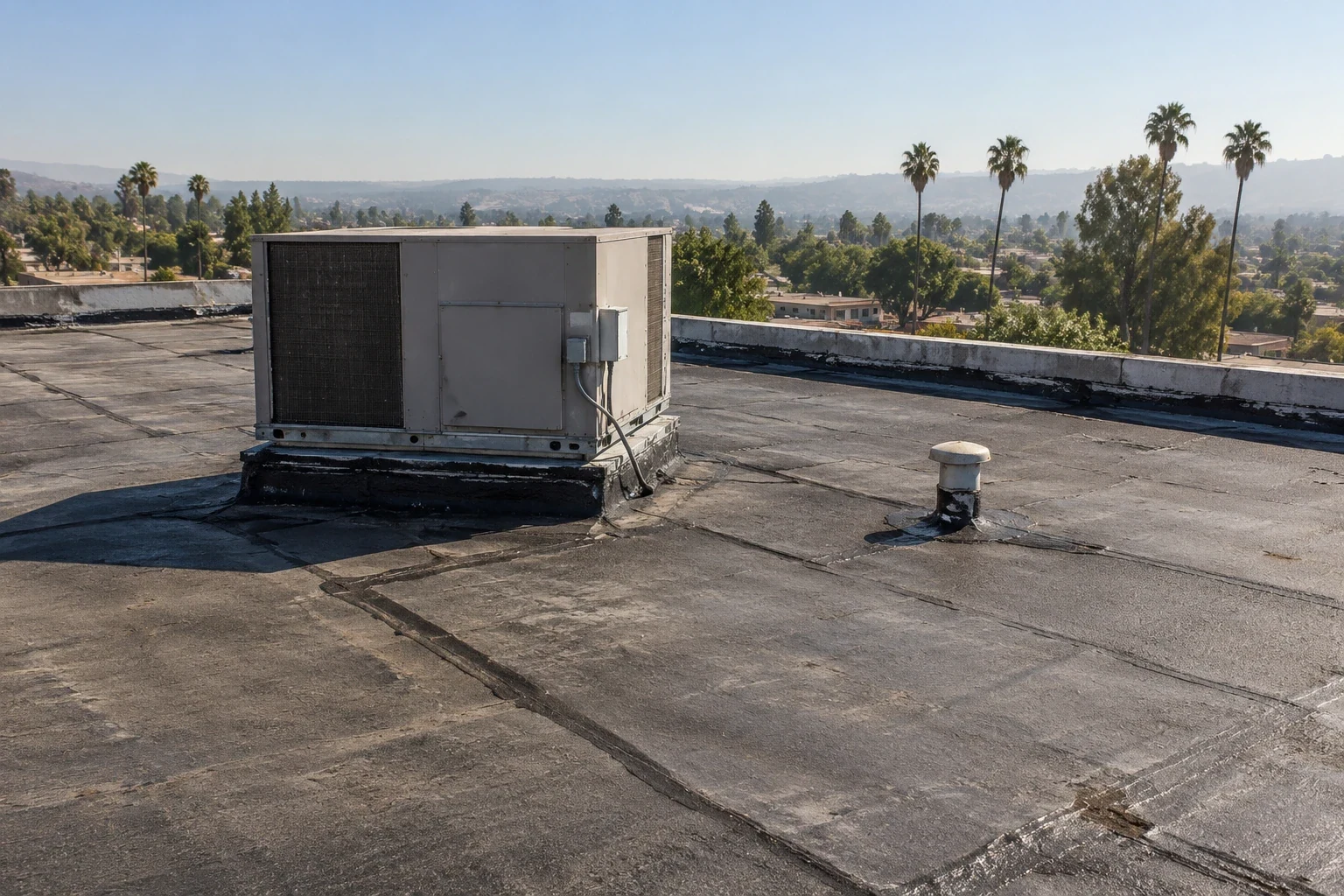
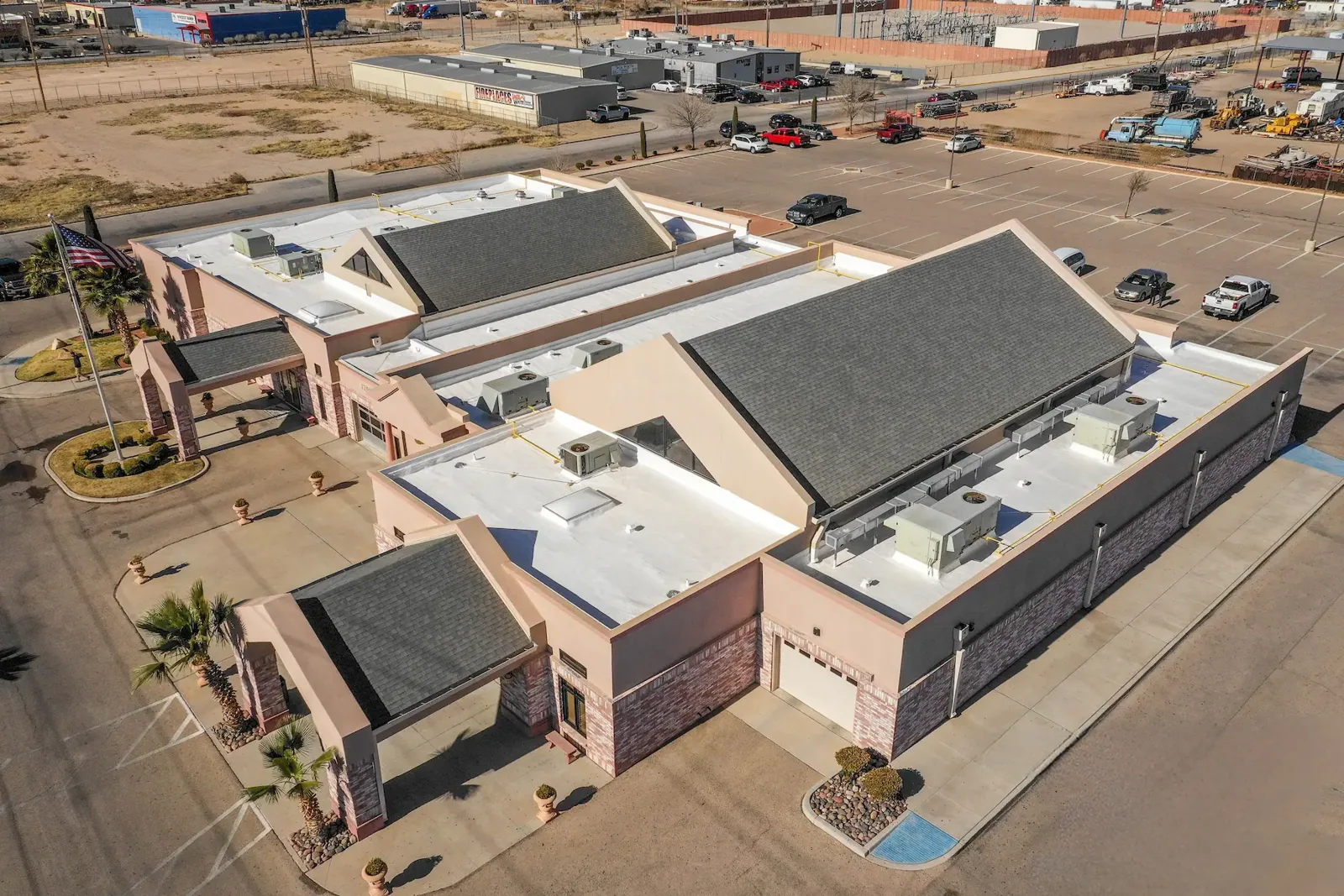
Single-ply roofs rely on watertight seams and secure transitions. A TPO roof, PVC roof and EPDM assembly each require compatible repair materials and methods. We look at membrane condition, seams, fasteners or adhesive where visible, then trace drains, curbs and perimeter details. A coating should not conceal a leak path or weak substrate. Existing layers and hidden moisture affect whether repair, recover or removal is the responsible next step.
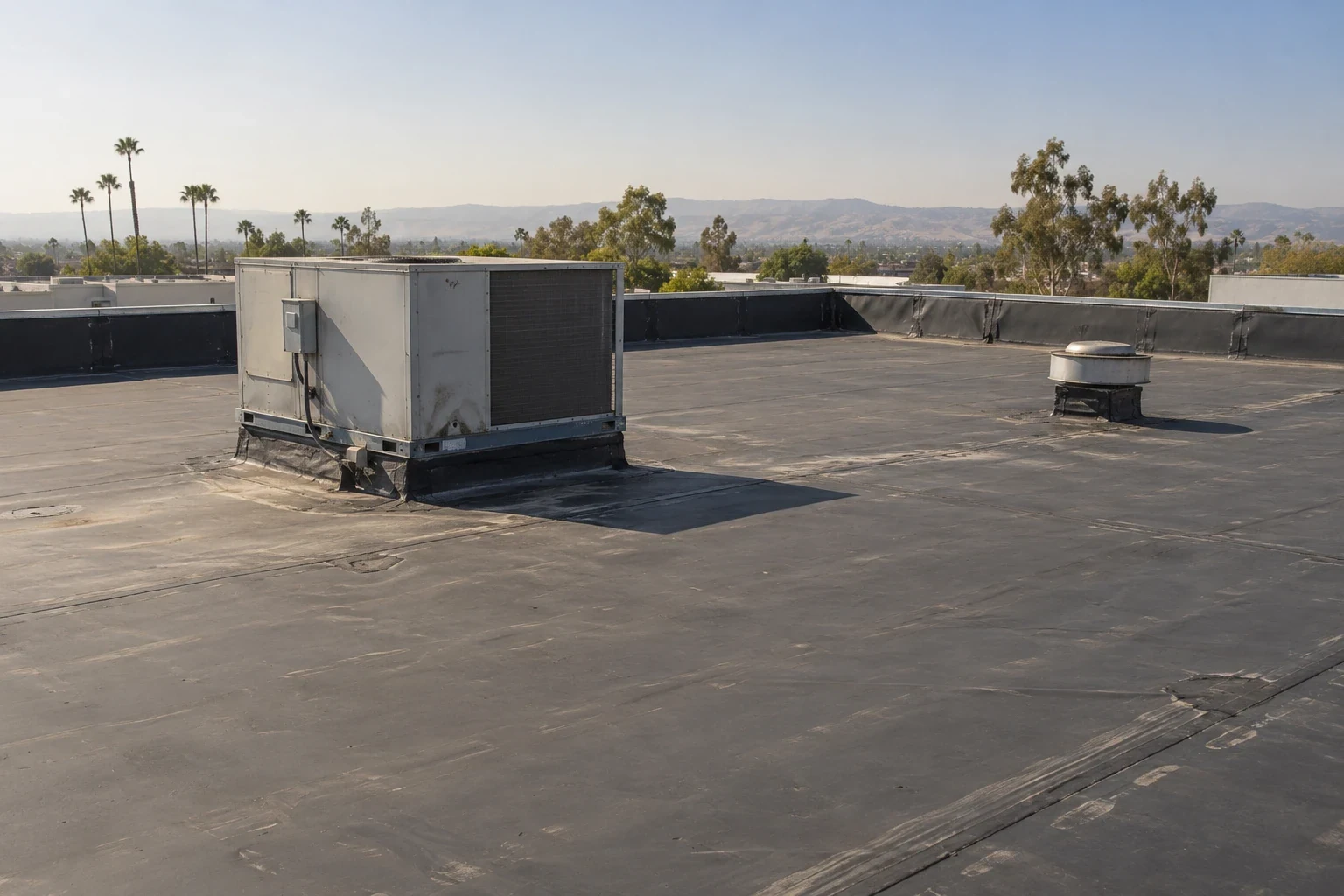
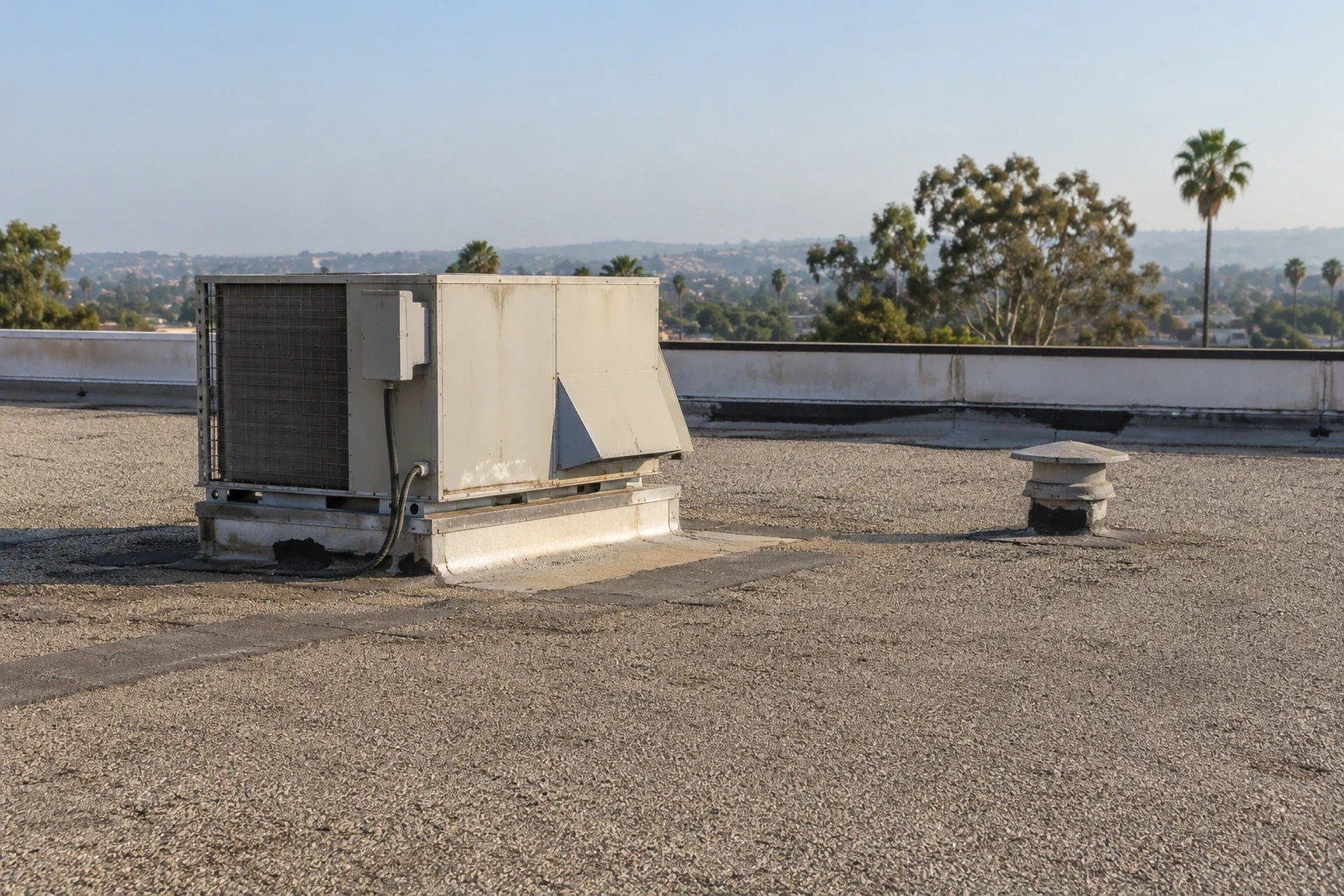
Older multi-ply roofs need a different reading. Modified bitumen and built-up roofing have laps, surfacing and flashing details that change how water moves through an assembly. Punctures, open laps and trapped moisture can look similar from below, so the inspection record should identify what was visible and what needs further testing.
Treat Coatings as a System Decision
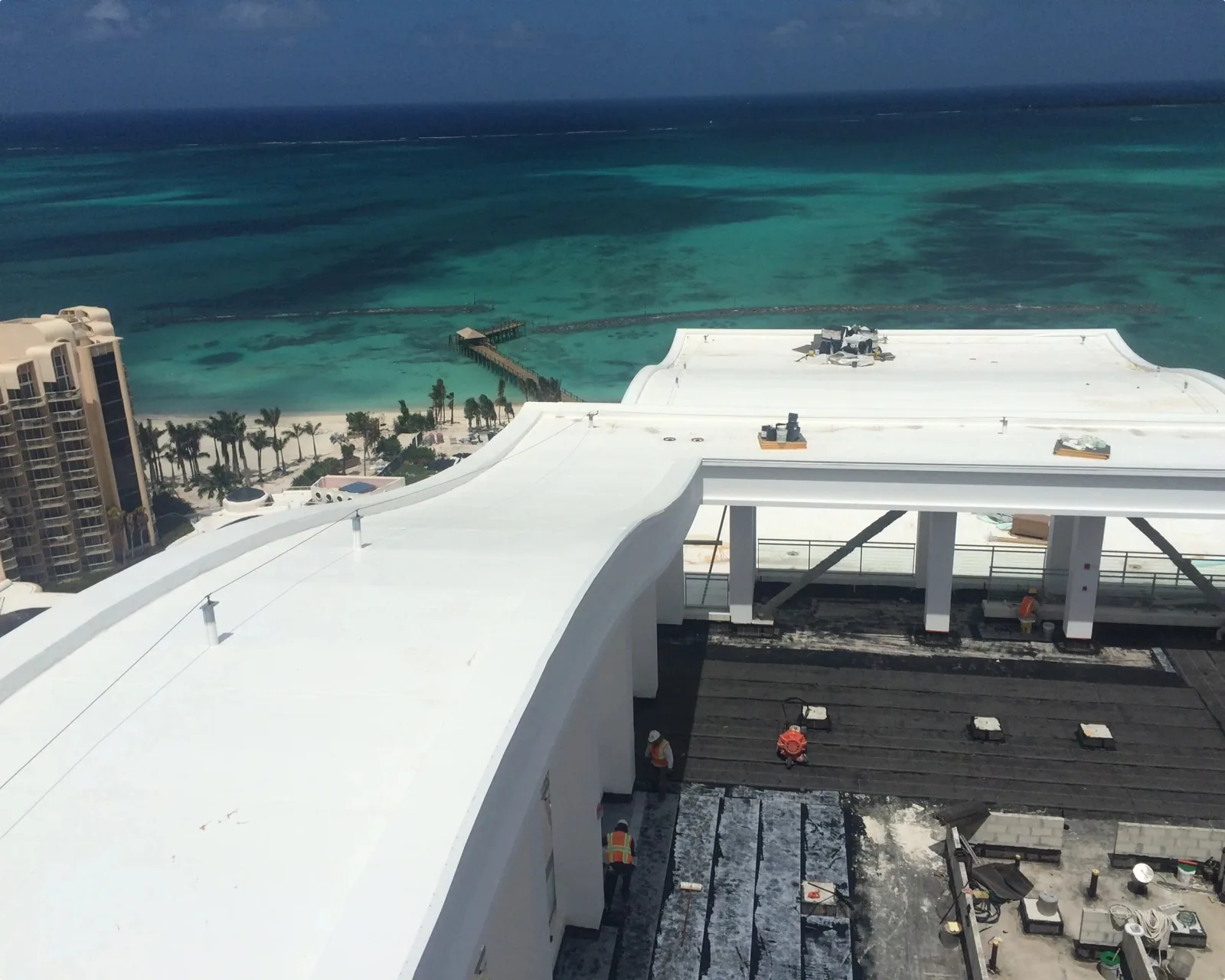
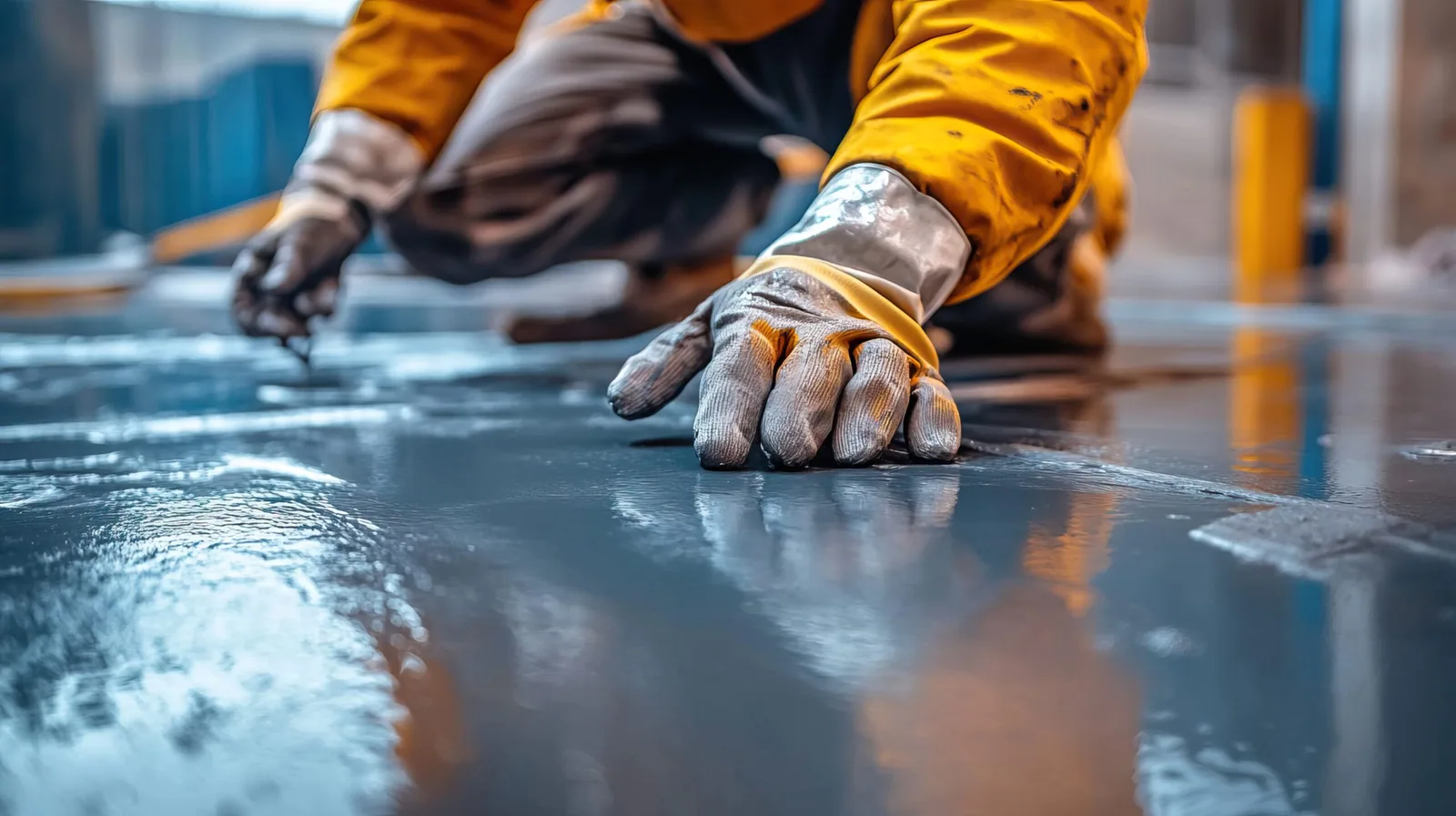
A coating is not a universal fix. Before considering silicone or acrylic restoration, we verify adhesion, substrate condition, drainage, existing coatings and detail compatibility. A prepared sample area can expose a bonding problem before a larger application. The scope also has to account for cure conditions, access, protection of rooftop equipment and how a future repair will be documented.
Read Metal Roofs at the Joints
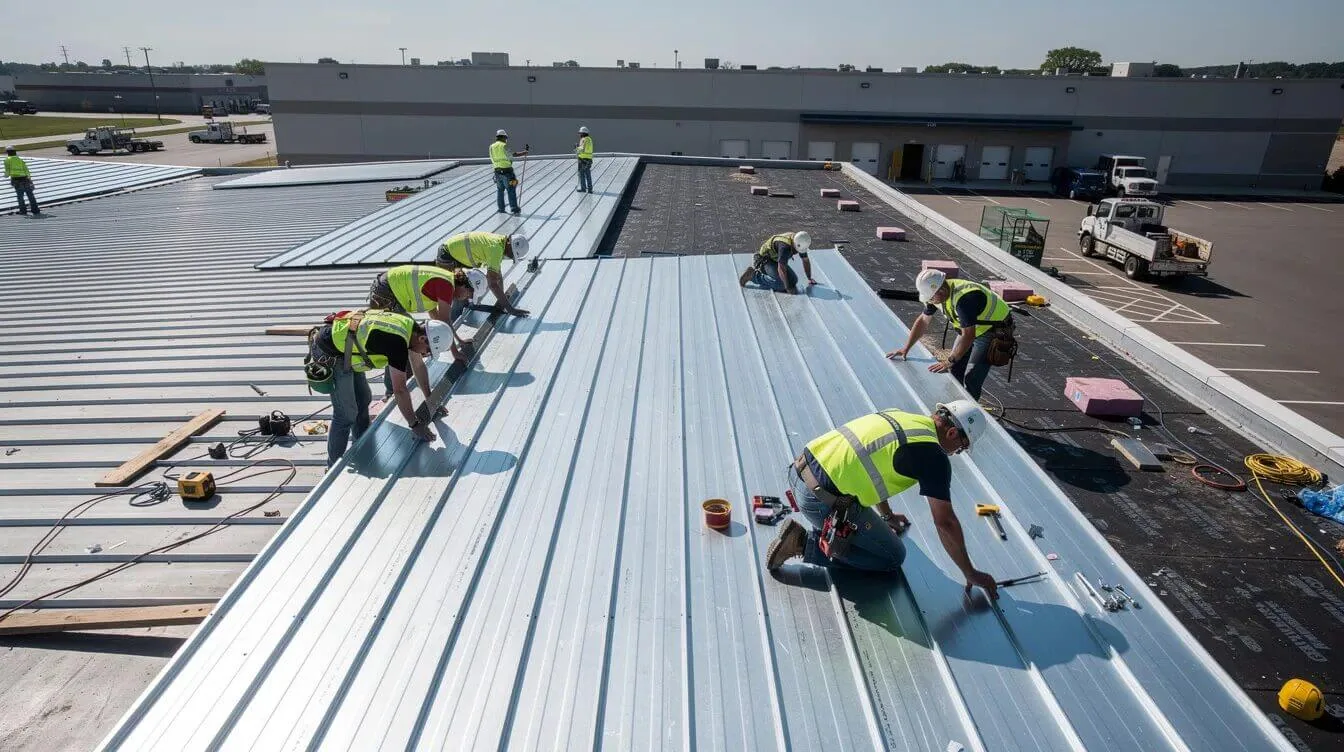
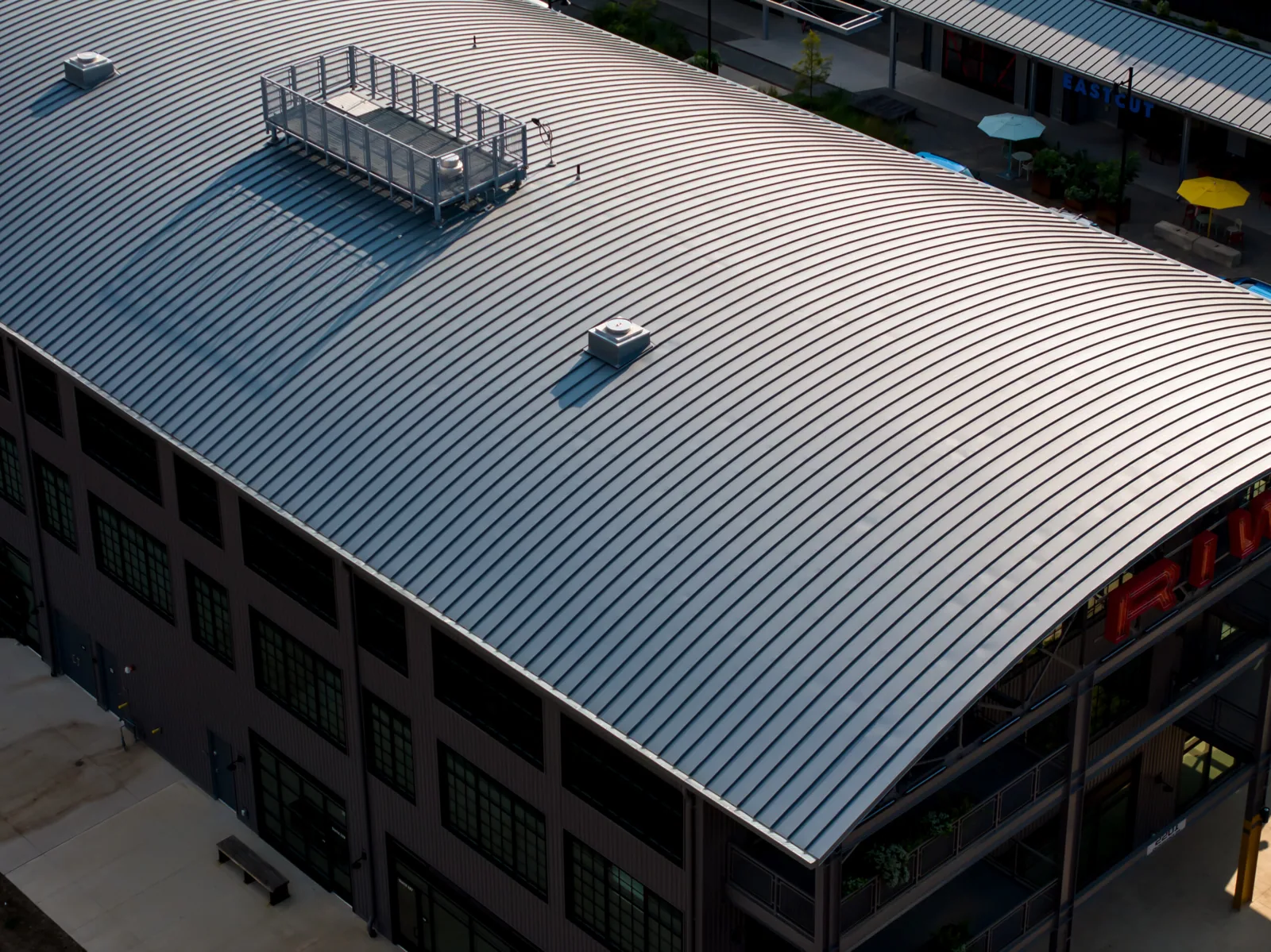
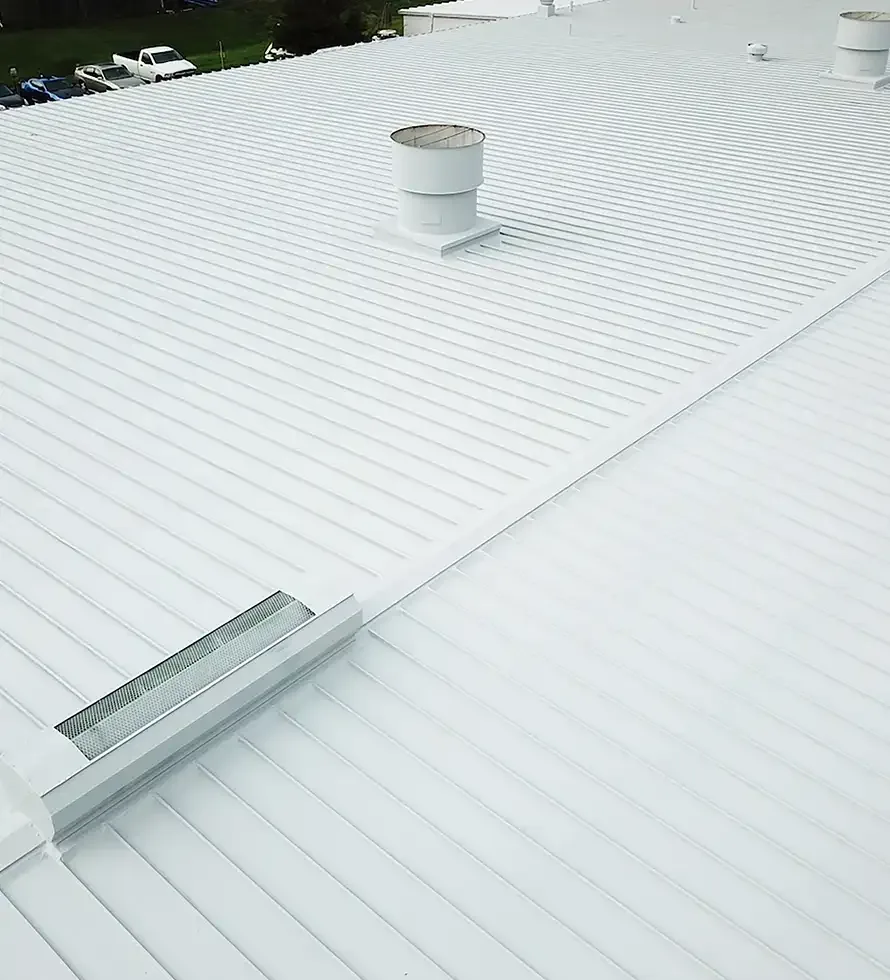
Metal roofs need attention at laps, fasteners, penetrations, panel ends and transitions to adjoining assemblies. A standing seam system moves differently from a through-fastened panel, and a metal retrofit introduces its own attachment and drainage questions. We inspect the panel field and the details that interrupt it, then compare repair with a broader upgrade. A leak near a curb may require careful flashing work even when the surrounding metal remains serviceable.
Connect the Material to Building Use
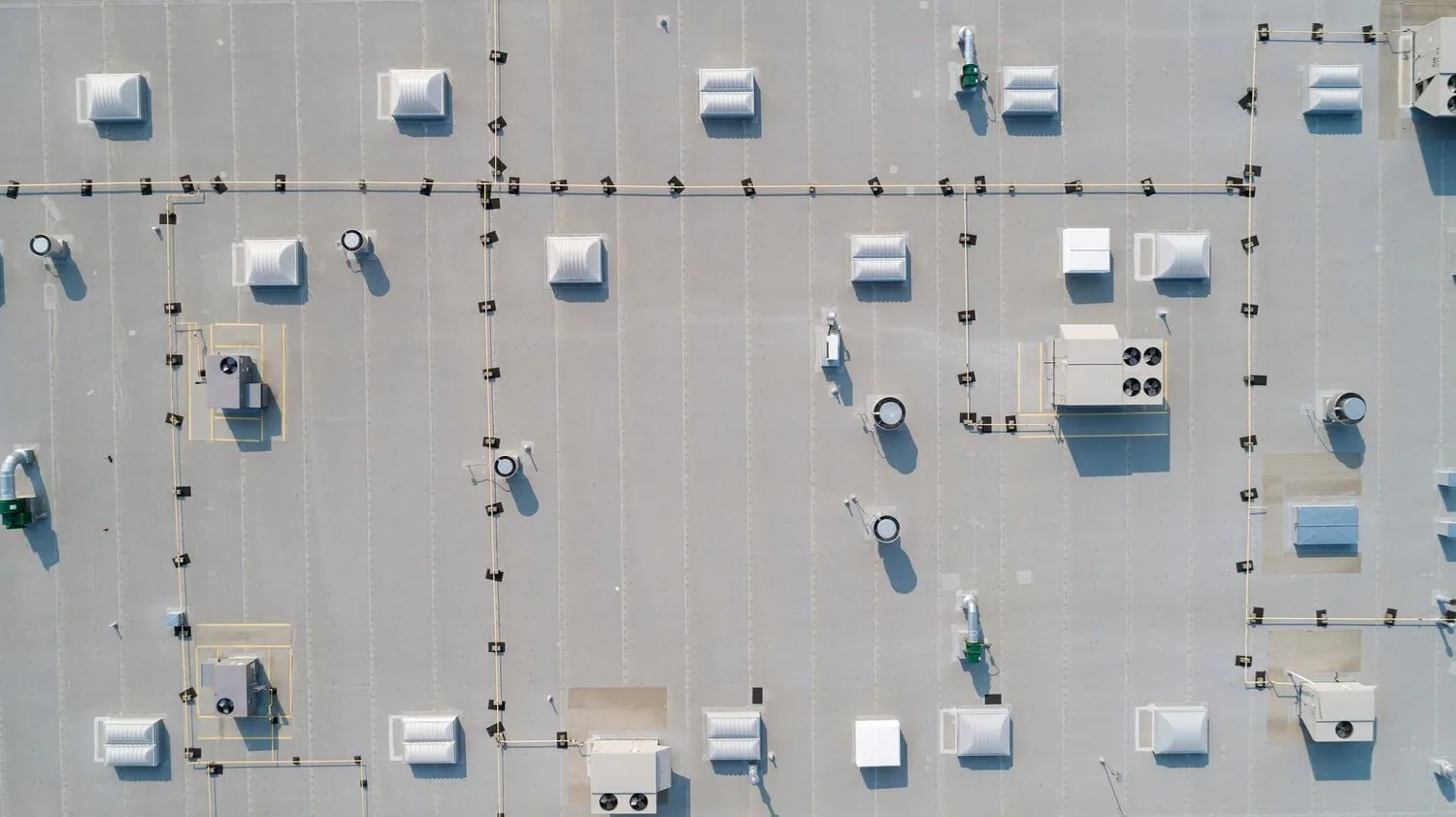
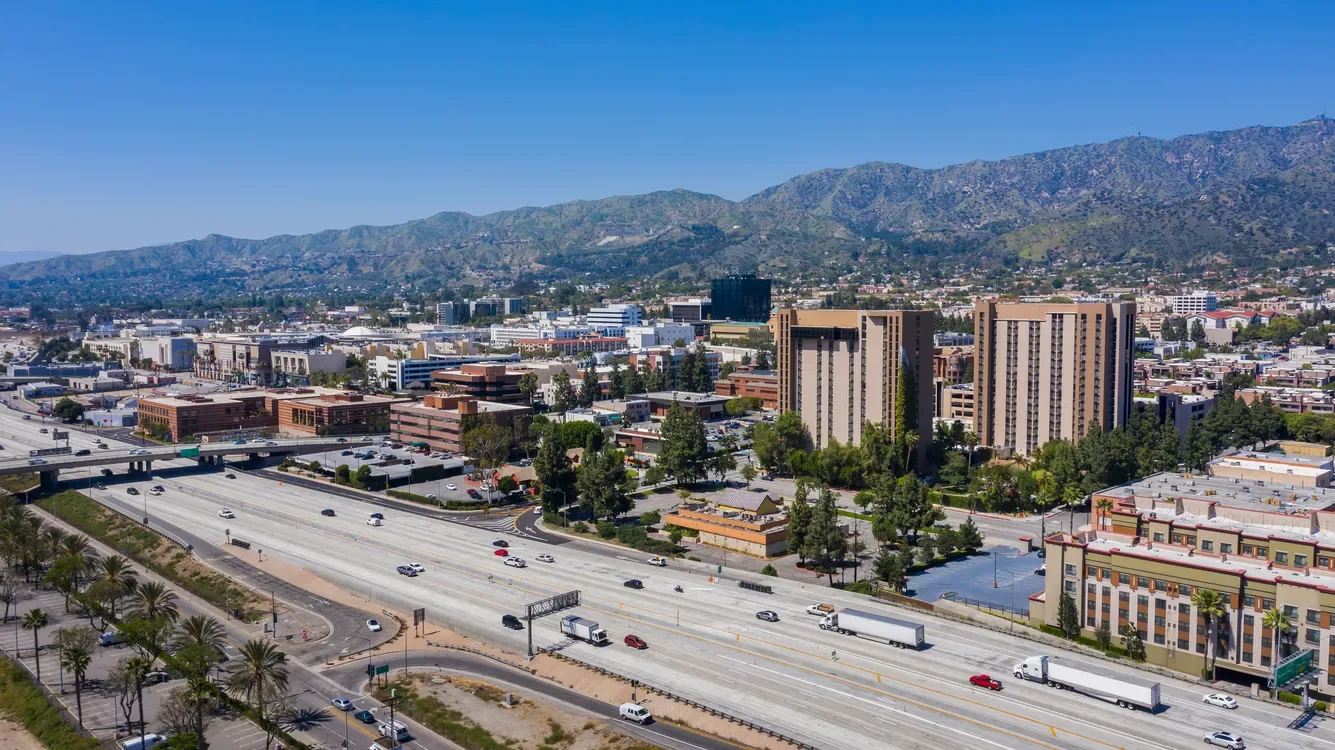
The Media District combines production studios with office and healthcare employers. An occupied production building may need distinct access and noise windows; a Downtown Burbank office may need tenant notices and protected entries. Those local uses shape the work sequence, not the material diagnosis. We document the assembly, moisture findings, repair options and access limits so the owner can compare like-for-like scopes. Share prior roof records and the decision date for a review that starts with the actual roof section. A commercial roof inspection can establish the material and detail findings.
Commercial Roofing Questions
Can a coating go over any membrane?
No. We first check compatibility, adhesion, moisture, drainage and previous coatings. A sample area or closer testing may be needed before a larger restoration scope.
Why does the seam type matter?
Seams are formed and repaired differently across single-ply systems. Identifying the assembly keeps a proposed patch compatible with the membrane and its attachment.
Does the climate decide the replacement material?
Climate informs exposure, but it does not select a system by itself. Roof geometry, deck, use, drainage, detail condition and capital timing also matter.
What records help compare systems?
Roof plans, prior repair files, moisture findings and a clear access plan make options easier to compare. We note any assembly detail that still needs verification.