PVC Roofing in Burbank, CA
Retail refrigeration and studio equipment can put different demands on a roof, even across buildings in the same Burbank district. The Airport District includes technology firms, conference hotels and big-box retail; Downtown Burbank mixes offices, shops and restaurants. A PVC review starts with the roof section and the conditions around its seams, drains and penetrations, then accounts for the space below. We use that field record to define a repair, renewal or replacement scope, rather than treating the membrane name as a complete design.
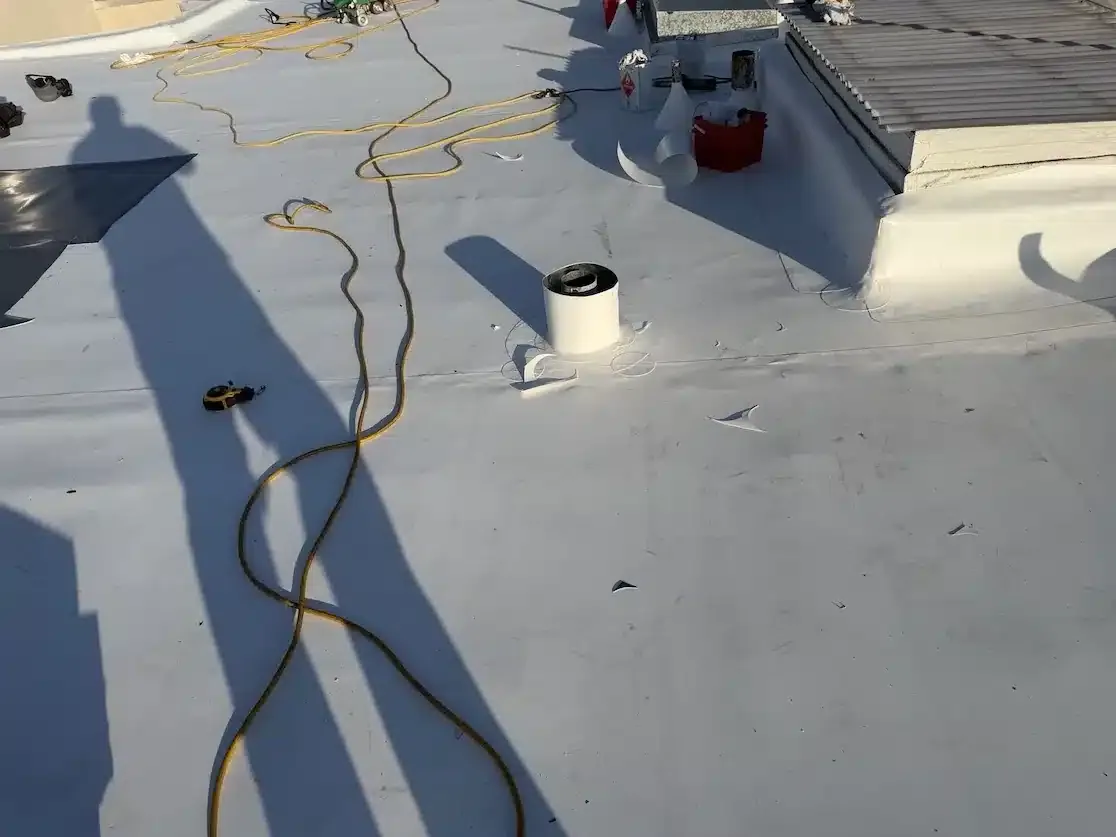
PVC membrane seams are fused with heat, so clean preparation and a consistent weld matter at each lap. The installation still depends on compatible flashings, attachment, insulation, cover board and perimeter details. We compare the existing build-up with the proposed assembly before setting a price or phasing plan. A roof inspection can identify which details need closer review and what information remains concealed.
Check the Weld and the Material Around It
A seam can be closed in one stretch and vulnerable at a corner, termination or patch edge. We inspect welds with appropriate probes and look for areas where the sheet has pulled, wrinkled or separated from a detail. Chemical exposure, rooftop discharge and prior repairs can matter to PVC, so the review includes nearby equipment and the surface around each condition. We record observations by roof section and distinguish a repairable detail from a broader material concern.
Magnolia Park’s commercial zone is associated with independent retail and dining, while the Media District includes production studios and office uses. We ask when rooftop equipment can be shut down, where staging may occur and which interior areas cannot be disturbed. That information lets us plan a PVC inspection without assuming a tenant, studio or store operates on a standard schedule.
Review Discharge and Flashing Compatibility
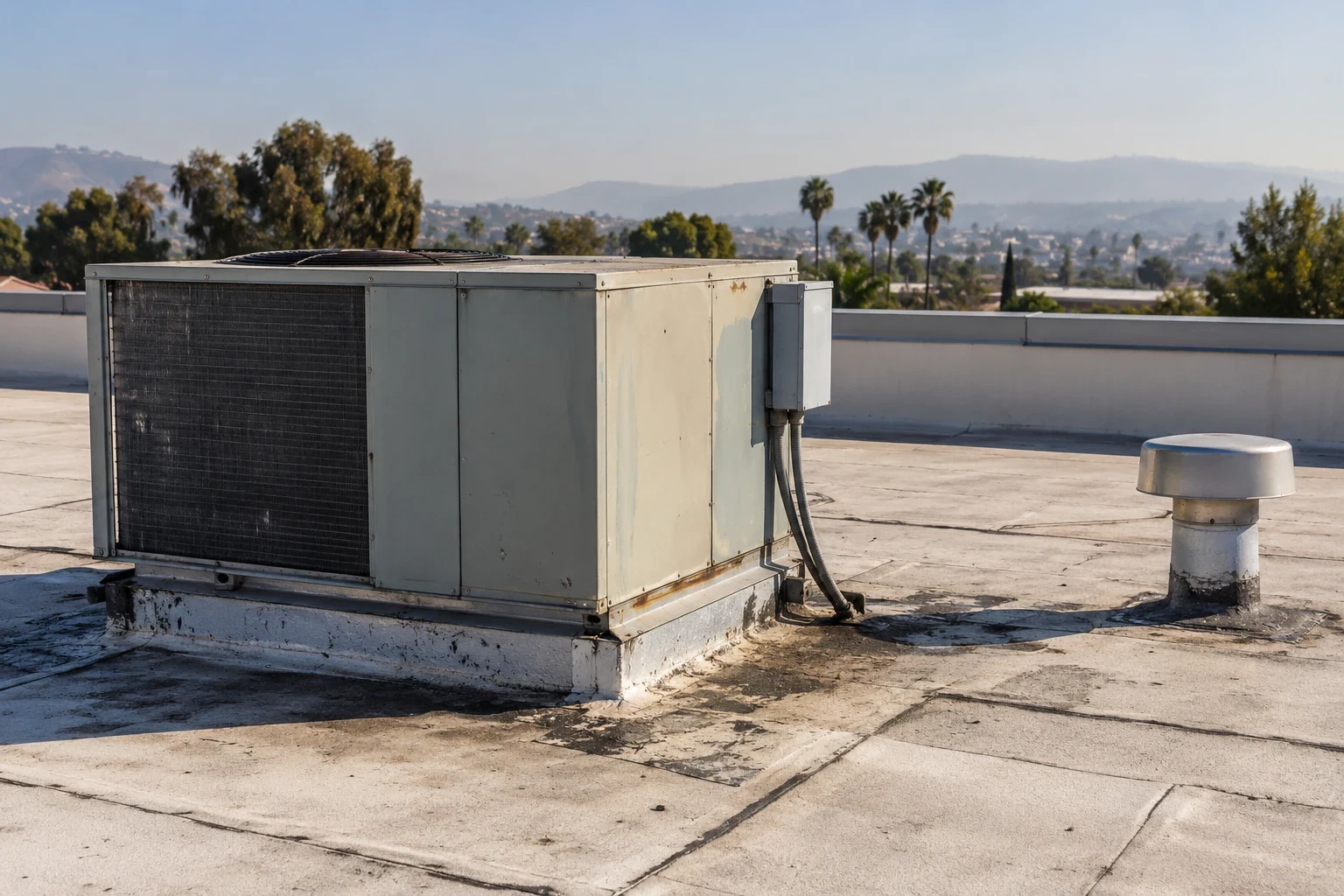
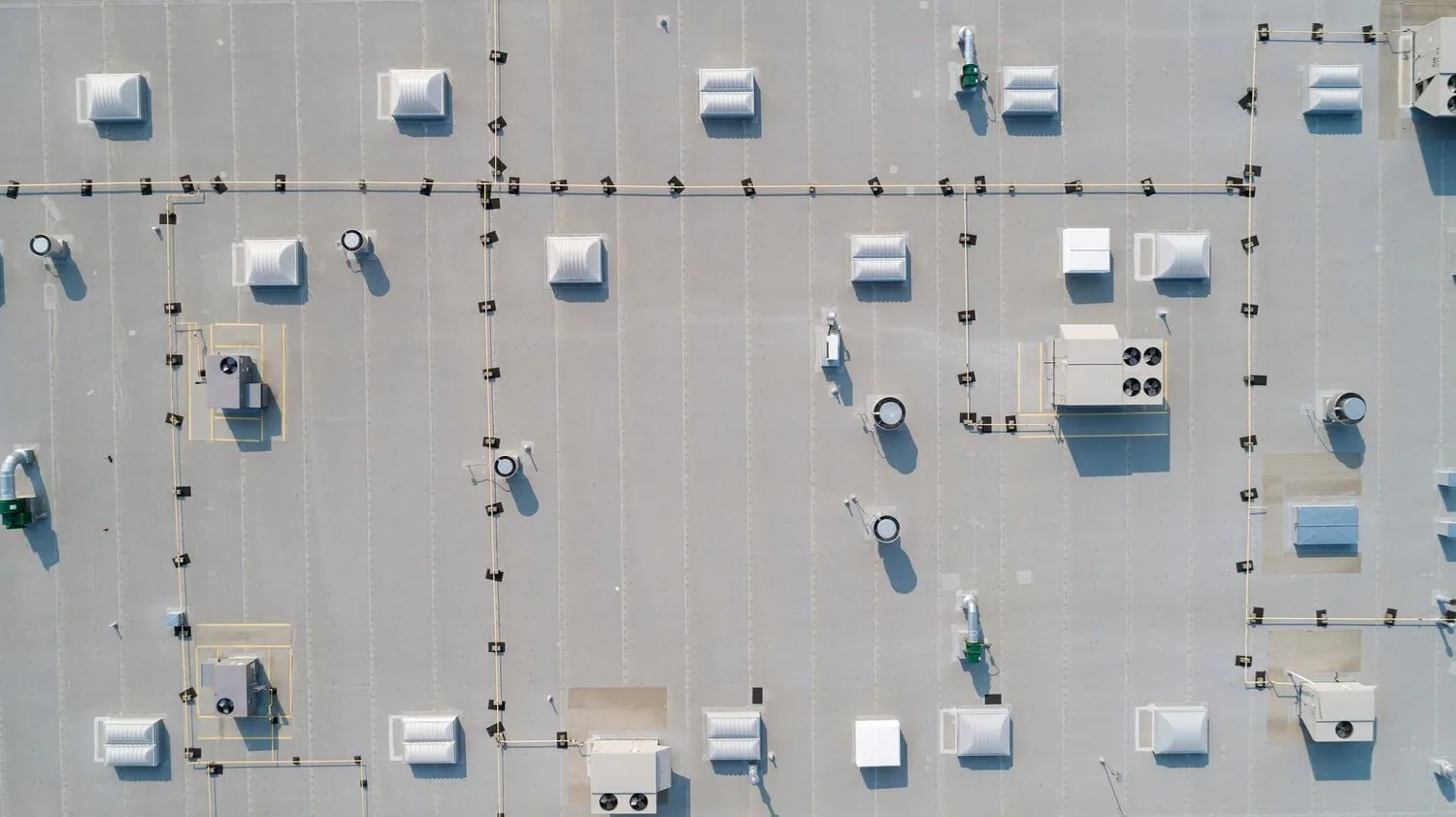
Some roof locations sit below exhaust or process discharge. Before recommending PVC, we identify what reaches the roof, how the discharge is managed and whether the membrane and accessories are appropriate for that exposure. We do not infer chemical conditions from a business name.
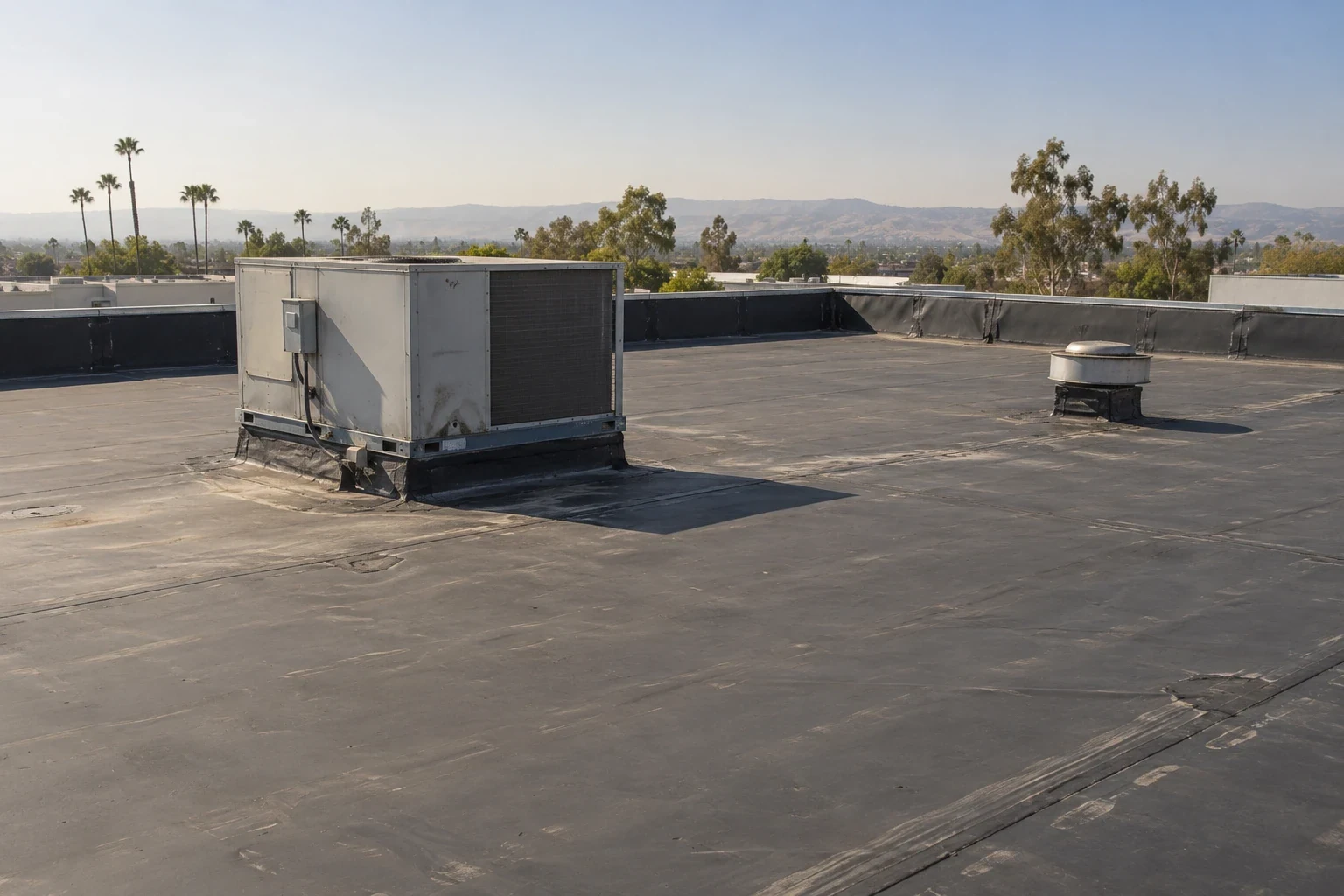
Where a roof has older material or mixed repairs, the transition needs a defined detail. The membrane in a TPO system also uses welded seams, but that does not make every accessory or tie-in interchangeable with PVC. When the existing surface is EPDM, the EPDM condition review helps establish whether removal or a tested transition is appropriate.
Carry Drainage Through the PVC Scope
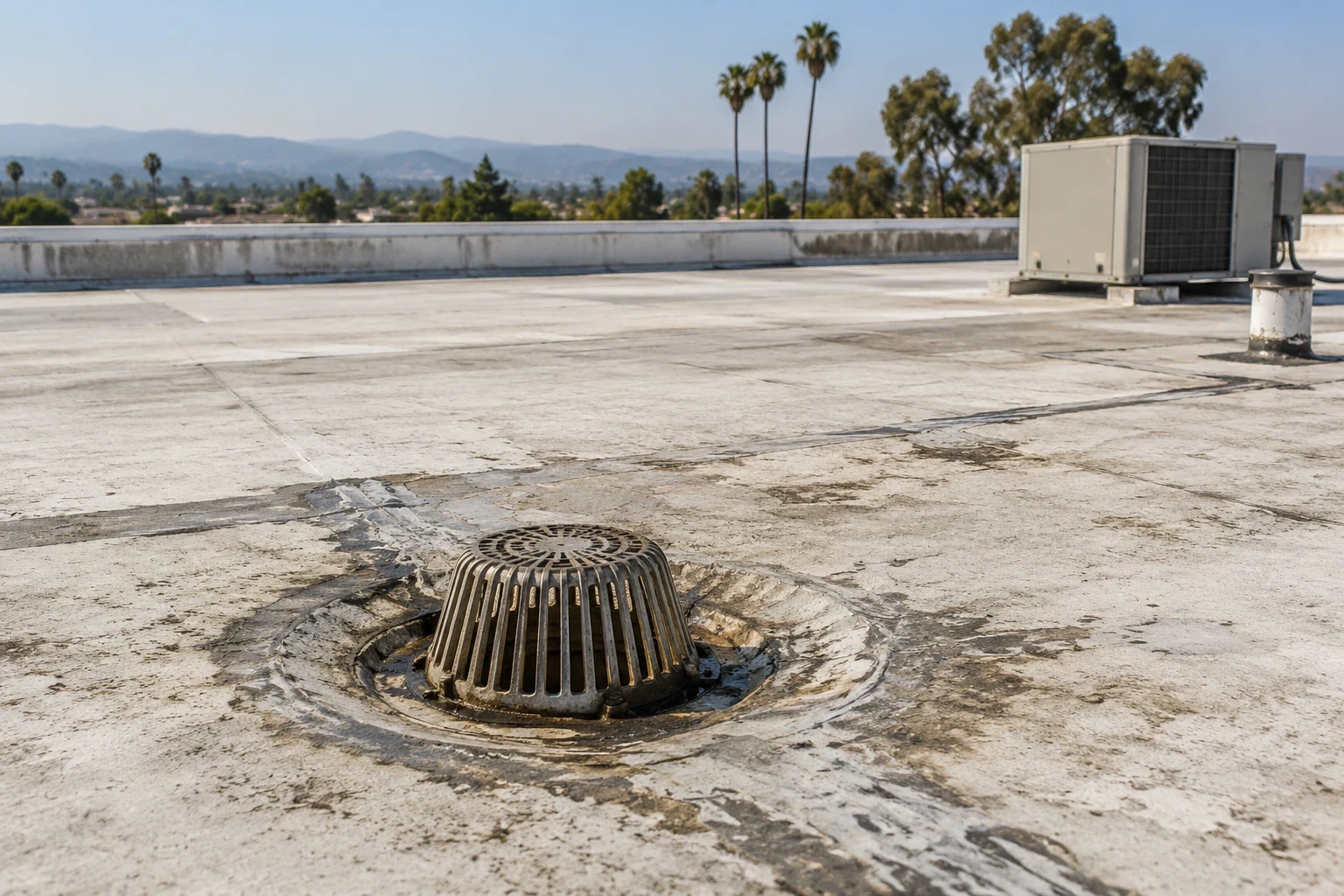
A renewed field membrane cannot correct a low point by itself. We trace the flow path to drains and scuppers, look for debris or restricted openings, and check whether the surface directs water to those outlets. If tapered insulation is proposed, the plan should show its relationship to curbs, doors, edge metal and existing drains. Changes in roof height can alter flashings and overflow conditions, so the detail set should be coordinated before materials reach the roof.
Burbank’s mapped corridors include I-5 and State Route 134, with commercial streets such as Magnolia Boulevard and Olive Avenue serving different districts. We can coordinate drain and scupper work with the membrane scope and inspect coping and edge-metal transitions where uplift resistance and drainage meet. Each item receives a separate work boundary and photo record.
Separate Local Damage From System Failure
A puncture, open flashing or small failed weld may be repairable when the surrounding sheet remains secure and the substrate is sound. We prepare the area as required by the system, install compatible material and verify the completed weld. A repeated leak in the same area deserves a look at the water path above, not another patch placed only where the ceiling stain appeared. We compare interior reports with the roof map and note what additional testing would resolve uncertainty.
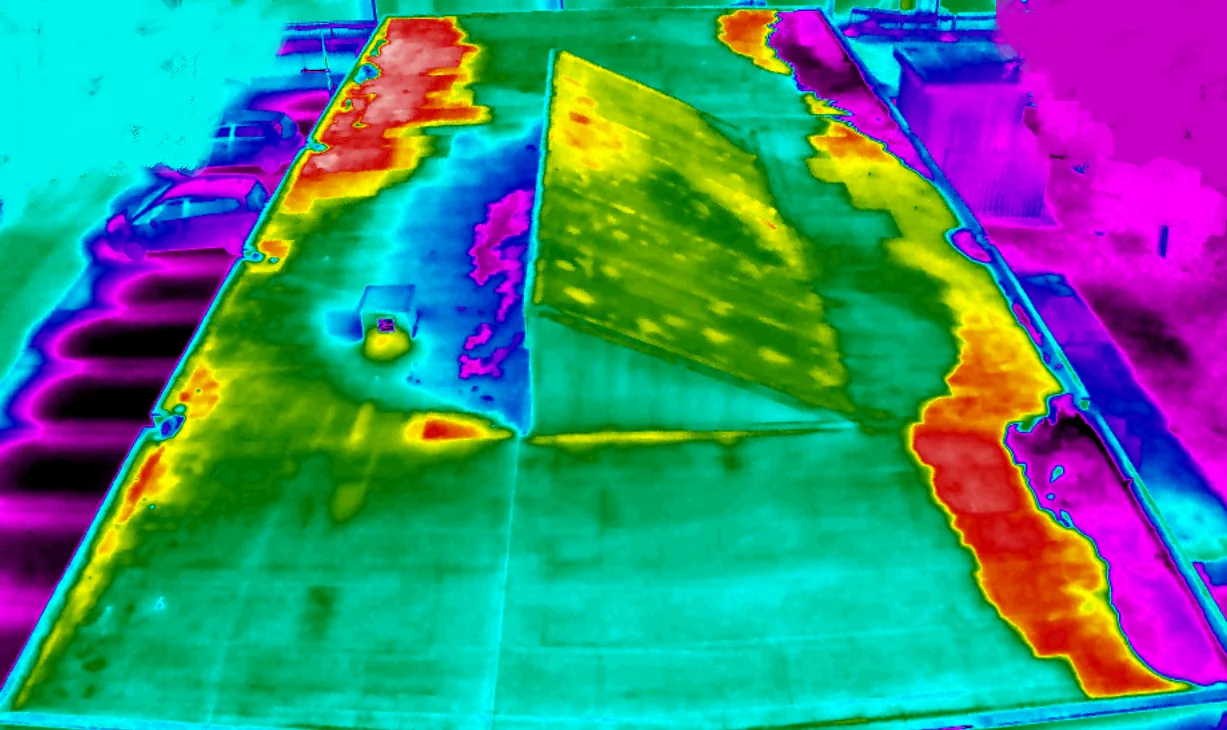
If moisture may have entered insulation, an infrared scan can guide testing but cannot confirm wet material on its own. The moisture survey scope identifies patterns for follow-up; the field team checks likely areas through suitable verification. The owner then has a clearer basis for comparing a targeted repair with replacement. We show the limits of each option, including areas that cannot be confirmed without opening the assembly.
Set Work Zones Around Business Hours
PVC work can involve tear-off, substrate preparation, adhesive or mechanical attachment, welding and flashing. We divide the project into zones, establish how material reaches the roof and identify any open edge that must be protected at day’s end. For an occupied building, the sequence also considers noise, interior access, deliveries and rooftop service interruptions. A facility director can then review the plan before the crew’s first shift instead of resolving access conflicts after work starts.
Airport District hotels and retail properties may have loading windows that differ from office floors downtown. Production uses in the Media District may require quiet periods or restricted routes near active sets.
Compare PVC With the Whole Roof Assembly
Material selection should follow the condition of the existing roof, the exposure above it, the building’s operating needs and the planned capital window. A recover remains an option only when existing layers and substrate are suitable and system requirements allow it. The recover evaluation records those checks separately from a replacement proposal.
New insulation can change curb, drain and perimeter heights, so a roof estimate should make those interfaces visible. Burbank’s code guidance directs the design team to evaluate energy requirements against the building category and the specific roof work. Our insulation and cover-board review checks the proposed build-up against rooftop equipment and the existing drainage plane.
Record the PVC Details That Need Follow-Up
At closeout, we give the facility team a record of installed sections, seam and flashing observations, drainage work, approved changes and any remaining monitoring items. Photographs should identify the location they show, while the roof plan should identify the boundaries between new and existing work. This record helps a future service visit start with the last known condition rather than an unlocated list of leak calls.
For a Burbank roof, the next step is a review tied to access and operating hours. We serve the broader Airport District, which includes retail, hotel and technology uses. The Airport District service area helps frame location coverage; we confirm the actual work plan at the property.
Commercial Roofing Questions
Does PVC suit a roof with kitchen or process exhaust?
It can be considered only after the discharge and exposure are identified. We inspect the equipment locations, note visible effects on the roof surface and compare those conditions with the membrane and accessory requirements. A facility engineer should confirm what is exhausted and how the equipment operates. We use that information to select details or recommend a different assembly when the exposure does not fit.
How can we tell whether a PVC seam needs repair?
We inspect the weld, adjoining sheet, flashing and substrate, then compare the location with leak reports and previous work. A defect limited to one detail may support a local repair. Repeated openings or movement across several areas call for a broader review of attachment and roof condition. The report maps what we saw and identifies any concealed condition that still needs testing.
Can a new PVC roof go over the existing membrane?
A recover depends on the number and condition of existing layers, moisture, deck support, attachment and the new system’s requirements. We inspect those items and document any unknowns before pricing a recover. Added height can affect drains, curbs and edge transitions. If the assembly cannot support a new layer, the scope should show why removal is needed.
What does a roof scan tell us about moisture?
A scan can flag thermal patterns for closer examination; it does not establish that insulation is wet or show why a leak occurred. We compare the image with visible conditions and confirm selected areas through appropriate testing. The resulting map helps target investigation and keeps an owner from paying to replace areas that were never verified.
How do you keep a PVC project workable for tenants?
We plan delivery, roof access, noisy tasks and daily dry-in around the building’s actual schedule. We then phase roof zones, keep open edges protected and record the work boundary. Downtown retail, Airport District hotel and Media District production schedules can differ, so the site plan is specific to the property.