KEE Roofing in Burbank, CA
A production floor, hotel and storefront can have different exposure and access needs under similar low-slope roofs. Burbank’s Media District includes studios and office uses; the Airport District mixes technology, hospitality and large-format retail. We inspect the roof section, seams, penetrations and drainage before recommending a KEE membrane repair or renewal. The facility director receives a map of what was observed, which sections need testing and how the work can fit the building’s operating window.
KEE is a PVC-alloy membrane formulation, not a separate shorthand for every PVC roof. We verify the existing material and proposed system details before planning a tie-in, repair or replacement. Surface condition, rooftop discharge, attachment, insulation and perimeter transitions can change the scope. A roof inspection records those items before the owner compares alternatives.
Confirm the Sheet Before Choosing a Detail
The term KEE should match the specific membrane being installed and its manufacturer requirements. We review labels, closeout records and field characteristics where available, then inspect seams and flashing for separation, wear or prior incompatible work. We do not assume an older sheet is KEE from its color or appearance. When the record is incomplete, the proposal identifies what is known and where a sample or further review is needed.
That identification affects how a repair is prepared and how an adjoining system is connected. TPO and PVC are also thermoplastic sheets, but the exact formulation and accessory requirements still matter. A comparison with PVC membrane roofing should consider the actual product documentation, exposure and assembly rather than a generic material label. For other thermoplastic options, the TPO assembly review lays out the seams and details we verify before specifying work.
Inspect Welds and Transitions by Roof Zone
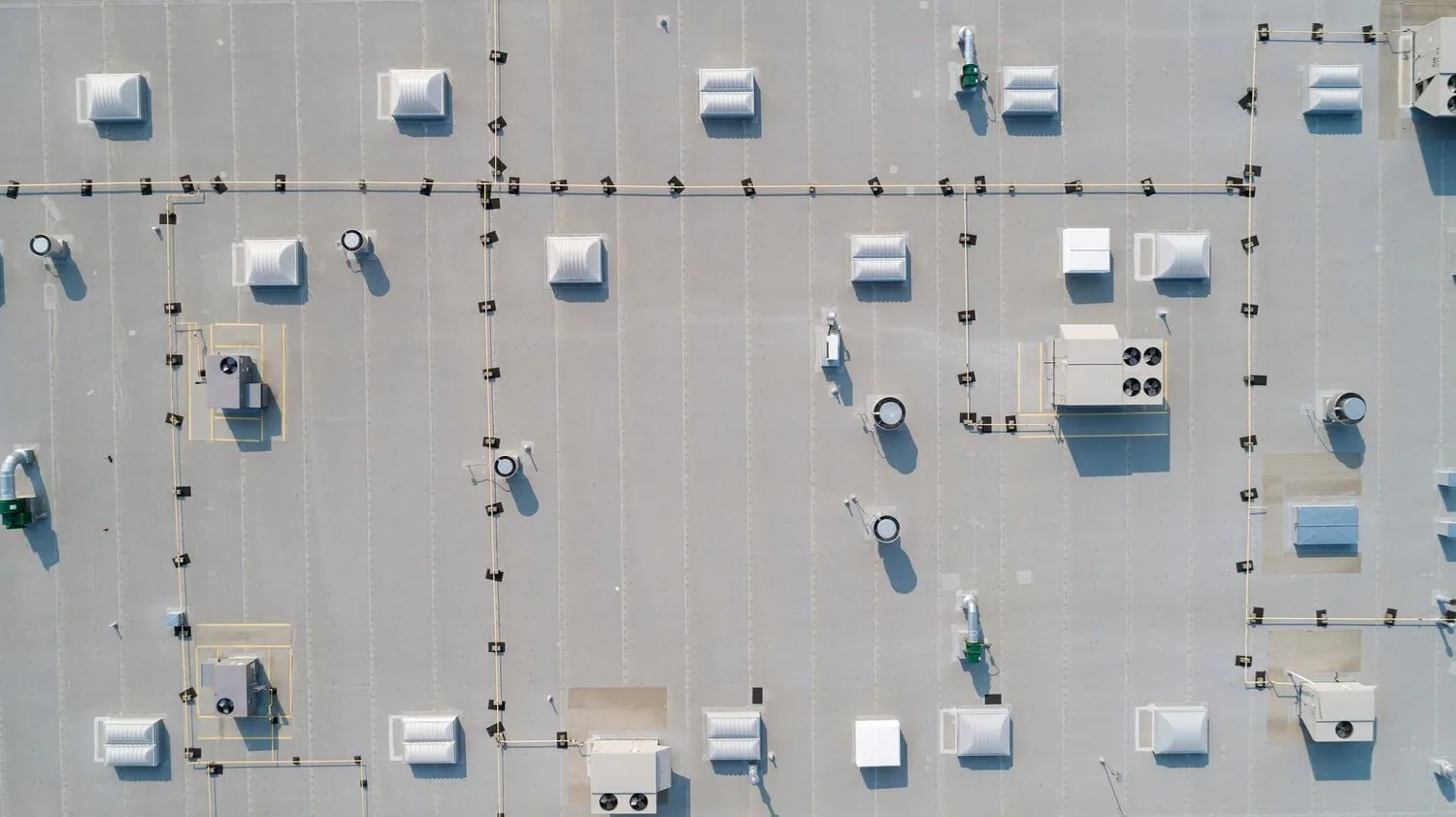
We check field seams, corners, wall transitions, drains, penetrations and repairs as separate details. A visible opening may be local, while repeated separation across several sections can point to movement, attachment or substrate questions. The inspection record ties each observation to a roof-zone photo and marks the proposed repair limit. That helps an owner compare a localized correction with a larger scope without assuming every seam has the same condition.
Burbank's long-term average temperature is 64.5°F. That broad average cannot set a KEE welding adjustment, so our crew checks the membrane and equipment under the conditions present at the seam. If separation recurs across roof zones, the comparison helps distinguish a local repair from a wider attachment or transition issue.
Keep Drains and Edges in the Assembly
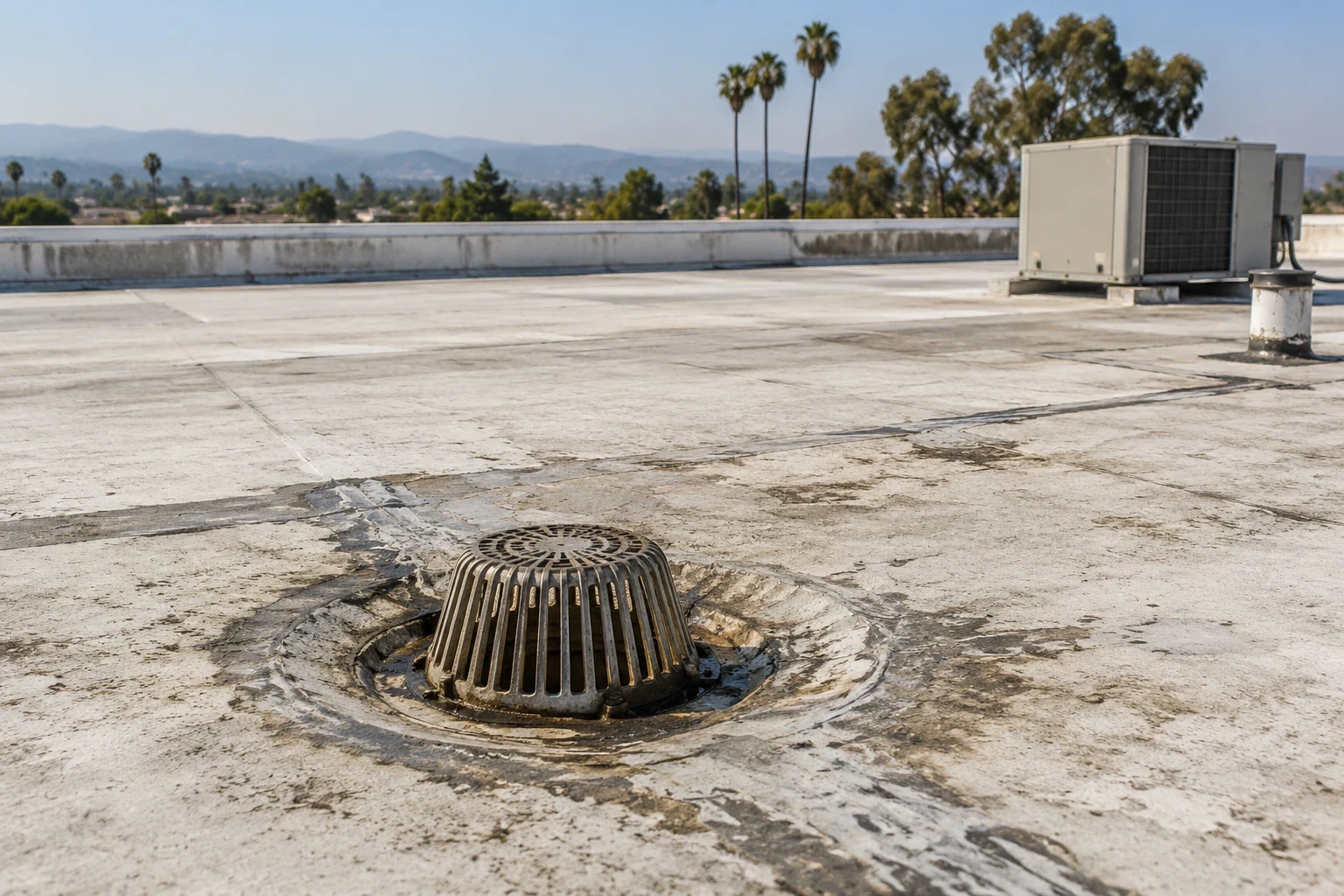
A membrane replacement should follow the water path from the roof field to the outlet. We inspect drain bowls, scuppers, overflow openings and adjacent laps, then check whether ponding, debris or a blocked outlet is part of the report. If new insulation changes the surface height, the drain and edge details can require adjustment. We show these items on the same roof plan so the owner sees the full boundary rather than a membrane-only allowance.
Burbank's land-use map distinguishes the Rancho Commercial area from nearby business uses. A roof inspection remains property-specific, even when delivery staging uses the larger arterial network. The drain and scupper inspection and perimeter metal review identify interfaces where water management and attachment meet.
Set a Repair Limit That Can Be Verified
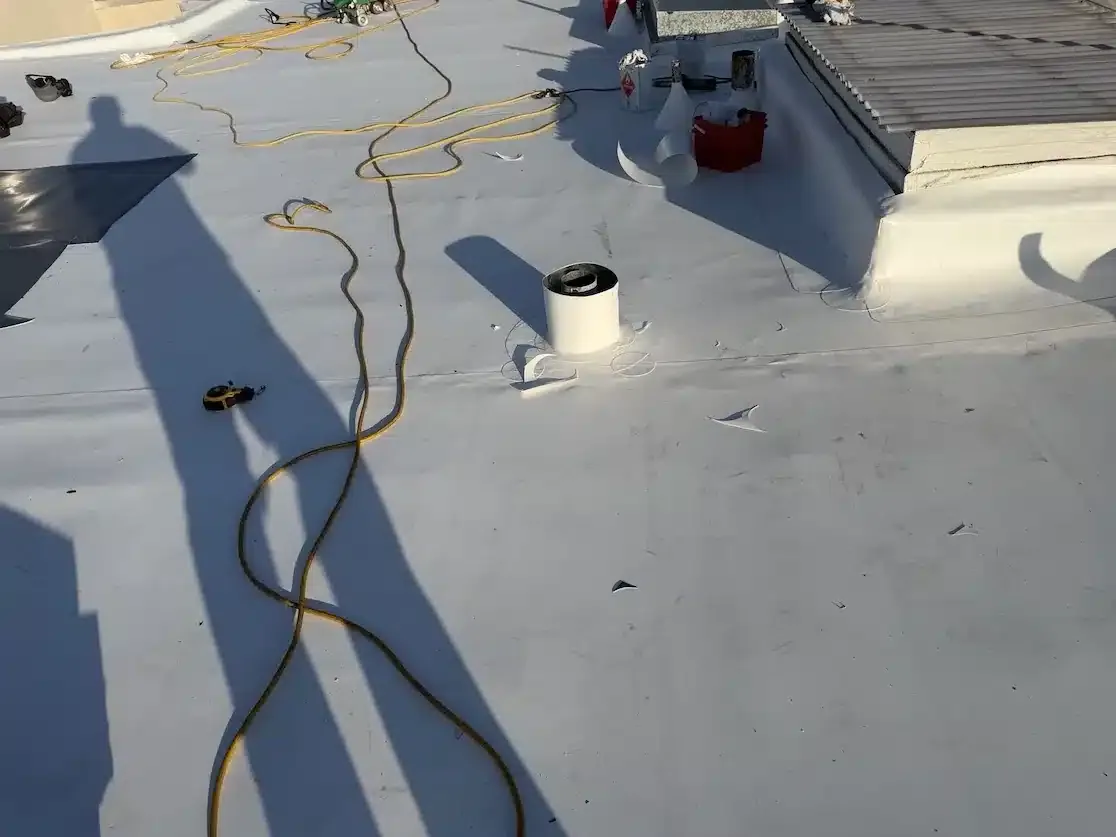
A KEE repair should name the material, detail and roof section being corrected. We clean and prepare the surface in line with the system requirements, use compatible flashing or membrane and verify the completed seam. If water has moved beneath the sheet, a surface patch may leave wet insulation or a weak substrate in place. We identify where verification stops and what type of testing would support a broader repair or replacement decision.
Infrared scanning can help prioritize locations for further checks but cannot establish that a roof area is wet by itself. A moisture survey is combined with visual review and confirmation of selected suspect zones. That process keeps a test pattern separate from a measured repair limit. The report also notes prior patches or field conditions that may affect a later system tie-in.
Schedule Work Around the Building’s Use
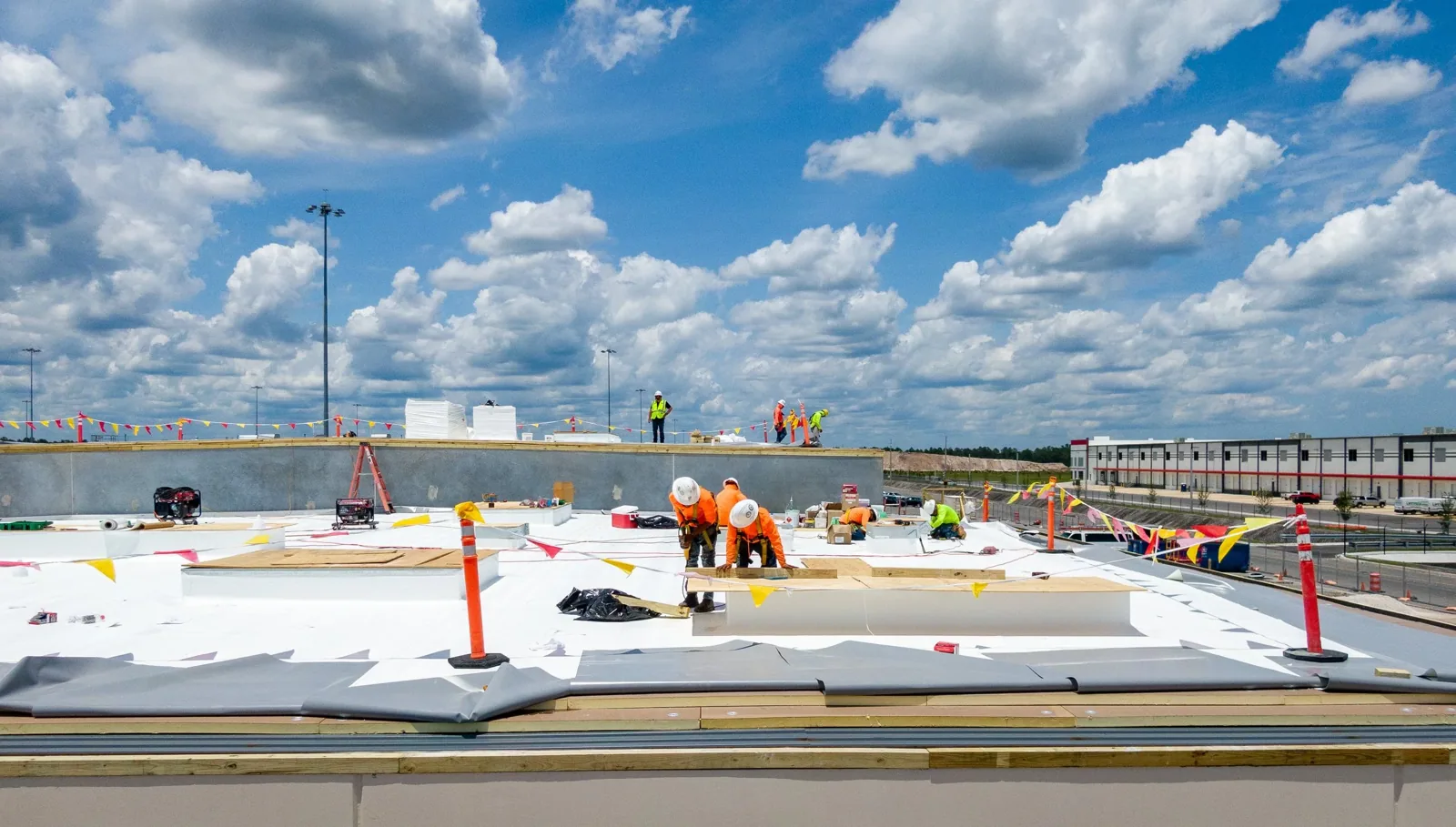
Membrane work can include removal, insulation, cover board, attachment, welding and flashing. We divide the roof into work zones, identify how materials arrive and set a daily protection plan for each open area. An occupied floor below may need notification or temporary protection before tear-off begins. The facility director reviews access routes, noise limits, equipment outages and the order in which roof sections will be released.
Media District production schedules may differ from Airport District hotel deliveries or retail operations. We ask for the actual operating constraints and adjust the sequence where practicable. The occupied-building work plan links each roof zone to tenant notices, dry-in checks and closeout photos. If weather interrupts work, the record shows which areas are sealed and what must be inspected before work resumes.
Compare Repair, Recover and Replacement
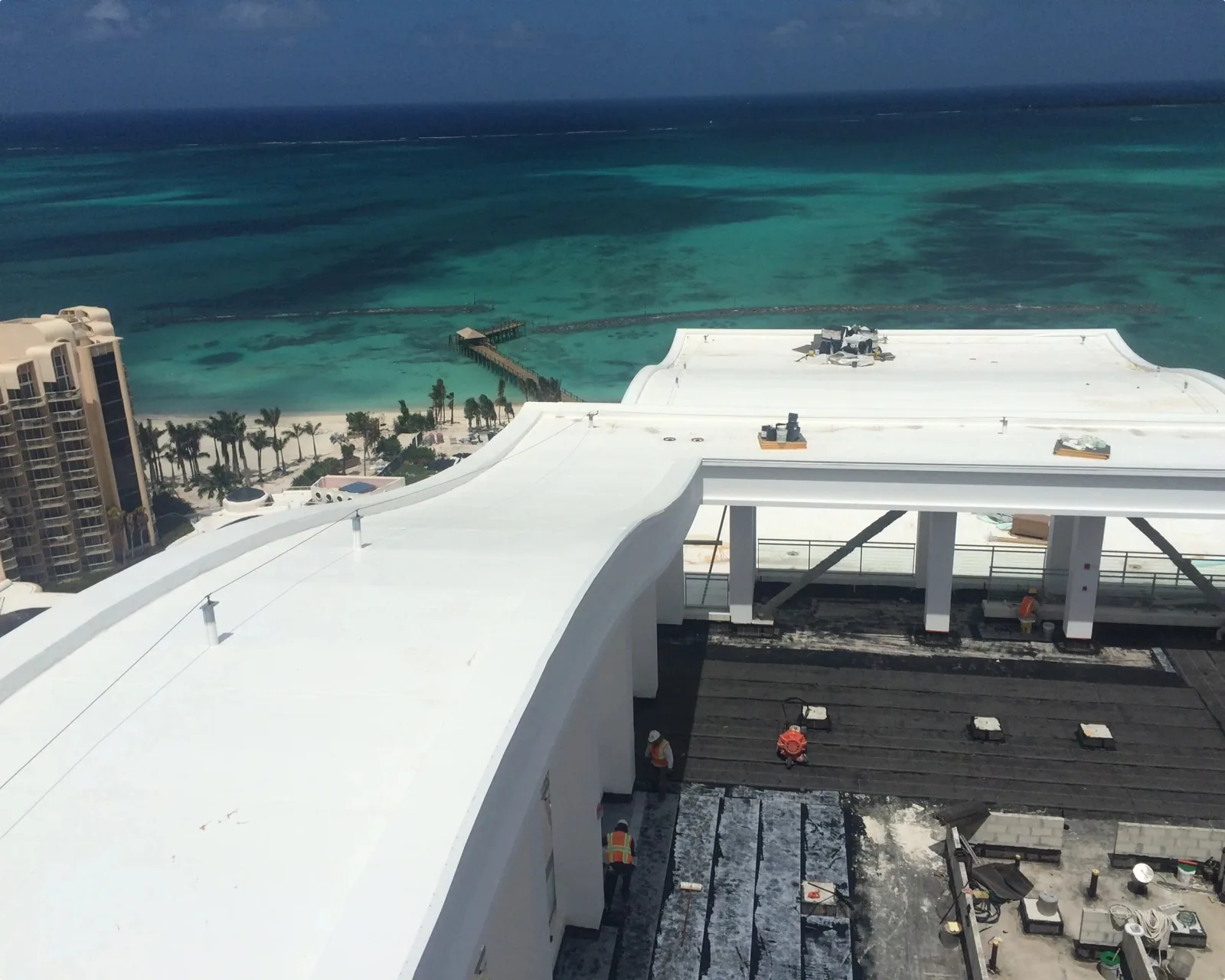
A recover can be considered only after the existing layers, moisture, attachment, deck and transitions are reviewed and the proposed system allows it. Added height can affect curbs, drain bowls, edges and access. We keep recover assumptions separate from tear-off so an owner can compare actual scope rather than a low number that excludes unresolved conditions. The recover assessment documents those checks before a capital decision is made.
A roof alteration can bring energy provisions into the permit review; Burbank’s code page makes the requirements depend on the work and building category. We provide assembly and insulation details for the project team to evaluate, while the relevant official determines permit requirements. The insulation and cover-board scope should resolve curb heights and drainage before the proposed membrane is ordered.
Keep the Material and Repair Record Together
Closeout notes should identify the membrane system, repaired sections, seam and flashing details, photos, approved changes and any condition left for monitoring. The owner can then compare a later leak report with the last documented roof condition. We also record drainage work and penetrations because those details may determine where a future service call begins. A useful file makes the installed scope readable to the next facility contact.
We review KEE and other low-slope membrane roofs across Burbank’s commercial districts, including the Media District and Airport District. The Media District service area describes a broad business area, not a specific studio. Schedule the inspection around access and the renewal date, and provide roof plans, previous repairs, equipment notes and current interior reports. We will map the findings and state which next step the evidence supports.
Commercial Roofing Questions
Is KEE roofing different from ordinary PVC?
KEE refers to a PVC-alloy membrane formulation. Product composition, thickness, accessories and application requirements vary by system, so we verify the product data and existing roof records before specifying a repair or replacement. The label alone does not establish compatibility with another sheet or prior coating.
Can a KEE seam be repaired without a replacement?
A local repair may be appropriate when the defect is limited and the surrounding sheet, substrate and details remain sound. We inspect the seam, nearby flashing and water path, then record the repair boundary. Repeated separation or suspected moisture below the membrane can justify testing or a wider assembly review.
Does a moisture scan confirm a wet KEE roof?
No. Infrared patterns can guide where we investigate, but stored heat, shade and equipment can affect the reading. We compare scans with the roof surface and confirm selected areas through appropriate tests. Only verified limits belong in a removal or insulation-replacement scope.
What should be checked around rooftop exhaust?
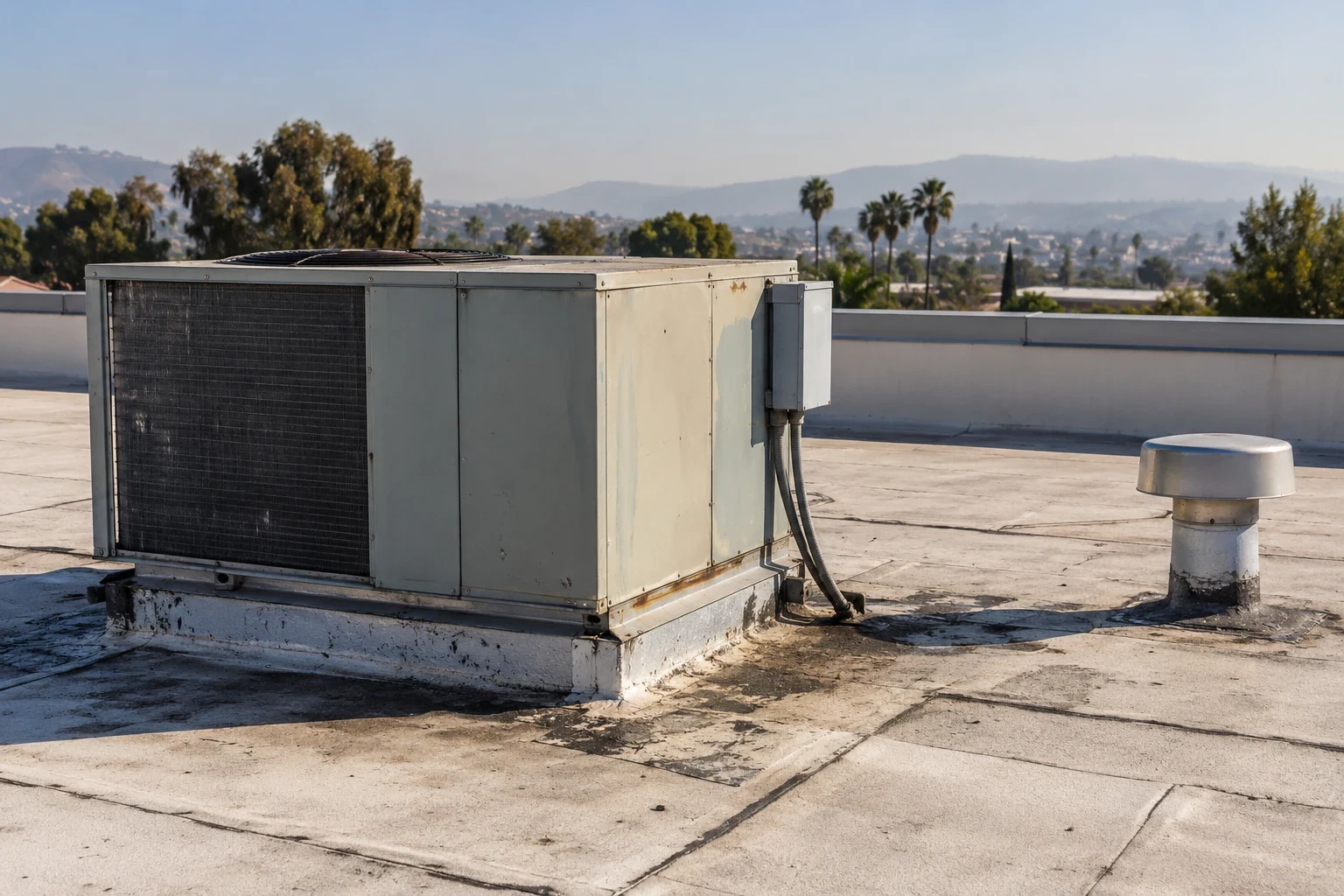
We identify the equipment and discharge location, review the facility information and inspect nearby membrane, seams and flashing for visible effects. The exact KEE system must be suitable for the actual exposure. A mechanical contractor addresses equipment operation; we define the roof-side repair boundary and coordination needed.
How do you plan KEE replacement in an occupied facility?
We map sections, staging, equipment access, daily dry-in and tenant-sensitive areas with the facility director. Media District production uses and Airport District retail or hotel operations can have different work windows. The property’s actual schedule determines sequencing, protection and notices.