Built-Up Roofing in Burbank, CA
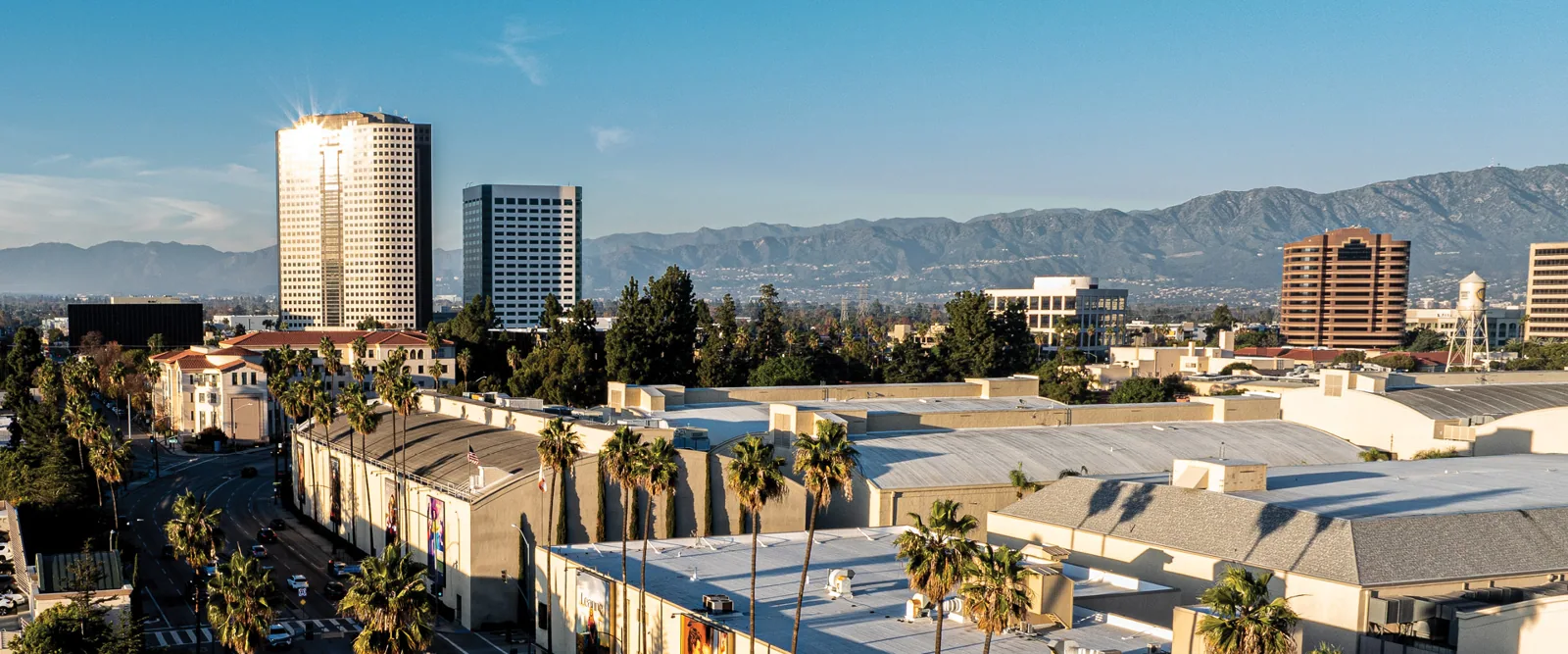
A multi-ply roof over an office or retail building can hide several generations of repair beneath its surface. Burbank’s Downtown district contains office and retail space, while the Airport District combines hotels, technology companies and large-format retail. Before recommending work on a built-up roof, we inspect the surface, exposed edges, drains and flashings, then review available repair records. The facility director receives a section map that helps compare a localized repair with renewal or replacement.
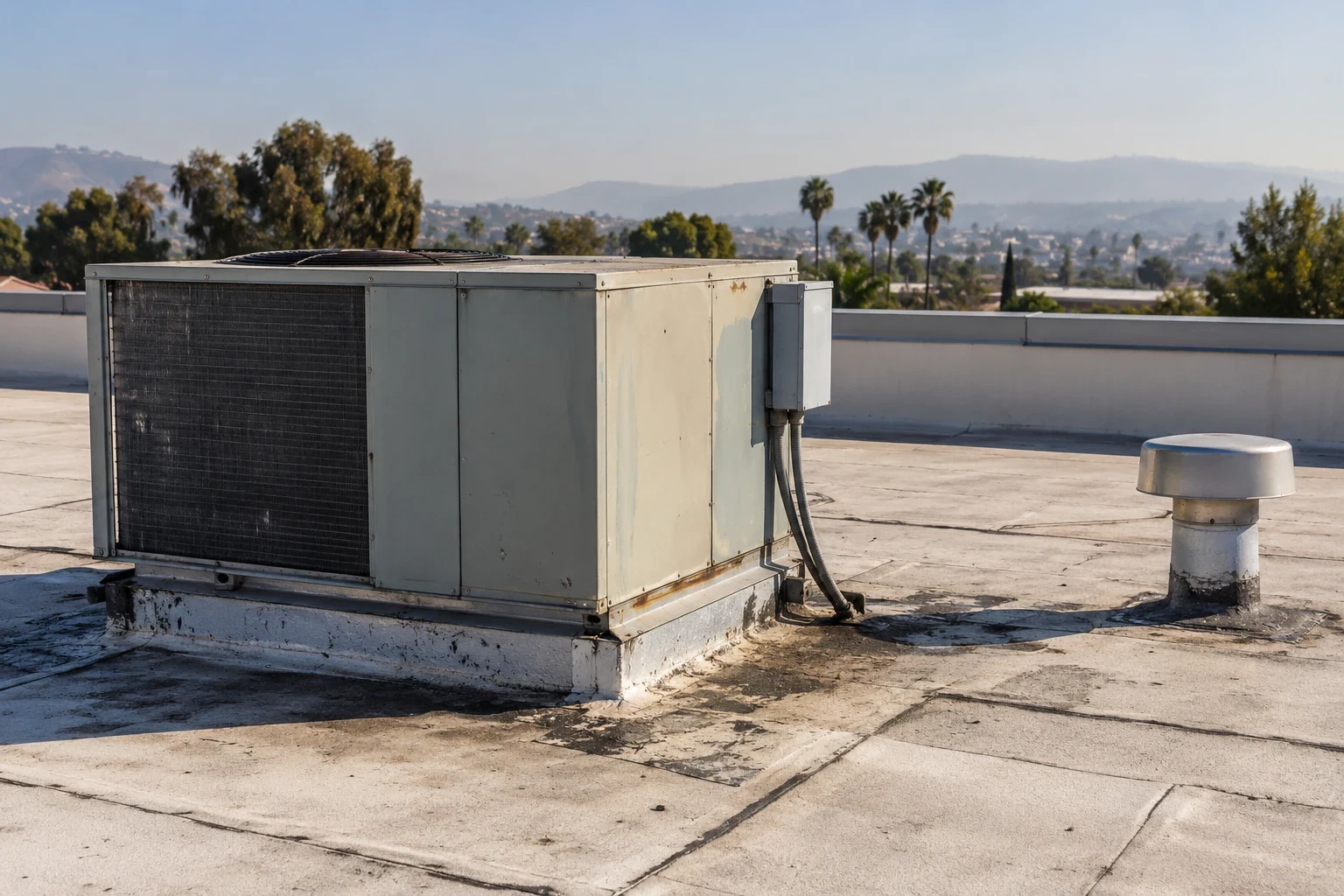
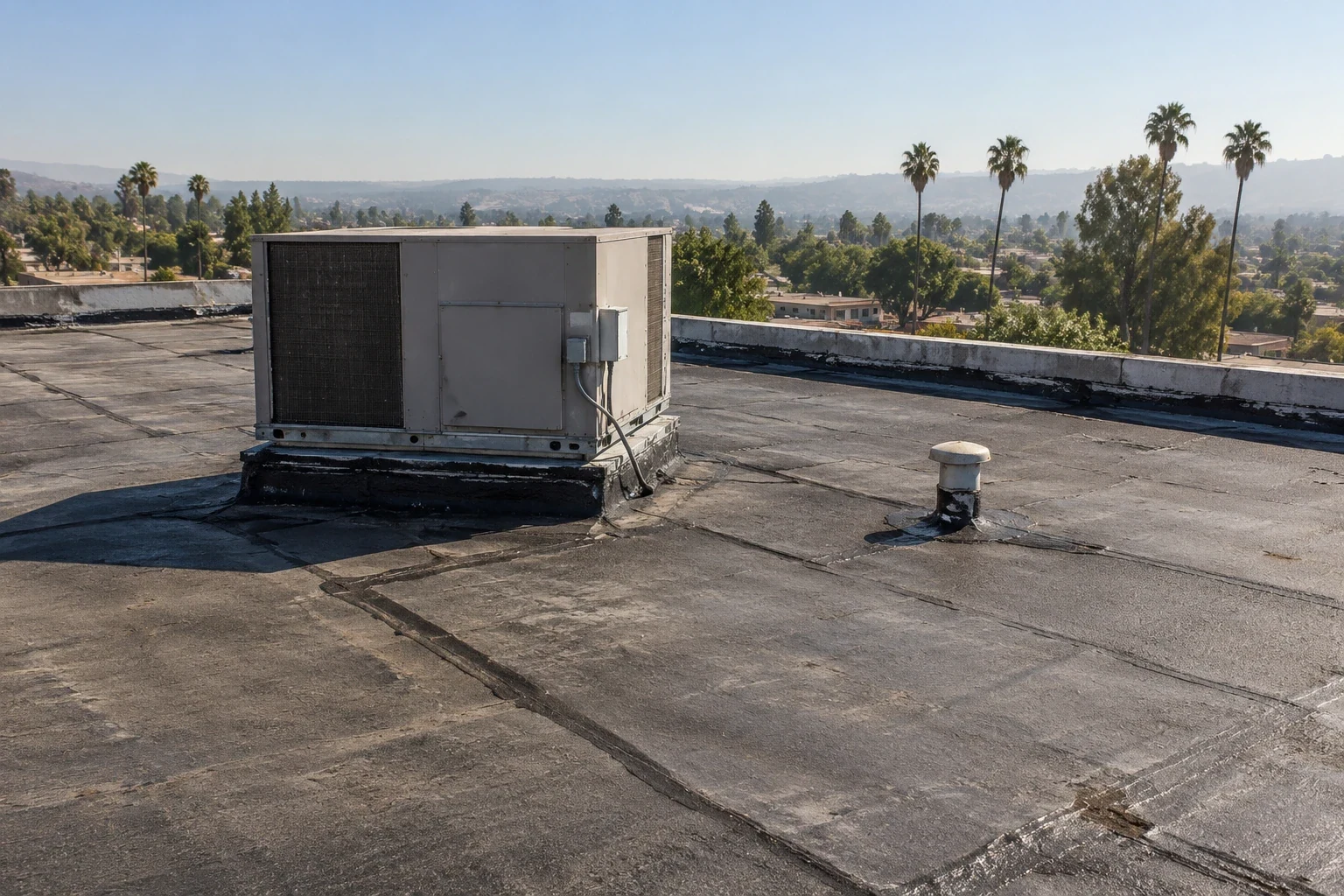
Built-up roofing uses alternating reinforcing plies and bituminous layers, often finished with a protective surface. The exact assembly depends on what is present and how it was installed. We do not assume the roof has one uniform build-up from a single visible edge. A roof inspection identifies what can be seen and where a test opening may be needed.
Read the Existing Layers at an Exposed Edge
Roof age and repair history can change the number of layers across a building. We examine exposed conditions at drains, curbs and perimeter transitions, and check available records before describing the assembly. If a later patch covers an older cap sheet, the proposal should state that condition instead of calling the whole roof one material. An opening may be required to confirm insulation, deck and attachment before a recover or tear-off scope is finalized.
A built-up roof differs from a modified bitumen sheet system, even though both use asphalt-based materials. Their reinforcement and installation details are not interchangeable. We identify the actual build-up, then compare repair options with the existing plies and surface. Where a membrane overlay is being considered, the recover evaluation records layer count, moisture, substrate and code concerns before a new assembly is priced.
Check the Surface Without Guessing Below It
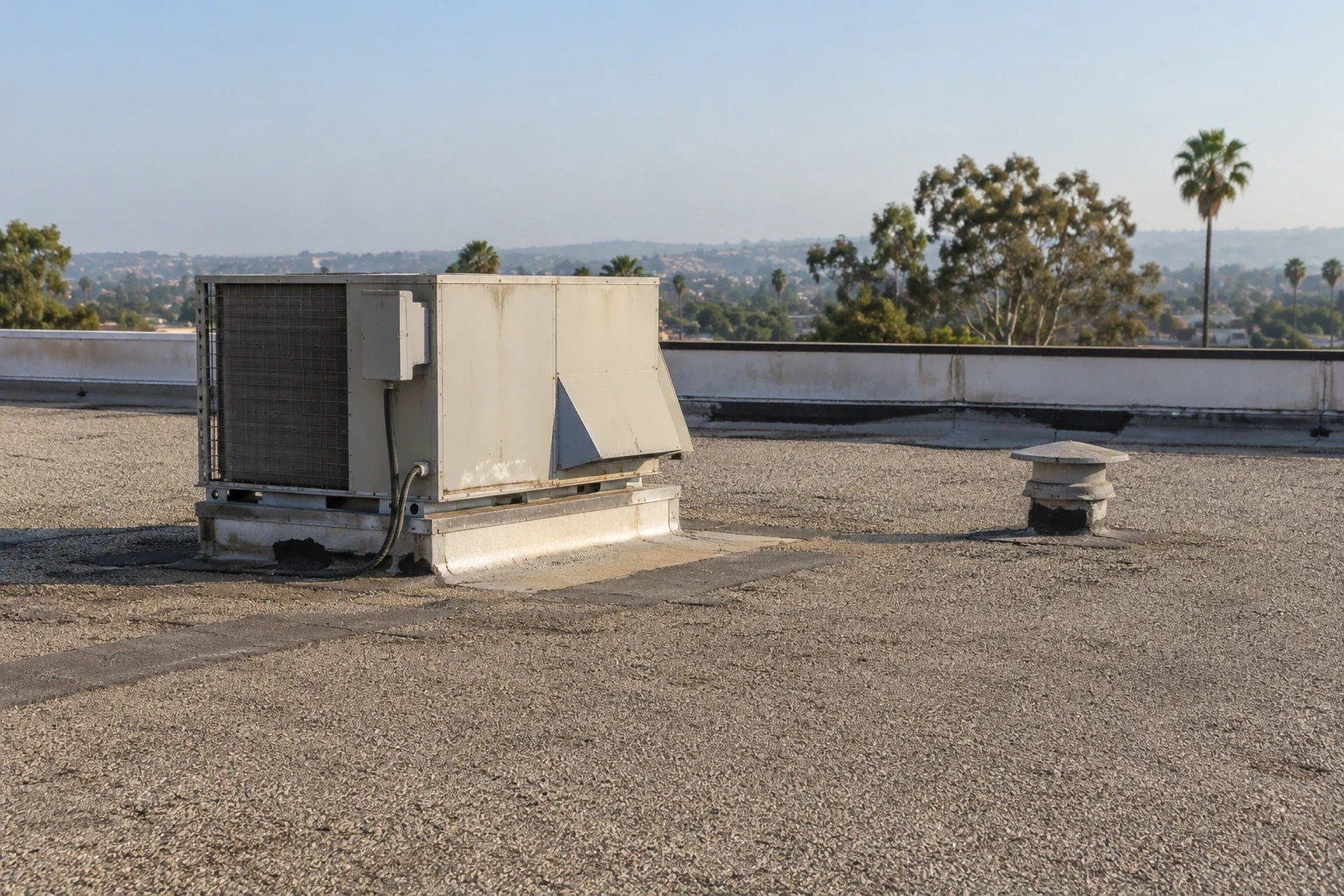
Blisters, exposed reinforcement, loose gravel or a split can point to a condition that needs attention, but the surface alone does not reveal every layer beneath. We inspect the extent of the defect and look for nearby water paths or prior patches. A local correction can be suitable if surrounding material remains secure and dry; widespread movement or moisture may change the decision. The report marks observed conditions separately from areas that need confirmation.
Warm-season roof conditions belong in the work plan, but a regional average does not establish whether a specific surface is ready for repair. We check the roof and follow the application limits for the selected system. If the assembly has multiple repair layers, we keep the proposed work limit clear so the owner can see what removal includes.
Carry the Scope Through Drains and Edges
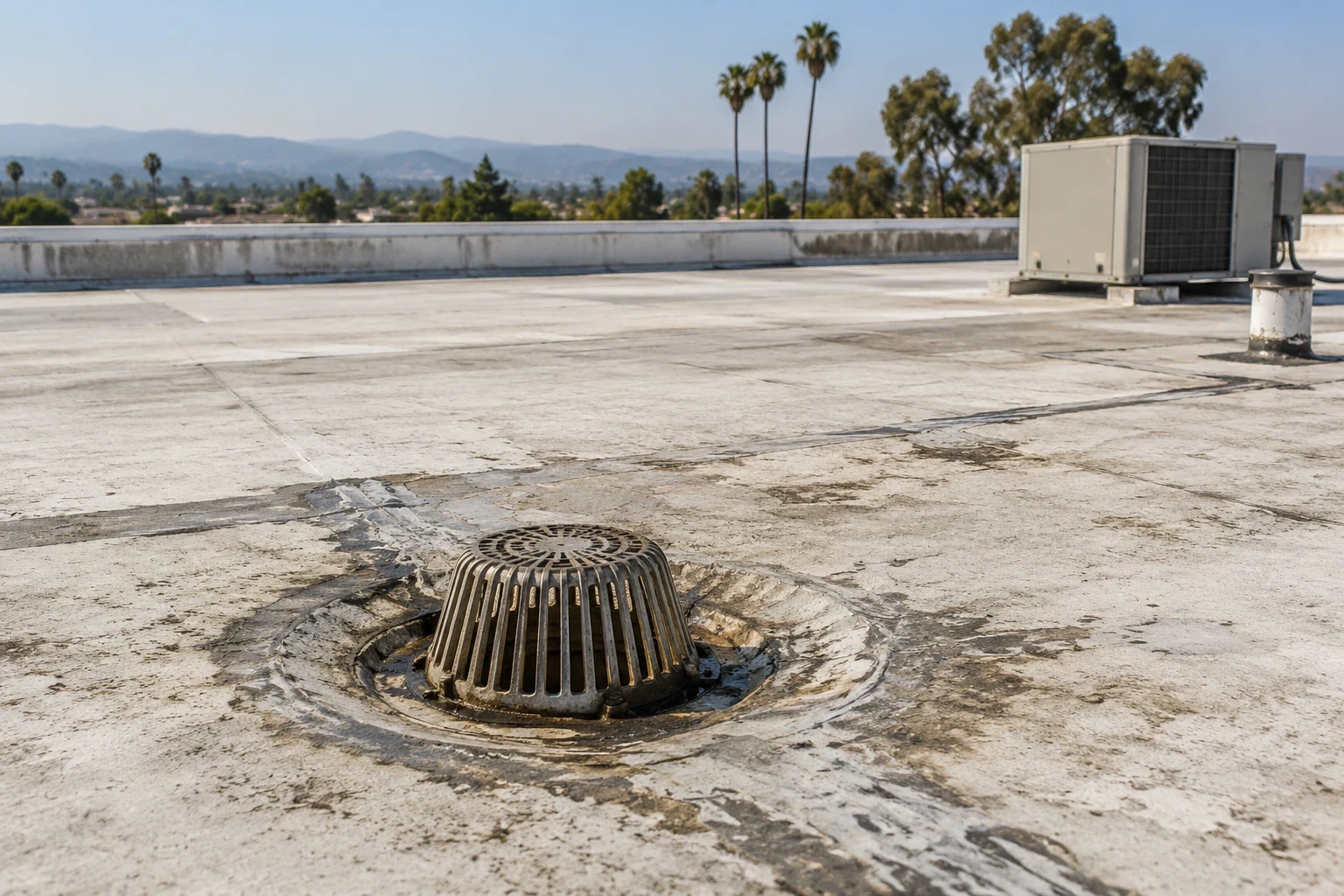
Built-up surfaces can hold debris around drains, scuppers and changes in slope. We trace how water should reach each outlet, inspect the openings and check whether the surface or flashing obstructs flow. If insulation or added plies raise the finished roof, drain bowls, wall flashing and edge heights need to be reviewed together. A membrane-only price can miss the work that keeps the new roof connected to the building.
North San Fernando Boulevard and Victory Boulevard are commercial corridors in Burbank. The route context can inform delivery and staging, while each property’s access rules shape the work plan. We include drain and scupper work and perimeter metal details where the inspection shows they affect the proposed boundary. Photos tie each repair to its roof zone.
Repair the Defect and Document Its Limits
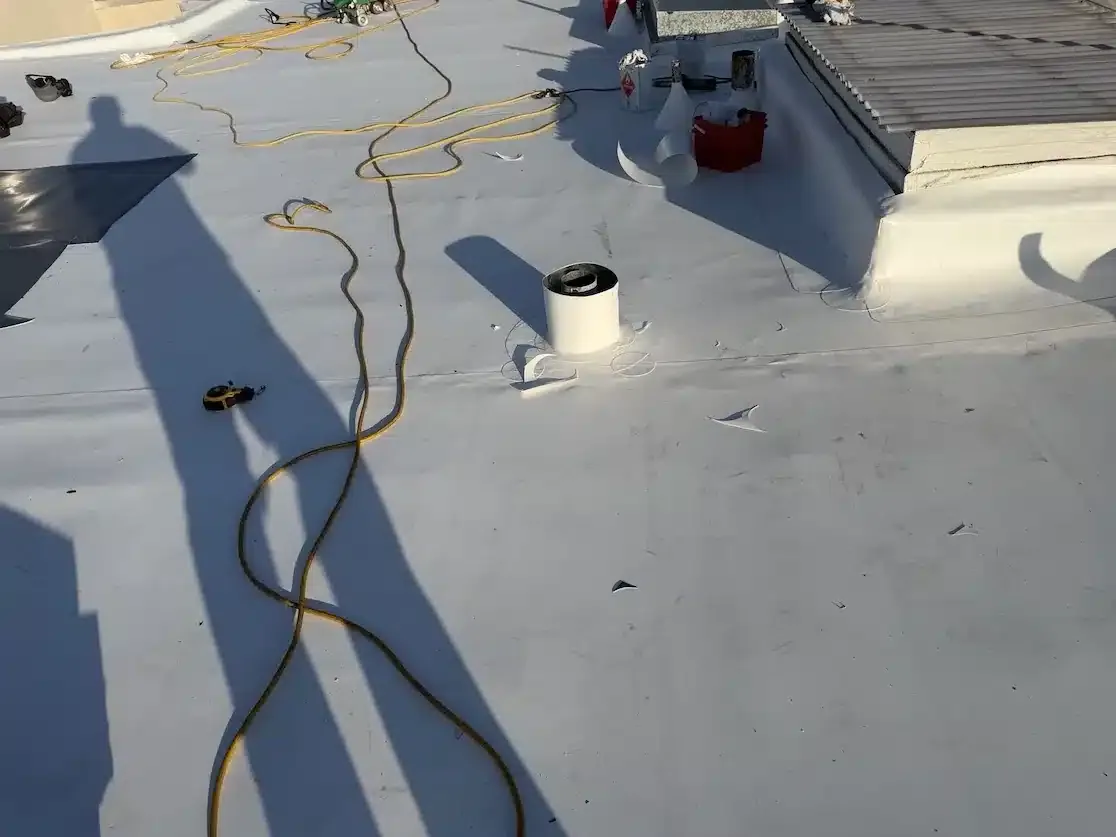
A repair should define the failed area and how new material connects with sound existing roofing. We remove loose material where required, prepare the surface and install compatible plies, flashing or surfacing for the assembly. The closeout record includes photographs and the location of the tie-in. If an opening exposes wet insulation or damaged deck, we stop at the agreed boundary and document what needs approval before expanding the scope.
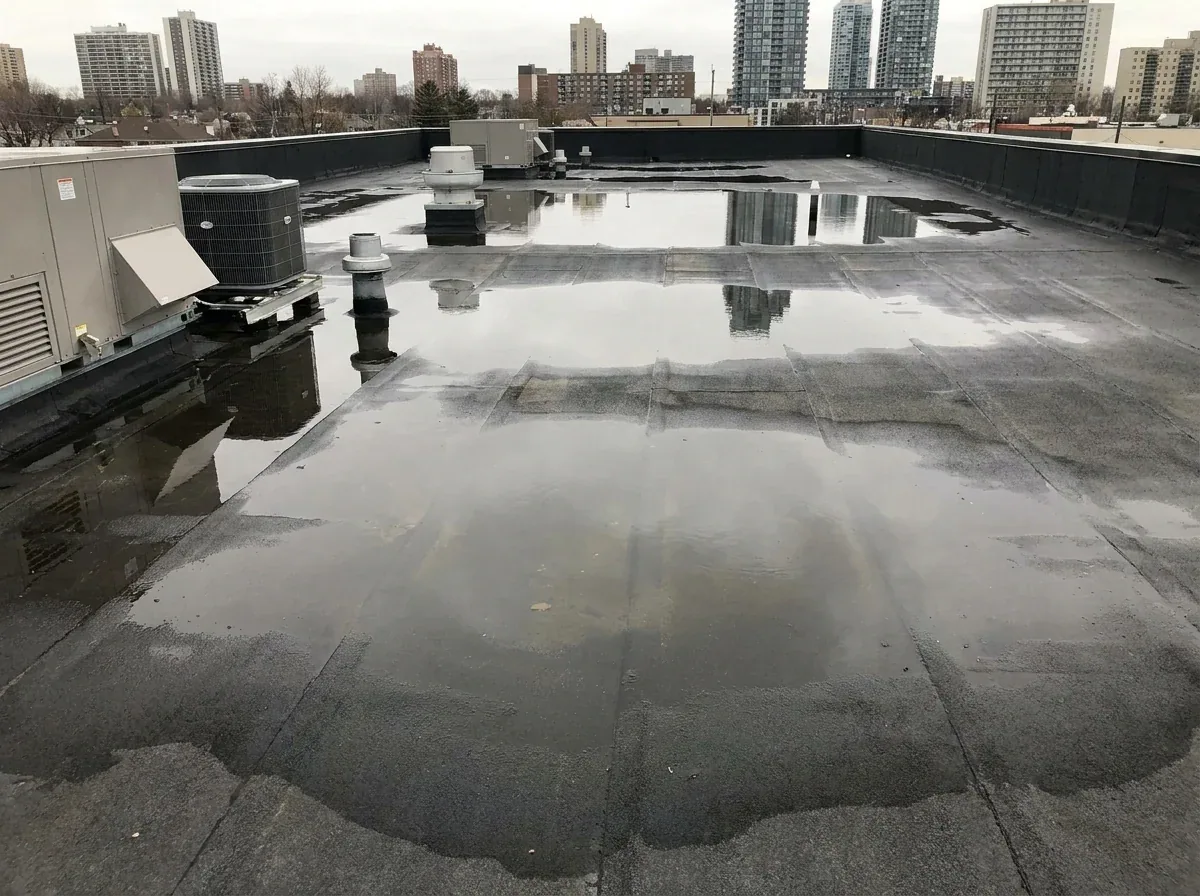
Water from an interior stain can travel along a roof layer before it appears below. We compare the report with slopes, drains, penetrations and prior patch locations. A ponding-water investigation can separate outlet issues from membrane defects, while an edge and flashing review focuses on transitions. The findings determine whether a repair remains local or merits a wider condition survey.
Protect the Roof Between Work Shifts
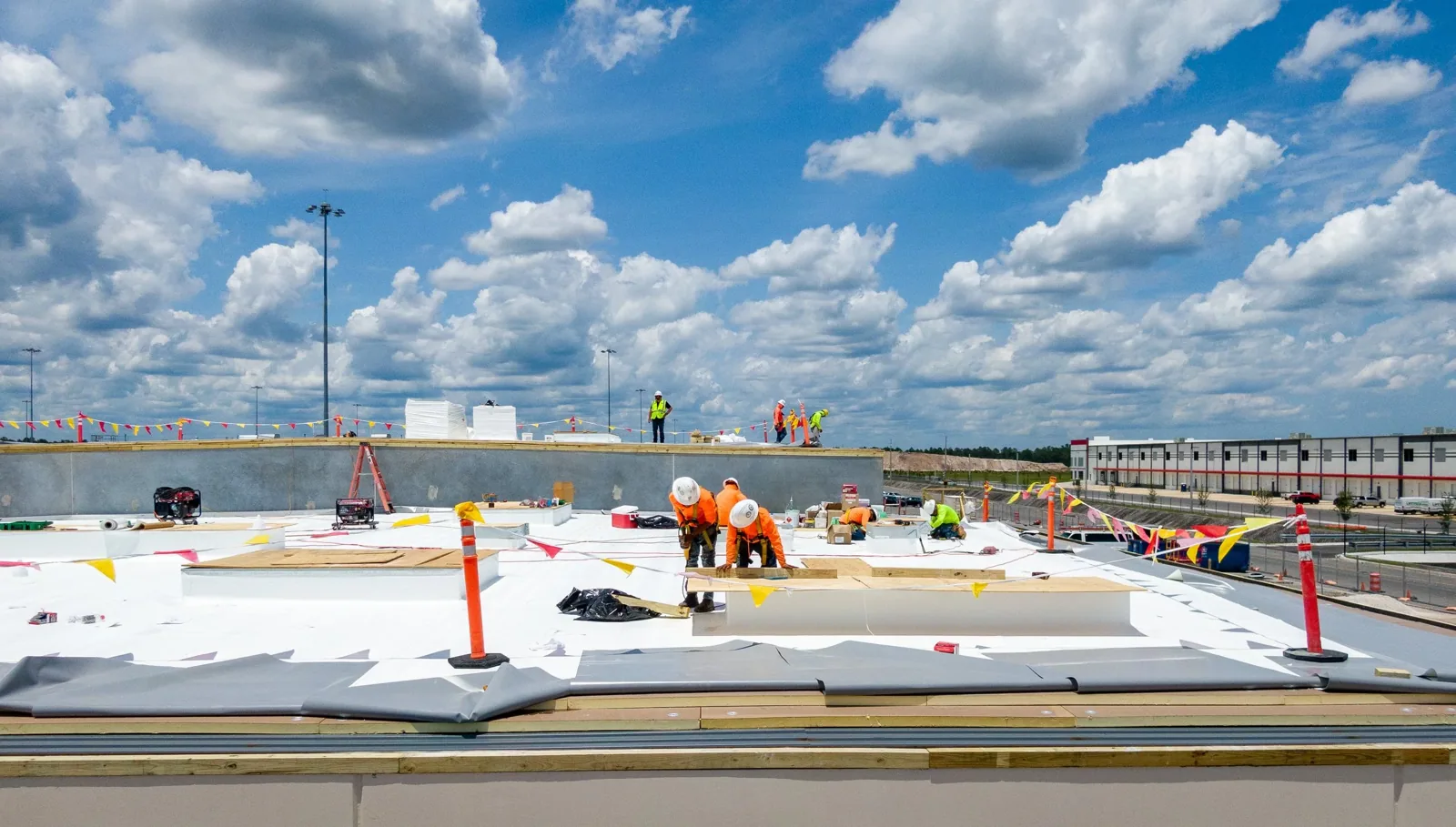
Removal and resurfacing can expose areas that must be kept dry at shift end. We define daily work zones, temporary protection, material storage and the route to the roof before mobilization. For occupied offices or retail floors, the facility director identifies access hours and any room or tenant that needs additional protection. The project file notes what has been completed, which area is sealed and what remains open for the next shift.
Downtown Burbank’s pedestrian-oriented streets and active commercial spaces can affect deliveries and work hours. A property manager should identify loading and customer access constraints in advance. We sequence roof sections around those conditions and coordinate noisy or disruptive steps with building operations. The occupied-building work plan connects notices, staging, daily dry-in and turnover with the roofing sequence.
Compare More Than the Surface Repair
A patch can address one defect while the rest of a built-up roof remains serviceable. We compare the plies with a TPO system only when the full assembly supports that change. When repair calls spread across sections, we compare the map and prior invoices with moisture checks and observed surface conditions. A replacement scope should show removal limits and any insulation or deck allowance. A recover scope must establish that the existing layers and substrate can support added material and that the selected system permits it.
For an alteration, the city directs the design team to review state energy provisions against the building category and the exact work scope. We provide the roof and insulation details for project review, while the permitting authority makes the applicability decision. If cover board or insulation changes, the insulation scope should resolve added height at drains, curbs and edges before the assembly is ordered.
Leave the Layer History With the Owner
At completion, we record the work area, material installed, repair boundaries, drain and flashing details, photographs and approved changes. The file should say whether work was a patch, a section renewal or a broader replacement, and it should identify any conditions left for monitoring.
We review built-up roofs throughout Burbank, including Downtown, the Airport District and Magnolia Park. The Downtown Burbank service area describes a broad district with mixed commercial use, not one property. Schedule a field review around building access and the capital date. Provide roof plans, previous scopes and interior reports so we can record the existing layers and show the options supported by the inspection.
Commercial Roofing Questions
How do you know how many built-up layers are on a roof?
We review exposed edges, drain and curb transitions, prior roof records and any previous openings. The number can vary across a building, so one view may not represent every section. Where the assembly remains uncertain, we identify an opening or test needed to confirm layers before pricing removal or recover work.
Can a built-up roof be repaired instead of replaced?
A repair can fit when the defect is limited and nearby plies, substrate and drainage remain serviceable. We map the damaged area, check adjacent flashing and document the repair boundary. Recurring leaks or moisture across several roof sections may justify a larger survey and comparison with replacement.
What is the difference between BUR and modified bitumen?
Built-up roofing is assembled from multiple reinforcing plies and bituminous layers. Modified bitumen uses factory-made sheets with reinforcing and modified asphalt. We inspect the existing system and describe its components before specifying repair materials, because the installation methods and details differ.
Can a new roof go over an existing BUR system?
A recover depends on the layers, moisture, deck, attachment and new system requirements. We document those conditions and review added height at drains, curbs and edges. If wet material or an unsuitable substrate is confirmed, covering it would not resolve the condition and removal should be compared.
How do you keep work areas dry between shifts?
We divide removal into sections and identify the temporary protection and end-of-day check for each one. The work plan covers weather monitoring, open edges, material storage and the areas below. The facility contact receives a record of what is sealed and what must be inspected before the next phase.