Commercial Roof Leak Repair in Burbank, CA

A leak report starts an investigation; it does not identify the roof opening by itself. Water may travel from a seam or penetration along insulation, deck, framing or building services before it reaches a ceiling. We collect the date and weather conditions, interior location, prior repair history and roof plan, then inspect the likely route. The technician records confirmed observations separately from possibilities so the owner can see what the visit established. If the source remains uncertain, the next step may be a controlled test, another visit during leakage or an approved opening. This avoids placing a patch only above the interior stain and mistaking that action for diagnosis.
Connect roof observations to interior reports
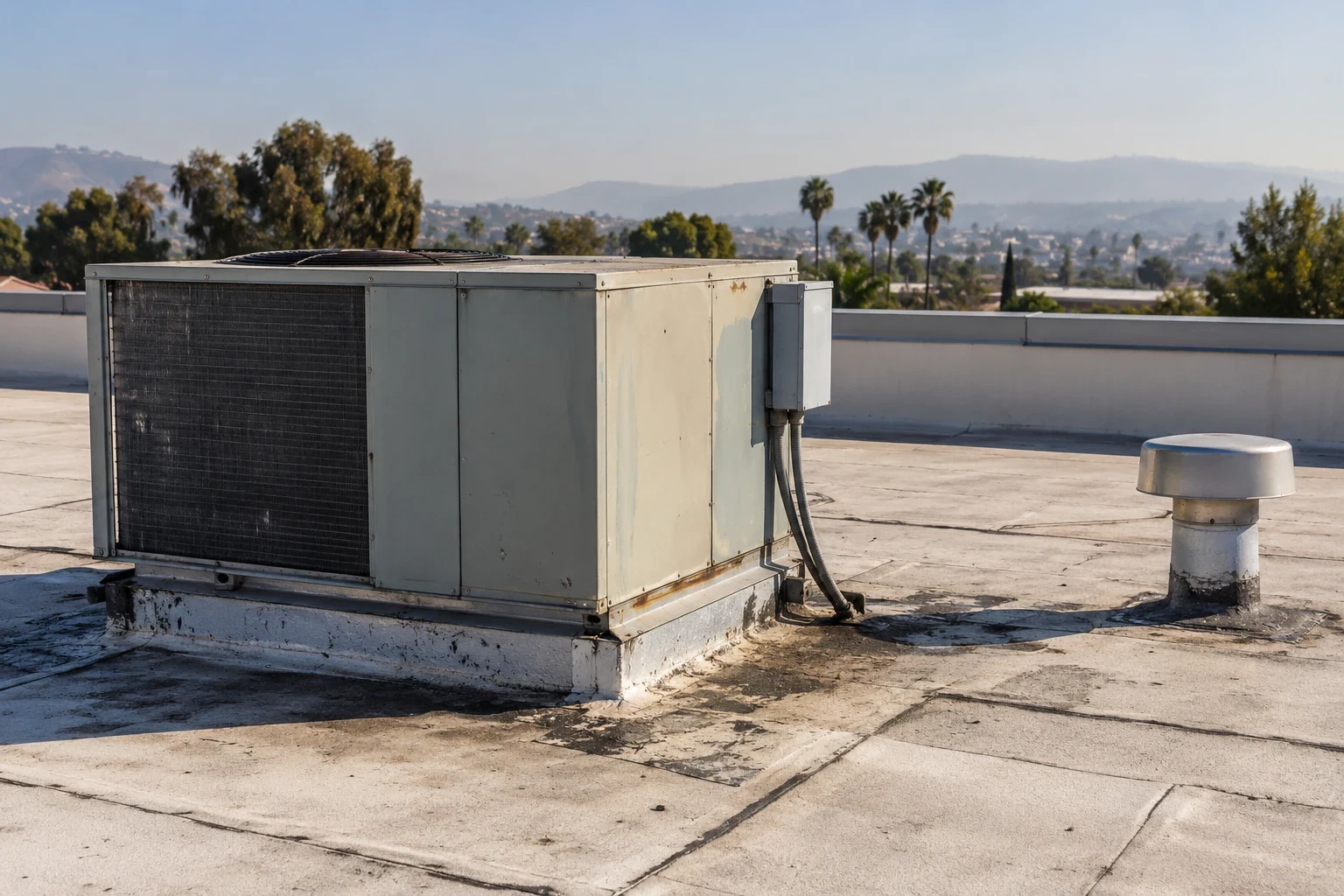
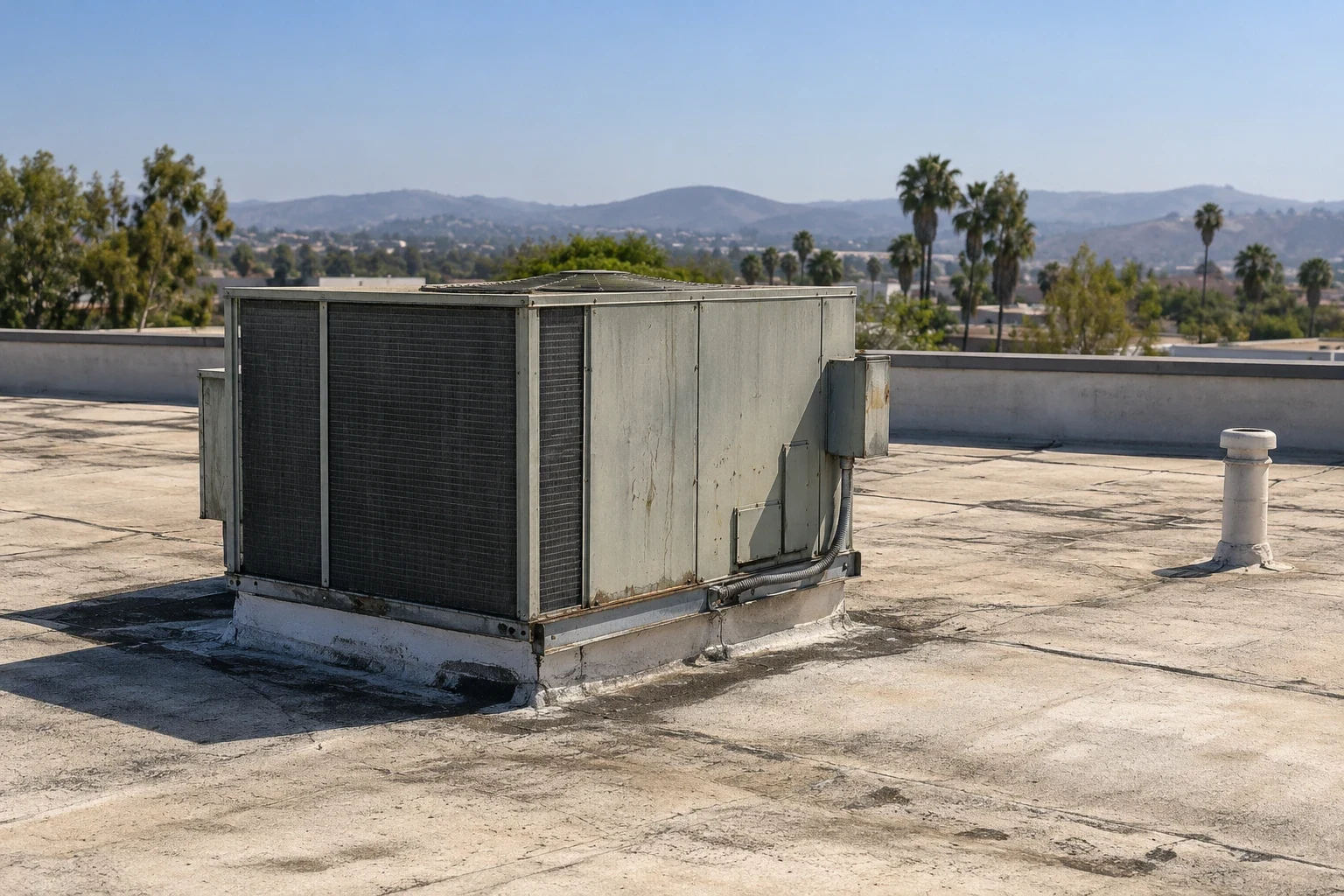
Facility staff can help narrow the search by noting when water appeared, whether it followed wind or sustained rain, how quickly the stain developed and whether the area has leaked before. We map the interior location to roof zones, then check slopes, drains, seams, edges, penetrations, curbs and wall transitions in that vicinity. Rooftop equipment and conduit may create routes for water that are not directly above the affected room. Where a roof section serves several tenants or operating areas, we record the access restrictions and avoid entering spaces without approval. A photo log with a simple map reference helps property teams compare new reports with prior service calls.
Choose a test that can answer a real question
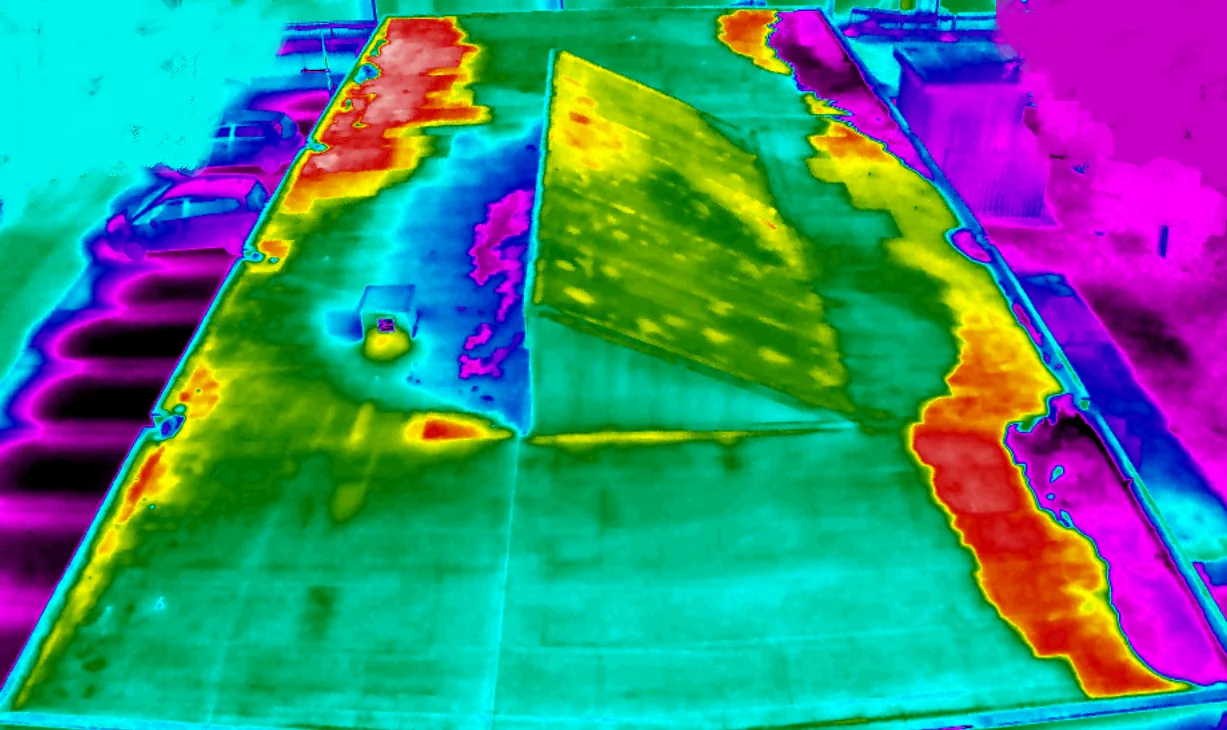
Not every leak needs a scan, hose test or core opening. We identify the uncertainty first, then recommend a method that can help resolve it without introducing avoidable risk. A scan may help identify a pattern for follow-up, but infrared temperature differences do not independently prove wet insulation. A controlled water test may isolate a detail when weather and assembly allow, though it requires planning to protect occupants and equipment. A core opening may provide direct evidence but needs owner approval, restoration materials and a record of its location. We explain the limits and expected result of each test, so the facility director can decide whether added investigation is worthwhile.
Repair only after the substrate and system are understood
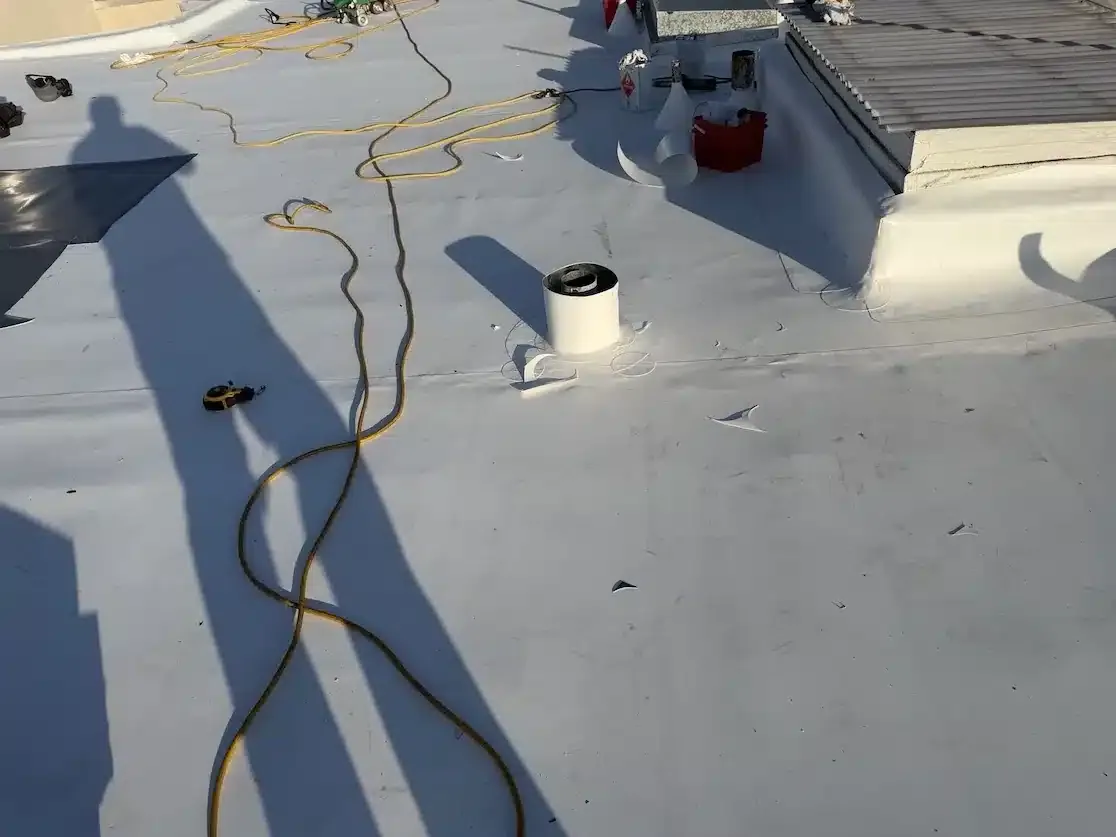
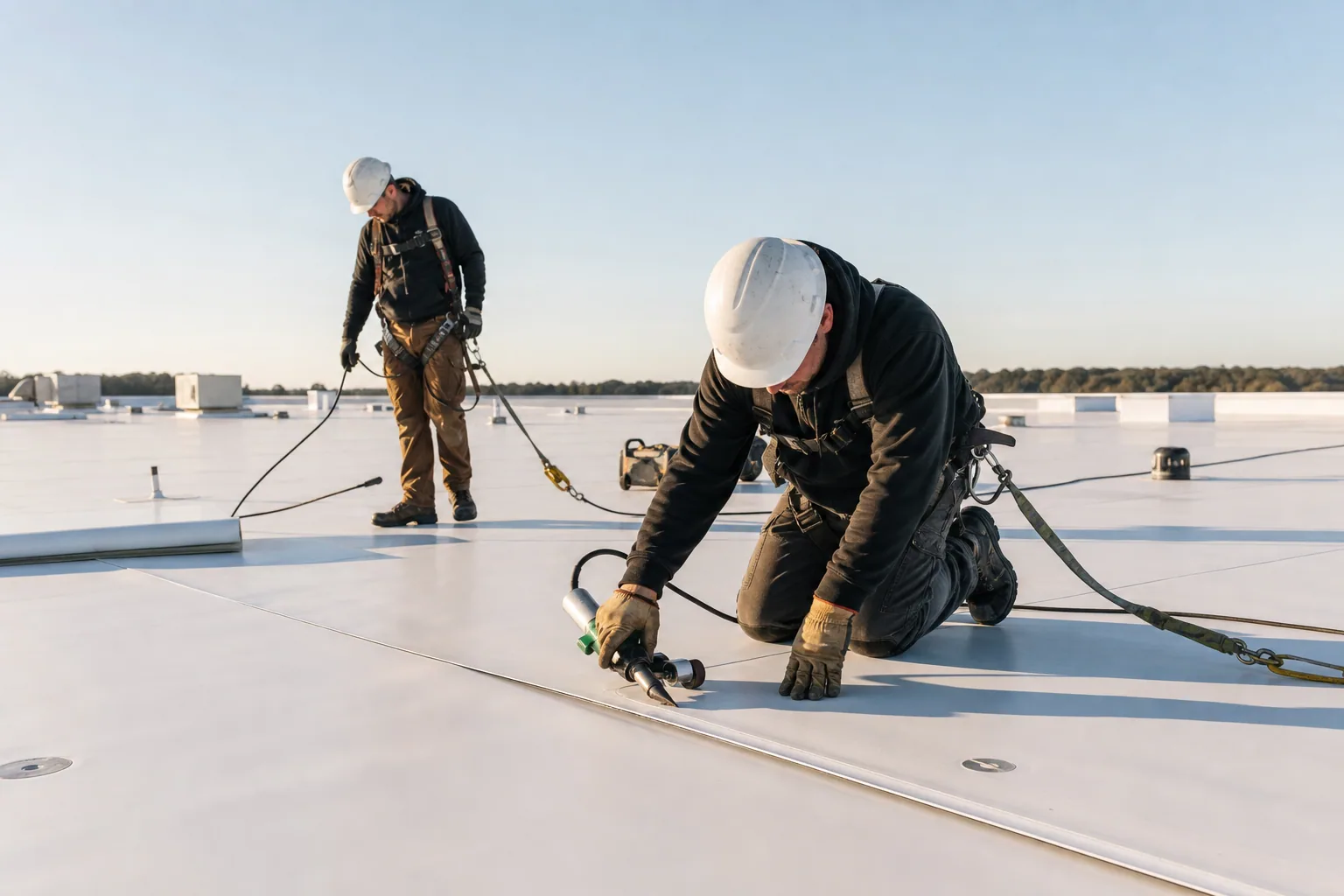
A durable repair depends on compatible materials and a sound, adequately dry surface. We identify the roof membrane where possible, inspect surrounding seams and verify whether the proposed patch reaches stable material. A repair to TPO membrane details differs from work on modified bitumen, coating or metal. If the assembly is wet, loose or unidentified, we explain the issue and whether additional evaluation is needed before permanent work. The repair scope should state its limits: location, preparation, materials, test method, weather conditions and warranty considerations. A small patch can be appropriate for an isolated defect, while recurring problems may call for a broader commercial roof repair plan.
Protect the occupied space while work proceeds
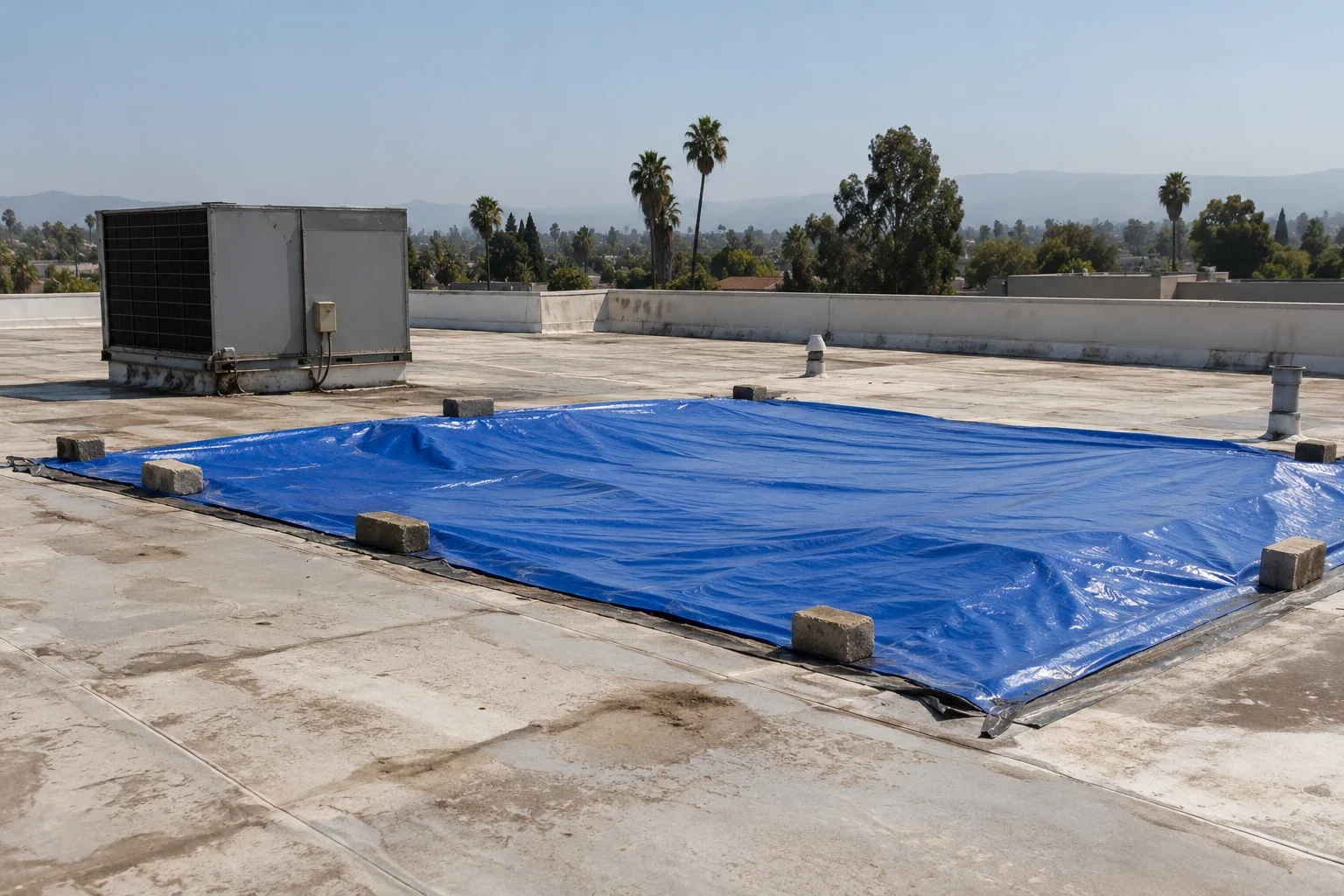
When active water threatens finishes or equipment, the property team may need to contain water, move sensitive contents and protect electrical areas before roof work begins. We coordinate with the designated facility contact on entry, escorts, work windows, interior access and any area that should remain open. Temporary protection may be possible, but it must be identified as temporary and followed by a permanent repair plan. Roof access should avoid blocking emergency routes or drains, and the crew should know where materials can be staged. Burbank’s Downtown, Media District and Airport District have varied business uses; we confirm each property’s schedule and access rules rather than assuming a standard daytime window.
Keep temporary protection and permanent repair separate
A temporary patch may reduce immediate water entry but may not meet the roof manufacturer’s repair detail or restore the full assembly. We describe its expected service period, the conditions that could limit it and what follow-up remains. A permanent repair may require dry weather, system-specific materials or removal of wet layers. If an emergency measure is needed first, see our emergency roof response. The work order should record who approved each step and when the permanent scope will be reviewed. This separation is important for budget approvals, warranty discussions and maintenance records, especially when a temporary measure is installed after hours and another team completes the permanent repair.
Use a repair record that supports the next decision
The service record should show the reported symptom, roof zone, inspection observations, photos, materials, work performed and any limitation or recommendation. Note whether the area was tested and what conditions prevailed during the test. If a leak returns, the record helps compare the new evidence with the original source theory rather than restarting from a vague work-order description. We can connect the issue to a commercial roof inspection or infrared moisture survey when a broader review is justified. For recurring problems, a maintenance visit can track drains, seams and prior repairs.
Close the loop with the facility team
Before leaving, the technician reviews what was repaired, what could not be verified and which signs should trigger a call. The owner should know whether to check the ceiling after the next storm, whether a dry-out or interior contractor is needed and when the roof requires reinspection. We do not represent that every building leak is a roofing issue; plumbing, HVAC condensation and wall openings can also contribute. If the roof source is not confirmed, that uncertainty stays in the report. For service planning in Downtown Burbank, we coordinate access with the property contact and preserve the same evidence trail for a one-time repair or continuing roof program.After the first visit, we can organize the evidence into a simple source path: reported interior point, likely roof zone, observed opening or transition, and any test still needed. This format gives property leadership a clear reason for the repair scope and a record of what could not be confirmed. We also note whether a ceiling or wall repair is separate from the roofing work, since drying and interior restoration may involve different contractors. The roof team can return to the mapped section after suitable weather and check whether the repair remains intact. For multi-tenant buildings, we identify a single facility contact for follow-up so a new report includes date, weather and exact interior area instead of only a generalized leak complaint. If another roof zone shares the same drainage path, we label it separately and record whether it was examined. This prevents a later work order from confusing an adjacent condition with the leak source under investigation. We can note whether the affected roof section is near a drain, wall or equipment curb, then compare the same landmarks on the next visit. That small addition makes the record easier for a property manager to use when a different technician follows up.
Commercial Roofing Questions
Can you find a roof leak from the ceiling stain?
The stain is a useful starting point, but water can travel before appearing indoors. We compare interior evidence with roof zones, details, drainage and prior repair records.
Does an infrared scan prove the roof is wet?
No. Temperature patterns can identify areas for follow-up, but other inspection or approved testing may be needed to confirm moisture and its extent.
Can you make a temporary repair during a storm?
It depends on access, safety and weather. We discuss immediate protection separately from a permanent repair, which may require dry conditions and compatible materials.
What information should I provide?
Share when the leak occurred, interior location, weather context, photos, roof plans, previous repairs, access limits and any equipment or tenant area at risk.
What happens if water returns after repair?
We review the original record, inspect the roof zone and compare new evidence with the prior source theory. The next step may be a different test or expanded repair scope.