Commercial Roofing for School Districts in Burbank, CA

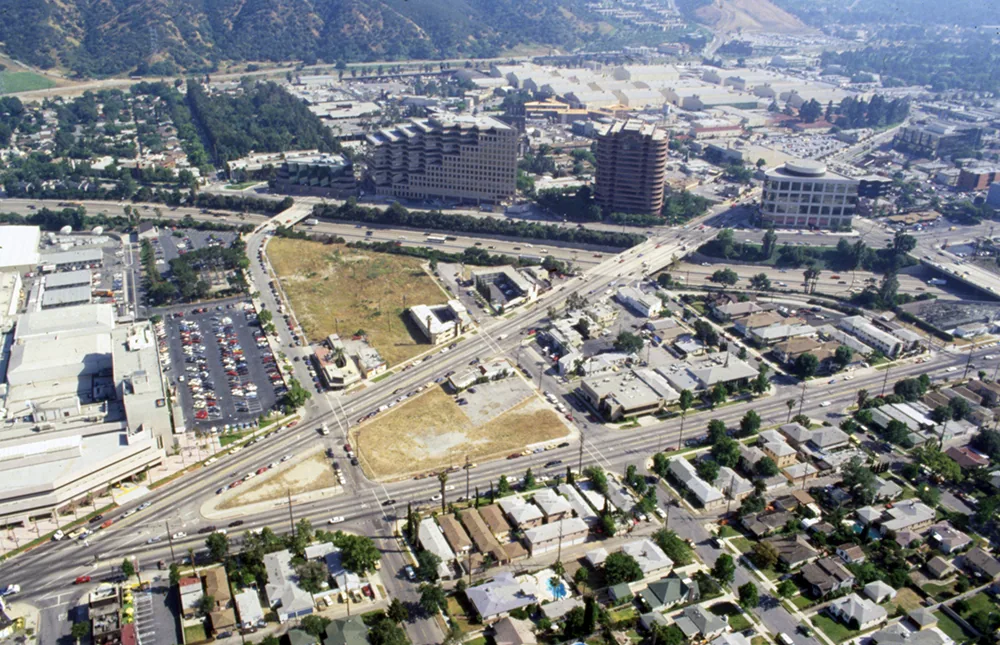
Sequence classroom-side protections and occupied paths first, then give district staff a condition record they can use in a funding review. Burbank's Media District includes education employers among a mixed group of office, healthcare, entertainment and production uses. Nearby North Hollywood connects to Burbank at the east side of its community-plan area, with the 101 and 134 along its southern edge. Those regional contexts do not determine any school's roof condition; each building needs a separate inspection. We map the affected roof sections, note areas below them and prepare a roof inspection record that facilities staff can use to compare summer work, a limited repair or a longer renewal plan.
Use the Calendar as a Work Constraint
A summer break can create longer access windows, but it does not eliminate summer programs, custodial schedules, deliveries or staff occupancy. We ask the district to identify testing periods, athletic use, meal-service routes and any building that must remain open. The roof sequence is then divided into sections with a daily weather closeout and a clear handoff to custodial staff. If work must continue during instruction, we state the routes, noise windows and overhead protection needed before a crew is assigned. An occupied-school phasing plan should list which areas are open, which are restricted and who releases them back for use.
District facilities staff can list summer school, athletics, custodial work and planned deliveries before the roofing schedule is set. A calendar block alone does not indicate that a building is empty, so we confirm which rooms remain in use and who controls keys and roof access. The work plan identifies those dates and the contact responsible for each release.
Separate Building Evidence by Campus
A district portfolio may include classroom wings, gyms, kitchens, administration space and additions from different periods. We record the roof section and building name on each photo, then note what assembly was visible and where an approved test would be needed. A drain problem over a gym should not become a conclusion about classroom roofs, even when both buildings share a maintenance budget. If a school remains open during work, we map the safest access route and identify where students, staff, buses or service deliveries intersect with staging. That makes the scope specific enough for facilities staff to brief a principal and compare contractor proposals without merging unrelated roof findings.
Student circulation should stay distinct from contractor movement. We identify entrances, bus areas, playgrounds and service paths near the proposed staging zone, then coordinate barriers and material drops with school operations. If the safe route changes during a project, the district receives the revised access plan before the next shift begins. Keep the public procurement record aligned with school access approvals, but leave each campus calendar intact.
Check the Roof Assembly Before Planning Renewal
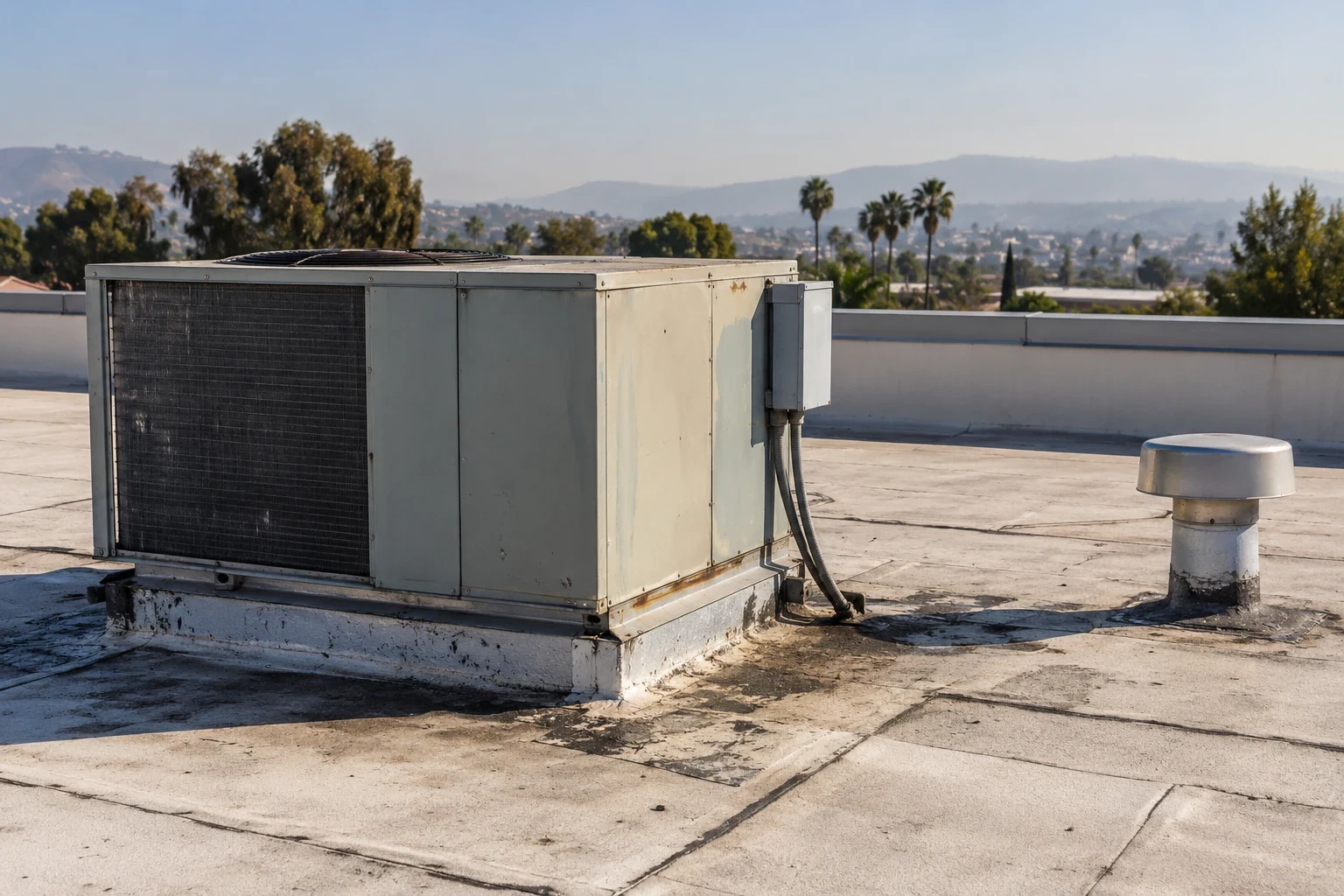
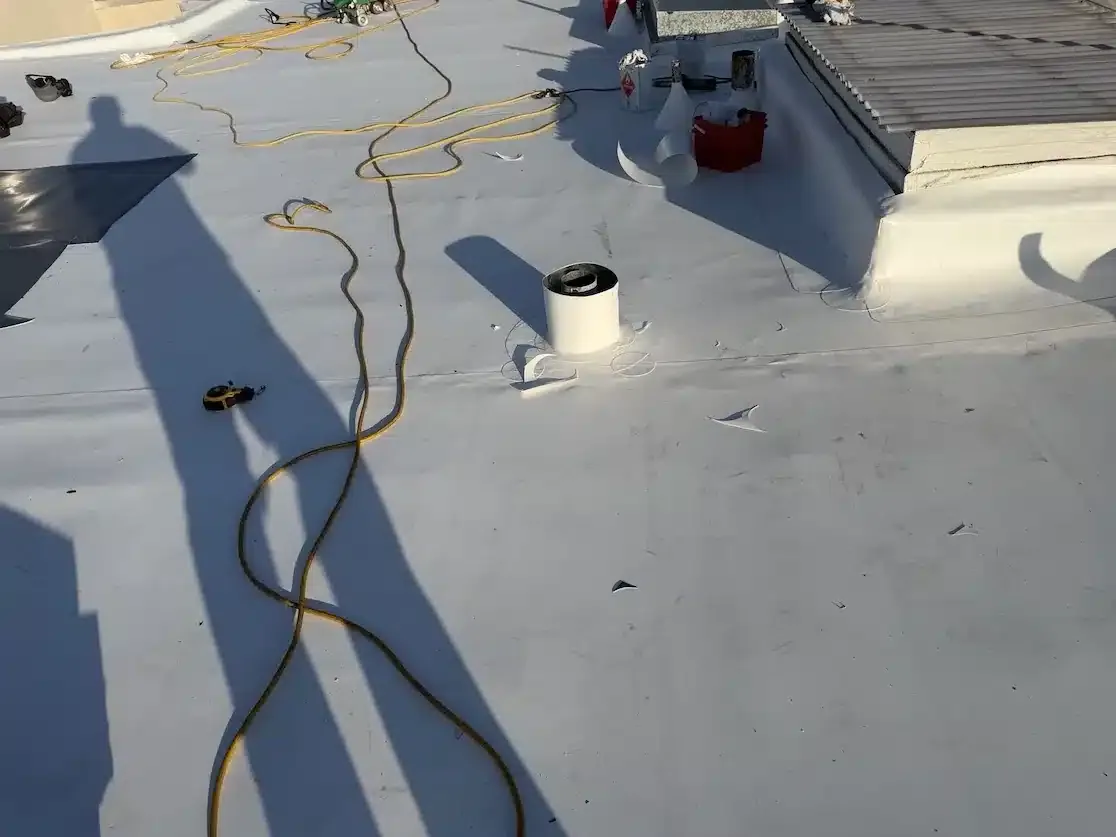
Membrane repairs, metal details and coatings require different preparation, compatibility and closeout steps. We check edge securement, wall transitions, drains, equipment curbs, skylights and prior patches before presenting options. If several sections show recurring failure or moisture under insulation, a district may need to compare repair with replacement rather than extend a weak patch. Before reserve review, separate conditions seen at the roof surface from concealed areas that would need a test to estimate. A TPO assembly review or other system comparison follows the existing roof and project documents, not a general assumption about school buildings.
A district roof register can track building, section, system observed, prior work, open testing and next action. Keep dated photographs attached to each location rather than filing them under a district-wide album. This makes an annual budget review more reliable and helps staff explain why two roofs with similar age may need different timing or scopes. District staff can compare roofs without treating every building alike: Downtown Burbank includes office, retail and storefront activity, while the Media District is an employment area with education, health, office and production uses. A school schedule remains the controlling access document.
Coordinate Permits and Project Records
For code planning, Burbank moved to its locally amended 2025 California edition on January 1, 2026; applications meeting the city’s 2025 cutoff stay under the 2022 code. District staff and the design team should identify the relevant permit timeline for a proposed project. For school work, eligible nonresidential changes in Burbank with permit valuations at the $200,000 level can be subject to debris diversion; district staff can verify the current permit checklist before bid. We help define roof removal and installation scope so the project team can plan documentation and closeout. A capital-planning schedule can show which building decisions need current-year approval and which require another design or permit step.
Where replacement is under consideration, the bid documents should call out deck repair allowances, insulation removal, edge metal, drainage and interior protection separately. That lets procurement compare like scopes and leaves room to resolve a concealed condition after approval. We identify the test needed to price the unknown rather than burying it inside an overly broad contingency. The building access register offers a useful comparison for mixed-use assets, while district approvals stay with school staff.
Give the District a Comparable Priority List
The campus register should identify the inspected wing, photo set, access exclusion and action still waiting for approval. District staff can compare open needs by active water, student or equipment exposure, work-window availability and project readiness. Keep the original evidence with each building so a districtwide view does not erase important differences between a classroom wing and a gym. The next step is a Burbank roof review with building plans, leak dates, summer and school-year calendars, prior repairs and the funding decision date. We can identify what is ready to bid, what needs an approved test and what can remain under monitored maintenance until the next capital cycle.
Burbank's code timeline can affect applications and project documentation, and the permit team should identify which code edition applies to the submission date. For work subject to debris diversion, define removal and disposal in the construction scope before bidding. A roof map and section-by-section quantities make that coordination clearer without treating every building in the district as identical.
Where several schools are considered in one budget cycle, the district can group similar access needs while keeping each roof's findings separate. We note which building has active water, which has a scheduled project window and which still needs a test. That list helps facilities staff sequence design and procurement without ranking by anecdote.
A daily closeout should name the door or route returned to service, the roof section secured, materials removed and the next access date. If rain is forecast or a roof edge remains under temporary protection, we identify the responsible contact and next inspection point. School staff then have a clear handoff before students return.
Commercial Roofing Questions
Can a school roof project happen during the academic year?
It may, if access, noise, student routes, deliveries and overhead controls can be separated from the work. The district identifies restricted hours and occupied spaces, and we phase the roof sequence to those conditions.
What should facilities staff provide before inspection?
The campus map, leak history, ladder controls and immovable instructional dates give the survey a workable boundary. Include any rooms or equipment that need a specific protection plan.
Does one school building represent the district portfolio?
No. Gyms, classroom wings, kitchens and additions may have different decks and roof histories. We document each section separately before preparing a district-level priority list.
When should a district evaluate replacement instead of another patch?
Repeated failure, broader moisture, weak transitions or incompatible prior repairs may justify a renewal comparison. The report identifies the evidence and the further test needed if concealed conditions remain open.
How can summer work avoid conflicts with school programs?
List custodial shifts, summer classes, athletics, deliveries and building openings before setting mobilization. We identify staging and roof zones in the sequence, with a daily safe stopping point and named release contact.