Commercial Roof Capital Planning in Burbank, CA
A capital request should describe the roof decision, not just the amount requested. The facility director needs to know which sections need work, what evidence supports the scope, what can wait, and what event would change that timing. Burbank average highs reach 85.8 F during July and 88.3 F during August; use this only to shape seasonal budget scenarios. That local heat context makes surface and seam condition relevant, but a station reading does not predict an individual roof's failure date. We inspect the assembly and connect the result to a budget action.
Our comparison separates repair, roof recovery and replacement rather than combining unlike work into one total. Downtown Burbank has a broad mix of shops, restaurants, businesses, office and retail space; an occupied building's access and operating windows affect staging as much as material choice. A condition report supports that comparison. We can also review portfolio records and identify the next inspection that could reduce budget uncertainty.
Tie Each Request to a Roof Section
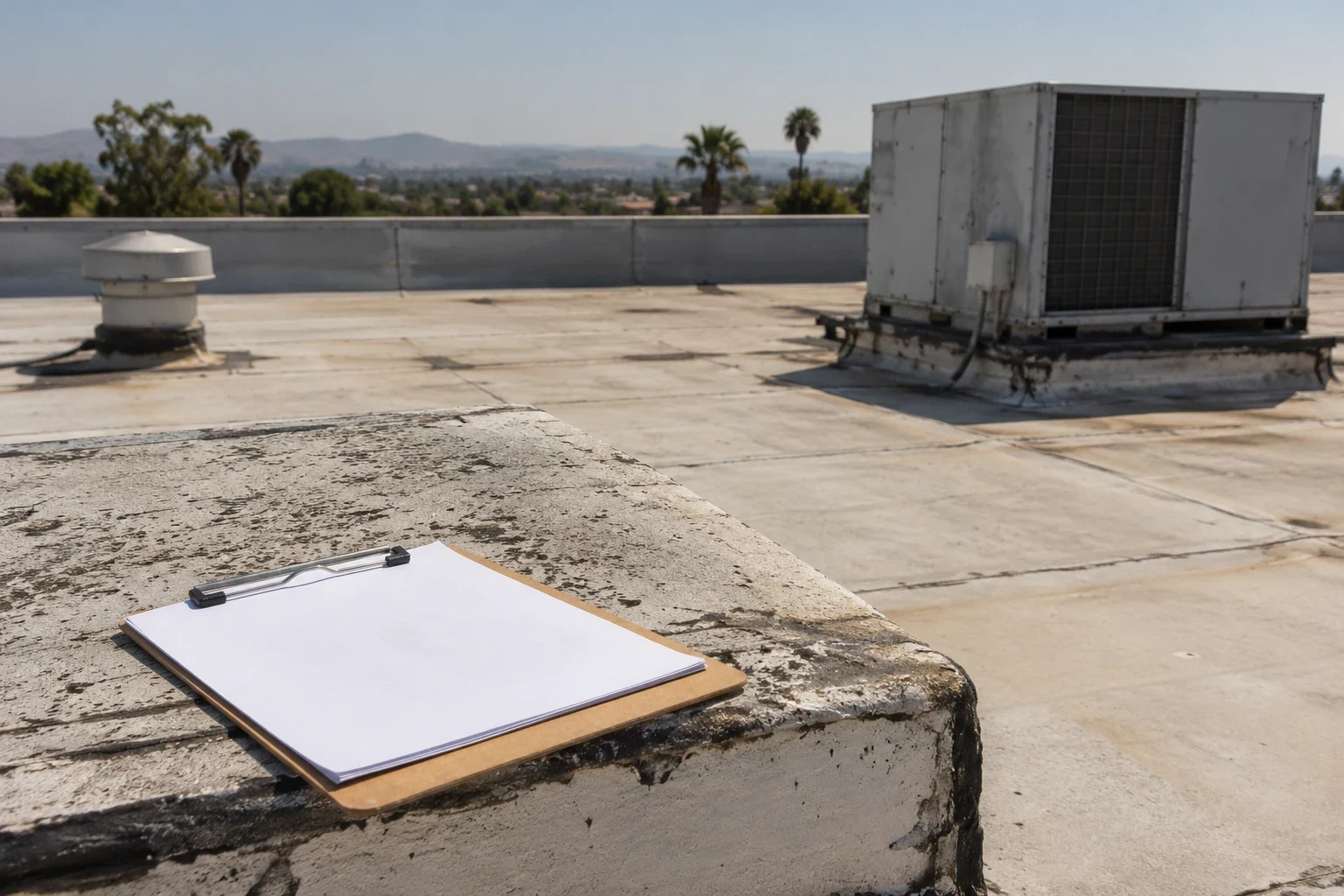
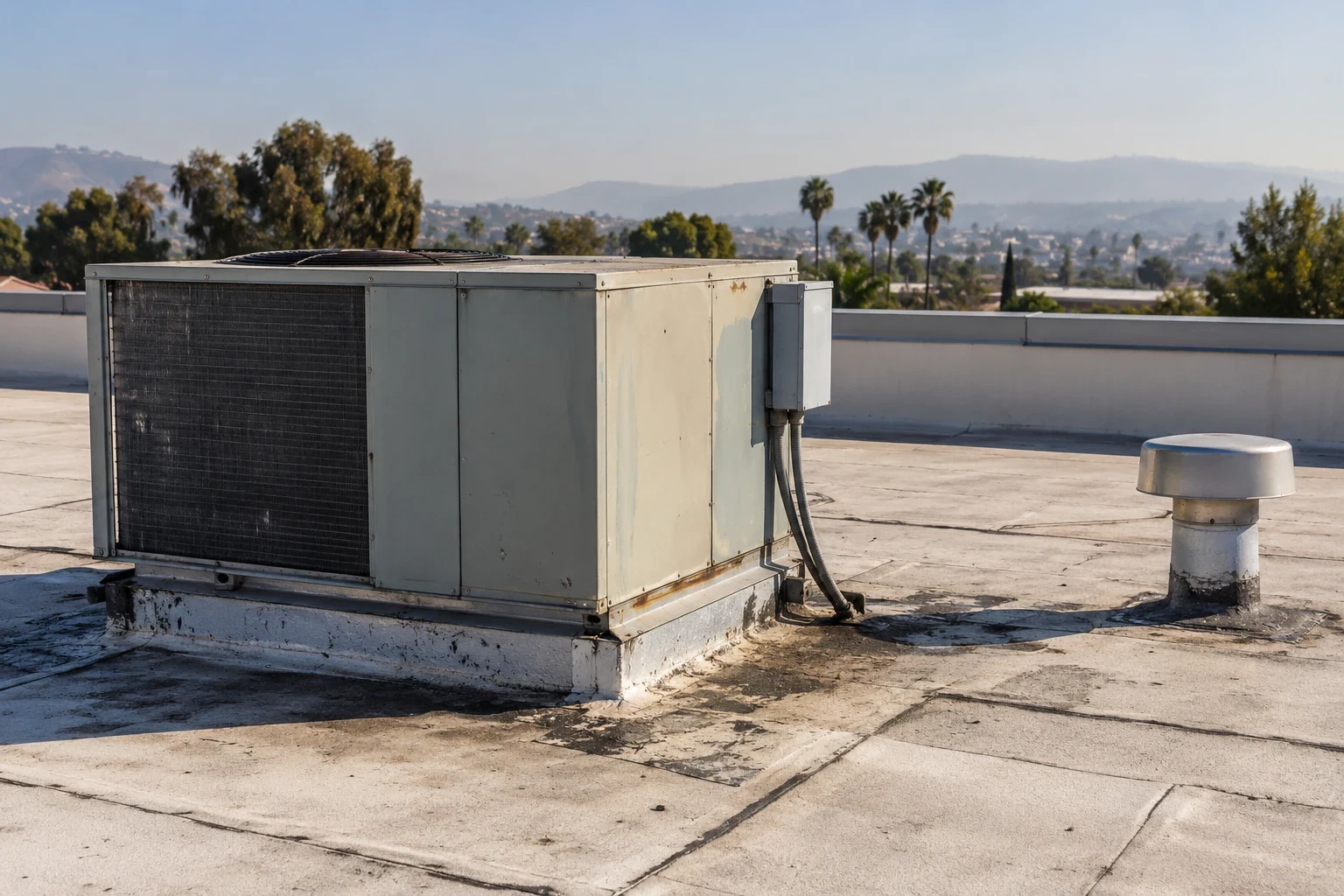
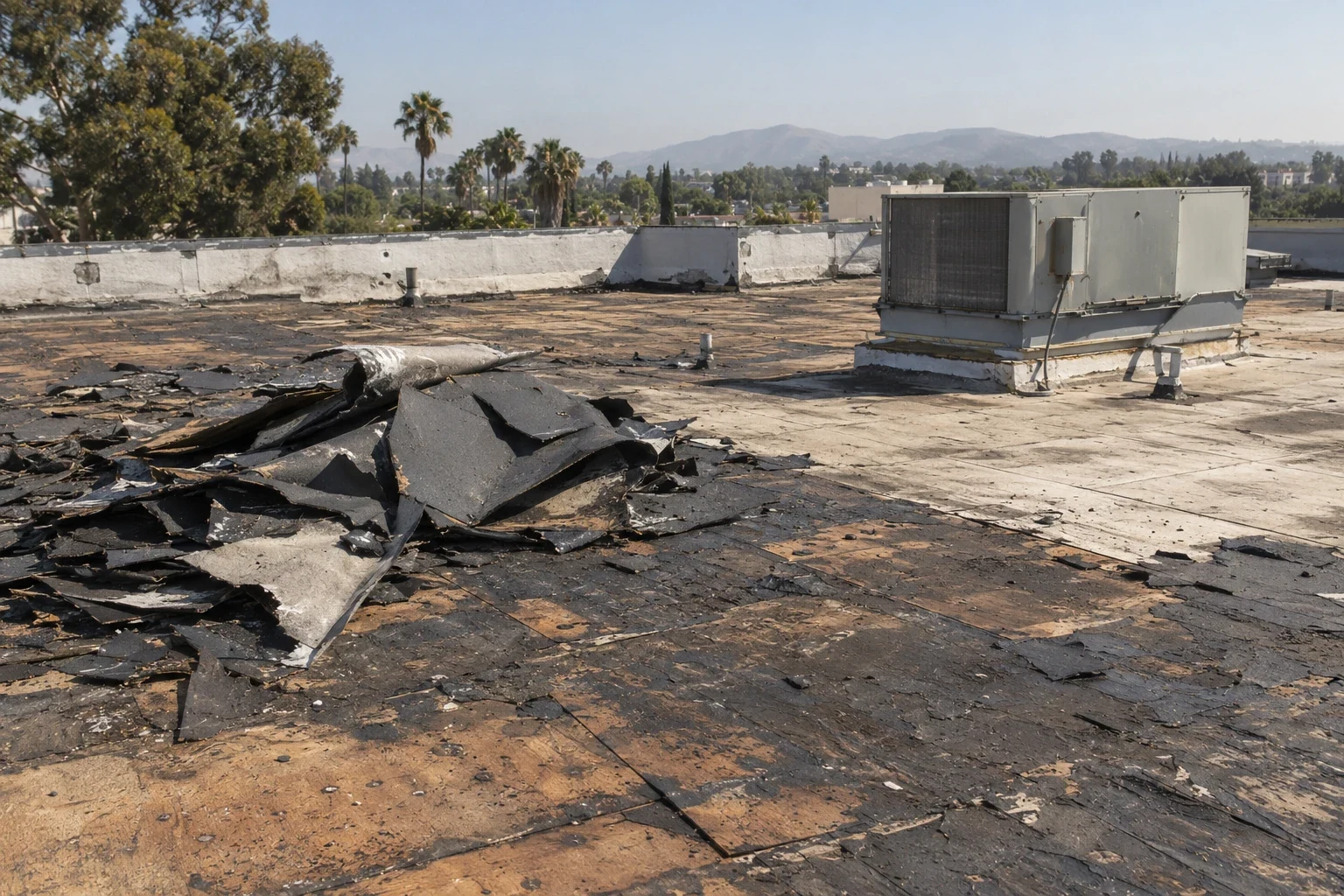
List the observed condition, its location and the method used to evaluate it. A request for seam work should identify the affected run and adjoining details. A replacement request should show the extent of wet or deteriorated material, if confirmed, and explain where investigation stopped. We add photos and a section map so ownership can compare the proposed boundary with prior work. If records are incomplete, state the test or access needed to move from an allowance to a defined scope.
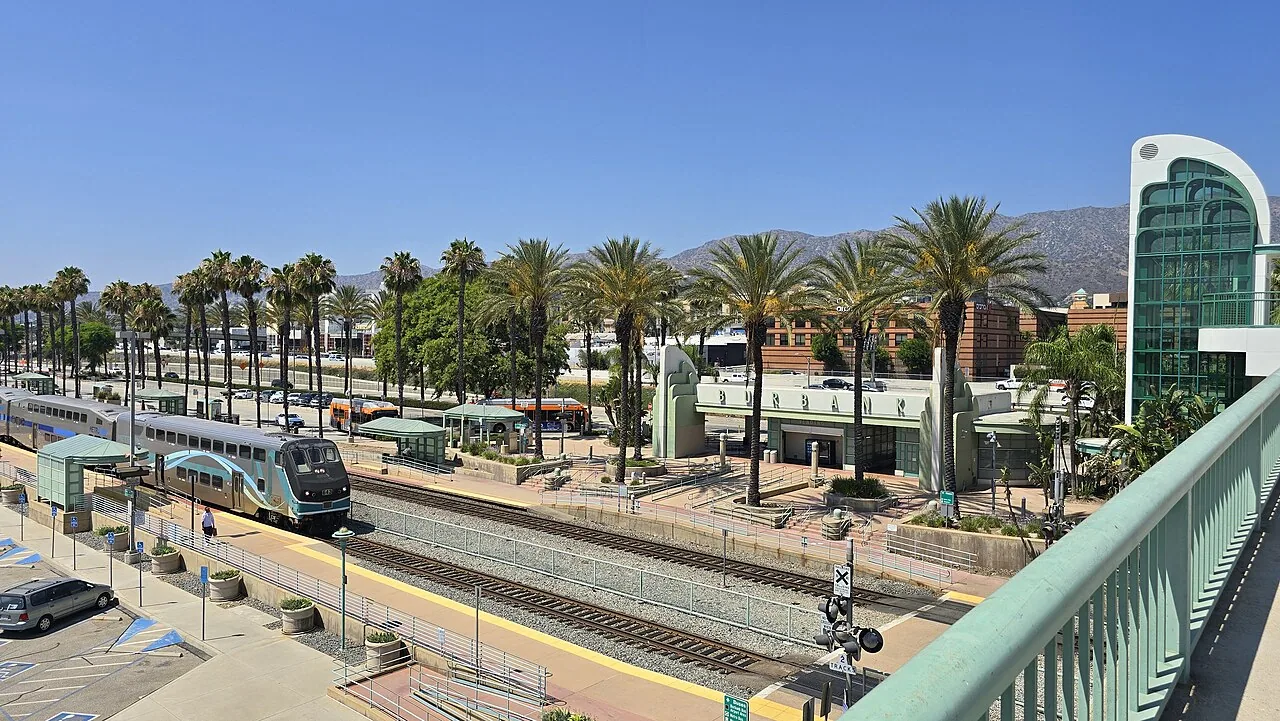
A Burbank capital file may cover the Media District's production, office and healthcare properties or a Downtown tenant building. Those uses do not imply the same roof system or renewal need. We confirm each assembly, roof access and any occupied-floor restriction. A current inspection can establish condition, and an infrared moisture survey may help identify areas for follow-up when roof conditions suit that method. The report keeps findings distinct from the recommended work so a board can review both.
Compare Repair, Recovery and Replacement
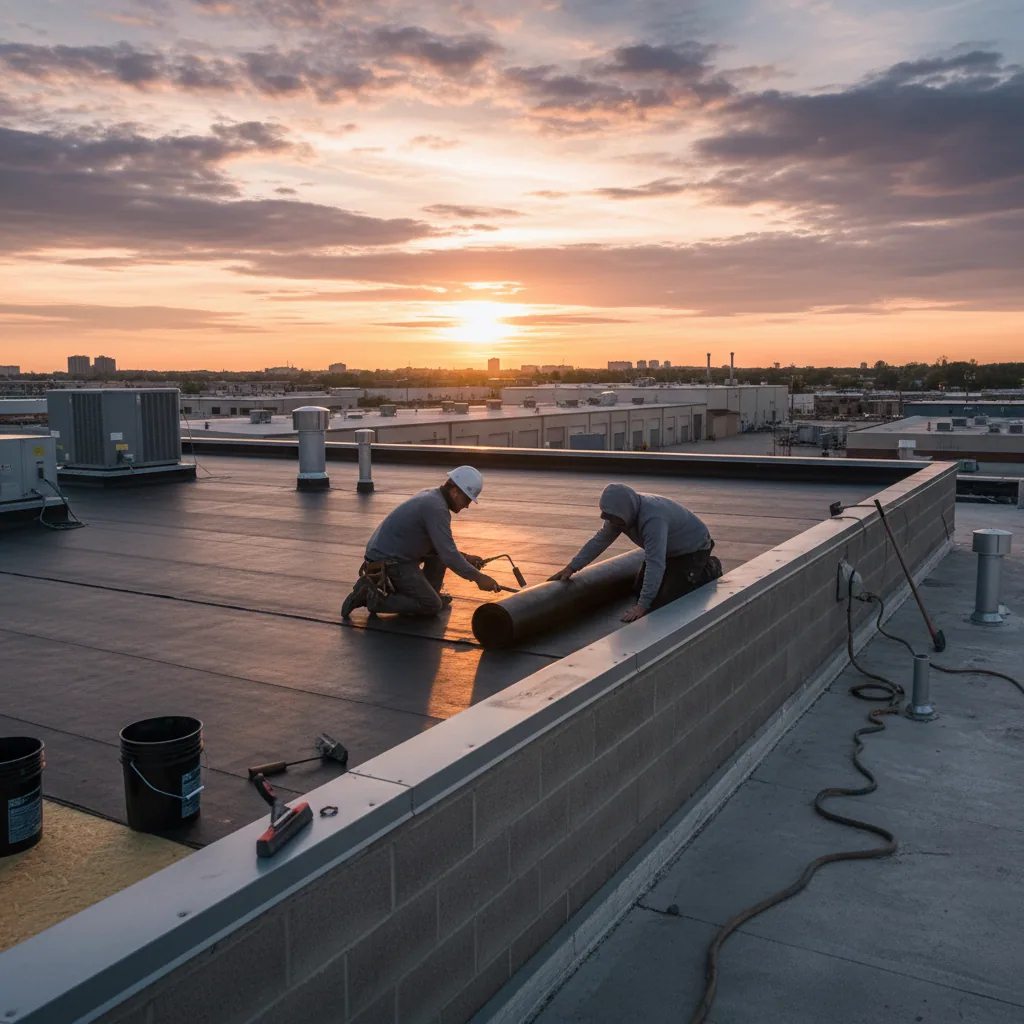
A localized repair may suit isolated failures on a stable assembly; a recover may be a candidate only when existing layers, deck, attachment, drainage and system rules support another roof. Replacement may be more appropriate when damage or moisture crosses sections or the existing substrate cannot support the proposed work. We set each option against the same roof map and describe what it includes, what it excludes, and which unknown could change the choice. That keeps an initial low scope from hiding work that would be needed later.
The comparison should identify tear-off, disposal, insulation, cover board, membrane, perimeter details, drains, rooftop equipment interfaces and interior protection where they apply. It should also note whether the facility can remain occupied during each phase. A recover evaluation checks a different set of constraints than a replacement scope. We explain the basis for both so the owner can compare disruption and capital timing without assuming one method always costs less or finishes sooner.
Plan Around Weather and Operations
Burbank receives 16.50 inches of precipitation in an average year, while summer heat shapes a separate work window. Those measurements describe the station, not a property-specific roof. They still give the schedule review a local frame: a roof project must account for weather exposure, dry-in readiness, material handling and protection of the occupied floor. We set work phases around forecast review and confirm that each section can be made watertight at the end of the shift. The plan names what remains exposed and who makes the go or hold decision.
Downtown's pedestrian-oriented streets and outdoor dining affect how a particular property may need to manage loading or access, but the district profile cannot establish one tenant's operating hours. We confirm receiving windows, customer paths, noise restrictions and staging permission with the facility contact. For a location in the Downtown Burbank area, a roof plan may need a different lift or material sequence than a property in the Airport District. The actual building rules set the sequence.
Sequence Work by Consequence
Rank work by active water entry, material damage risk, safety, equipment protection, repairability and the time needed to obtain approvals or materials. A high ranking should point to a condition and consequence, not simply an age label. We separate immediate protection from permanent work and identify where a targeted test could change the sequence. If an interior area houses sensitive equipment or production, the facility team can tie its operating window to the roof section and the daily weather plan.
Budget phasing can isolate urgent details from broader renewal without suggesting that a patch resolves a system-wide condition. We show the near-term scope, the next review trigger and what must be monitored. The warranty record may constrain a proposed repair, while occupied-building phasing can help define tenant protection and access. These items belong in a capital request because they affect what work is authorized, how it is carried out and when the owner can reopen the next decision.
Give Approvers a Comparable File
A concise approval package contains the marked roof plan, condition photos, options, scope boundaries, assumptions, access sequence, exclusions and a date for the next decision. If costs are included in a proposal, show them beside the defined work and state any allowance separately. Avoid presenting a repair number next to a full replacement number unless their assemblies and inclusions are clear. We can organize the file so finance and facilities teams can ask the same questions about each option before approval.
Close with the evidence that will be gathered after work: completed details, material records, photos, punch items and care instructions. A roof survey for a transaction may need a different decision date than a renewal project already in an annual capital cycle. For a Burbank property near Magnolia Park or the Media District, the neighborhood name adds dispatch context, while its own roof sections and business schedule control the scope. Schedule a review with the roof plan, invoices and next funding date ready.
Before a funding meeting, we check that every option uses the same quantities, roof boundaries and access assumptions. A repair proposal that omits protection or drain work cannot be compared fairly with a full assembly scope. If a condition is still unconfirmed, we show the investigation as a separate decision and explain how its result could change the package. Finance can then approve the known work, authorize a test or hold the broader project without mistaking an estimate allowance for a field finding.
Commercial Roofing Questions
What makes a roof capital request reviewable?
A marked roof plan, dated photos, observed condition, proposed boundary, access sequence, exclusions and the next decision date let reviewers connect the request to the building.
Should a repair and replacement be compared together?
They can be compared when each option uses the same roof sections and clearly states its materials, preparation and exclusions. A localized patch should not be presented as equivalent to a system renewal.
Does Burbank heat set a replacement date?
No. Burbank long-term averages provide climate context, not a remaining-life prediction for a particular assembly. We evaluate the roof condition, repairs, drainage and material behavior before setting a timing recommendation.
What if the roof records are incomplete?
We identify which sections or details remain uncertain and price the inspection or test needed to answer the budget question. The request can separate confirmed work from an investigation allowance.
Can the project be divided across budget periods?
Phasing is possible when scope boundaries, temporary conditions, interfaces and water-tight closeout are planned. We document which sections remain and what condition would trigger the next phase.