Roofing Capabilities in Burbank, CA
A roof program is useful when it turns field observations into a decision the building owner can schedule and fund. We inspect the assembly, record conditions by section and connect immediate work to longer-term capital needs. Burbank's four city-supported commercial districts include Downtown, Media District, Magnolia Park and Airport District. Their mix of production, office, retail, hotel and technology uses makes access and documentation part of the review, while the actual roof findings still determine the work.
More About Our Roofing Capabilities
Build a Record Around Each Roof Section
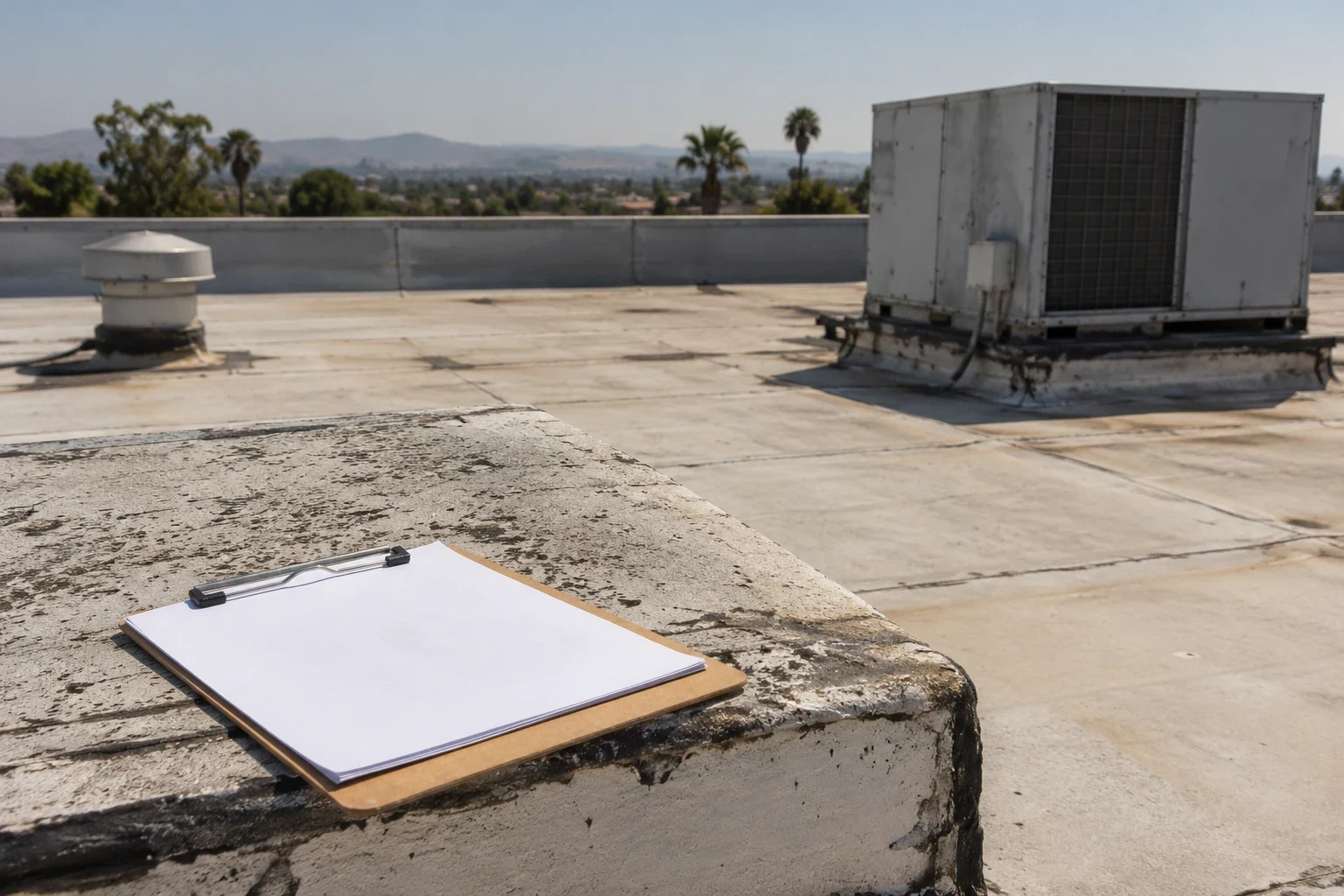
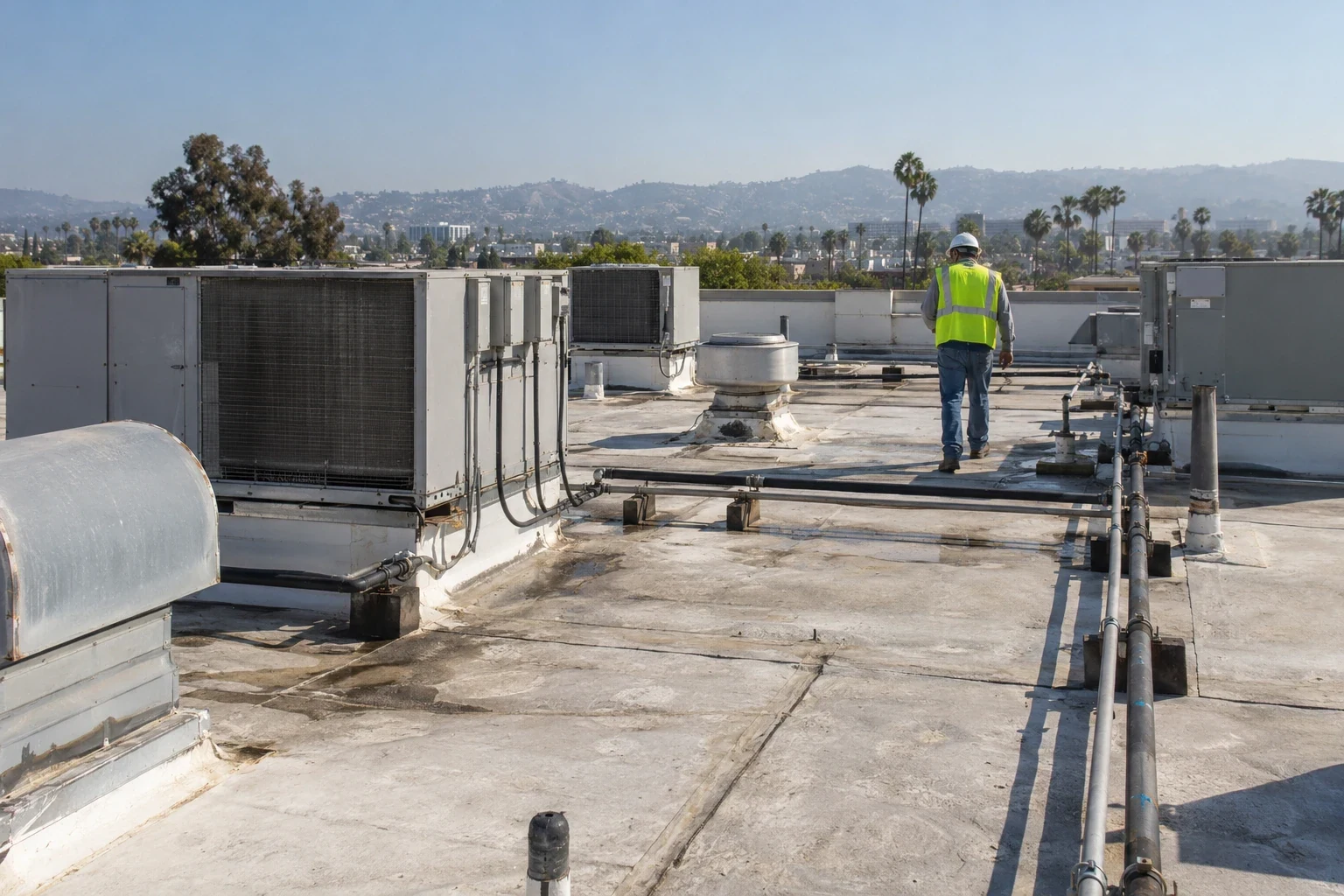
A roof condition report should make the location, visible evidence, repair boundary and follow-up item easy to understand. Photos need enough context to connect a detail to a roof section, not just show a close-up. We note what was accessible, what was hidden by equipment and which observation would justify further testing. That makes the file more useful at the next budget review and reduces the chance that a new manager has to reconstruct the reasoning from an old invoice. A commercial roof inspection gathers the field observations for that report.
Turn Findings Into a Capital Sequence
Roof capital planning separates urgent protection from renewal that can be scheduled later. We compare repairs, coating restoration, recover and replacement against the condition of the assembly, access requirements and decision date. A roof asset record can preserve open items and completed work across more than one building, while keeping each site's findings distinct. If the owner is acquiring property, a due-diligence roof survey can focus the review on condition evidence and likely scope drivers.
Keep Warranty and Multi-Site Records Useful
Warranty paperwork matters when a repair or alteration could affect the roof manufacturer's requirements. Our warranty review helps identify documents, maintenance expectations and questions that need resolution before work proceeds; it does not replace the manufacturer's decision. For portfolios, multi-site coordination can standardize how inspections and recommendations are recorded without treating every roof as identical.
Account for the District and the Building
In Downtown Burbank, pedestrian-oriented streets and outdoor dining can influence deliveries and protected entry routes. The Media District includes production studios and office, healthcare and media employers, so noise and access windows may be part of a roof schedule. We confirm those limits with the facility contact instead of assuming them from the neighborhood. A Media District roof review starts with the building and its roof record, then identifies the next practical approval.
Commercial Roofing Questions
What belongs in a roof condition report?
Include dated observations, photographs, affected sections, recommended work and open questions. The reader should be able to tell what was inspected and what needs another look.
Can a roof plan forecast replacement timing?
A plan can organize condition, repair history and capital priorities, but timing remains tied to current inspection findings and changes in the assembly.
Will a portfolio program standardize the repair scope?
It can standardize records and review steps. Each property still needs its own condition map, access plan and repair boundary.
What do you review before altering a warranted roof?
We gather the warranty documents, prior work records and proposed scope, then identify requirements that must be confirmed before the alteration proceeds.