Silicone Roof Coatings in Burbank, CA

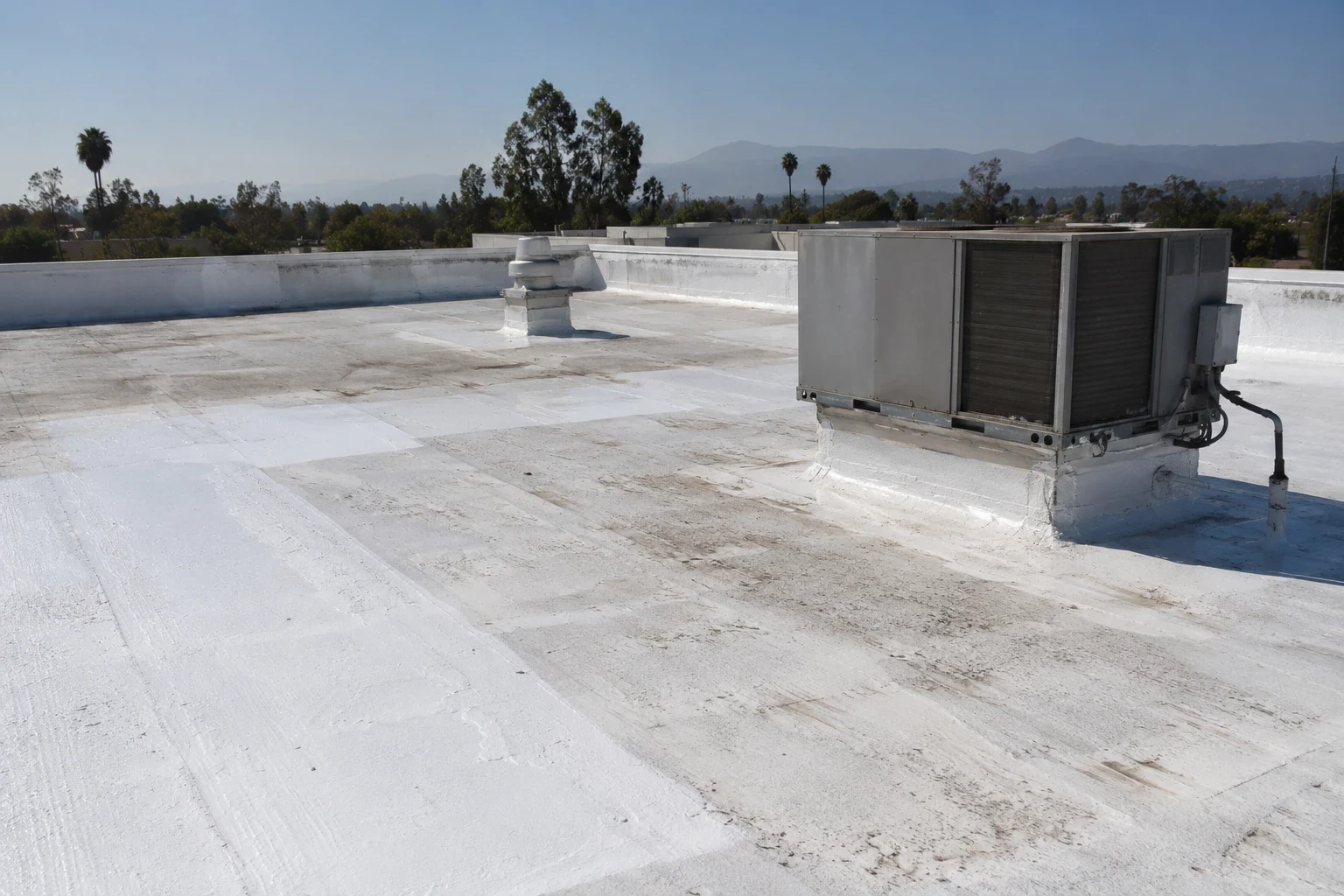
A silicone coating can be useful only when the roof below it is suitable for the system. Burbank’s Downtown district includes office, retail and restaurant uses; the Airport District mixes hotels, technology and large-format retail. We inspect the existing surface, repairs, drains and penetrations before discussing a recoat. The facility director receives a map showing where coating is sound, where preparation is needed and whether a broader roof investigation should happen first.
Silicone is a liquid-applied coating used to protect compatible roof surfaces. It is not a replacement for damaged insulation, a weak deck or a drain that cannot move water. We identify the existing substrate and coating, then check system requirements before specifying preparation or application. A roof inspection records what the visible surface can and cannot establish.
Confirm What the Coating Will Bond To
Old silicone, acrylic, asphaltic material and membrane surfaces require different preparation and compatibility checks. We review product records where available and inspect adhesion, dirt, oils, loose coating and repairs. If the coating type is unknown, a test patch or other manufacturer-directed check can help establish compatibility before a full application. The proposal identifies the verified substrate and any area that still needs confirmation.
A coating should not conceal wet insulation or an unstable surface. We look for blisters, soft areas, punctures and recurring interior reports, then mark suspected sections for testing. The acrylic coating comparison explains why two liquids with different properties cannot be treated as interchangeable. When the existing roof is TPO, the TPO system review checks the membrane, seams and flashing before a coating option is considered.
Resolve Ponding Before Adding Material
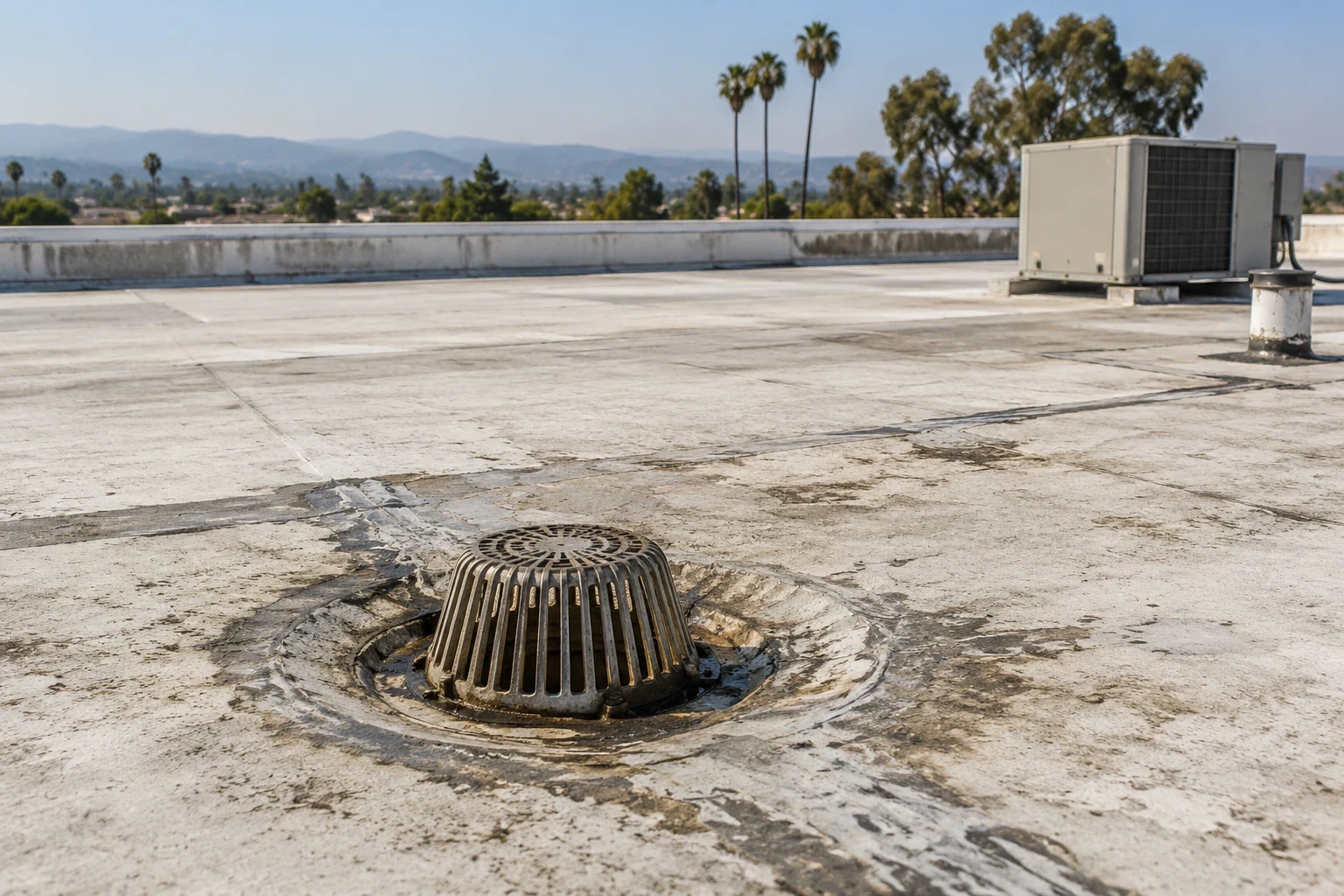
Silicone is often selected where water remains on a roof, but a coating does not correct poor slope or an obstructed outlet. We trace the water path, inspect drains and scuppers, and note areas where ponding persists. If the roof has a low point, the scope should determine whether drainage work, slope correction or another assembly is needed before recoat. The inspection plan maps outlets and keeps water-management work visible.
The station’s annual mean temperature normal is 64.5°F, a regional reference that does not describe any roof surface or the day’s cure conditions. We check the current forecast and substrate before application. We plan application around current weather, substrate moisture and cure requirements. The drain and scupper assessment shows whether the outlet condition affects the coating decision.
Set Preparation and Repair Limits
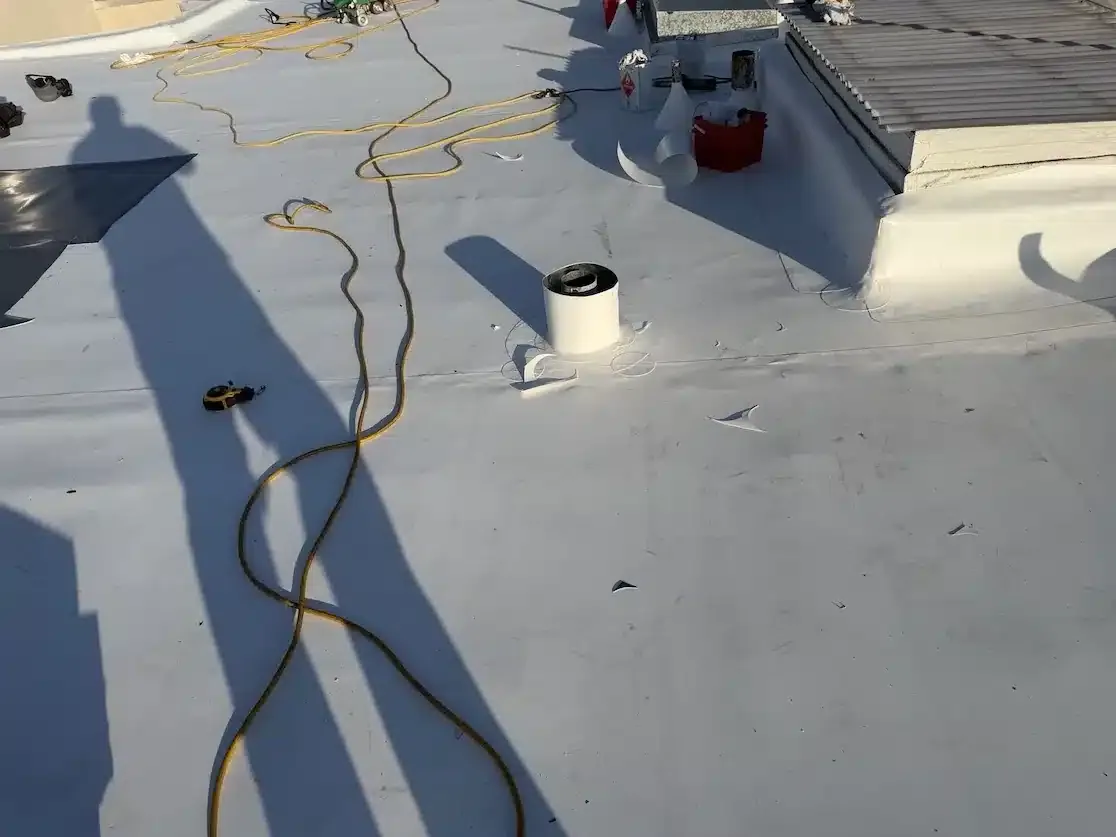
Before application, the roof needs a clean and stable surface, compatible repairs and completed flashing details. We identify areas that require washing, removal of loose material, patching or primer, and document the sequence. The coating manufacturer’s instructions govern application conditions and coverage checks. Our proposal states which roof sections are included, what work precedes coating and how the completed surface will be inspected.
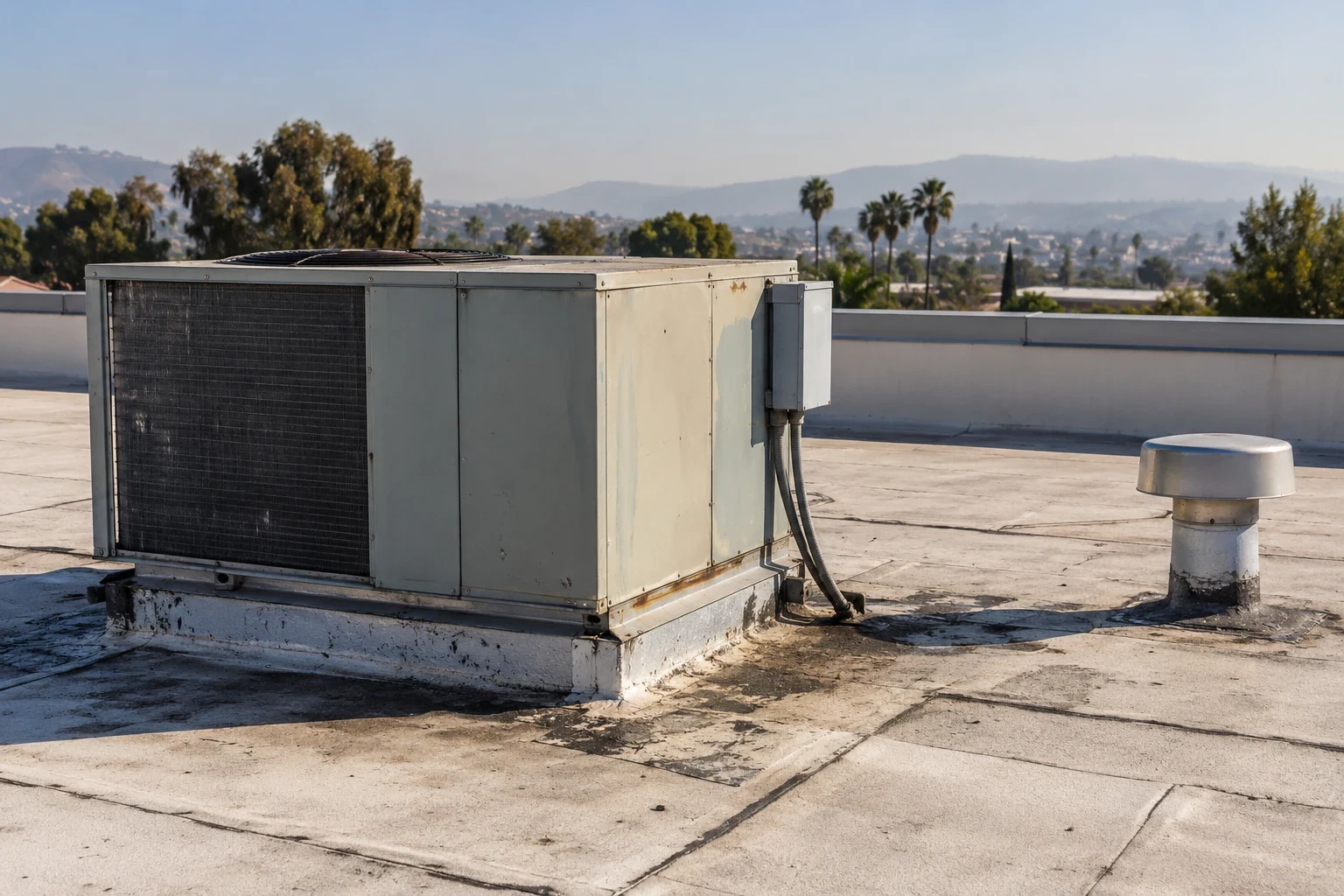
Penetrations, curbs and wall transitions deserve separate attention because coating needs to terminate into a compatible detail. We inspect the existing flashing and specify repairs where a gap or movement path is visible. The coating restoration scope separates roof-wide application from localized detail work. If a roof curb involves an active unit, we coordinate the roof-side work with the mechanical contact.
Check Coverage Across Every Roof Section
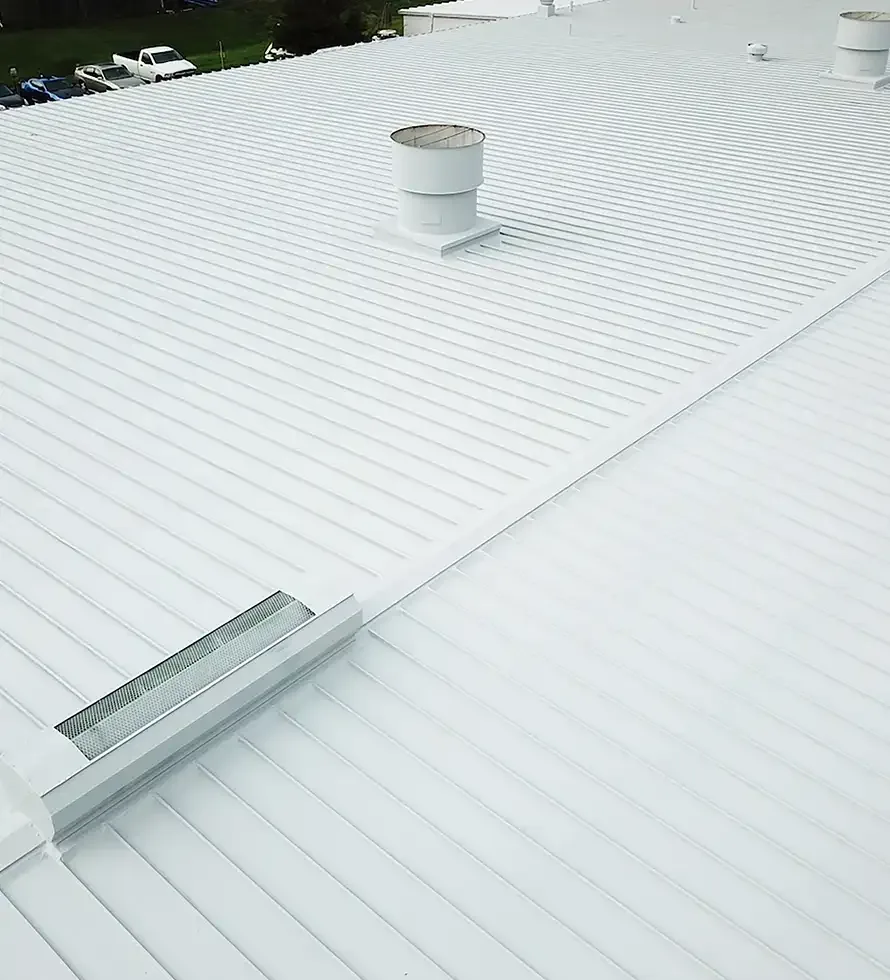
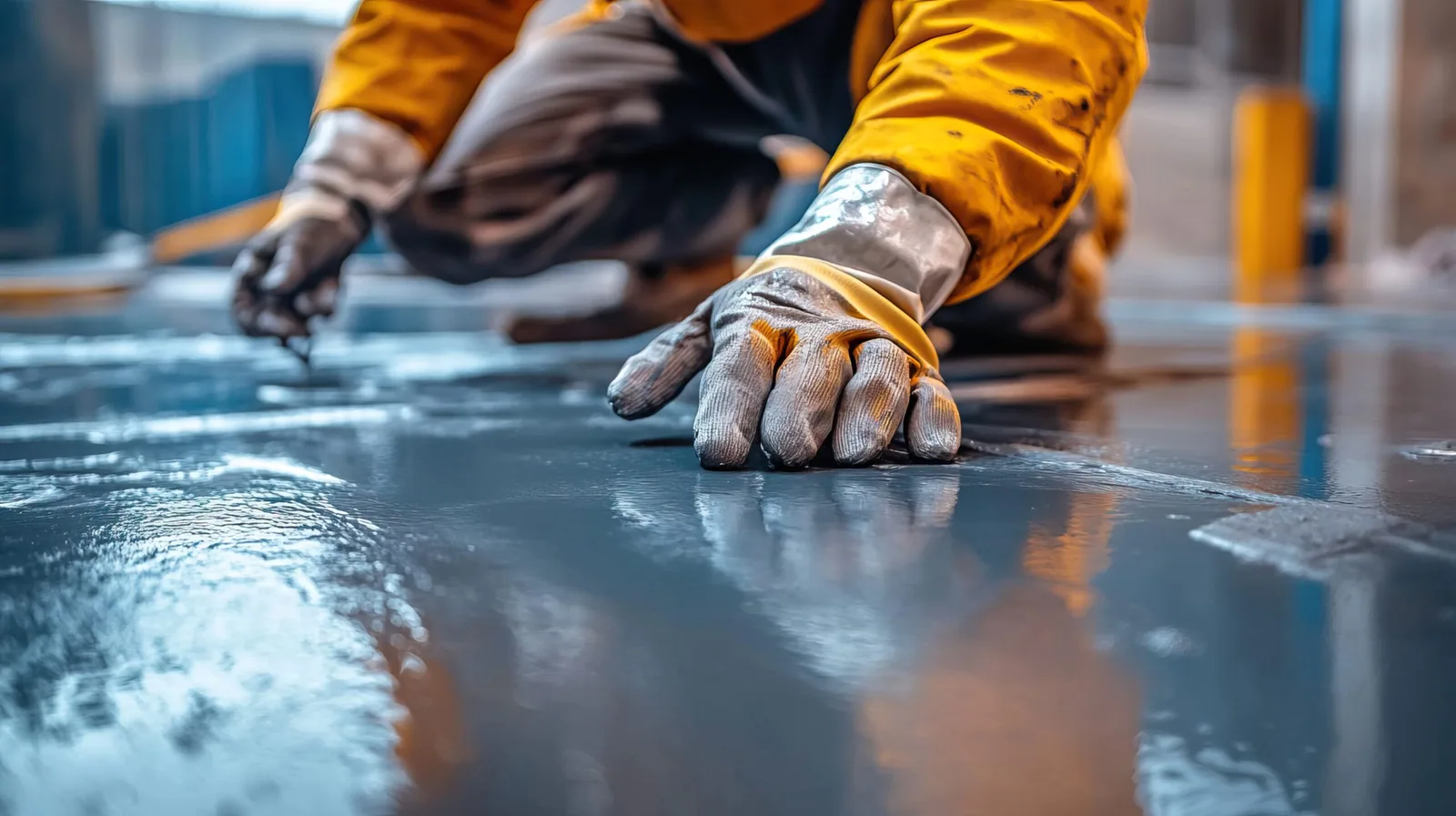
Application thickness and coverage need to match the selected system. We establish a work zone, confirm the surface is ready and monitor conditions during installation. The crew tracks material use and checks the finished coating against the product requirements. If weather or access interrupts work, the plan identifies where the application stopped and what preparation is needed before it resumes.
For a silicone restoration, the immediate scheduling question is surface dryness: we check the roof and weather conditions before coating, then verify the finished film after the specified cure interval. The annual normal gives regional context, not permission to apply over a damp deck or membrane.
Coordinate Roof Access With Building Use
Coating work may require rooftop units to remain clear, temporary closures and a period without maintenance traffic. We coordinate access, material staging, pedestrian protection and equipment service with the facility director. Occupied floors below may need notice or protection if roof work affects interior spaces. The daily plan identifies the area under application, the remaining route to drains and the check required before the zone is released.
Downtown office and retail schedules differ from Airport District hotel or technology operations. We confirm actual loading hours and shutdown limits with each property. An occupied-building sequence connects roof zones to access notices and daily closeout. After application, the owner receives a record of the coating boundary and any surface that should be monitored.
Compare Recoat With a New Roof Assembly
A recoat can extend service only where the underlying roof and bond remain suitable. We compare the cost and timing drivers for preparation, repairs, drainage corrections and coating with those for replacement. The owner should see the verified area, required preparation and unresolved condition separately. If damage or moisture reaches insulation or deck, the proposal should not present a coating as a substitute for correcting that condition.
For a replacement comparison, we review roof sections, attachment, insulation, penetrations and occupied-building constraints. The EPDM assembly review is one alternative for a low-slope membrane, but the final choice follows building design and system requirements. A moisture survey can guide additional field checks before the owner selects a coating or replacement path.
Keep the Coating Record Ready for Inspection
Closeout records should show the coating product, preparation, repairs, application sections, coverage checks and photos. The owner can then compare later wear with the completed scope and locate any area that needs a touch-up or further evaluation. We note the drains, penetrations and terminations inspected, along with any conditions outside the work boundary. A clear map helps future roof maintenance avoid unplanned damage to the coating.
We review commercial roofs across Burbank. Golden State Commercial and Magnolia Park are different business districts, with different tenant flows, load-in patterns and roof access limits. The Airport District service area describes a broad commercial area rather than an individual hotel or retail property. Share previous coating records, roof plans, leak reports and equipment notes before the inspection. We can map substrate and drainage conditions, then outline what the next decision requires.
Commercial Roofing Questions
Can silicone coating be applied over an existing coating?
Only after the existing material and its bond are identified and the selected system permits that application. We inspect repairs, adhesion and surface contamination, and may recommend a test patch. The scope states preparation and any removal required before the new coating begins.
Will silicone coating stop water from ponding?
No coating corrects a drain that is blocked or a roof plane that sends water to the wrong place. We trace slope and outlets first, then decide whether drainage or surface correction is needed. Ponding conditions belong in the inspection record before the coating area is priced.
How do you verify silicone coating thickness?
We follow the selected manufacturer’s application instructions and check coverage across defined roof sections. The work plan records the surface preparation, material use and conditions during application. The closeout file links those checks to photos and the section map for future inspection.
Can we coat a roof that has a leak?
We first inspect the leak path, substrate and moisture indicators. A coating should not cover a failed flashing, wet insulation or unstable surface. We identify localized repairs and test needs before deciding whether the roof is a coating candidate or needs a broader replacement comparison.
How long must the roof stay clear during application?
Access limits depend on preparation, application and cure requirements for the selected product and current conditions. We coordinate rooftop equipment service, maintenance traffic and pedestrian protection before work begins. The daily record shows when a section is released for use.