Acrylic Roof Coatings in Burbank, CA
A coating proposal should begin with the roof underneath it. In Burbank, the Media District combines studios with office and healthcare uses, while Magnolia Park has independent retail and dining. We inspect the existing membrane or roof surface, coating bond, repairs and drainage before recommending acrylic application. The resulting map shows what can be coated, which areas need preparation or repair, and what must be tested before a capital decision.
Acrylic roof coatings are liquid-applied protective layers used on compatible assemblies. Product formulas and application limits differ, so the existing roof, slope, moisture condition and weather window all matter. A coating will not repair wet insulation, a weak deck or a failed drain. Our roof inspection records the assembly and visible conditions before the owner compares recoat and replacement.
Check the Existing Surface and Bond
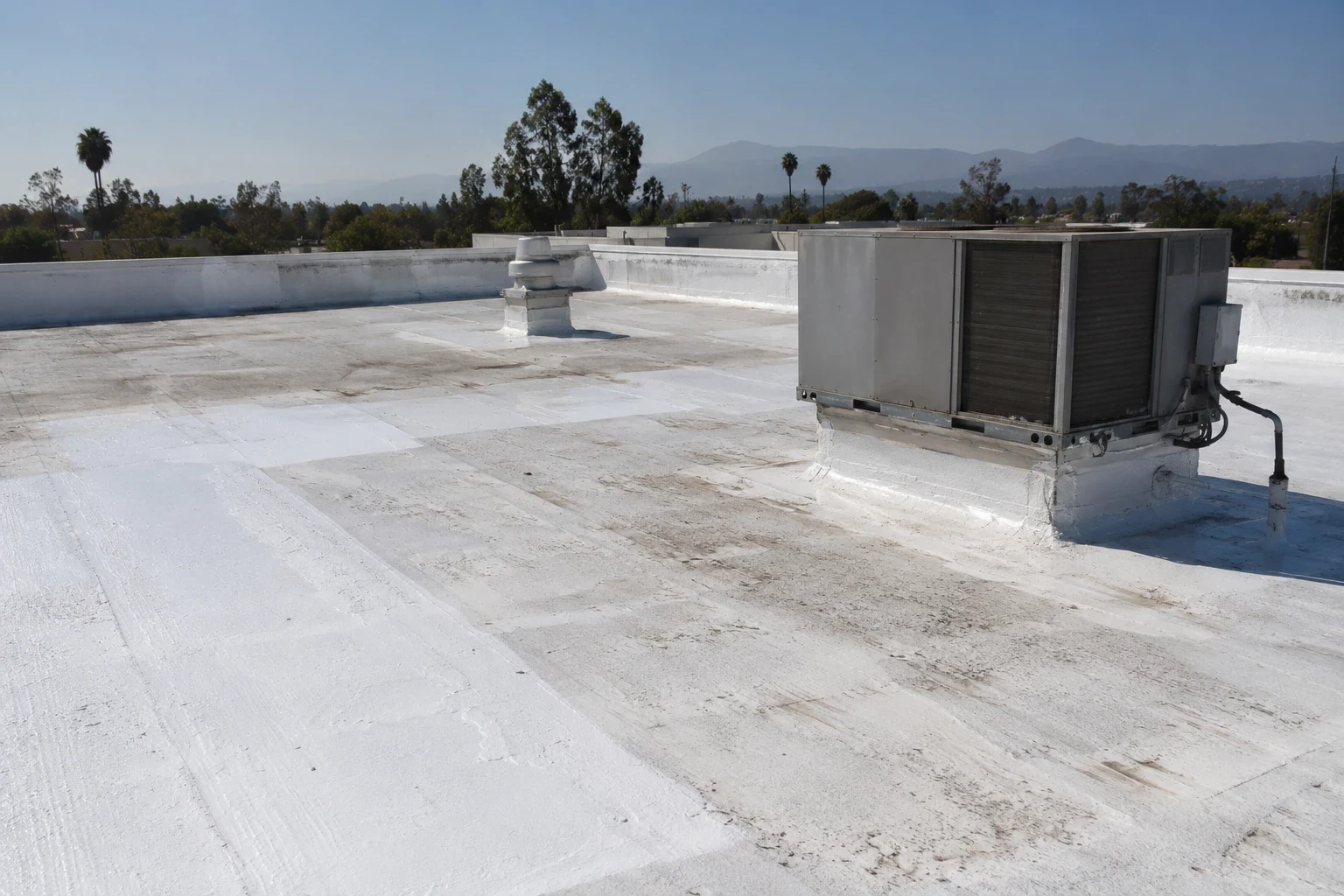
Coating adhesion depends on the substrate, old repairs and surface preparation. We inspect for loose material, dirt, oils, chalking, blisters and separation, then identify the existing coating where records or testing allow. A test patch or manufacturer-directed compatibility check may be needed before full coverage. The written scope names the areas that passed review and lists any removal or repair needed to create a stable surface.
We also look at punctures, seam separation, flashing and soft areas that a new layer should not conceal. If a roof has a membrane beneath the coating, we record its condition and repair history. The silicone coating comparison explains differences in system properties, while an SPF assembly review checks a foam substrate and protective surface before a coating is selected.
Confirm Drainage Before the Recoat
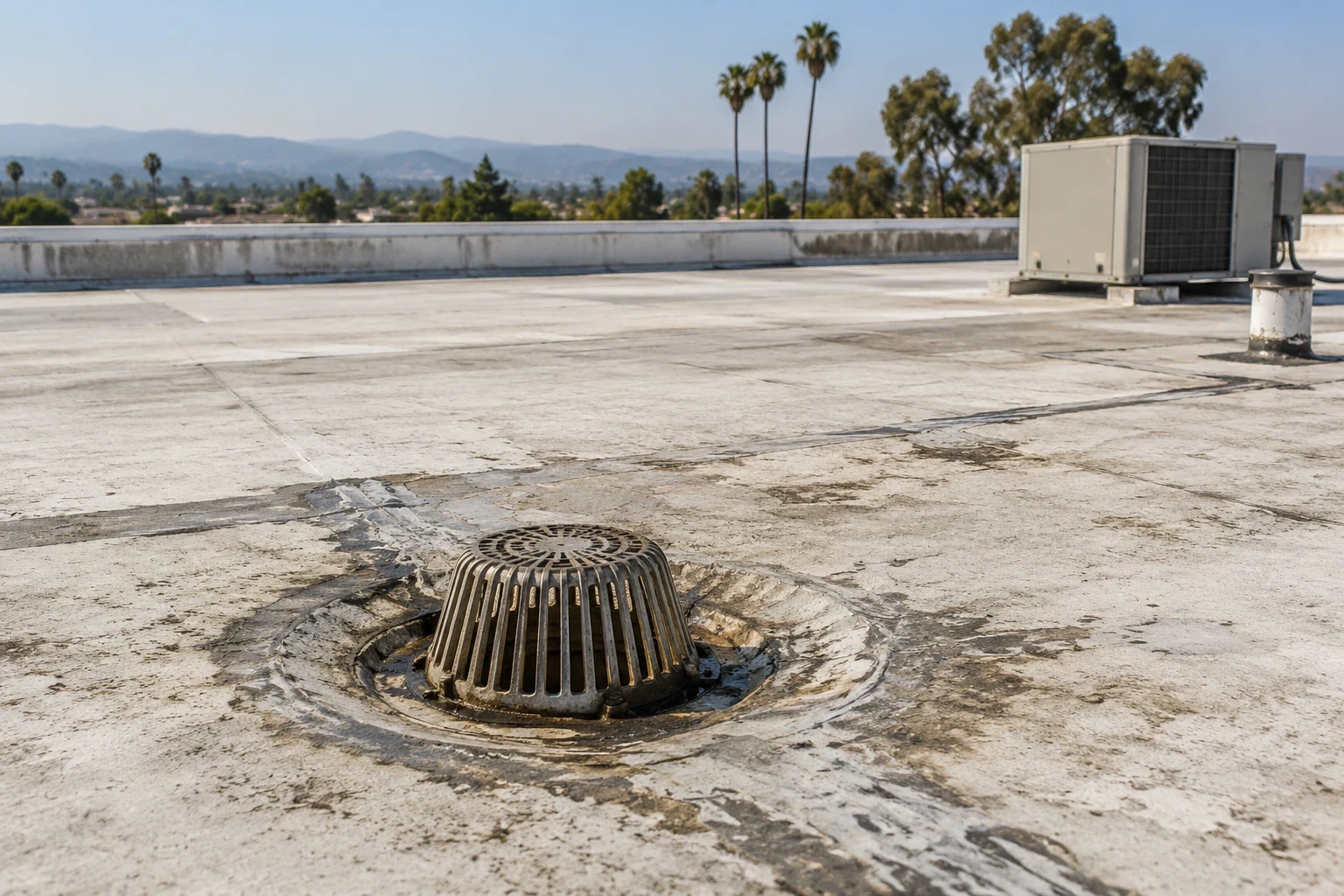
Acrylic coating is not a substitute for slope correction or clear outlets. We trace the roof surface toward drains and scuppers, identify ponding or debris, and check whether water remains after ordinary drainage should occur. Product instructions govern whether the selected coating can tolerate the expected exposure. If a low spot persists, we compare drainage correction or another roof assembly before including that area in the recoat quantity.
August's average daily high in Burbank reaches 88.3°F. That long-range value cannot set a coating day; current roof, air and moisture conditions govern the application window. We plan application around current weather and the product’s cure conditions. The drain and scupper review records outlet conditions that affect coverage and future inspection.
Define the Work Before the Pail Reaches the Roof
Surface preparation may include cleaning, removal of loose coating, priming and repair of seams or flashing, depending on the selected assembly. We set the area, method and acceptance check in the scope. The product data governs application rate, wet-film measurement, temperature and recoat window. If an area remains damp or contaminated, application may need to wait or the scope may need to change.
Details at curbs, wall transitions and skylights need their own repair limit. A continuous coating field cannot make a loose termination secure. We inspect flashings and identify compatible reinforcement or repair before application. Our coating restoration scope distinguishes the field coating from detail work and notes any mechanical or glazing trade coordination.
Track Coverage Across Roof Sections
We divide the roof into application zones so the crew can document preparation, coverage and cure condition as work proceeds. Material use and wet-film checks help show that each section received the specified application. A weather interruption should leave a known stopping point and a defined check before the next lift continues. We mark open areas and daily protection so the facility team can see what is complete.
July's average high is 85.8°F; August is warmer at 88.3°F. Those calendar figures frame planning, while roof temperature and moisture decide whether an acrylic application can proceed. We check field conditions against the system's cure limits before choosing a start point.
Coordinate Application With Building Operations
Coating work can limit access to rooftop units, walking routes and maintenance points while the surface is being prepared or cured. We coordinate those limits with the facility director and identify any equipment shutdown, delivery route or tenant area that needs protection. The work plan sets daily dry-in and release steps for each roof section. If an interruption occurs, the record notes the coating edge and what must be checked before resuming.
Media District production schedules may call for quiet blocks or controlled access; Magnolia Park storefronts can have delivery and customer windows. We confirm the property’s actual needs before staging. An occupied-building sequence ties notices, access and daily closeout to each zone, giving the facility team a reviewable work order before application begins.
Compare a Recoat With Membrane Replacement
A recoat may fit when the existing material is bonded, compatible and dry, and the roof can drain as designed. If testing finds wet insulation or the substrate has failed, application alone will not resolve the cause. We map confirmed repairs and unresolved zones, then compare the preparation and coating scope with a replacement option. Each estimate states which roof area and details it includes.
For a replacement comparison, a TPO membrane assembly has different seams, attachment and flashing from a liquid coating. The building use and existing assembly guide design review; no coating should be promised to extend service where the substrate is not suitable. A moisture survey can help select areas for field confirmation before the owner makes the renewal decision.
Keep Application and Inspection Records
Closeout notes should identify the product, substrate, preparation, repaired details, application sections, coverage checks and photographs. We label each image by roof zone and record weather or access interruptions that affected the sequence. The owner can use the file to compare later coating wear with the completed scope and locate details that need monitoring. Drains and penetrations should remain clear and accessible after the work.
We inspect commercial roofs in Burbank’s Media District and Magnolia Park. The Magnolia Park service area covers a broad commercial neighborhood, not a particular retailer. Share prior coating records, roof plans, leak reports and equipment notes before the review. We can map the existing surface and show which preparation or renewal path fits the conditions verified on the building.
Commercial Roofing Questions
Can acrylic coating go over an existing roof coating?
It depends on the existing material, adhesion, condition and the selected product instructions. We inspect and identify the surface, remove loose material and run any compatibility check required before application. The scope marks areas that need repair or further testing before a recoat can proceed.
Will acrylic coating correct ponding water?
No coating substitutes for functioning drainage or a roof slope that moves water to an outlet. We inspect drains, scuppers and low areas, then determine whether drainage correction or another assembly is needed. The selected system’s instructions also govern whether its use is suitable for the roof’s water exposure.
How do you know whether coating is ready for another layer?
We review the cure window, surface condition, adhesion and recoat requirements in the system instructions. The application log records where work stopped, weather conditions and the checks completed before resuming. A surface that is damp, contaminated or outside the product limits needs preparation or a later application window.
Can you coat a roof with an active leak?
We first investigate the roof-side source and the condition beneath the coating. A leak may involve a seam, curb, drain, puncture or concealed moisture. We identify repairs and testing before including a coating area. Covering an unresolved defect can make the next inspection and repair boundary harder to establish.
What makes acrylic different from silicone coating?
Their chemistry, water exposure limits, substrate compatibility and application requirements differ by system. We compare product data with the existing roof and drainage conditions before recommending either. The decision also includes preparation, detail repair, coverage checks and the building’s operating window.