Commercial Roof Insurance Claim Support in Burbank, CA
A roof claim file should help an owner compare the reported event with the conditions found on the building. We document roof zones, photos, interior reports, temporary measures and proposed repairs, then label what is observed and what still needs confirmation. That record supports a discussion with the property team and insurer; it does not decide coverage. The facility director can use it to coordinate emergency protection, permanent repair and the operating schedule while the claim moves through its own review. Burbank's commercial districts include production, office, retail and hospitality uses, so the file should also note access constraints and areas the building needs to keep open.
Build a Dated Record of the Reported Condition
Start with the date water or damage was first observed, where it appeared indoors, who reported it, and whether temporary protection followed. Add dated photos, weather notes supplied by the property team, repair invoices, prior inspection records and the roof plan if available. We separate those documents from our field observations so the claim file does not confuse a reported symptom with a confirmed roof opening. If another area had a prior patch, we identify it on the map and state what the current visit could establish. This chronology helps ownership answer follow-up questions without relying on recollection after the roof has been covered or the interior dried. We record the source of each file when the facility team provides it and keep the date associated with each photograph or work order. If dates conflict, we preserve both entries and ask the owner which record is current rather than silently choosing one. This is useful when an inspection follows temporary work, because the roof may look different from the first report. A clean chronology can also show when the property was accessible, what protection was installed and which part of the roof remained unexamined. Those details help all parties compare observations without turning an incomplete record into a conclusion about cause.
Map Findings to the Roof Assembly
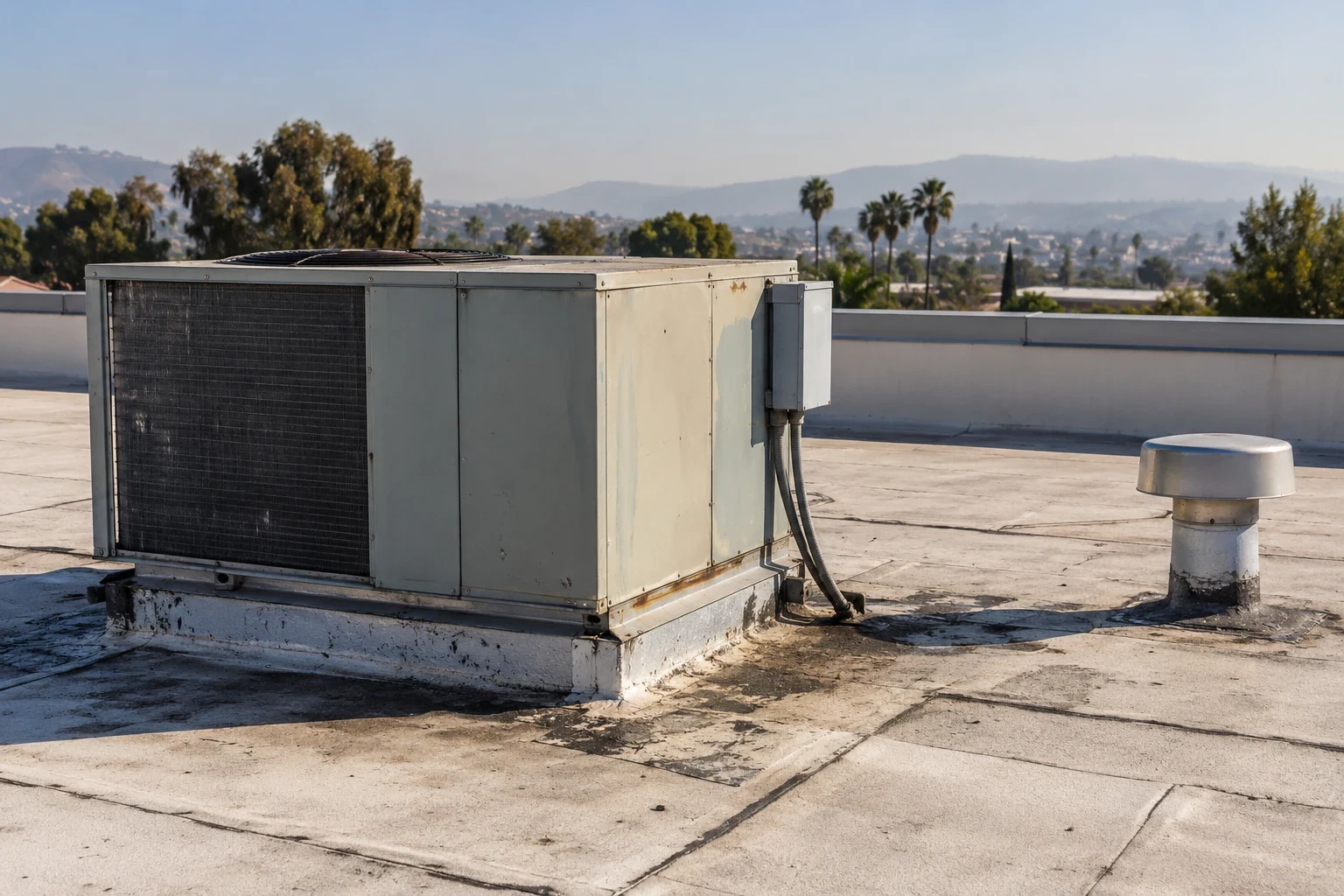
We inspect visible seams, penetrations, curbs, edges, drains and transitions, recording each condition by roof section. The photo should show both the detail and enough context to locate it later. If a scan or test opening is part of the investigation, the report names its limits and the area examined. A thermal pattern can guide follow-up but does not independently prove wet insulation. For a Burbank property near the Media District, production equipment and access routes may affect where a crew can work; those operating conditions belong in the schedule notes, not in a conclusion about cause. A commercial roof inspection can establish a condition baseline for the file.
Separate Emergency Protection From Permanent Repair
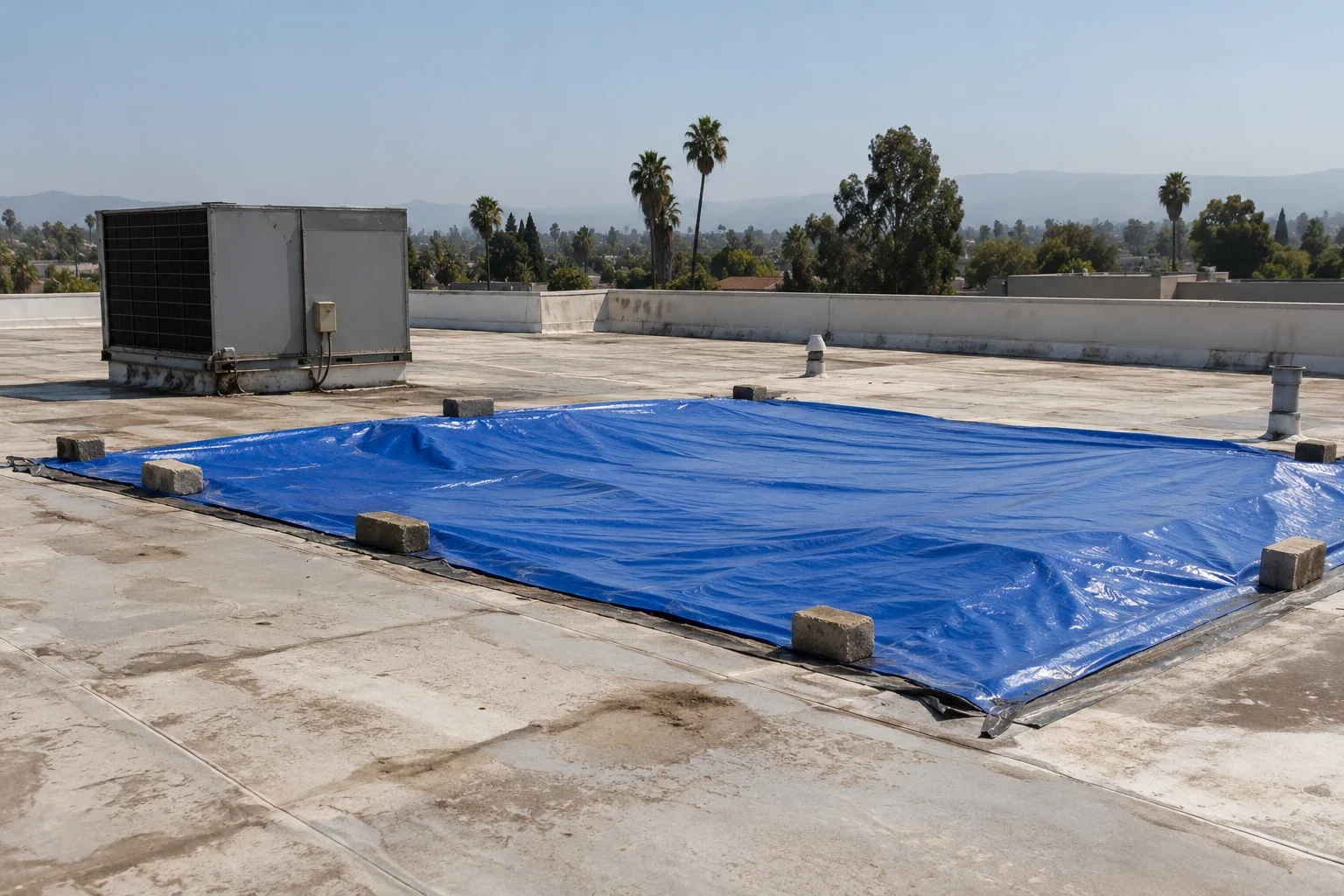
A temporary cover or patch can reduce exposure while the cause and permanent scope are reviewed. The record should identify its location, material, installation date, weather, limitations and return date. We keep temporary work separate from a permanent repair estimate so the owner knows what was authorized in response to immediate conditions. If water is still entering, the facility contact may need to protect equipment and coordinate interior drying. Our emergency roof response can document stabilization needs; commercial leak diagnosis can trace a source that remains uncertain. Neither service determines an insurer's coverage decision.
Write a Repair Scope That Can Be Reviewed
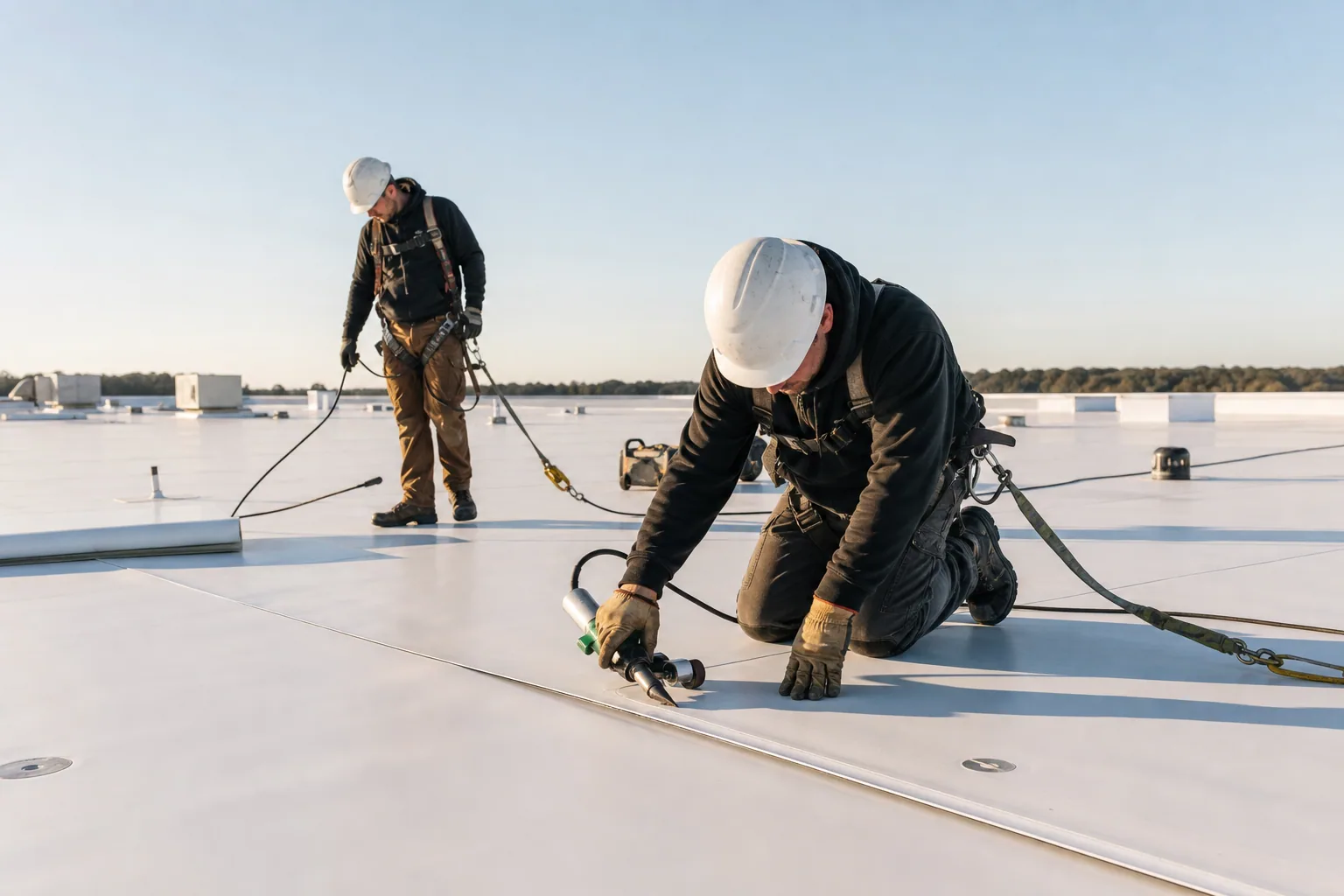
A roof repair scope identifies the affected section, system, preparation, materials, access, protection and exclusions. We list concealed conditions that could change the work, along with any test needed before that issue can be priced. If the scope includes drains, flashing or edge metal, each detail should be called out rather than hidden inside a broad allowance. Nonresidential alterations and remodels in Burbank with permit valuations of $200,000 or more can fall under construction and demolition debris-diversion requirements, so project scope and permit coordination may matter when work expands. We document the facts relevant to the roof work and leave policy interpretation to the insurer and owner. The estimate should also distinguish base repair from optional testing or work that depends on opening the assembly. We identify the roof area measured, the detail repaired, the material assumptions and the limits of access. If an owner wants a separate alternative, such as replacing a larger section, it is shown in its own scope so it can be reviewed independently. A written approval record should identify who authorized work and when. This helps the property manager track the decision even if the insurer's review is still underway. We keep our field description tied to the building condition and avoid stating that a policy will reimburse any particular line item.
Keep the Review Aligned With Building Operations
Claim discussions can overlap with tenant notices, production schedules, retail deliveries or equipment access. We confirm who may approve roof entry, which interior areas need coordination and how updates should be sent. Downtown Burbank's mixed-use business district and the Airport District's technology, hotel and retail mix illustrate why access plans are property-specific; those districts do not establish the condition of a particular roof. Before a joint inspection, the owner can identify the reported damage area, available records, temporary work and questions that need a field answer. We can attend to explain the roofing scope and provide observations, while the insurer and policyholder handle coverage and claim decisions through their own channels.
Track Changes When Concealed Conditions Appear
Once materials are opened, the deck or insulation may differ from what was visible at the first visit. We photograph the condition before covering it, mark its roof zone, describe the proposed change and request approval through the owner's process. A revised estimate should show the reason for the added work and separate it from the original scope. The record can include quantities, material, access impact and schedule effect without implying the claim will pay for the change. When repair boundaries extend, a localized repair scope or replacement evaluation can be documented as a separate option. The facility director retains a traceable decision file.
Deliver the File the Facility Team Needs
At closeout, we organize the dated report, roof map, photos, approved work, invoices, material details, temporary measures and unresolved recommendations. The owner can keep the file with roof condition reporting and the building's maintenance history so a later inspection has context. If a leak continues, a maintenance visit can record drains and repaired details after weather returns. For service coordination in Downtown Burbank, we route updates through the property contact and state whether a condition was observed, tested or remains uncertain. The final file supports review, but coverage remains a policy determination. The file can include a short index with the inspection date, affected roof zones, completed repairs, pending approvals and contact for the next visit. If the building has several roof areas, label each separately and attach the same zone map to the estimate, change record and closeout. That makes follow-up easier for a technician who did not attend the first inspection. We can identify whether a condition should be monitored after the next rainfall, tested before repair or carried into a separate capital review. A facility team may then share the relevant materials with its insurer, broker or internal reviewer through its usual process, while retaining the original records with the building history.
Commercial Roofing Questions
Does a roofer decide whether an insurance claim is covered?
No. We document roof conditions and prepare a repair scope. Coverage and policy interpretation remain with the insurer and policyholder.
What should we save before temporary work begins?
Keep dated photos, the interior report, roof location, prior repair records and approval for any temporary measure. Safety and protection come first.
Can the repair estimate include concealed damage?
It can state assumptions and a process for documenting conditions found after opening. Added work should be photographed and approved through the owner's procedure.
How do you distinguish old repairs from new damage?
We compare current observations with prior photos, work orders and roof maps, then label which conditions are verified, reported or still uncertain.
Can you join an inspection with the adjuster?
We can coordinate access and explain the observed roof scope when authorized by the owner. The claim decision stays with the insurer and policyholder.