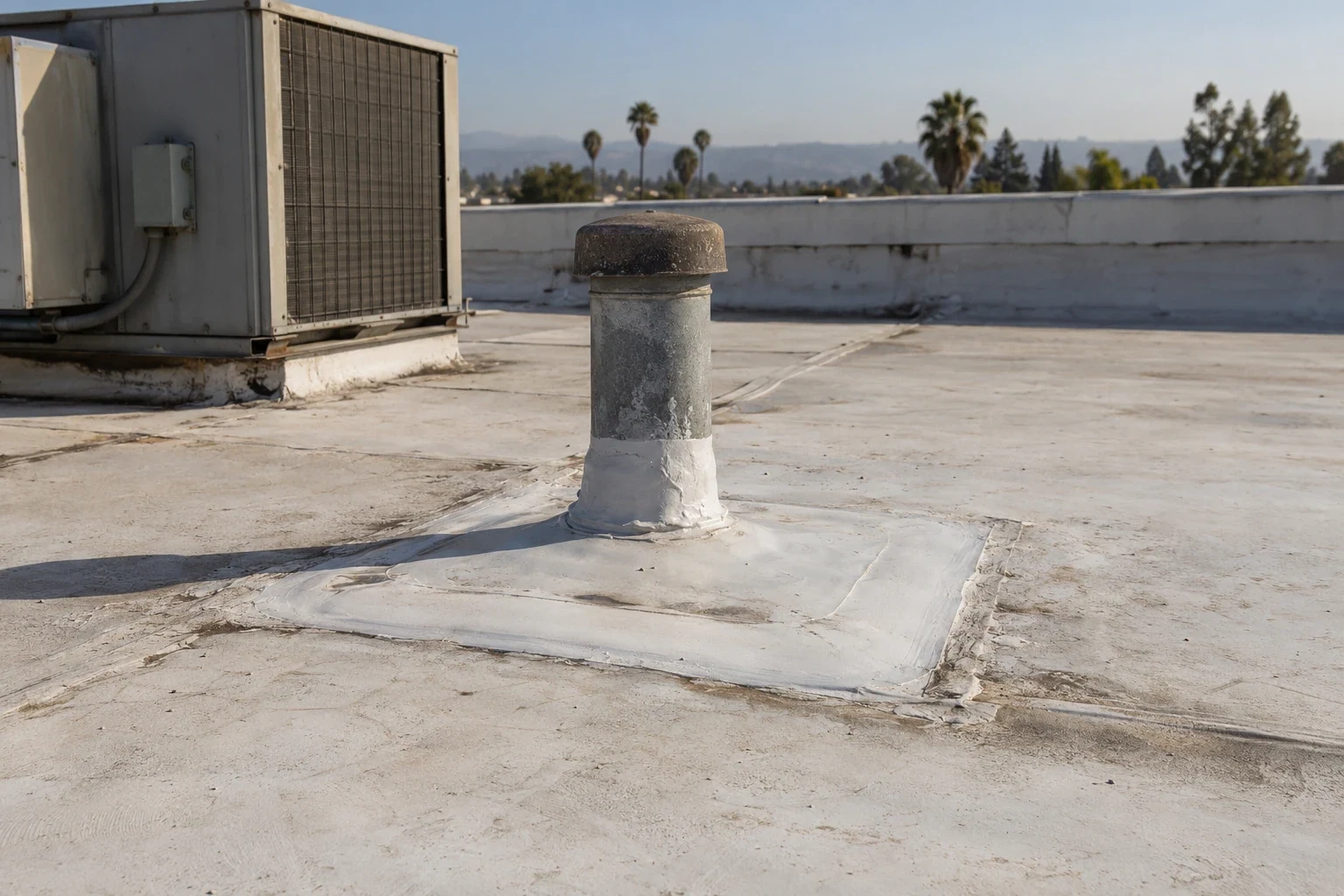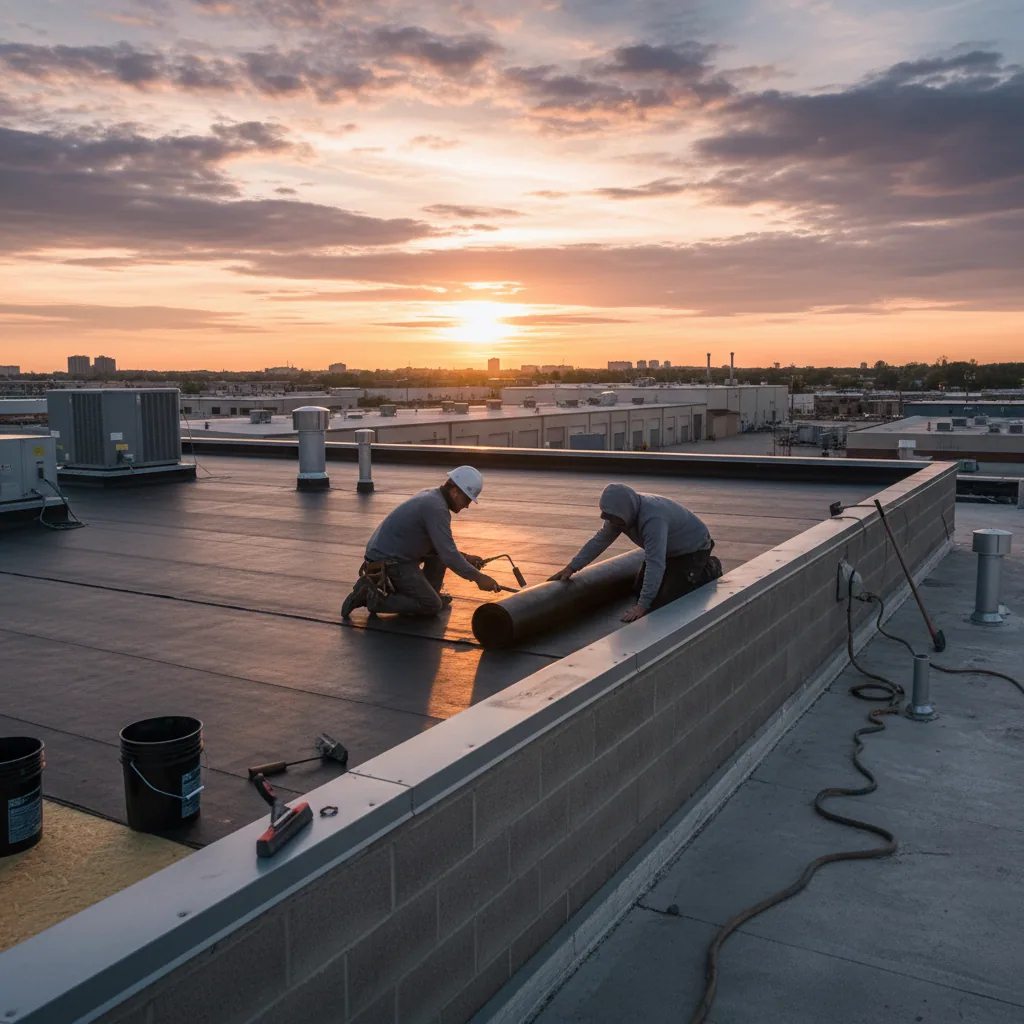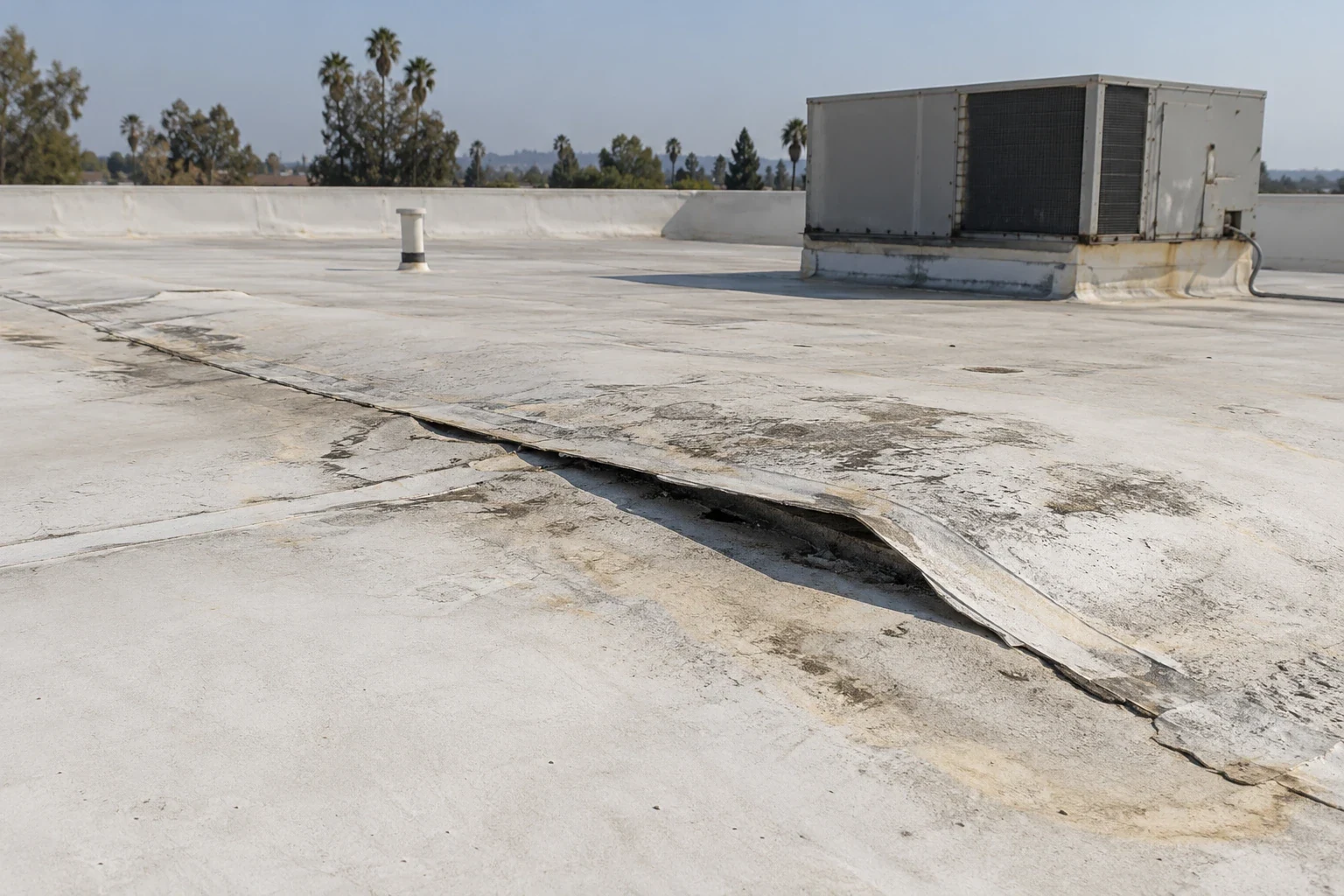
Commercial Roof Seam Failure Repair in Burbank, CA

Open membrane laps often appear first as a narrow line, but the repair decision depends on how far separation continues and whether the sheet still holds beside it. In Burbank, CA, we inspect the full seam, its intersections and nearby rooftop details before choosing a patch. The record identifies the roof section, visible opening, moisture signs and any previous repair that affects preparation. A temporary seal may limit exposure, but permanent work needs a clean, compatible tie-in with sound material on each side. A seam repair assessment helps the owner set that limit and schedule the work safely.
Measure Separation Beyond the First Opening
We follow the seam across its full accessible length, including end laps, T-joints, changes in sheet direction and intersections with curbs or drains. The inspector checks whether the membrane edges remain aligned, whether a weld or adhesive bond has separated and whether the sheet is brittle, stretched or contaminated. We photograph the start and end of the defect and note any location hidden by equipment. If an opening disappears beneath a patch or metal cover, that limit remains in the report until access is approved. The scope should follow the observed bond failure rather than an arbitrary short cut around the visible gap.
Movement can concentrate where a membrane meets a roof edge, wall or equipment base. We inspect nearby flashing and attachment, then note whether those details move with the seam. A flashing assessment may be needed where water can pass behind a curb or parapet. We also look for ponding or debris that could keep a split wet, because the repair plan may need both a seam correction and separate drainage work. Each finding gets its own location and recommendation so the property manager can approve the right combination.
Check What the Open Lap Has Exposed
Water can enter through a split and travel before it reaches the ceiling, so we map the interior report to the roof section and inspect the insulation where access allows. Darkened materials, soft areas, trapped moisture and recurring stains may change the repair area. We distinguish visible wet material from a suspected extension under the membrane. If a test cut is needed, the owner approves its location and reinstatement before we proceed. The report then states the result and any remaining area that could not be checked. That evidence is more useful for a capital decision than assuming the entire roof is wet from one interior mark.
Downtown Burbank has a mixed commercial setting with shops, restaurants and office space. A roof leak above a tenant area may require a timed inspection, interior protection or coordination with a facility lead, but district information does not establish any individual roof condition. We record the room, operating restriction and roof access boundary for the specific property. The local work sequence should protect the active space while retaining enough time to clean, dry and prepare the seam. If the defect is over a critical operation, the first step may be temporary cover while the permanent material and work window are confirmed.
Restore the Bond With a Compatible Detail
The repair method follows the existing assembly and the condition of the sheet. We remove loose or contaminated material within the approved boundary, prepare the surface and install compatible membrane or seam components. A patch must extend onto sound material with the correct overlap and attachment for the system. Where separation runs to a termination or equipment curb, the tie-in may need to include that detail rather than stopping at the seam line. The proposal states materials, removal, preparation, access and any substrate allowance. If the system cannot be identified with confidence, we describe the verification needed before ordering a product.
A local weld or bonded repair can address an isolated split when surrounding membrane remains serviceable. Repeated openings across several sections may indicate wider movement or a roof condition that deserves a larger comparison. The roof inspection record can map each failure and distinguish recurring locations from separate defects. If a nearby puncture contributed to the opening, a membrane puncture review can document that area as a separate repair. We show the immediate repair and any broader renewal option with stated assumptions, so ownership can make the decision against a defined roof section.
Protect the Seam Between Work Shifts
Seam work needs a clean, dry surface and enough time for installation and quality checks under the selected material’s requirements. We confirm access, weather conditions, equipment restrictions and the shift endpoint before opening the roof. If the work cannot be completed in one window, the plan describes the temporary seal and inspection needed before the next shift. For occupied space below, we identify the room contact and protection measures. A clear stop condition prevents an incomplete repair area from being treated as permanent simply because the crew has left the roof.
Magnolia Park is a Burbank retail area with independent shops and food businesses. That supports early coordination around customer access and deliveries where a work zone affects an entrance; the property’s own manager sets exact hours and routes. We mark material staging, lift placement and any path that must stay open. Work near an active tenant may be phased by roof section if that preserves a safe route and complete tie-in. The estimate should name any special access, interior protection or trade assistance as a project condition rather than burying it inside membrane footage.
Document the Repaired Seam and the Remaining Risk
Closeout photographs should show the seam before preparation, during installation and after the tie-in is complete. We label the roof section, record the materials and repair length, and identify any nearby opening that remained outside the authorized scope. If moisture testing or access was deferred, the file lists why and what approval is needed next. A condition report can retain those photos with a map and inspection date. The facility team can use it to compare later reports and determine whether the same lap moved again or a separate area has opened.
After the repair, a maintenance visit can check the repaired bond and nearby intersections after the system has been in service. If the seam was part of a roof-wide pattern, the owner can compare the number and distribution of failures against the cost of a larger repair or renewal. Schedule a Burbank review with leak dates, prior patch records, roof plans and tenant access limits ready. The requested decision may be a temporary weather stop, a permanent seam repair or testing beyond the current boundary. Our report should keep those choices distinct and make the evidence supporting each one visible.
Commercial Roofing Questions
Can a split seam be repaired without replacing the whole roof?
A local repair may work when the surrounding sheet and attachment remain sound. We inspect the full separation and adjacent details before defining the repair extent or recommending a broader option.
Why do seams open again after a patch?
The repair may not have reached sound material, or movement, contamination or a nearby detail may still affect the bond. We compare the new opening with the prior closeout before setting another boundary.
Do you need to remove insulation under every open seam?
No. We map visible moisture and identify where a test is needed to confirm concealed conditions. Any opening is located, approved and restored under the agreed scope.
Can you repair an open seam above an active tenant?
We plan roof access, interior protection, noise and staging with the property contact. If the work spans shifts, the closeout records how the open area is secured between visits.
What information helps choose a seam repair method?
A roof plan, system identification, photos, leak dates, past repair materials and access limits help us set a compatible tie-in and confirm whether more testing is required.