Commercial Roof Membrane Puncture Repair in Burbank, CA

A single puncture above occupied space can turn a routine equipment visit into an interior water problem. In Burbank, CA, we locate the opening, identify the roof section and check whether traffic, a dropped tool or a sharp support edge could have damaged nearby membrane. The visible hole may be smaller than the area that needs preparation, especially if water or dirt has traveled beneath the sheet. We document the surface, substrate evidence and access path before choosing a repair. A commercial roof repair review gives the owner a defined boundary for stopping the leak and protecting the surrounding assembly.
Find the Breach and Its Likely Cause
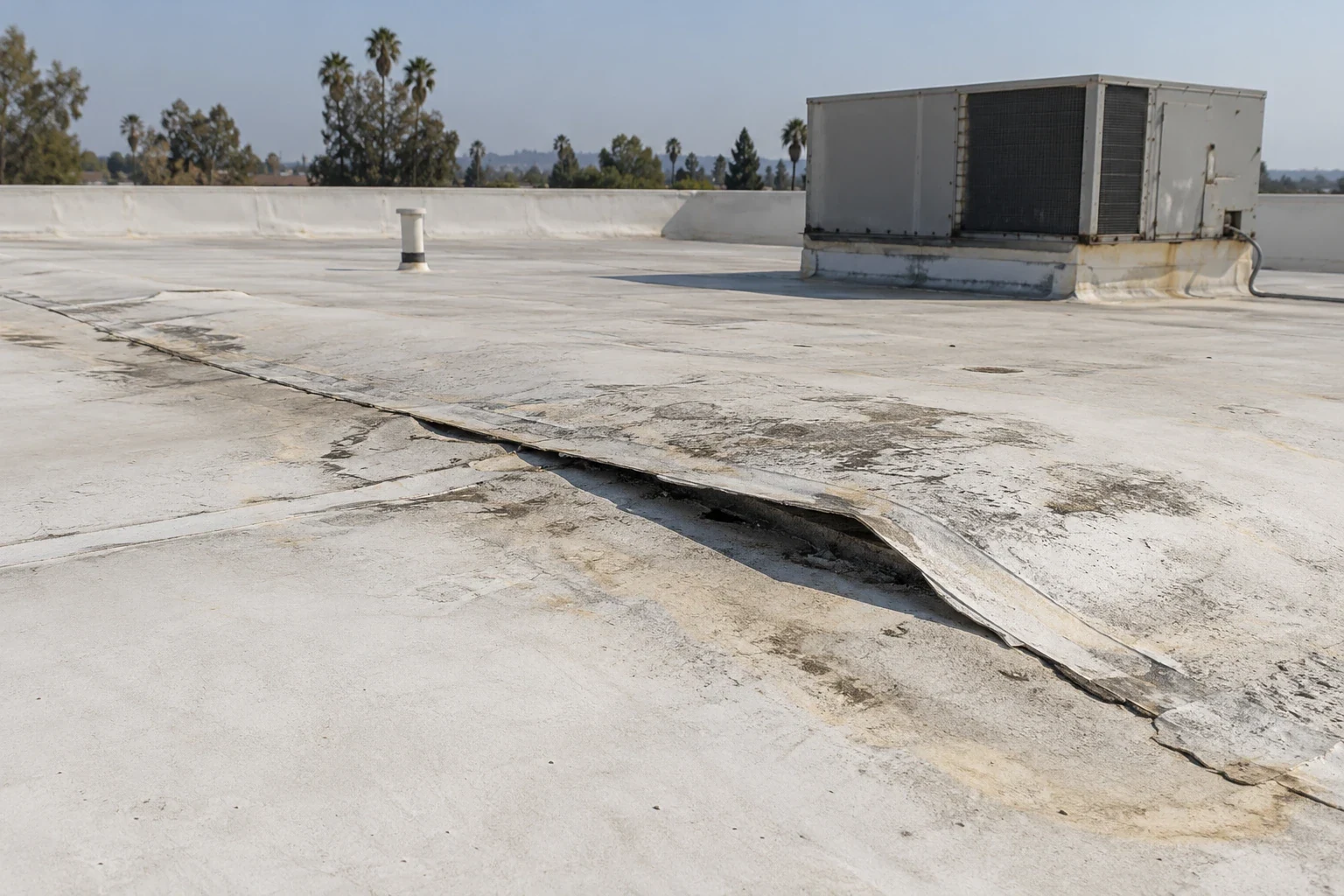
We start with the reported ceiling or equipment location, then trace the roof area directly above it. The inspection checks membrane cuts, pinholes, abrasion, displaced ballast or pavers, loose fasteners and marks near service routes. A puncture can be hidden by equipment, a walkway or a previous patch, so the report identifies areas that were blocked from view. We photograph the opening with a scale where useful and mark it on the roof plan. If the alleged cause is not confirmed, the record describes the evidence rather than assigning fault to a trade or tenant.
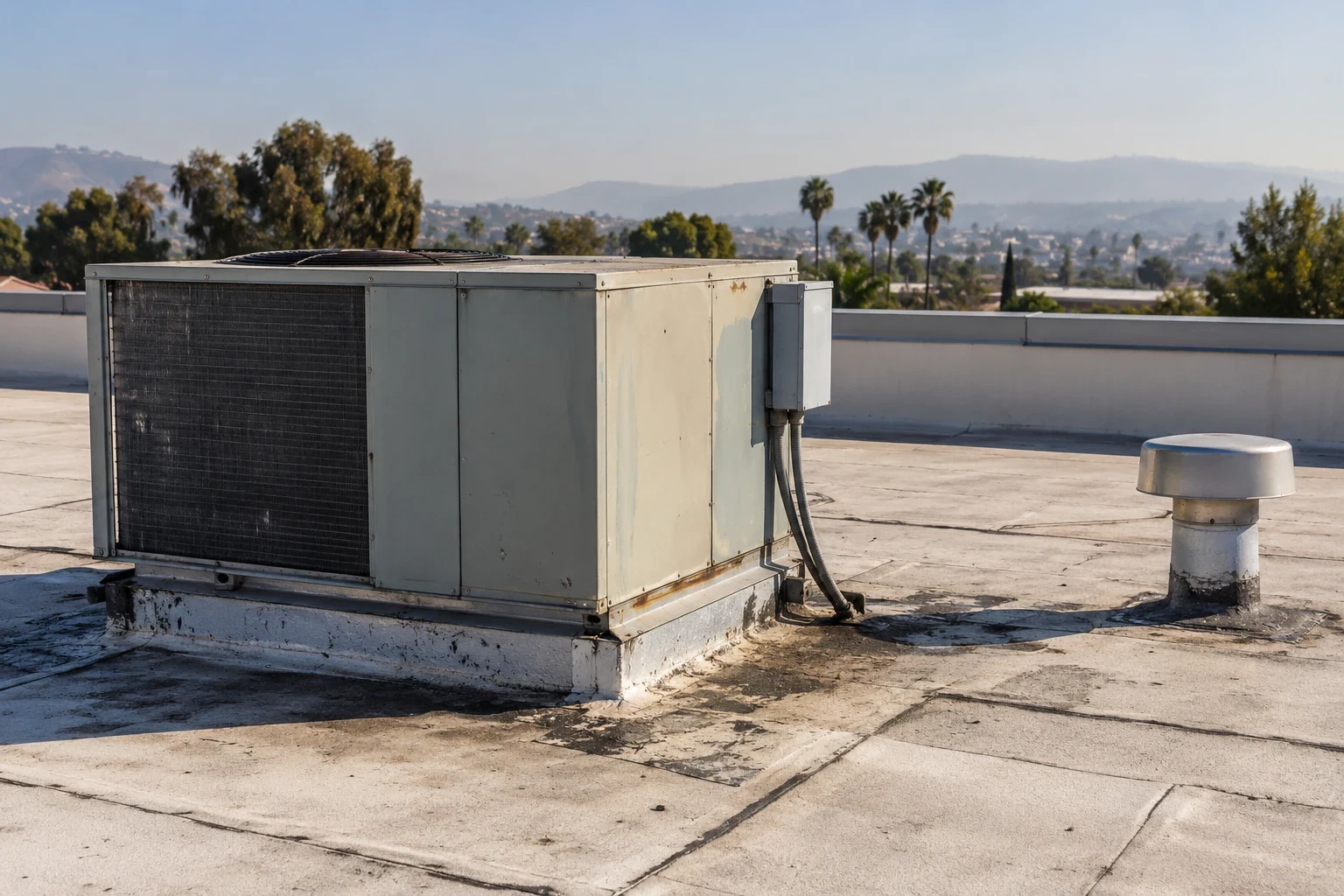
The surrounding material matters as much as the hole. We check the membrane for cracking, stretching, contamination and separation, and inspect the nearby seam, curb and support base for a second entry point. If a fastener or metal edge remains exposed, removing only the damaged sheet may leave the same hazard in place. The work scope can include a protective walkway or relocation of the sharp contact only when the site conditions support that step. A seam inspection or flashing review may be needed where the reported puncture meets an open lap or penetration.
Check the Material Beneath the Membrane
Water can spread laterally through insulation before it reaches a ceiling, so the visible puncture does not establish the wet-area boundary. We look for soft or displaced membrane, staining at a deck joint and changes around the reported point. Where moisture mapping or a test cut is warranted, the owner approves the method and location in advance. We note what was measured, what was exposed and any area that could not be checked. The repair estimate then distinguishes dry, accessible substrate from an allowance for concealed wet material. That protects the owner from approving a tiny patch that leaves confirmed damage in place.
In the Media District, production studios sit alongside office, healthcare and other employers. That local mix can make equipment access and room availability relevant to an inspection, while the district cannot tell us how any individual roof is used. We coordinate with the building contact to identify service routes, sensitive equipment and the room below the reported point. If access must wait for a scheduled shutdown, temporary protection can be documented as an interim measure. The repair record keeps each observed condition tied to the roof section and interior report so the owner can authorize follow-up testing without confusing it with confirmed puncture work.
Repair the Opening and Remove the Contact Hazard
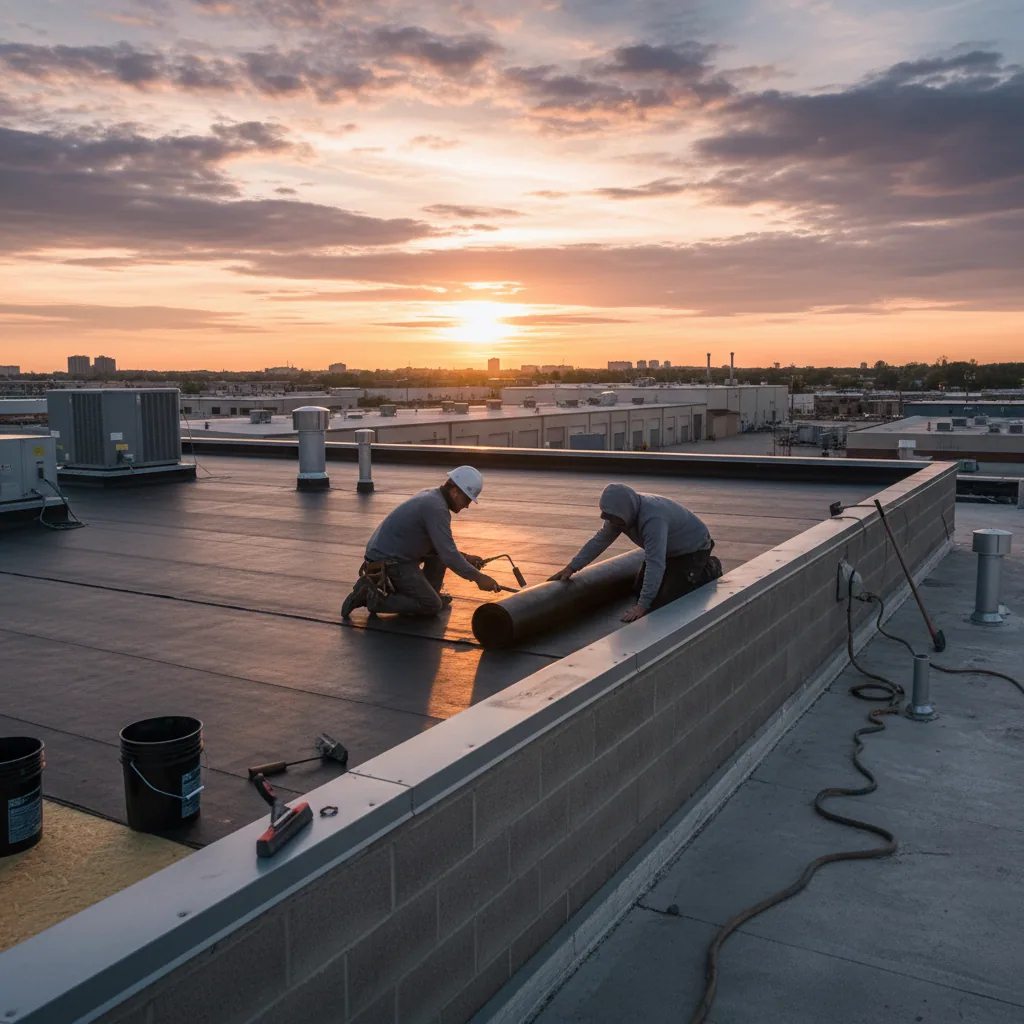
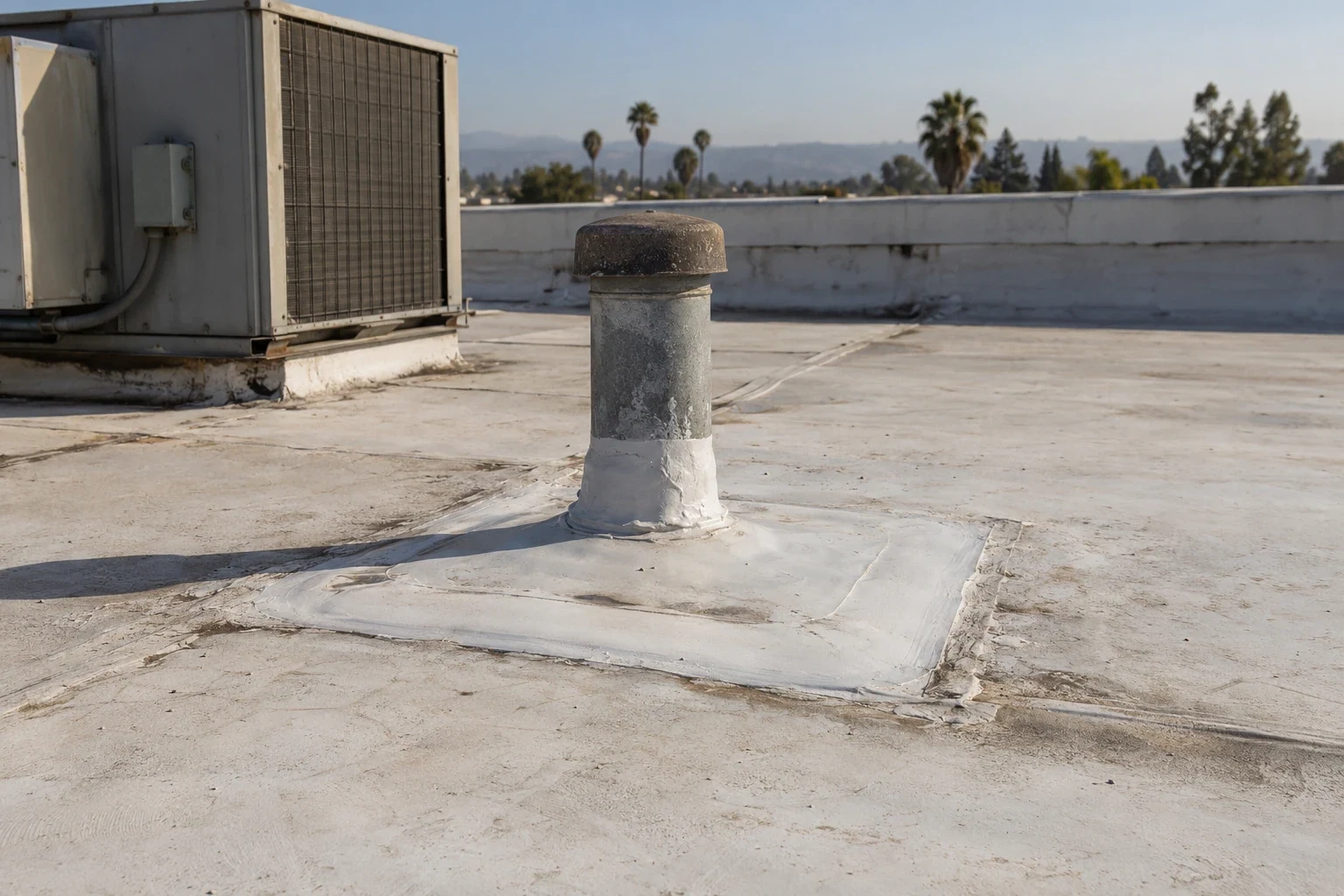
After the surface is identified and prepared, we install a compatible patch that extends onto sound membrane and restores the intended water-shedding surface. The scope states removal limits, substrate replacement if confirmed, flashing or seam tie-ins, and how the patch will be checked. If the puncture sits beneath a service route, we can identify a designated walkway or other protection for approval. Equipment supports may require another trade to adjust or secure them; we note that handoff instead of altering a support outside the roofing scope. The completed repair should have a visible boundary and a record of the material used.
If the sheet is broadly worn, there are repeated punctures or moisture crosses several roof zones, a local patch may not resolve the owner’s larger exposure. We map separate openings and discuss whether a roof inspection or broader repair should be compared. Affected flashing can be addressed through an authorized penetration-detail scope, while unrelated wear stays outside the puncture work. Each item should identify the roof section, evidence, material and next decision, allowing a facility director to approve urgent containment without treating every roof condition as one project.
Set a Safe Route for Rooftop Service
Repeated foot traffic can wear a path or bring tools and parts across membrane that was not designed for direct service access. We identify the route, note equipment that requires regular maintenance and ask who controls roof entry. The property can then define a path, staging area and protection detail that reduces contact with vulnerable areas. We do not assume a tenant caused the damage; the inspection documents marks and conditions visible during the visit. If several trades need roof access, the facility lead can record their service windows and the locations they must reach before work begins.
Downtown Burbank includes pedestrian-oriented commercial streets and outdoor dining as part of its district character. That information may shape where material handling and lift staging require advance coordination, while each site manager sets the actual delivery, customer and roof-access rules. We confirm a clear route, protection for occupied areas and a safe stop point for the crew. If work occurs near rooftop equipment that must remain running, the access plan names the contact responsible for coordinating around it. Those details make a small repair easier to execute without leaving an open membrane or an unprotected route for the next service visit.
Make the Repair Easy to Inspect Later
We close the work with before-and-after photos, a roof-section label, materials installed and any remaining limitation. If insulation was replaced, the report shows its confirmed extent. If moisture outside the patch was not tested, that area remains an open question rather than a completed repair. A roof condition record can help staff compare later damage with the original point and identify whether the same access route is involved. The owner should retain the roof plan, work order, service notes and any equipment record alongside the photographs.
Magnolia Park is known in Burbank for independent retail and food businesses. For a roof above that kind of active commercial setting, managers can pair a repair record with tenant access and service-contact notes while keeping the roof facts specific to each address. Schedule a review with the incident date, interior location, roof plan, equipment list and prior repairs available. We will note which area was repaired, what protection is recommended and what should trigger another inspection. That gives the facility team a usable record for the next maintenance visit and a defensible basis for a broader capital request if repeated openings appear.
Commercial Roofing Questions
Can you repair a puncture during the first roof visit?
A complete repair can proceed when access, roof conditions, material identification and surface preparation allow it. If those conditions are missing, we document temporary protection and the information needed for the permanent scope.
Does a small hole mean only a small area is wet?
The hole does not show how far water traveled below the membrane. We inspect the surrounding assembly and recommend an approved moisture check when the evidence leaves the boundary uncertain.
How do you handle punctures near rooftop equipment?
We coordinate access with the equipment contact and define whether a support or service route needs protection. Work on the equipment itself remains with the responsible trade unless it is included in the approved roofing scope.
Can the same area be protected from future service traffic?
We can identify a designated route or protection detail for owner review. The facility team should tell service vendors which path is approved and keep the repair record with the equipment access notes.
What helps determine whether multiple punctures need broader work?
A roof plan, dated photographs, prior work orders and a map of each opening show whether damage is isolated or repeated across sections. We can then price further inspection separately from confirmed repairs.