Hotel Roofing in Burbank, CA

A hotel roof project has to fit around occupied rooms, guest routes, housekeeping, events and building services. A leak report needs timely protection, but a guest complaint does not by itself identify the roof detail. Start with the room or common area as approved by management, the time of the report, the roof plan and who controls access. The city's visitor report totals 18 hotel properties and 2,712 rooms; it also estimates roughly 3.2 million overnight visits each year. Those citywide measures are not a reading of any property's occupancy or roof condition.
Use public location language that names a broad commercial area, never a particular hotel or guest. The Airport District combines hotels with retail and technology uses; Media District has a different commercial mix. A commercial office roof may share occupied-floor planning, but hotel staff set guest communications and event constraints.
Coordinate Noise and Guest-Facing Routes
Ask management which room blocks, conference spaces, entrances and service corridors should remain quiet or clear during each phase. The hotel sets guest notices and access rules; the roofer provides a factual work window and identifies any expected noise, lift or temporary route change. Do not place tools or material in a guest path without approval. If an event is added or a room is taken out of service, confirm the revised plan before extending the barrier or work zone.
Housekeeping and maintenance teams may have separate delivery periods. Name the site contact who can coordinate those groups and a backup for early or late access. A daily release should state whether the roof is weather-tight, what remains protected and who will inspect next. A phased reroofing plan can structure handoffs. A restaurant roof scope helps illustrate kitchen access, but it should not be copied into hotel guest communication.
Inspect Equipment Curbs and Drainage Details
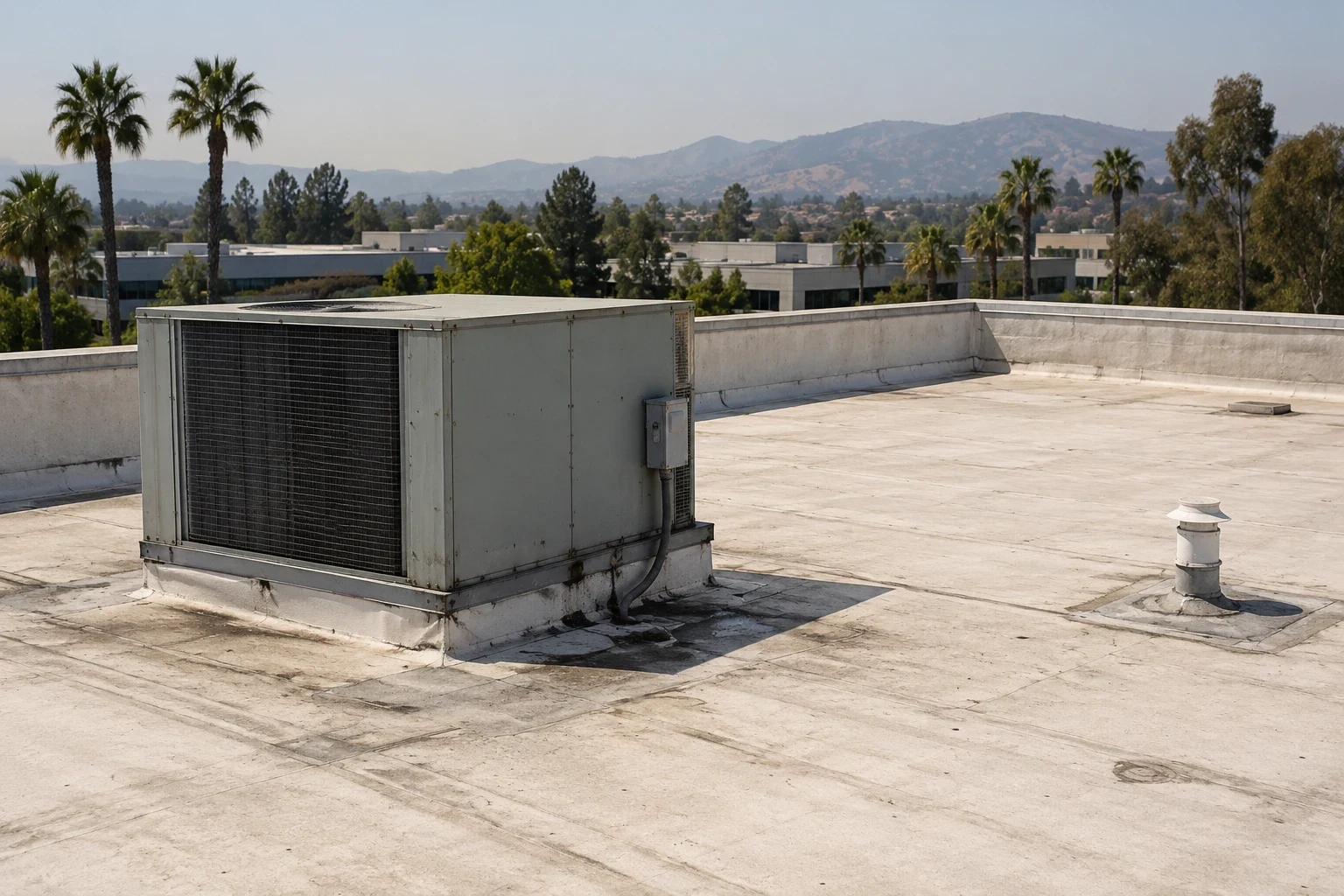
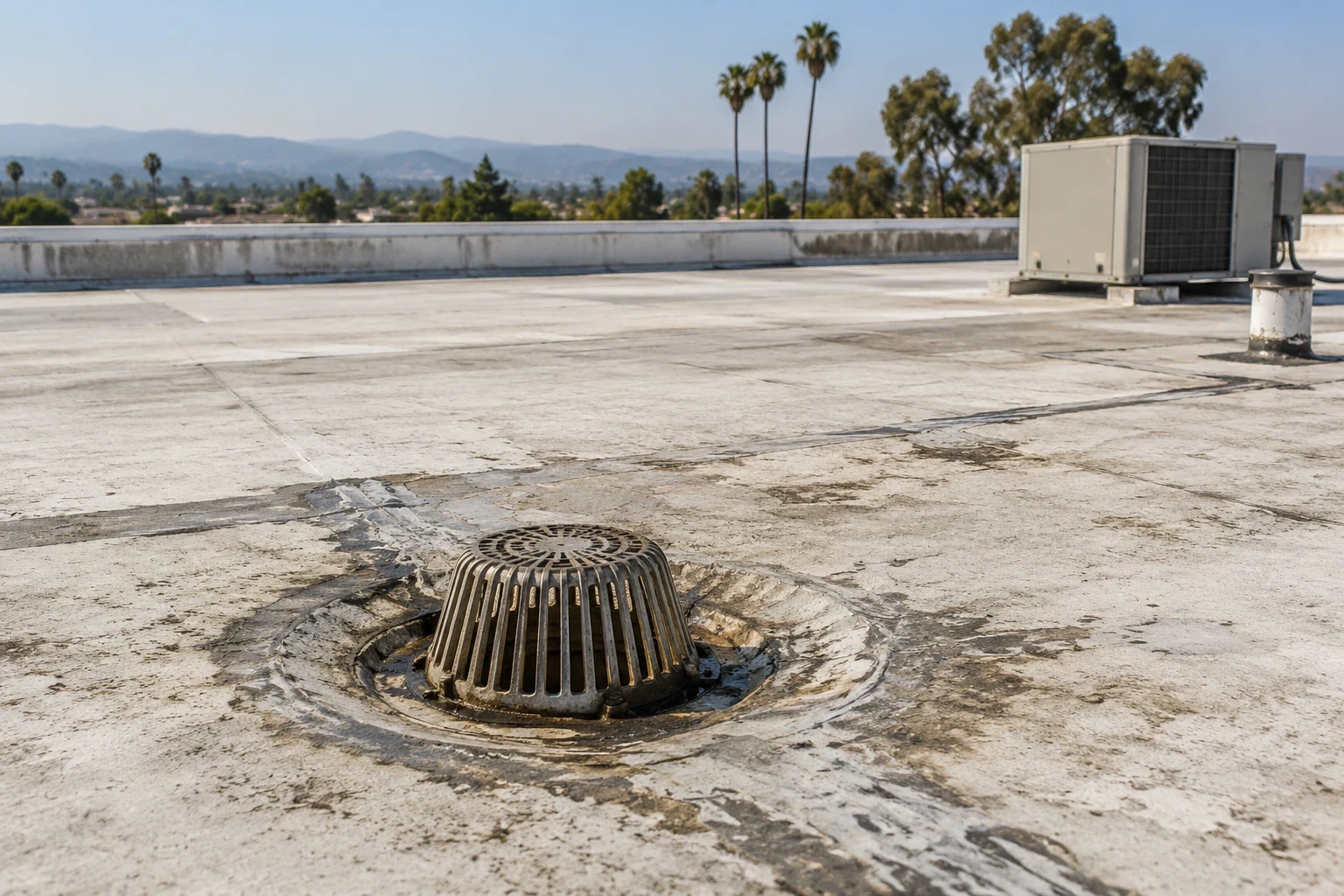
Hotels may have extensive rooftop mechanical equipment, service walks, screened areas and multiple penetrations. Confirm the equipment owner and clearance requirements before inspecting around a unit. Review flashing, counterflashing, membrane seams, drains and overflow paths; identify any section hidden by equipment or not safe to reach. Do not move or disable a fan, condenser, pipe or electrical component unless the authorized trade owns that task.
A ceiling stain can travel away from its entry point, so compare the interior report with roof observations and note uncertainty. If thermal imaging, a test cut or moisture reading is proposed, specify its scope and restoration before opening a surface. Burbank’s Airport District has conference hotels among its varied commercial uses; that context does not identify an individual property’s equipment or assembly. A drain inspection can be added when outlets need closer review.
An occupied hotel needs a phase plan that operations can communicate without disclosing room assignments to the roofing crew. The manager can identify quiet periods, event holds, service-lift rules and routes that must remain guest-ready. The contractor should translate those constraints into a roof-zone schedule, daily stop point and contingency for a weather interruption. If work over a room block must pause, secure the opened area and confirm who checks temporary protection. A roof survey should also distinguish an active leak from a guest report that has not yet been tied to roof evidence. Burbank’s Airport District includes conference hotels and big-box retail, a broad land-use context rather than a claim about any hotel’s facilities. Ask each property’s engineering contact about equipment access, fire-life-safety restrictions and any vendor coordination required before mobilization. For a multi-phase project, send a short daily record listing the section completed, area protected, access change and next planned work window. This gives the front desk and engineering team a consistent update without overstating what has been repaired.
Separate Guest Protection From Capital Decisions
A localized repair can be priced when the roof detail, surrounding membrane and tie-in support a bounded fix. Show the method, preparation, material, access, interior protection and acceptance check. If the condition repeats across sections or tests point to broader moisture, offer a separate renewal study with quantities, removal depth, insulation, edge work, equipment and temporary-cover assumptions. This gives ownership a way to protect guests now while reviewing a larger capital scope on its own merits.
Keep allowances explicit. Identify what the estimate assumes about deck condition, concealed layers, mechanical coordination and hotel schedule. If a test opening reveals a different assembly, stop at the authorized limit and ask for a written decision. A modified-bitumen reference can support assembly discussion, and capital planning can organize documented work by budget period. Neither substitutes for a property-specific survey.
For a proposal, translate those limits into a phase diagram, expected daily hours and a weather contingency. Management can use that information to plan room availability and event staffing without promising that every phase will be silent or invisible.
Confirm Permit and Ownership Approvals
Before the bid is final, identify the owner’s approval path, management contact, design professional and permit responsibility. Burbank has locally amended building standards whose effective edition depends on the application timing; the permit team should confirm which code path applies. The city also says energy provisions depend on building type and scope. Provide dimensions, observed layers and proposed work details for review, but do not promise an approval result or imply that hotel use creates an exemption.
List delivery, lift placement, work hours, debris handling and the daily roof release in the schedule. If a project meets the city’s stated nonresidential valuation threshold, ask the permit lead to check applicable diversion documentation. Guest safety plans remain under hotel management, while the contractor is accountable for its roofing work zone and weather protection. Make those responsibilities clear in the proposal so a schedule change does not leave an unassigned decision.
Give Hotel Operations a Clear Roof Handoff
Closeout should show the roof section, material installed, dated photos, drains and edges checked, open issues and the status of temporary protection. Provide warranty records supplied and maintenance actions the owner can perform. If work touched an equipment interface, note the authorized trade’s handoff separately. The hotel contact then manages room or guest-area release under its procedures. Do not state that rooms or services are available based only on completion of roof work.
Keep each hotel’s records separate even when one management company oversees several sites. A citywide service overview can mention the Airport District or Media District, but individual property findings belong in the private project record. A later inspection can compare the original condition, repair boundary and any post-weather follow-up. This creates a usable chain for maintenance and budgeting without putting guest names, security details or room numbers into public copy.
Downtown Burbank is another recognized commercial district, with a different mix of storefronts, offices and services. Each hotel should still provide its own engineering contact and room or event constraints for a site-specific sequence.
Commercial Roofing Questions
How should hotel roof work be scheduled?
Management identifies event, housekeeping, guest and quiet-hour constraints. The contractor can propose a phase plan with daily weather-tight boundaries, while hotel staff control notices and room-area release.
Can guest rooms remain occupied during a repair?
The hotel determines room access and protection. The roofing plan should state the affected zone, expected duration, noise, barriers and conditions that require a schedule change.
What does a hotel leak report establish?
It identifies an interior symptom and time. Roof-side inspection or a defined test is needed to connect that report to a specific opening or assembly condition.
When should ownership consider replacement?
Use mapped repeat failures, test results and assembly condition to compare a separately priced renewal option. State assumptions and keep immediate leak control distinct.
What should be in the handoff?
Document materials, completed sections, photos, drainage checks, temporary-cover status, unresolved details and any warranty information supplied. Hotel staff approve guest-area release.