National Guard Armory Roofing in Burbank, CA

An armory roof decision can sit beside a property-planning decision. In Burbank, CA, possible relocation, closure or consolidation of the National Guard armory is a property-planning issue, so a roof review should separate immediate water control from any longer capital commitment. The Glendale Army National Guard Armory is a separate site in downtown Glendale. We inspect the building actually in scope, define what remains serviceable and prepare a roof inspection record that a facility director can use while plans evolve.
Keep Site Planning Separate From Roof Findings
Burbank's armory may be relocated, closed or consolidated, a planning question that should remain separate from an urgent roof repair. The first roof decision is narrower: is there an active leak, a deteriorated detail, a drain problem or a broader assembly condition that needs action now? We document those observations by roof section, then show which work protects the building and which work would require a separate capital approval. That separation prevents a policy discussion from becoming a substitute for a field assessment.
The Burbank Armory sits beside Pacific Park, and earlier planning discussions considered consolidation with Glendale. Glendale's downtown Army National Guard Armory is a separate site with its own roof and inspection record. When a site may change use, a limited repair can address verified leakage without committing the owner to broad renewal. Before pricing, we confirm who can authorize access, where vehicles may stage and whether a daily temporary-cover closeout is required. A separate capital option can document replacement limits if the facility plan advances. This keeps a maintenance decision useful while longer-range property discussions continue. Any capital planning file should state the building, roof section, evidence date and decision being requested.
Inventory the Assembly Before Choosing a Repair
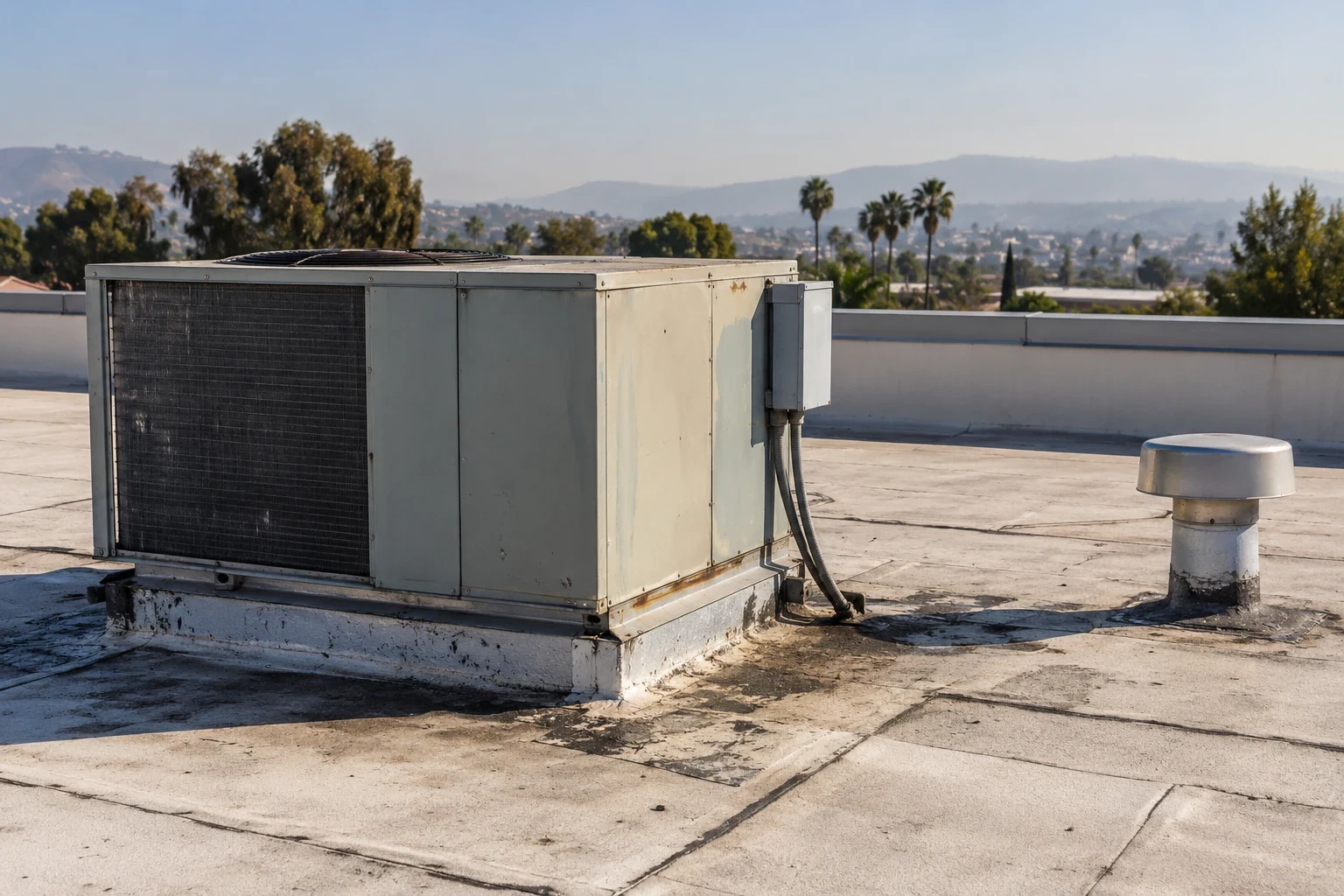
Armories can contain training, assembly, storage and administrative spaces, but those uses do not establish a particular roof system. We inspect the installed membrane, deck, insulation, edge securement, roof-to-wall transitions, curbs and drainage. Prior patch material matters because an incompatible repair can fail at the seam even when the surrounding membrane looks intact. Our notes identify where each observation sits and whether it was visible, tested or concealed. If records from a prior project are available, we compare them with field conditions before describing a repair limit.
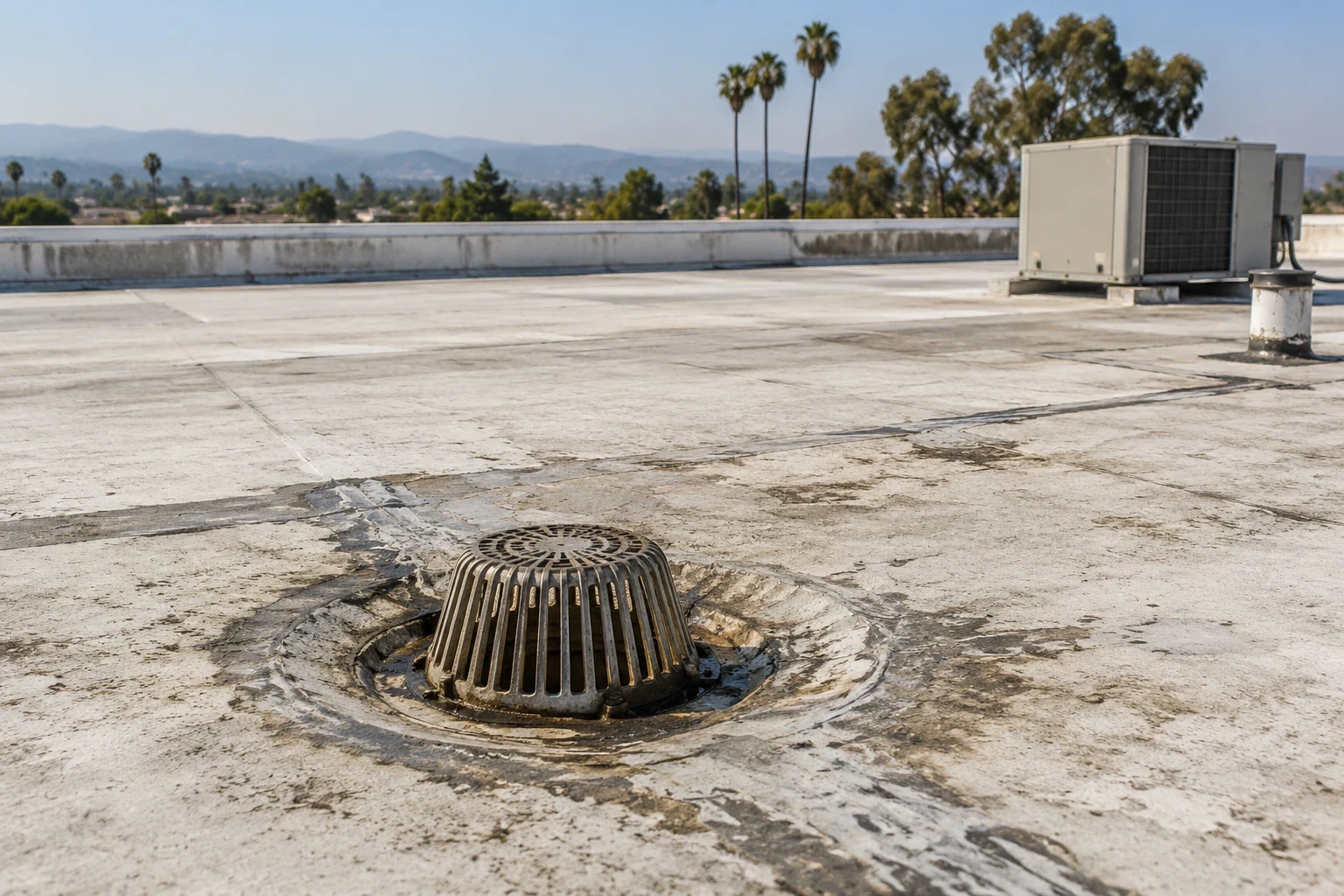
Where a roof section has one localized opening and sound material around it, a focused repair may make sense. If moisture or repeated seam movement crosses several sections, we show that wider pattern rather than describing every defect as an isolated patch. Drainage checks are also specific: we look at the path to each drain or scupper and document obstructions or damaged transitions. A drain and scupper review can help separate a water-entry detail from a larger membrane decision. We do not infer a roof condition from the armory name or a planning document.
Protect Entry Routes During Work
When a facility serves public or scheduled users, the work boundary affects more than the roof. We identify entrance routes, accessible paths, loading or emergency access and any interior space below the active section. The access plan states where materials will be staged, how overhead areas will be protected and when the area can reopen. If escort rules or site approvals apply, the facility contact confirms them before a crew is scheduled. These controls can affect labor sequence and cost, so the estimate should list them rather than hide them in a general allowance.
For an occupied section, we set a daily stopping point and a weather closeout method before removing material. Temporary dry-in is a separate task from a permanent repair, and each has its own limits. A work phase can shift if rain, access or an unexpected deck condition changes the planned sequence. We communicate that change to the named site contact and update the affected roof section in the record. The occupied-building work plan is useful where normal activity continues; an area-level review in Downtown Burbank concerns the broader district, not the armory site itself.
Compare a Limited Repair With a Larger Renewal
Repair and replacement answer different questions. A repair scope should name the opening or detail being corrected, the materials used and any adjacent condition left outside the boundary. A replacement scope should address removal, substrate preparation, insulation, new membrane attachment, drainage and perimeter transitions. If relocation or consolidation remains under discussion, the useful comparison may be a narrowly defined stabilization repair against a longer-term project, each with its own cost drivers and approval needs. We state what each option resolves and what remains for later review.
Burbank's Media District is a separate commercial area with production studios and office, healthcare and education employers. Its mix reinforces why building use and operating windows matter, but it does not establish what an armory's interior schedule is. We ask the site contact for current occupancy and access limits before setting the sequence. A roof system choice, such as built-up roofing, follows confirmed assembly and specification needs rather than a general assumption about institutional buildings. The comparison should preserve that distinction in the written scope. Material removal, temporary cover, deck repairs, edge transitions and disposal can affect sequence and cost. We list those items separately when they apply, then show which conditions need owner approval before work starts. That gives a property lead a clear repair limit even if the site's longer-term use changes.
Leave Evidence for the Next Property Decision
A usable closeout file includes a roof plan marked by section, dated photographs, repair boundaries, materials and details installed, any access changes and conditions that remain unresolved. For a site with an open planning question, that record can help the next reviewer understand what was protected and what still needs a capital decision. It should not overstate the extent of an inspection or imply that concealed areas were verified. If a test or opening was not authorized, we list it as a possible next step with the approval it needs.
Warm-season access can change how exposed membrane work is scheduled in Burbank. Long-term Burbank averages July mean daily highs at 85.8 degrees Fahrenheit, with August reaching 88.3. We use that profile to set a workable roof window, while choosing repair or renewal from the conditions found in the assembly. A facility lead can schedule a review with available plans, leak dates, prior repair notes and a decision deadline. Add any proposed access or use change to that record before the scope is approved. The resulting government-property roof scope or Army installation roof review should keep the planning record and building findings distinct.
Commercial Roofing Questions
Does a relocation discussion decide whether the armory roof should be repaired?
No. We inspect current conditions and separate urgent water control from any longer capital work that depends on a future property decision.
Can the Burbank and Glendale armories share one roof report?
Each site needs its own inspection, roof plan and access notes. A common city record does not establish that the buildings share an assembly or condition.
What if records show a prior roof replacement?
We compare the recorded scope with visible field conditions, identify any limits in the record and note where further testing or authorization is needed.
How should temporary protection appear in the estimate?
List it separately from permanent repair, including the affected section, expected duration, weather closeout and any area that remains exposed to follow-up.
What should the facility director bring to the review?
A roof plan, recent leak dates, prior repair notes, available assembly documents, access requirements and the date by which the property decision must be made.