Commercial Roofing in Valley Village, Los Angeles, CA
Commercial roof needs in Valley Village are concentrated where businesses and neighborhood commercial centers operate, not spread evenly through residential blocks. A leak above a shop, office, or service space calls for a fast diagnosis that protects the occupied area and identifies the roof section responsible. We confirm the property's actual use and access plan before setting repair or renewal limits.
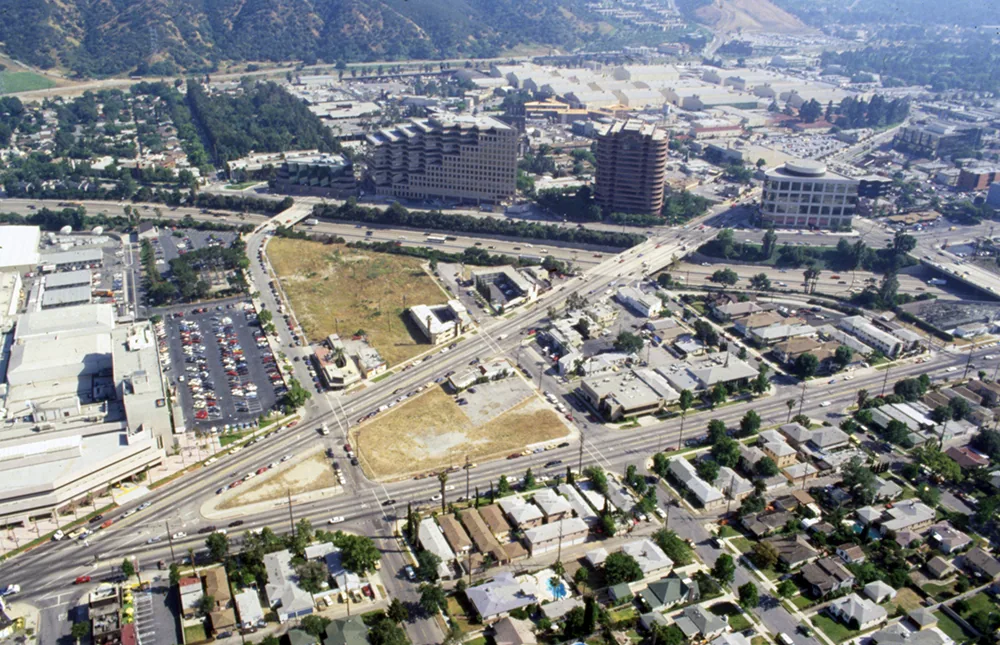
Valley Village occupies the southwestern portion of the North Hollywood-Valley Village area, directly south and west of Burbank. Commercial activity is concentrated mainly along Laurel Canyon Boulevard and at local centers on major arterials. Those broad places help orient service coverage; they do not establish a roof system or condition. A commercial roof inspection documents the membrane, drainage, penetrations, and edges before the owner chooses a path.
Focus the Review on the Commercial Frontage
When a building sits along Laurel Canyon Boulevard or a local arterial, the roof visit still starts with the parcel and its access rules. We confirm which entrance serves the business, where equipment can be staged, and when deliveries or customers need an unobstructed path. A property manager can share tenant hours and roof-access authority before the crew arrives.
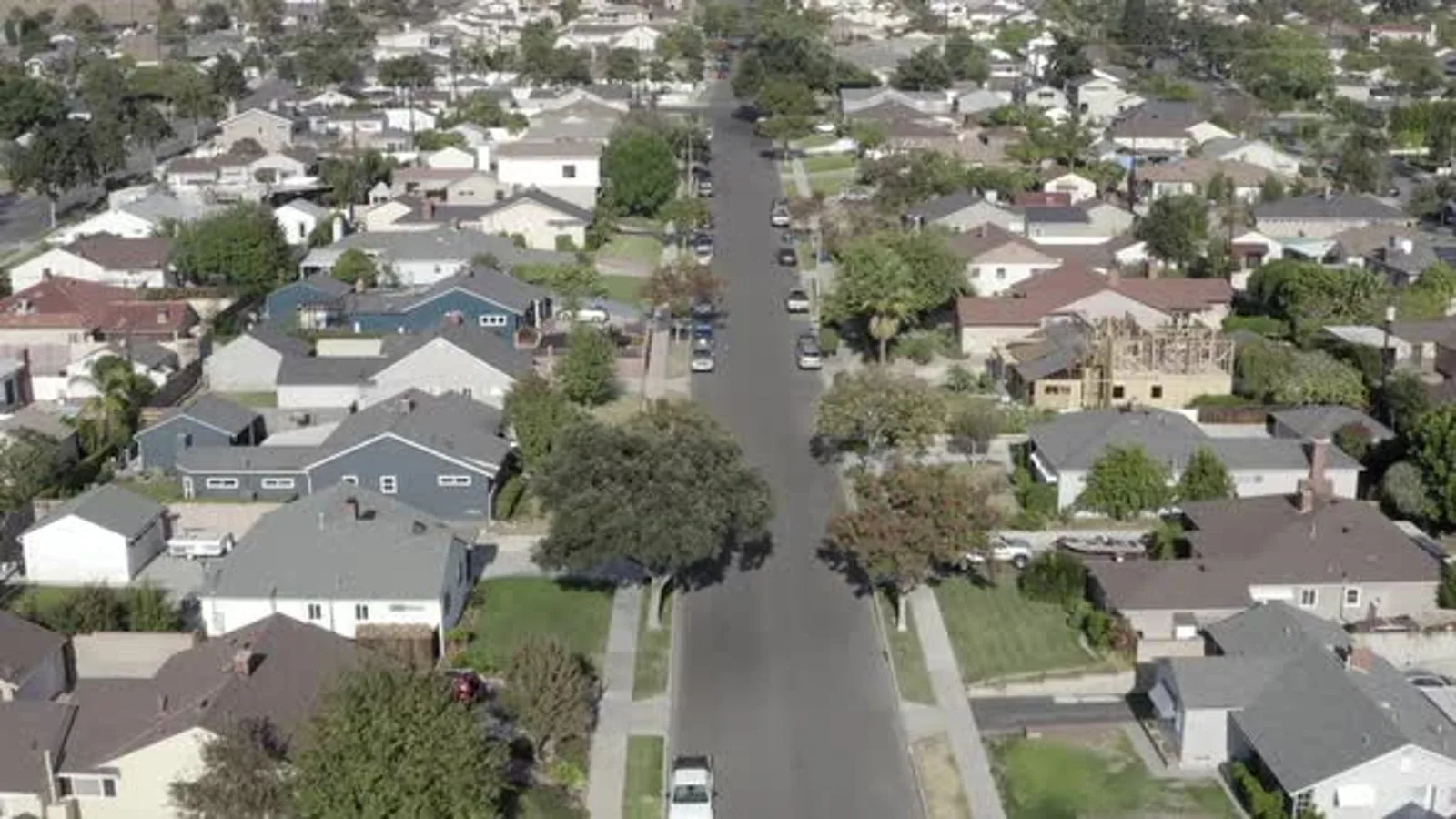
Most of Valley Village is residential, with commercial uses concentrated along defined corridors. That context helps explain why an owner may be responsible for a small commercial property beside residential uses, but it does not establish neighboring conditions. We focus on the roof above the actual business, record its water path and repair history, and coordinate staging so work does not spill into an unrelated entrance or tenant area.
Trace the Leak From the Interior to the Roof
A stain above a sales floor or office may be offset from the opening in the roof. Water may emerge several feet from the failed detail after moving through the roof assembly. We check the closest drains, seams, curbs, and earlier repairs against the interior report before selecting a test area. We map the affected room, inspect the corresponding roof section, and check seams, curbs, wall transitions, skylights, and outlets around the suspected path.
For recurring moisture, note whether it follows heavy rain, wind, or a particular part of a storm. That history helps us select the nearby details to inspect. If the leak has affected lighting or stored materials, the owner should identify the area needing temporary protection before diagnostic work begins. When visual checks leave the extent uncertain, we can price a small test cut for approval before opening the assembly. The result helps determine whether the repair stays local or needs a wider limit. A commercial leak repair review can then address a specific failure instead of applying a surface patch without a boundary.
Inspect the System That Is Actually Installed
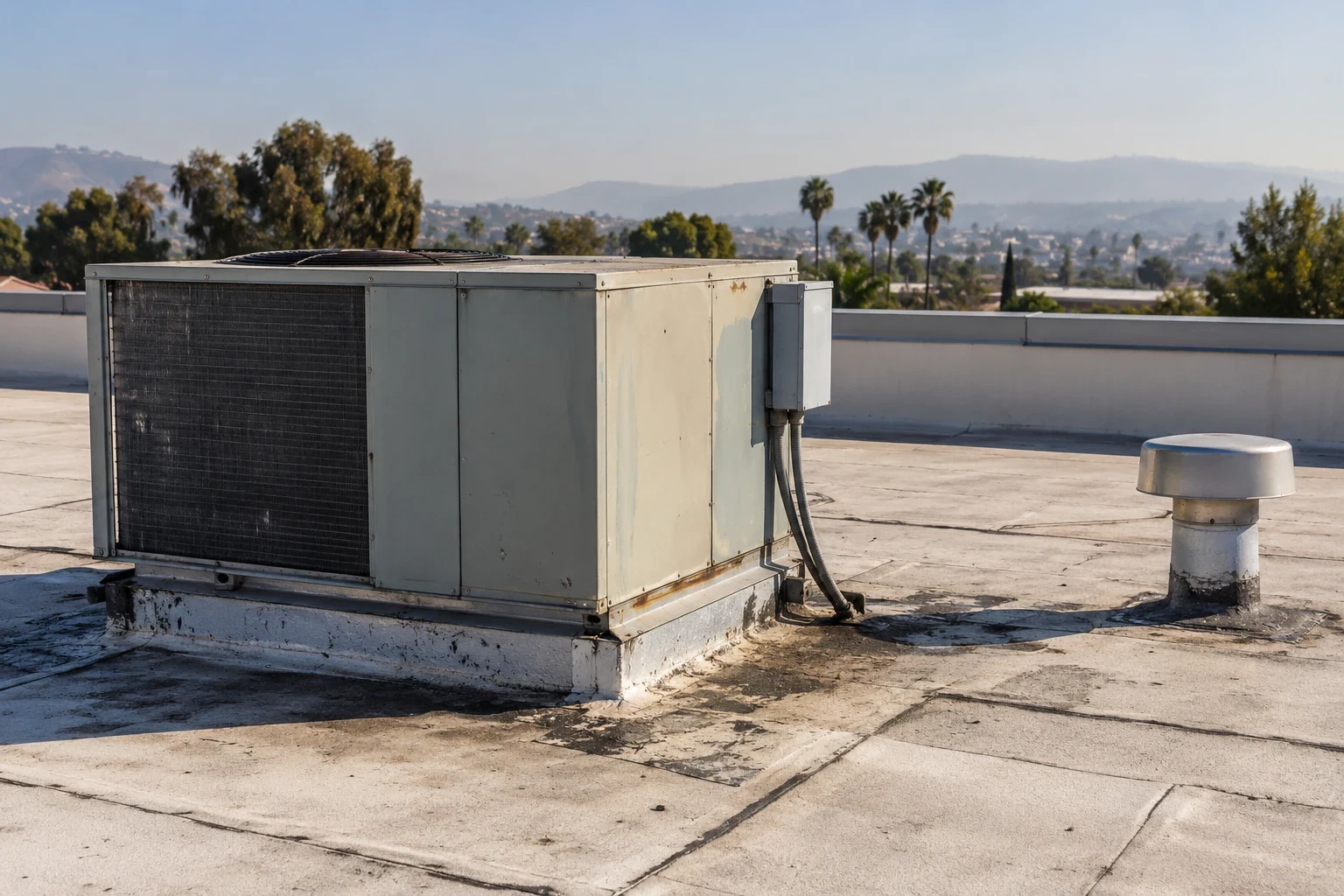
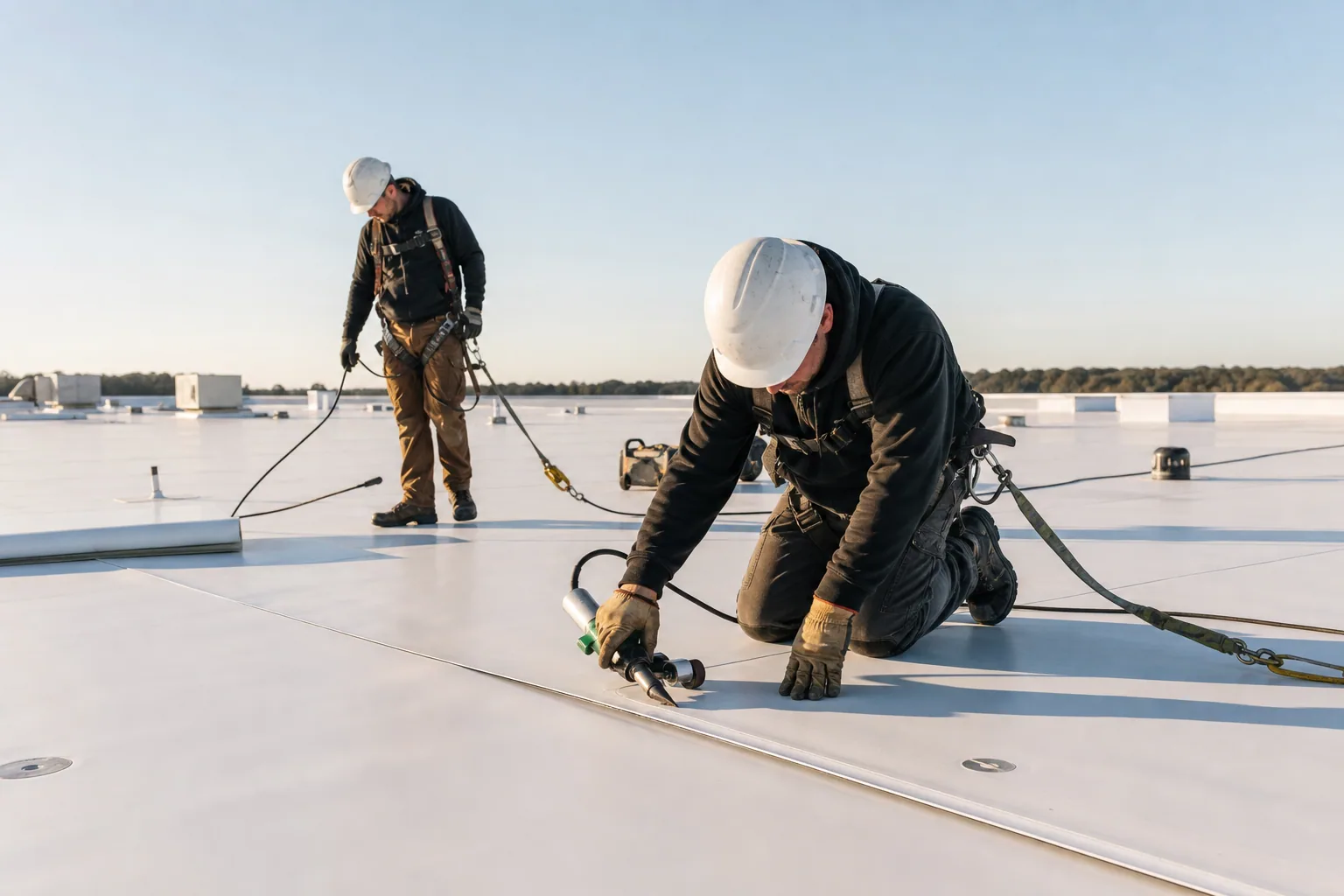
On a membrane roof, seam condition, attachment, flashing, and transitions matter more than the appearance of a single clean area. We check how the membrane terminates at a wall, what surrounds rooftop equipment, and whether earlier repairs remain bonded. A metal roof calls for a different look at panel laps, fasteners, and movement. The existing assembly should be identified before a system recommendation is made.
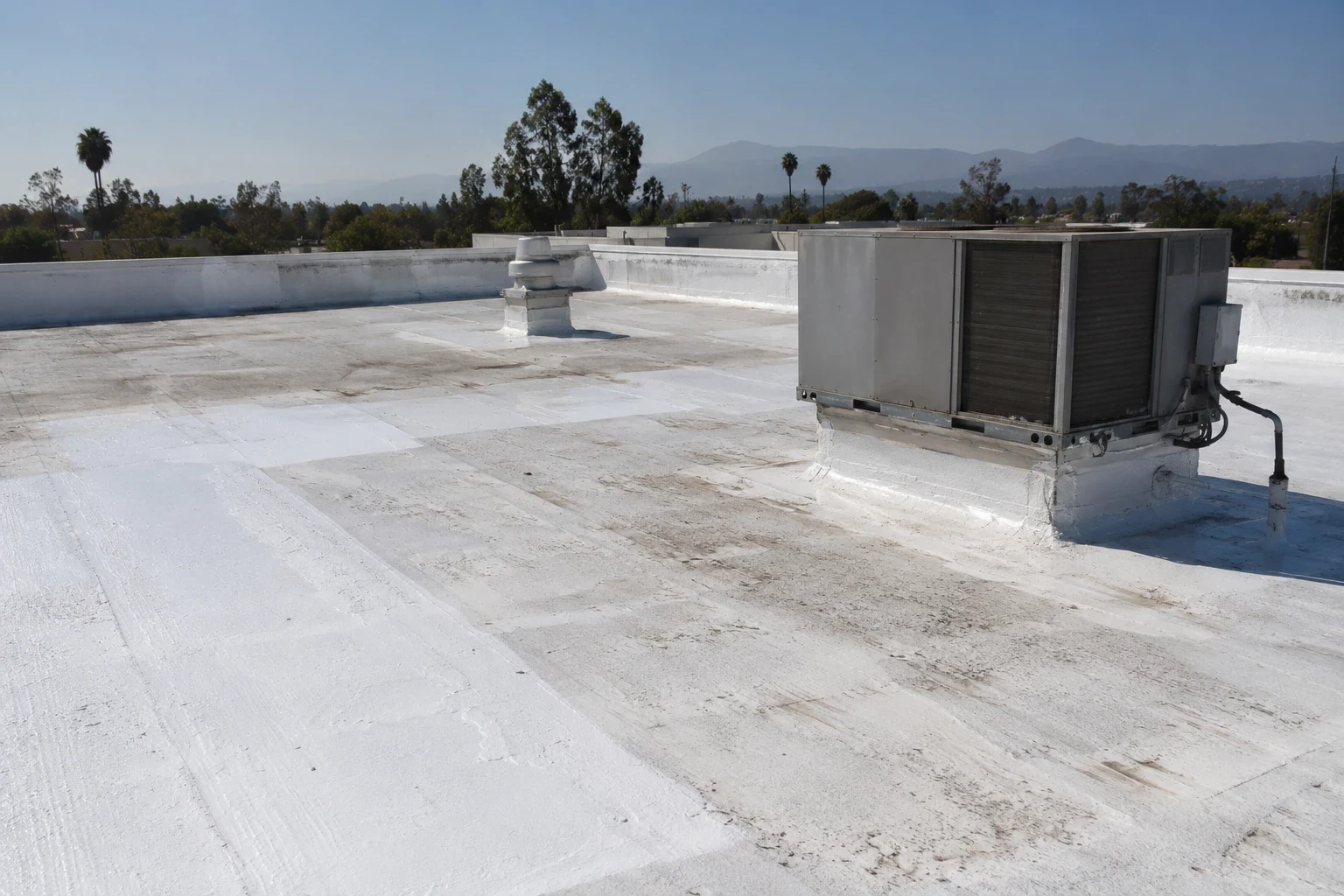
Where a coating is present or proposed, we examine the underlying material and the coating layers already in place. Wet insulation, loose sections, or incompatible surfaces can undermine adhesion. A test area may be useful before pricing if it answers a real question about bond or preparation. We show that result and its limits in the record. The owner can compare a roof restoration review with repair or replacement without relying on a finish coat to conceal an unresolved leak.
Use Heat Context Without Guessing at Roof Condition
Burbank's summer heat is part of the market's climate profile, but it does not prove how a particular Valley Village roof has performed. We look for brittle sealant, open laps, lifted repairs, and movement where walls or equipment meet the roof. Those signs guide closer inspection; they do not by themselves show whether insulation is dry or attachment remains secure.
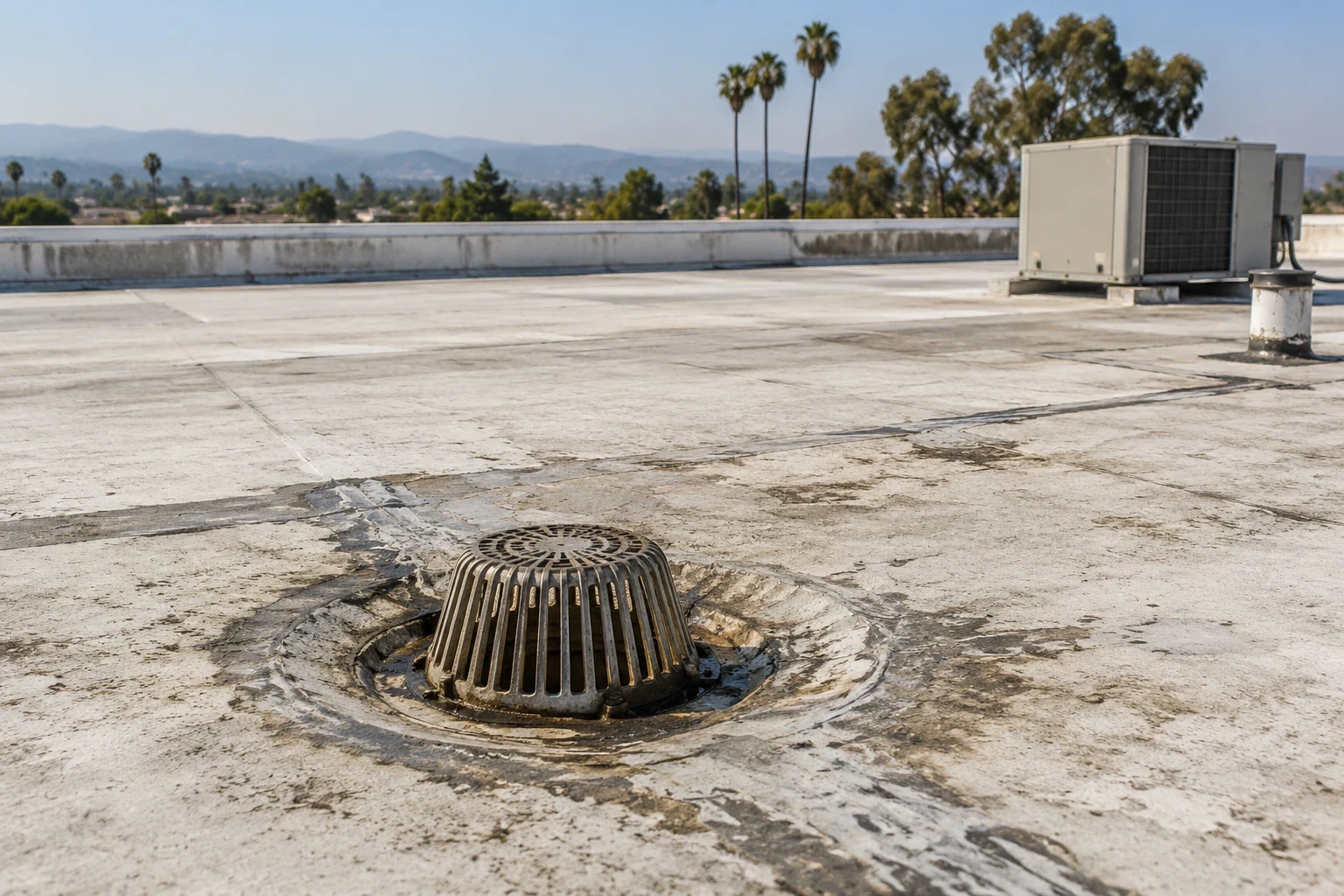
Edges, drains, and flashing can matter as much as the field membrane. We inspect coping joints, termination bars, scuppers, drain strainers, and the route water follows to an outlet. A patch over ponding water may fail again if the low point or blocked drainage remains. The report should state whether cleaning, a detail repair, or broader correction is recommended. A drain and scupper inspection helps the owner distinguish routine maintenance from a change to the roof's water path.
Set a Repair Boundary Before Approving Renewal
When a leak remains confined to one curb or seam and adjoining insulation is dry, a bounded repair may hold. We name the roof section, included flashings, and conditions that would widen the scope. If leaks recur along multiple seams or wet insulation appears across areas, repeated patches may consume the capital window without addressing broader deterioration.
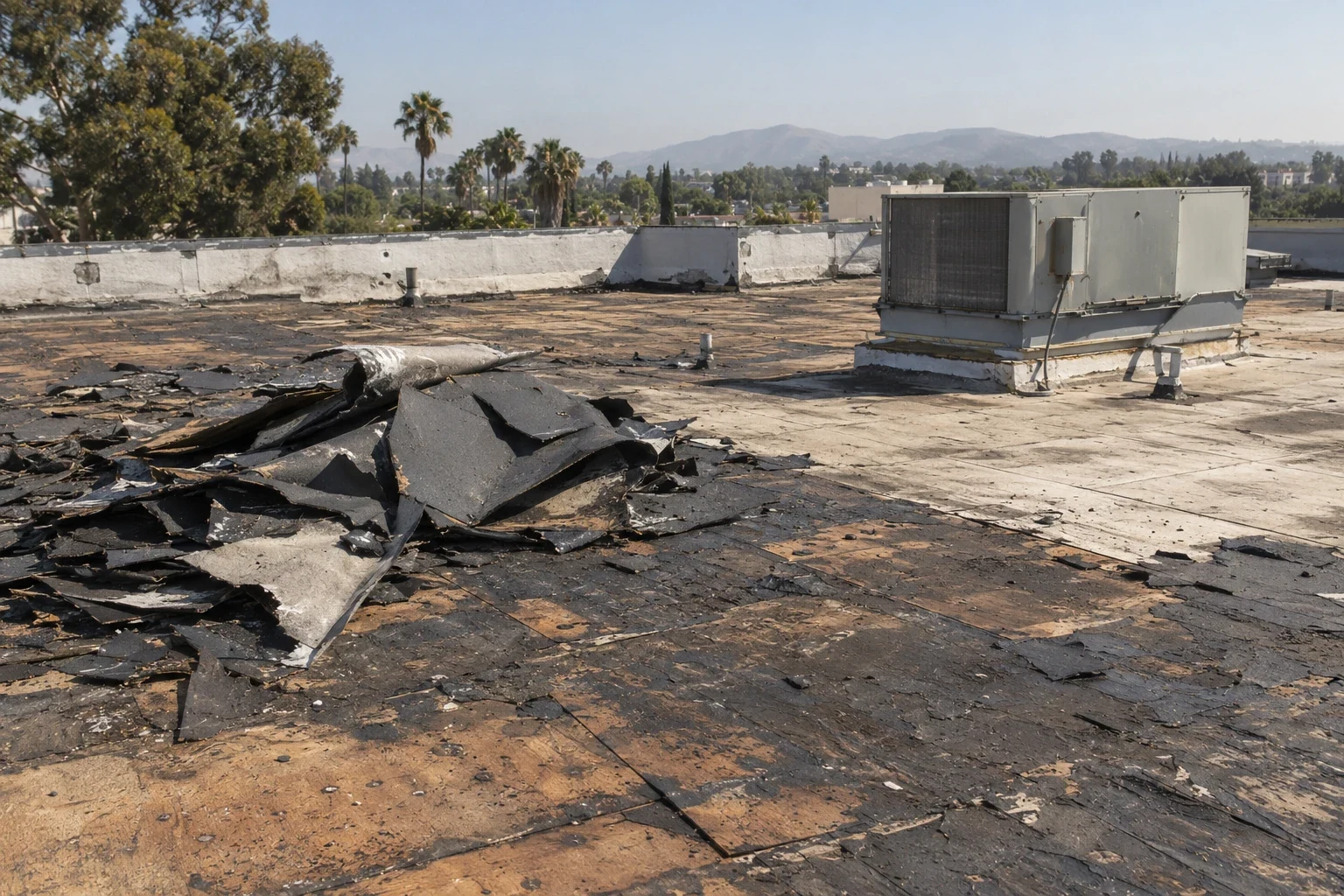
Replacement, recover, and coating each rely on different conditions. Recover depends on attachment, moisture, existing layers, and applicable requirements. Coating depends on a compatible, stable substrate and preparation. Replacement can include tear-off, insulation, drain work, and edge metal. Those items, plus access and tenant coordination, shape both price and schedule. A replacement comparison should show these assumptions beside the repair option so the owner can make a like-for-like decision.
Protect the Business Below During Roof Work
At a neighborhood commercial property, the roof crew may share access with customers, deliveries, and occupied suites. We agree on where materials arrive, which entrance remains open, and how the work area will be protected before opening the assembly. If a tenant has a narrow receiving window, that limit belongs in the staging plan rather than being handled after the crew arrives. A manager can also identify rooms that must stay open, sensitive inventory, and preferred work windows so temporary protection and sequencing fit daily operations.
We can sequence work by roof zone, with a planned end-of-shift seal for each opened area so the assembly is protected when crews leave. The facility contact should know when noise is expected, whether a room needs temporary protection, and whom to call if conditions change. We record completed areas and unresolved items at closeout. That file helps the property manager coordinate maintenance without relying on a verbal handoff or assuming every part of the roof received the same treatment.
Coordinate Valley Village With the Adjacent Market
The North Hollywood-Valley Village area also includes North Hollywood, whose northern industrial core lies along the Metrolink right-of-way. The NoHo Arts District is part of that broader community, while Valley Village's commercial activity is more concentrated on defined arterials. A North Hollywood roof review or NoHo Arts District property therefore calls for its own building-use and access questions.
For a Valley Village visit, share the cross-street, roof plan if available, leak dates, prior repairs, access contact, and decision deadline. Our inspection record labels conditions by roof section, includes location-based photos, and notes testing or access limits. We can schedule around business hours and give the owner a defined repair scope with any renewal comparison that the evidence supports.
Commercial Roofing Questions
Where is commercial service concentrated in Valley Village?
Commercial activity centers on Laurel Canyon Boulevard and local centers along major arterials.
Does a ceiling stain show exactly where a roof leaks?
No. Water can travel through the assembly before reaching an interior space, so we compare the room report with nearby roof details.
Can an occupied shop stay open during roof work?
Often, if the access route, staging, noisy tasks, dry-in sequence, and tenant schedule are planned with the property contact.
What determines whether coating or replacement is a better fit?
We review substrate compatibility, moisture, attachment, seam condition, repair history, and the extent of failure before comparing scopes.
What should I share before requesting an estimate?
Provide a roof plan, leak history, access rules, tenant hours, prior repairs, and the date a budget decision is needed.