Storm-Damaged Commercial Roof Repair in Burbank, CA
After a storm, a facility director needs to know which roof sections are exposed, what can be protected now and which repairs require a closer review. We start with the reported water entry, visible debris or displaced material, then plan safe access and document conditions by roof zone. The immediate response may include temporary protection, but that is not the same as a completed permanent repair. The inspection record should connect each observation to a photograph, roof detail and next action. Burbank's long-term rainfall average provides useful regional context, but it cannot predict a particular storm or roof-level wind. We follow the building's conditions and current weather.
Check Safety Before Reaching the Roof
Wet surfaces, wind, debris, damaged ladders and exposed electrical equipment can make roof access unsafe. We confirm the entry route, fall protection, roof condition and any restricted area before inspection. Facility staff should isolate hazards and follow their emergency procedures when water reaches electrical systems or occupied spaces. If weather prevents a safe walk, we can document interior reports and plan a return when conditions allow. The first visit should not promise full coverage if some zones cannot be reached. We state which areas were inspected, which were deferred and what conditions must change before the next check. That gives operations a clear status while avoiding a second incident during response.
Map Displaced Material and Open Details
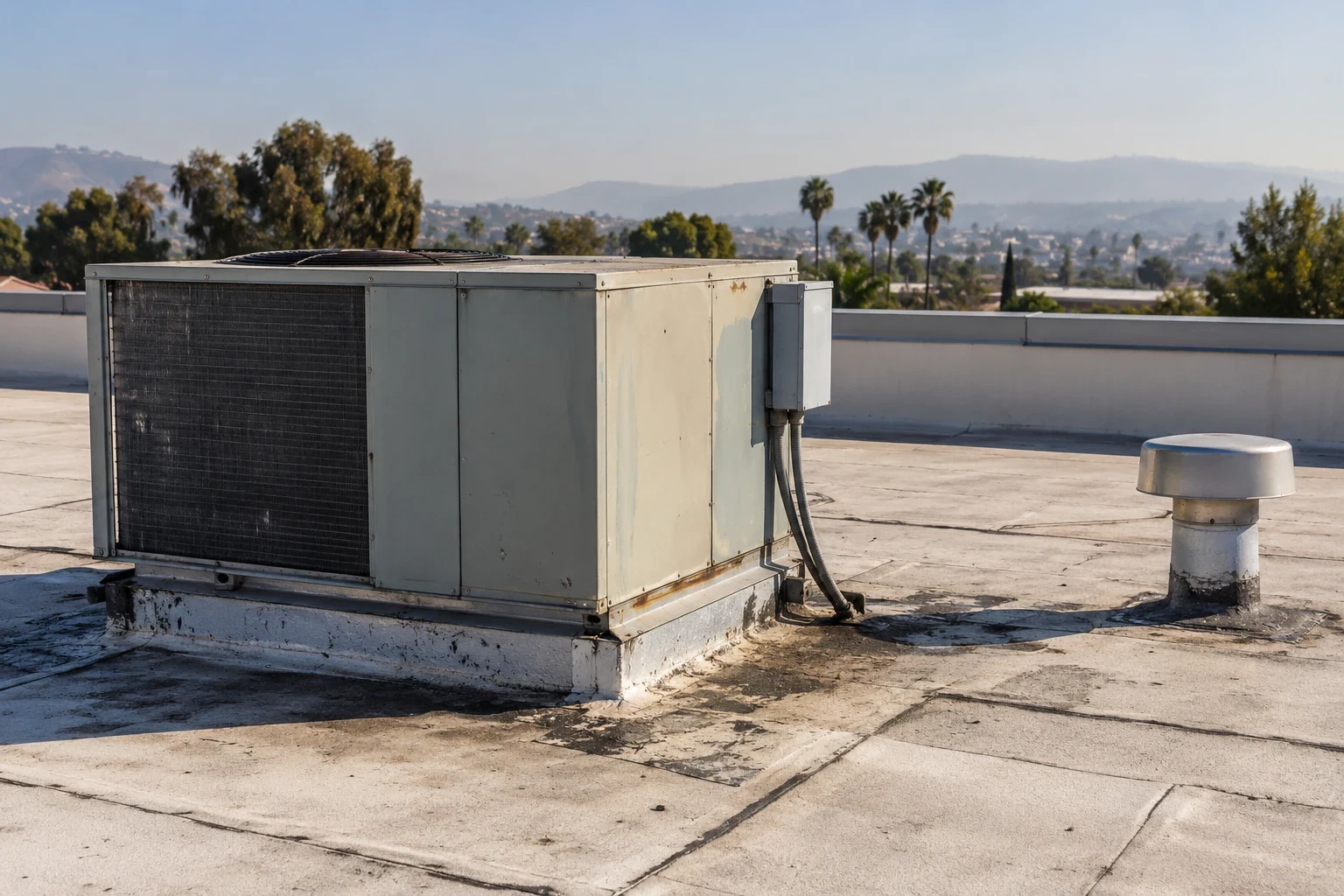
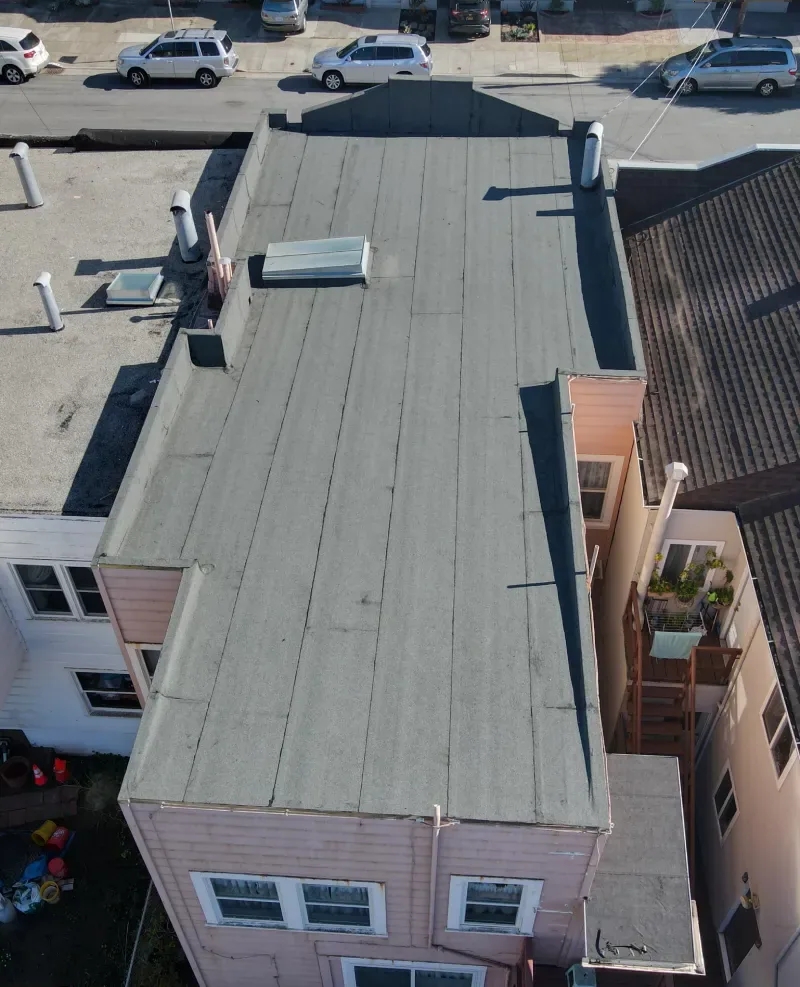
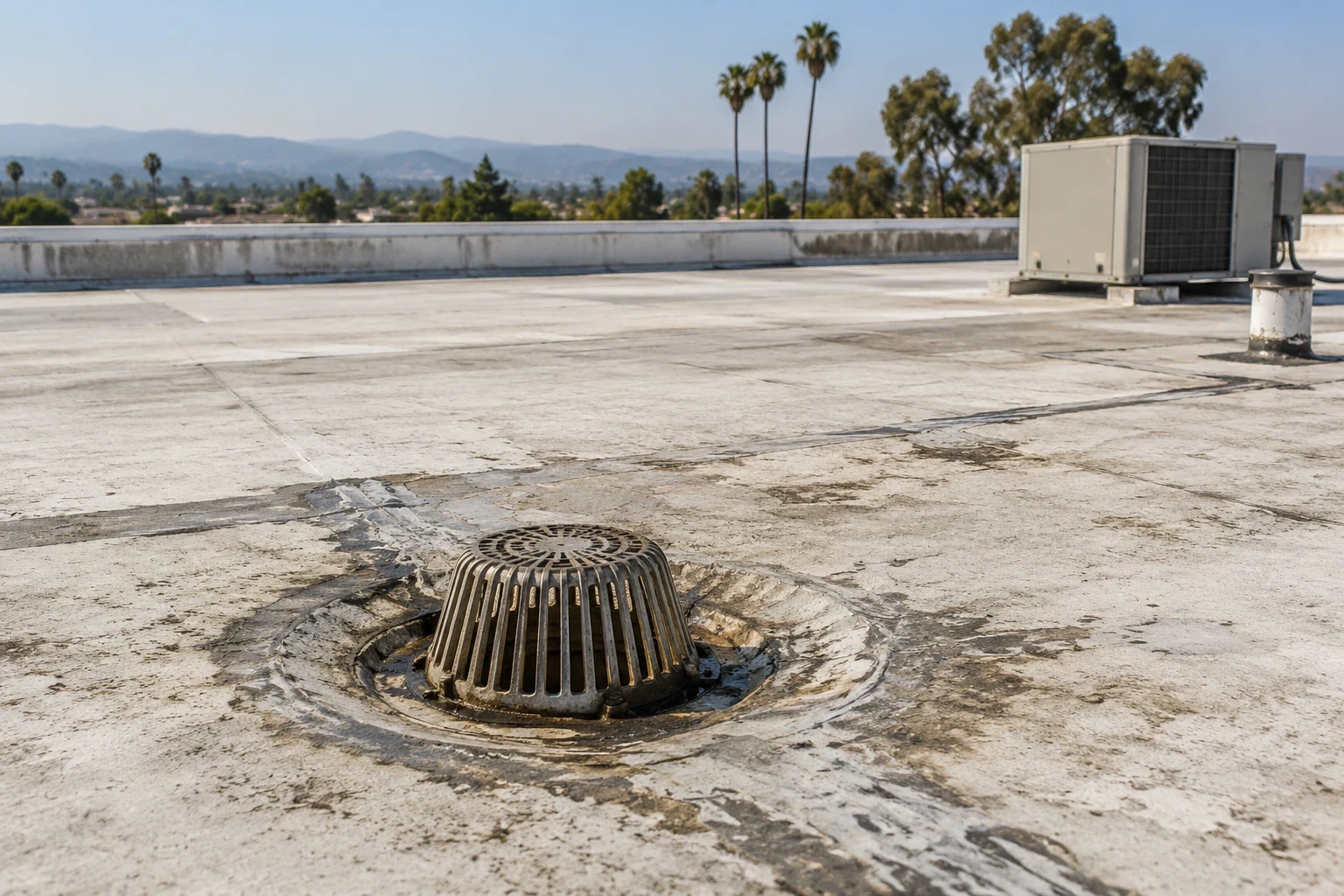
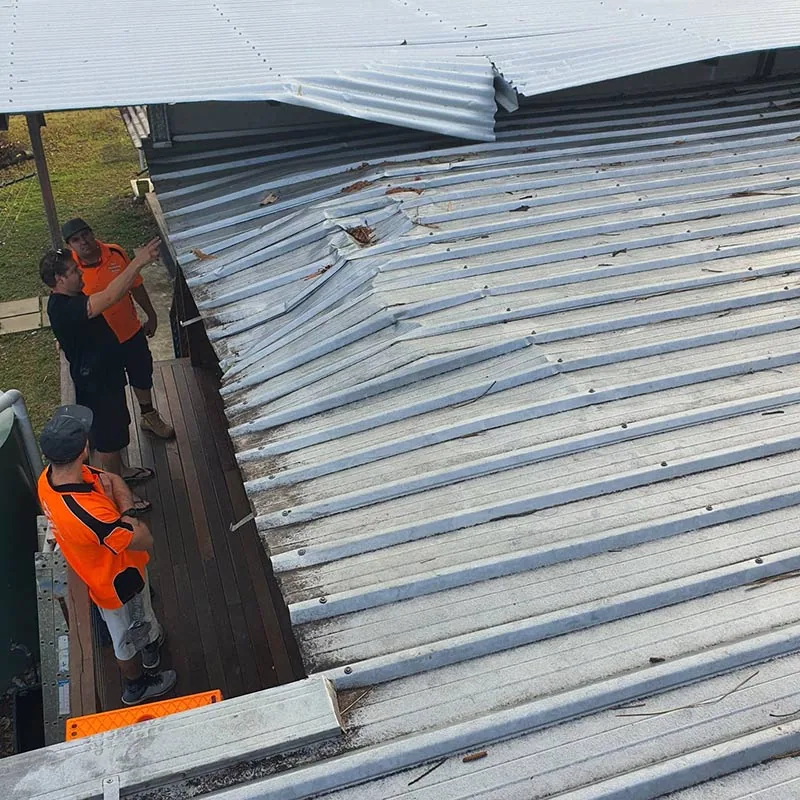
We examine membrane seams, edge metal, coping, flashing, curbs, skylights, drains and penetrations for visible impact or separation. Debris can puncture a membrane or block drainage; wind can expose edges or move unsecured items. We record each condition against the roof plan and note whether it appears new, prior or uncertain. A photograph should show enough surrounding detail for a facility team to locate the area again. We do not infer hidden deck or insulation damage from a surface mark. If broader review is warranted, a commercial roof inspection can check adjoining sections and existing repair history before a permanent scope is set.
Control Interior Water While the Source Is Checked
Interior protection can begin before the roof source is confirmed. Facility staff may move inventory, protect equipment, contain dripping water and notify affected occupants through normal building channels. We coordinate the roof visit with the interior contact, access window and areas that need to remain open. Water can travel from the roof entry point before appearing below, so we compare the reported room with drains, seams, walls, curbs and nearby rooftop equipment. If evidence remains incomplete, a staged diagnostic visit may be safer than a broad patch. For active entry, see the separate emergency roof response approach, which records temporary protection and the permanent work still required.
Record What Temporary Protection Covers
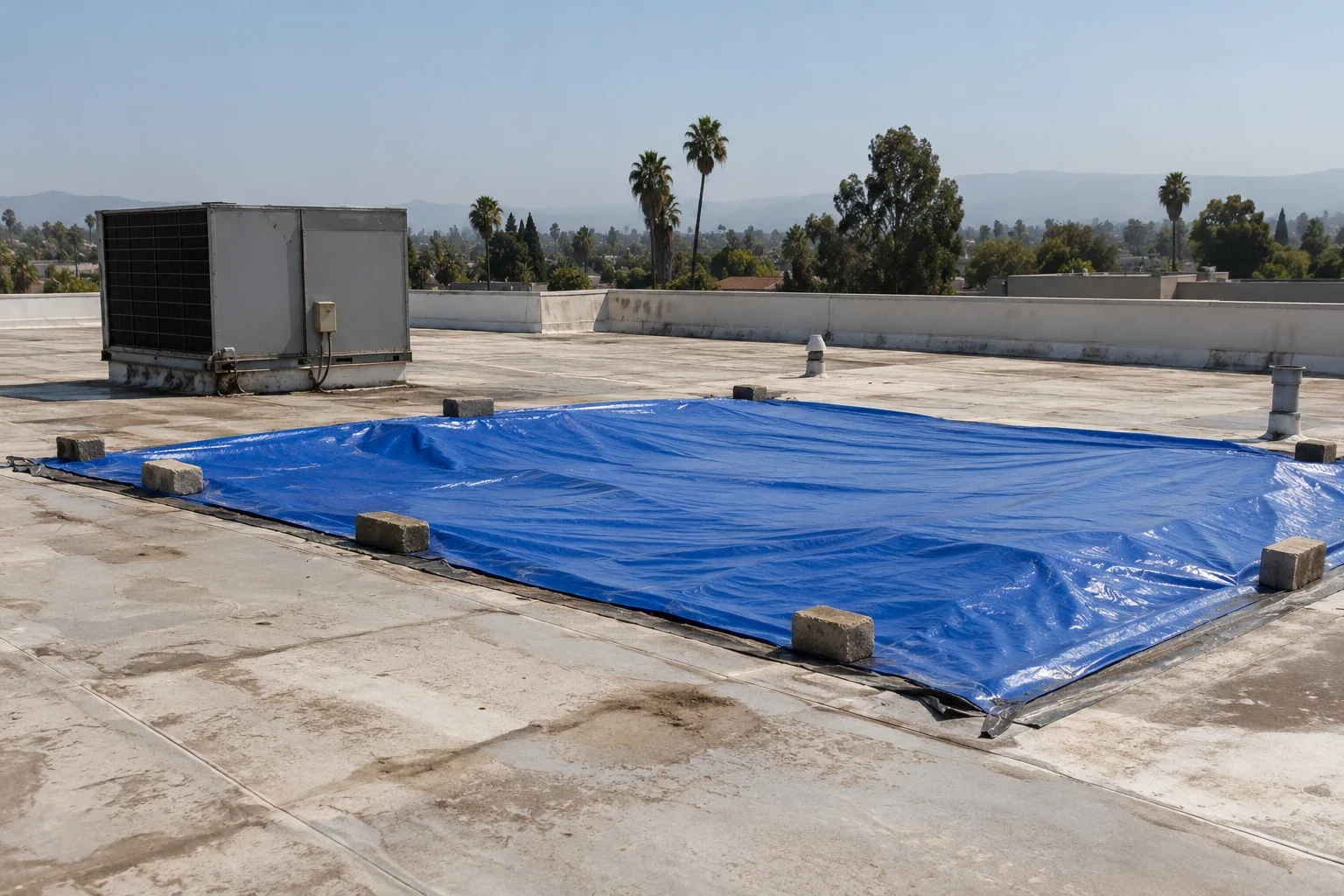
A temporary patch, cover or seal can reduce immediate exposure when access and conditions permit. We record its location, materials, attachment method, weather, expected limitations and the follow-up date. A temporary measure should not be described as a permanent repair unless the defect and system detail were fully addressed. If the membrane is wet or the source is uncertain, the owner may need another test or dry-weather visit. For a leak with an unclear path, commercial leak diagnosis can connect interior reports to roof evidence. A localized roof repair should use material compatible with the assembly and should define the boundary of work.
Separate Storm Findings From Prior Conditions
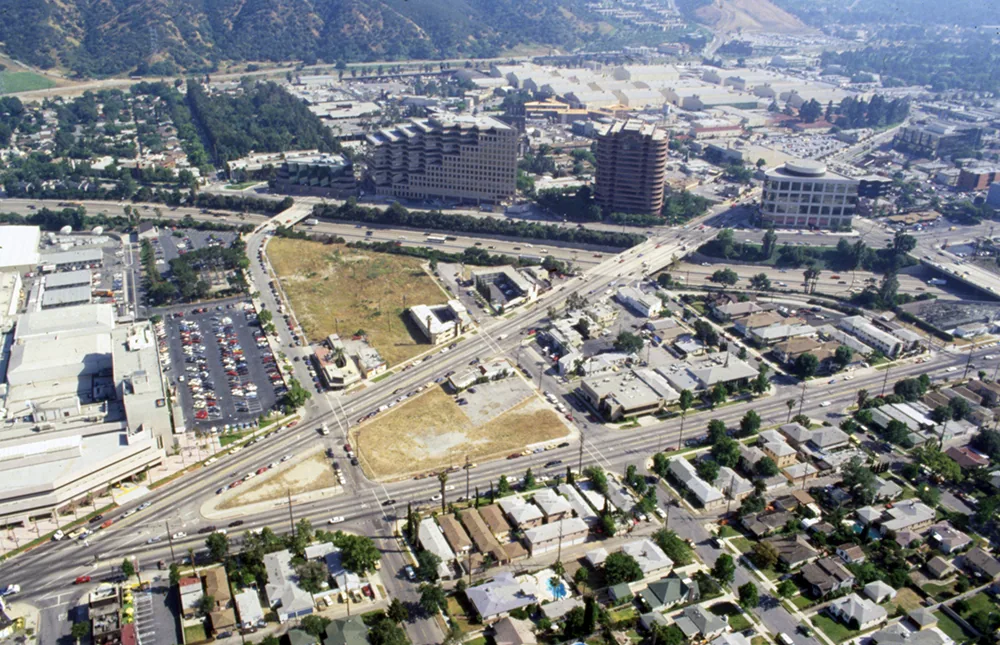
A prior patch, aging seam or blocked outlet may become visible after a storm without being caused by that weather event. We compare the current observation with maintenance records, earlier photos and the facility's report, then separate confirmed storm impact from existing conditions. The repair estimate should list access, temporary protection, permanent materials, disposal, interior coordination and concealed-condition allowances. An owner can keep storm observations distinct by logging the first report time, roof-zone photo, temporary action, interior contact and permanent repair approval. That sequence helps compare a new leak with a prior work order without attributing an older defect to the latest weather event. If several parties are involved, identify who controls the roof, who authorizes interior work and who receives the final record. This keeps the evidence useful when repairs are reviewed by facilities, ownership or an insurer later. If testing or design review is needed, it appears as a separate approval item. Owners who need documentation for an insurer can preserve the date, site conditions, photographs, invoices and repair records in an orderly file. Burbank's Media District and Downtown Burbank include different commercial building uses; Magnolia Park has a separate retail and dining pattern, so the report stays specific to the actual property, not a district-wide assumption.
Plan the Permanent Work Around Operations
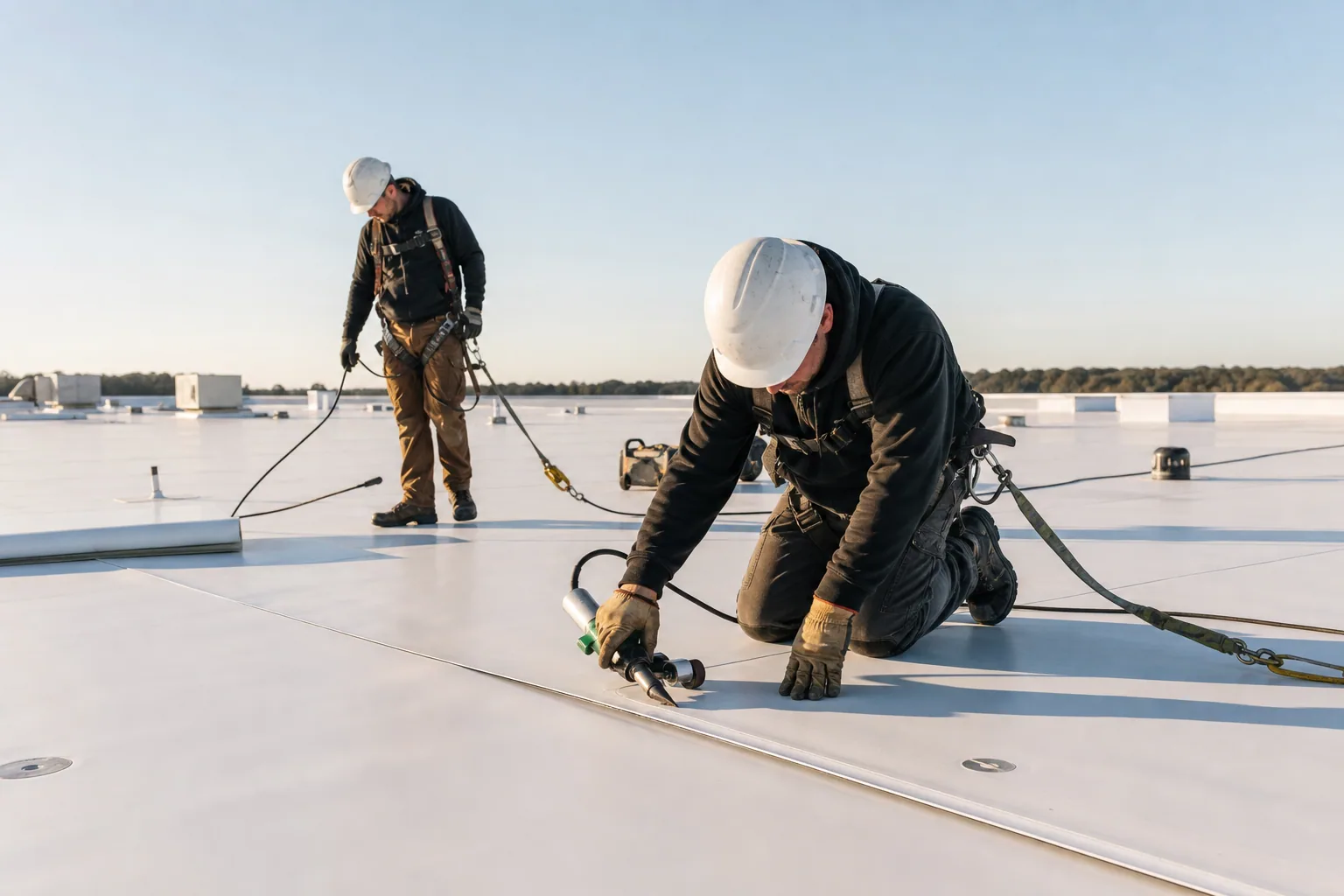
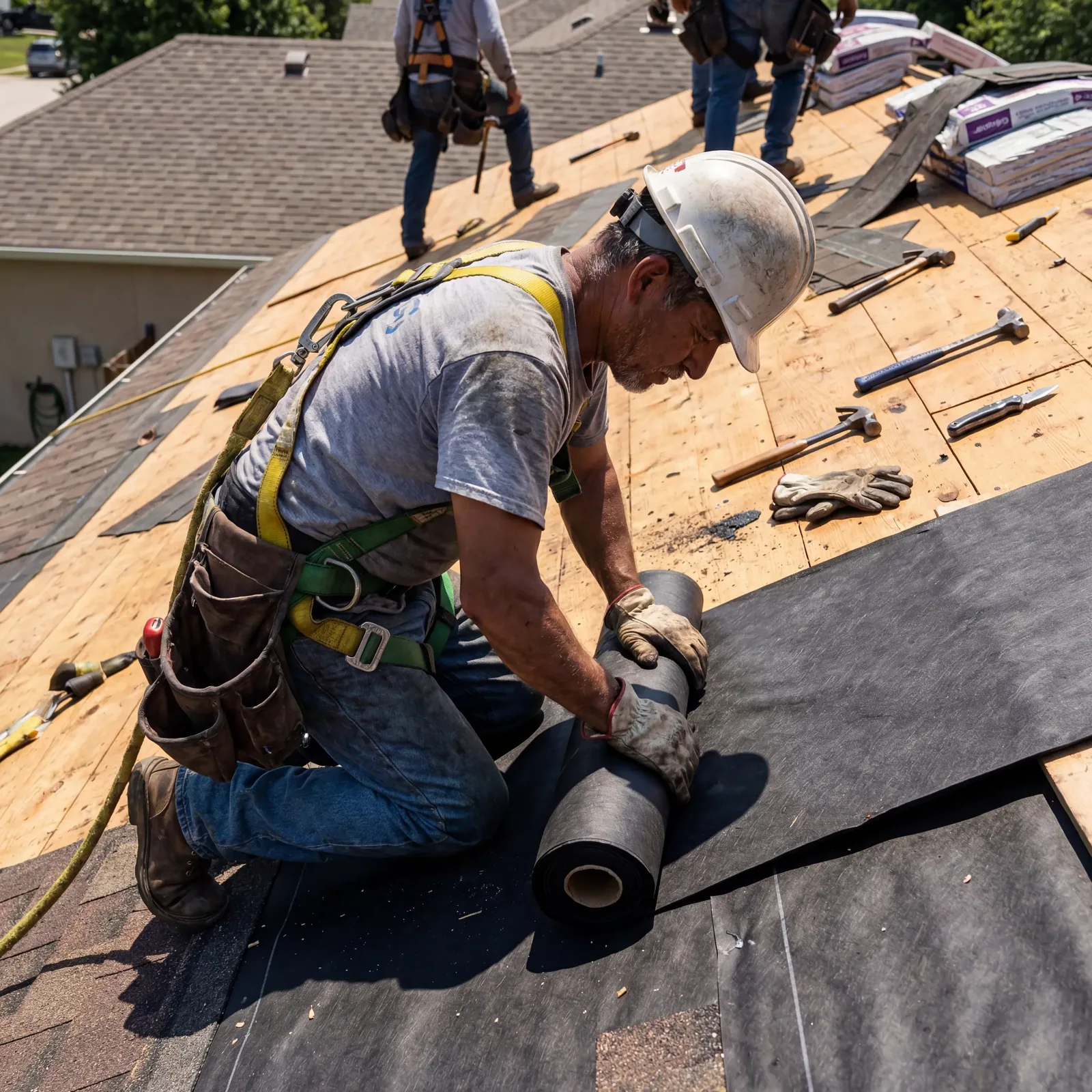
Permanent repair may wait for dry conditions, compatible materials or a safe work window. We confirm where crews can stage, which tenant or production areas need notice, how roof access works and how the building will stay protected at the end of each shift. Where several details were affected, the sequence can address exposed transitions before less urgent cosmetic work. A drain check may need coordination with drain and scupper repair, while a damaged perimeter can require edge metal review. We document the completed work and any remaining open item so the facility lead can close the work order or schedule a separate maintenance review. We confirm whether the facility contact wants a same-day photo update or a complete work summary at the end of the shift. That communication choice helps the operations team plan tenant access and interior cleanup. If a second trade is needed for equipment, electrical systems or interior restoration, the owner can coordinate that work separately from the roofing scope.
Set the Follow-Up That Moves the Claim or Repair Forward
The closeout record should identify the observed condition, what we repaired, what remains uncertain and any test or additional work recommended. A roof condition report can preserve that evidence, and a separate wind damage assessment can help organize displaced edges or membrane findings. If an insurer or owner needs a damage file, we can organize photos by roof zone and preserve invoices, temporary measures and inspection notes without stating a cause that the evidence does not establish. A claim documentation review can help assemble the roof records. For Burbank properties near the Airport District, the facility contact can use the same map and update process, while each roof scope remains tied to its own assembly. We agree on who receives follow-up photos, when temporary protection needs checking and what approval is needed for permanent work.
Commercial Roofing Questions
What should we do before a roof inspection after a storm?
Protect occupants and sensitive equipment, follow the facility emergency plan, and isolate electrical hazards. Share the access contact, leak location and current roof records.
Can you tell whether a roof condition came from the storm?
We compare current observations with prior photos, work orders and reported timing. Findings are labeled as confirmed, prior or uncertain when the cause is not established.
Will temporary protection be the final repair?
Not always. We state what the temporary measure covers, its limits and the permanent work or testing still needed after conditions allow access.
What photos and records should we keep?
Save dated roof and interior photos, leak reports, prior repairs, weather notes, inspection findings, invoices and approvals in the same damage file.
How do you plan work for an occupied property?
We confirm roof access, staging, tenant notices, operating windows and interior protection, then sequence repairs so open areas are secured at shift end.