Commercial Roofing in Eagle Rock, Los Angeles, CA

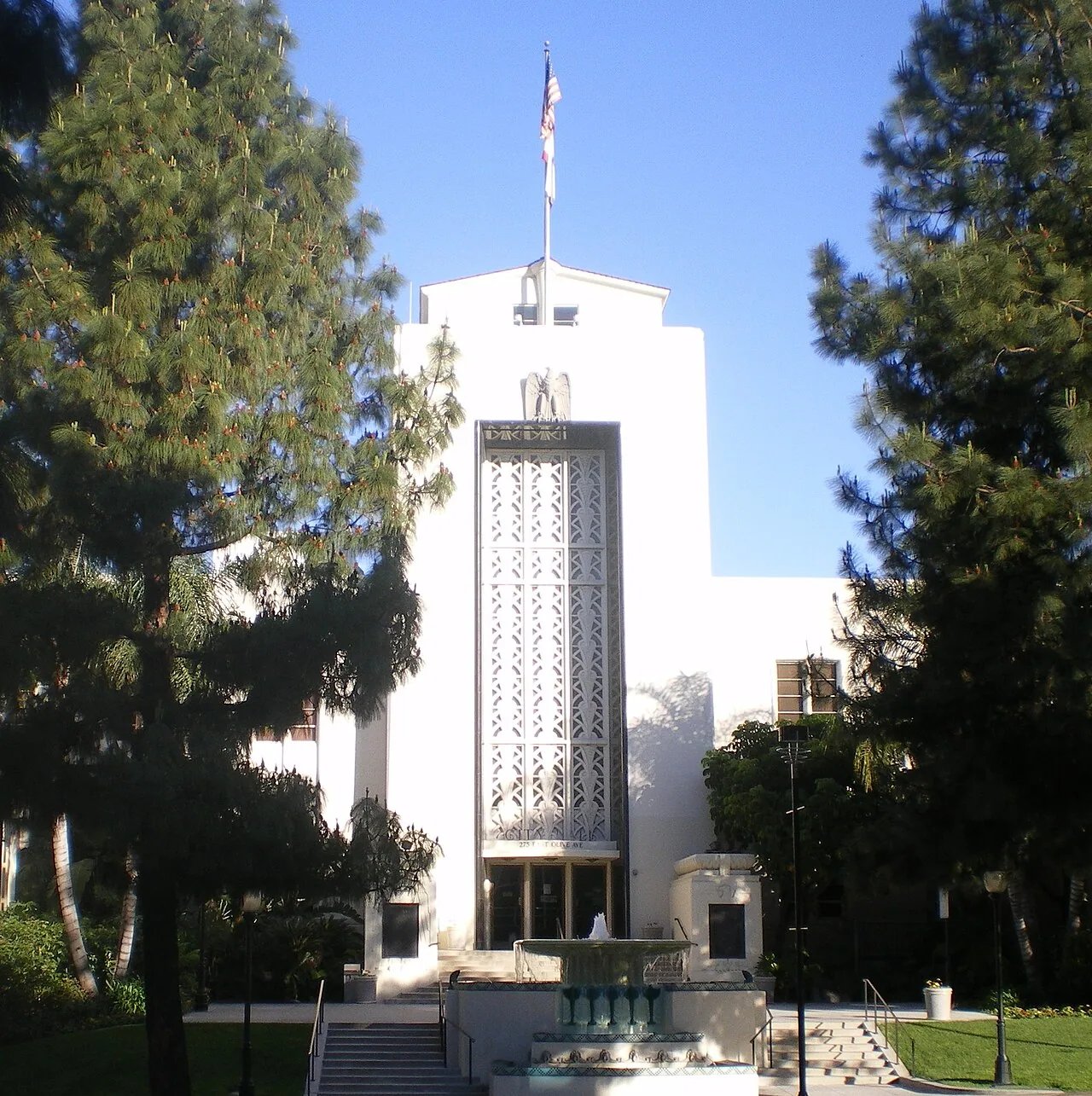
Eagle Rock Boulevard, Colorado Boulevard, and Figueroa Street are major commercial streets in Eagle Rock. For a business along one of these corridors, roof work has to account for access, deliveries, and the rooms that remain occupied below the repair. We begin with the reported condition and identify its roof section before choosing a method. Photos, detail notes, and the assembly check show whether a focused repair can be bounded or a wider inspection should come first. A commercial roof inspection helps ownership compare the proposed work with the condition record. It also keeps a corridor reference in its proper role: useful for orienting service, while the roof and property schedule determine the scope.
Protect the Business Route During Roof Work
A commercial street may have customer entry, service access, and deliveries sharing a small frontage. We confirm which doors and paths must stay open, where equipment can be staged, and how debris can leave the property. The actual address and property rules determine whether a lift, roof hatch, or alternate route is available. We mark the approved work zone and coordinate notices with the building contact before any roof opening begins. If the building has more than one tenant, the sequence should name which spaces lie below each zone and when work could affect noise, odor, or access. That makes a phase plan useful for operations instead of a generic calendar.
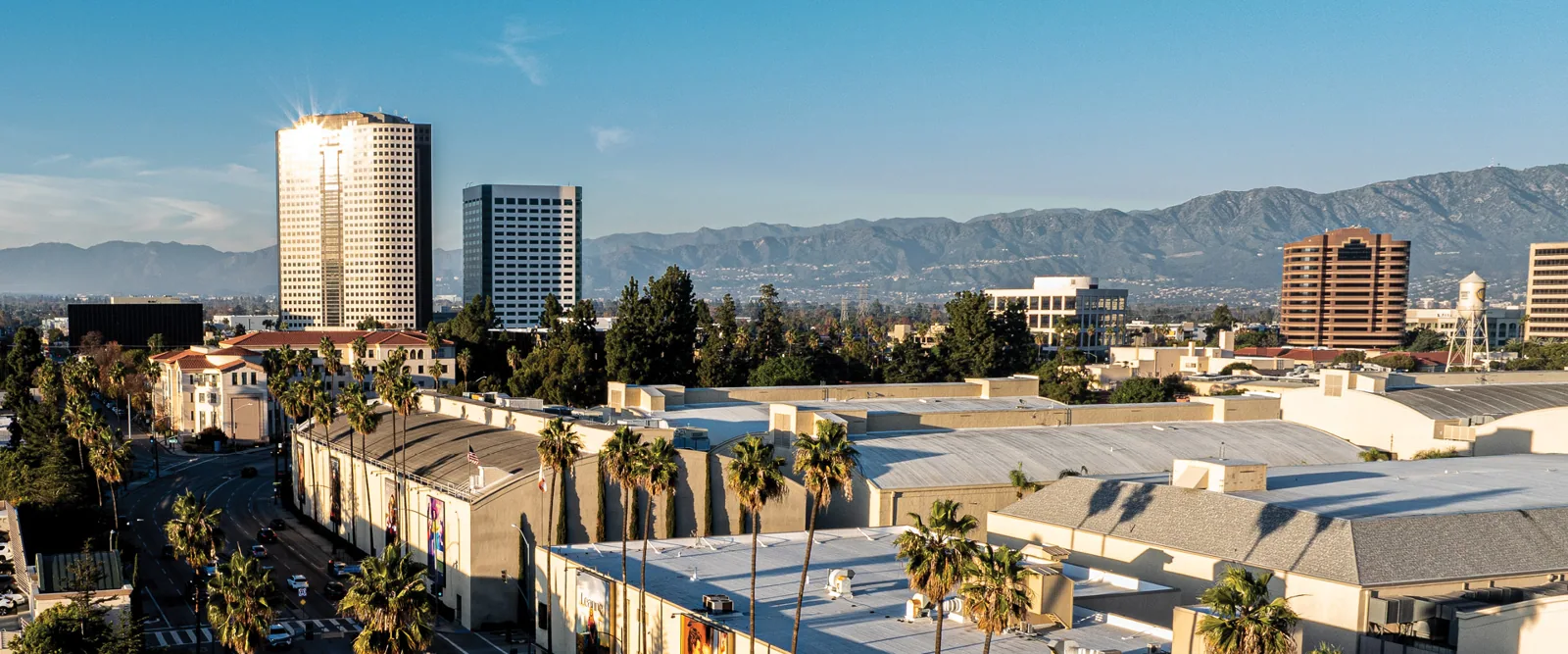
Eagle Rock lies between Glendale on the west and Pasadena to the east, with State Routes 134 and 2 along its regional edges. Those routes help orient the service call. At the property, we verify delivery access, inspect the perimeter, and map the route from material arrival to the work section. A rapid roof response still needs a safe entry route and a plan to keep temporary protection in place. For a separate property on the other side of the commercial district, the Glendale service area should have its own access notes and roof record.
Inspect the Details That Join Different Materials
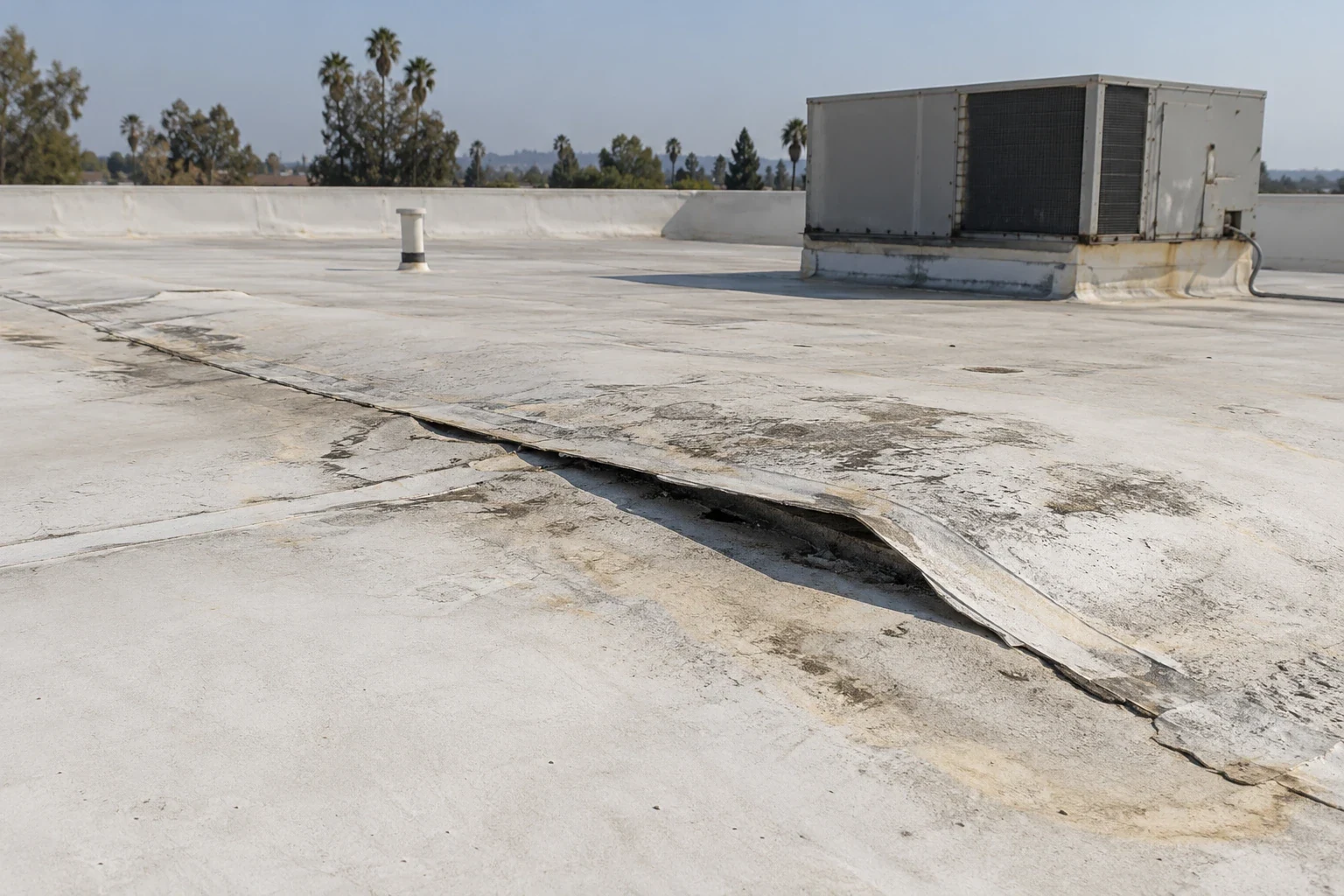
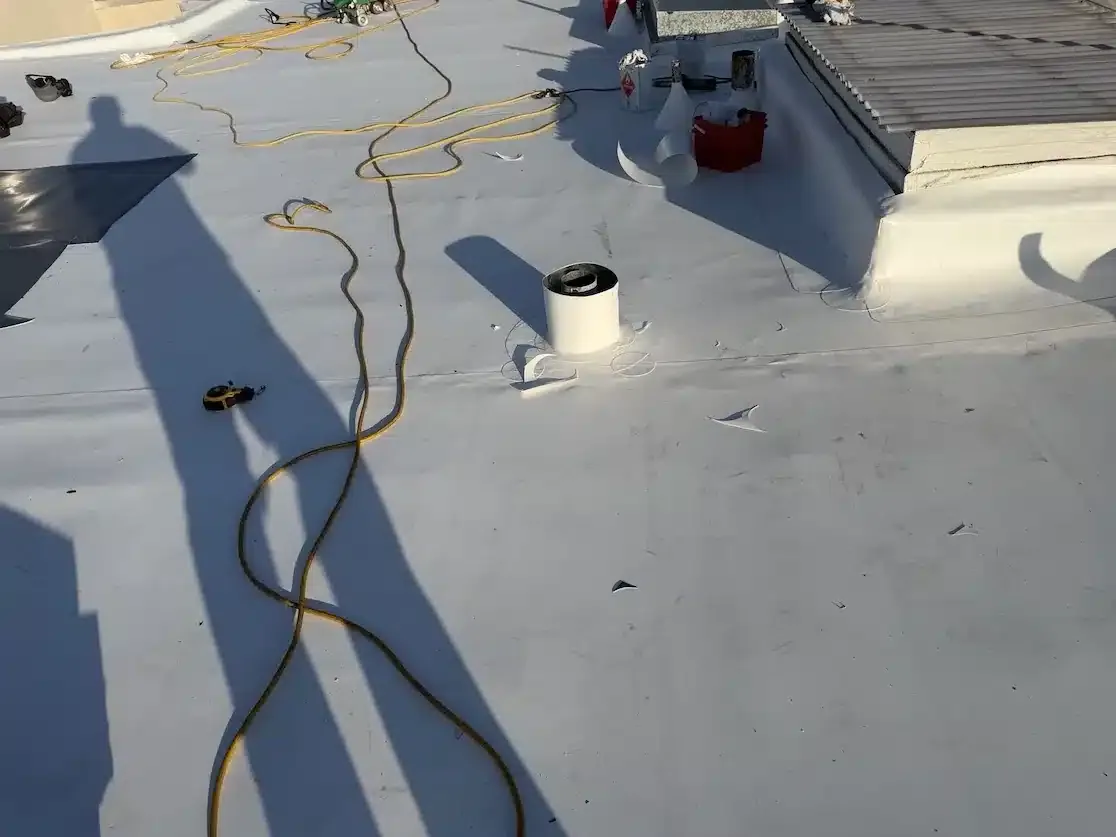
Water entry often follows an edge, penetration, or seam where materials meet. We inspect laps, fasteners, drain bowls, wall flashings, curbs, and previous patches around the reported area. The interior symptom and roof opening may be separated, so we compare the room location with drainage direction and visible movement. A seam that has opened in one section should be mapped separately from a nearby curb with a split flashing. A seam repair evaluation identifies the affected length, preparation needed, and whether adjacent material can support a tie-in. If testing is needed to confirm concealed moisture, we state how the result could alter the repair boundary.
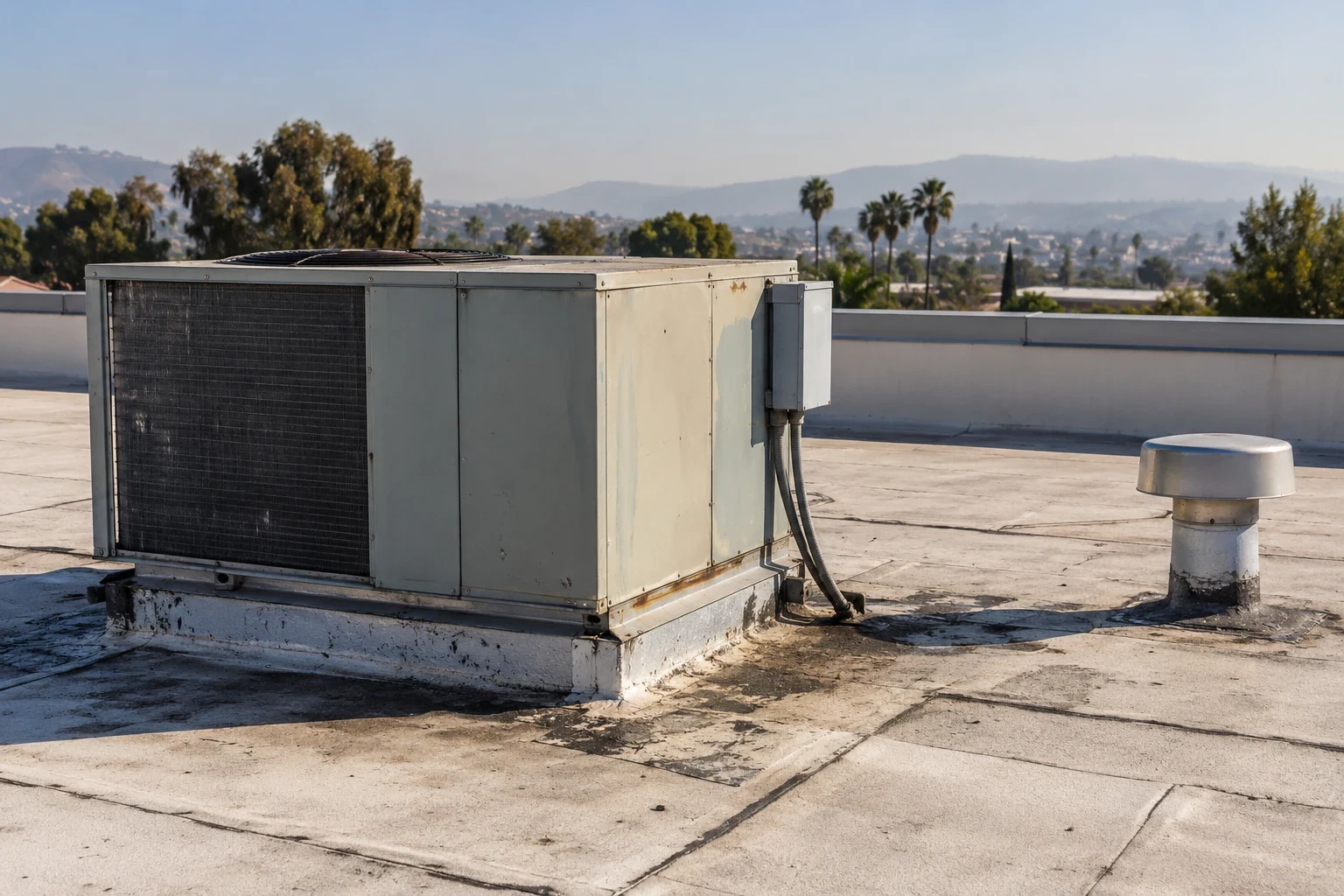
Eagle Rock Boulevard and Colorado Boulevard are subject to specific-plan or corridor policies. That planning fact does not identify the construction or roof of any one business, so we verify the installed system on site. TPO, PVC, EPDM, modified bitumen, and coated assemblies call for different repair preparation and joining methods. If inspection confirms TPO, a TPO repair detail can explain compatible membrane work; without that confirmation, the scope stays at the level of visible condition and required inspection. We photograph material transitions and note prior overlays, because a new patch must bond to the surface that is actually present rather than an assumed layer.
Follow the Drainage Path to Its Outlet
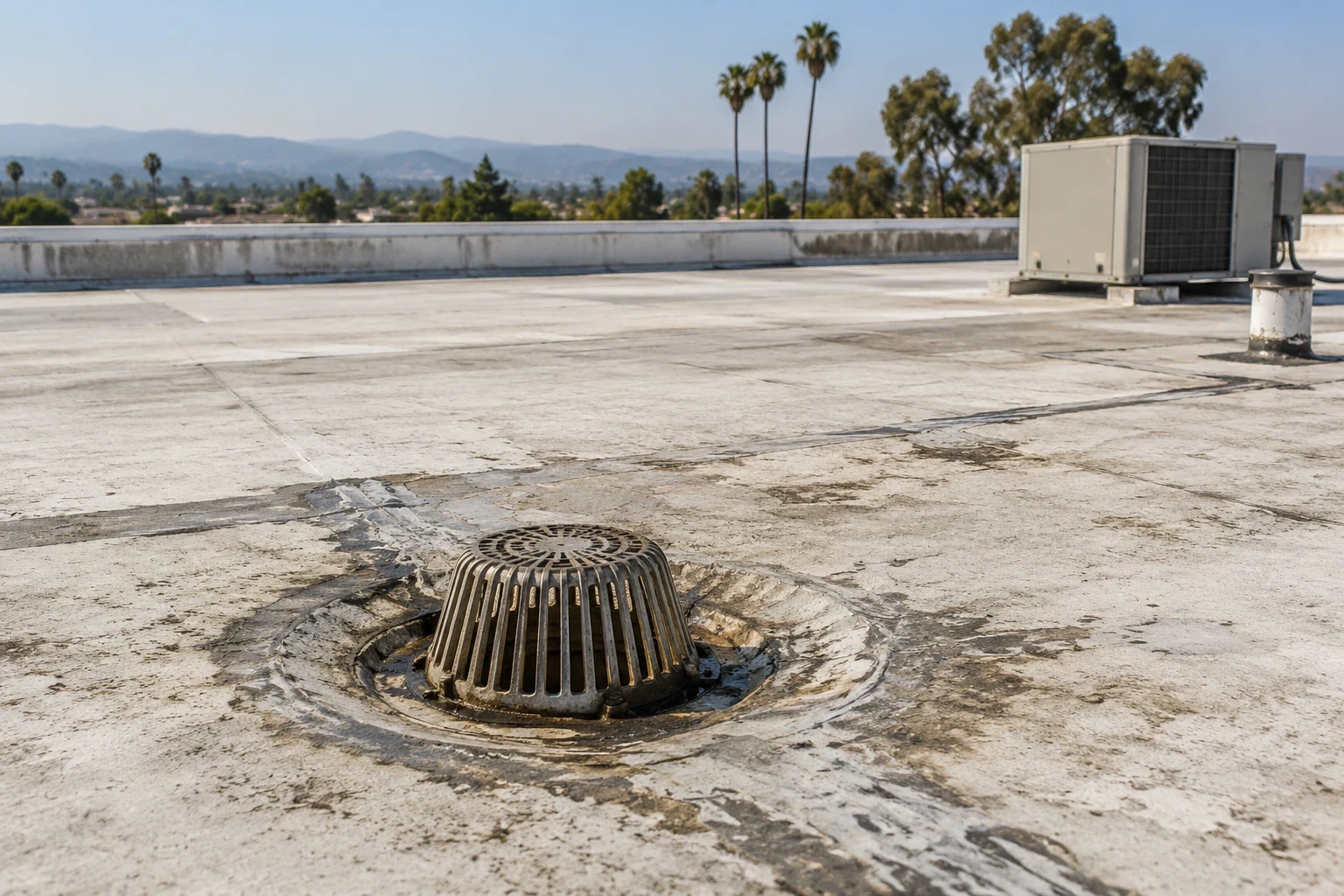
Water sitting near an outlet can point to more than a clogged strainer. We check the slope leading to the bowl, nearby seams, the drain flange, and any low area where water remains after a rain. The inspection distinguishes debris from a loose connection or failed flashing, and notes whether the conditions were observed dry or during active water. If an interior drain line is involved, we mark that as a plumbing handoff rather than including it in a roof repair. A drain and scupper scope records the roof-side findings and identifies the correction needed at each outlet.
For an annual rainfall comparison, Burbank, CA, receives 16.50 inches of normal precipitation. We inspect this roof’s drain path, slope, and outlet flashing to determine how rainfall moves across the property.
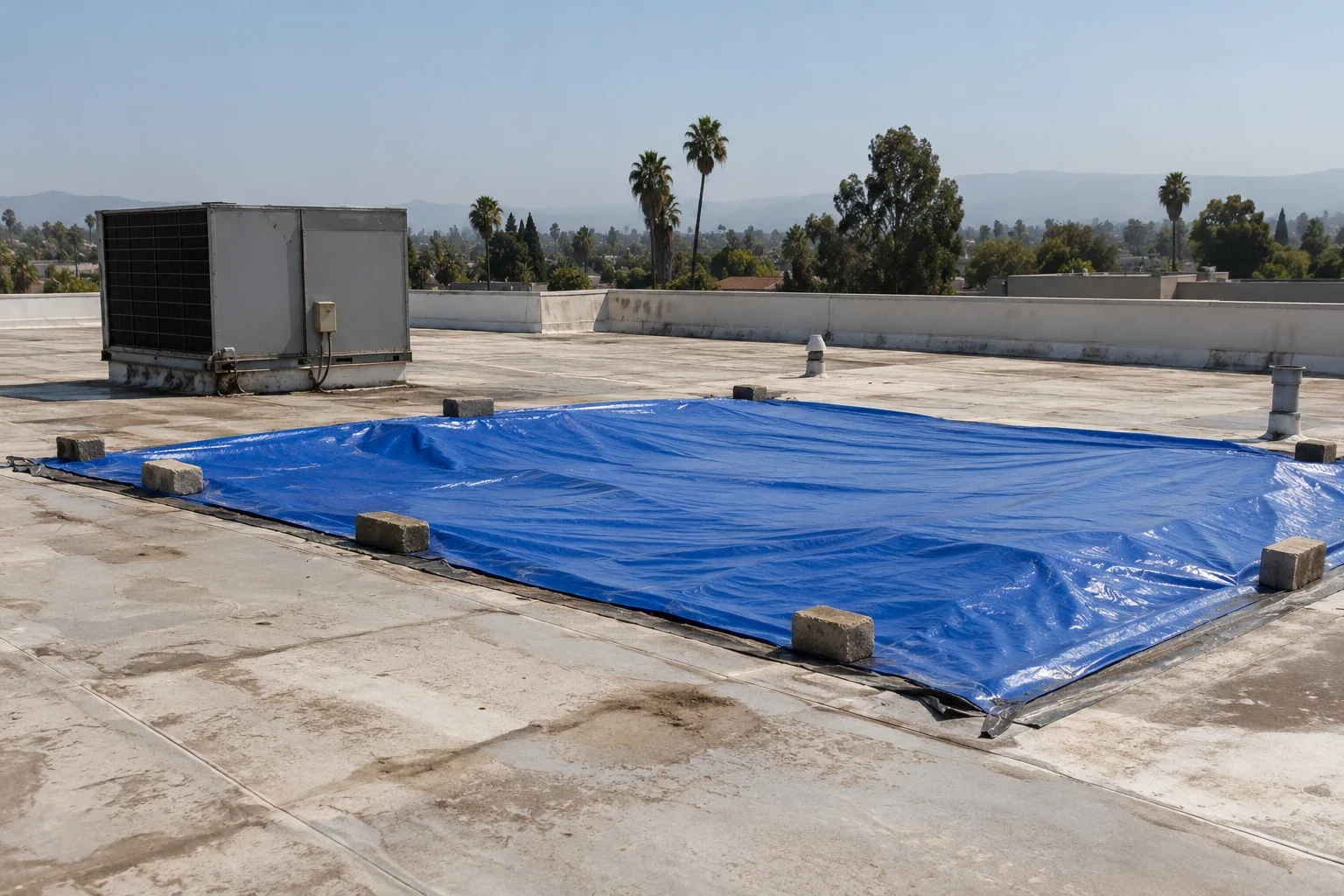
Where an active leak threatens inventory or an occupied room, we can stabilize the opening and document a temporary measure while the permanent scope is developed. Temporary covering must be compatible with the surface and secured for the expected conditions; it is a distinct step from a permanent repair. We identify the limit of the protected section and the inspection needed before a lasting tie-in. If recurring water marks extend beyond that area, a replacement comparison can be priced against the same roof map. That gives ownership a basis to compare repeated repair mobilization with a larger project and its access or tenant impacts.
Match the Work Scope to the Capital Window
A repair is often the direct path when the material around a defect remains sound and the work can stop at a dependable boundary. We describe removal, preparation, replacement material, flashing, edge transitions, and protection below. If failures recur across multiple sections or the substrate shows widespread deterioration, a broader restoration or replacement may deserve a separate estimate. The record should show confirmed areas, suspected areas, and tests still needed before final quantities. Cost drivers include removal depth, existing layers, access equipment, disposal, structural review, and how the work can be phased. Scheduling also depends on tenant hours and any material step that needs a specific surface condition.
For a property portfolio, a condition report can carry photos and section notes into a capital review without replacing a current roof inspection. Each location needs its own observations and assumptions. A manager with buildings in Pasadena may compare capital dates across both records, while keeping the recommended scope specific to Eagle Rock. The proposal states what belongs in the current authorization, what remains an option, and what finding would require approval before expanding the work. This lets ownership compare near-term protection with the cost and operational demands of renewal.
Give the Next Visit a Useful Starting Point
At closeout, the owner should receive a dated record of roof sections completed, final detail photos, materials installed, and any item held open. If access prevented inspection of a curb, drain, or perimeter, the file should identify it and state how it can be reached later. Keep approved changes beside the evidence that prompted them. That history helps the next service visit distinguish an old repair from fresh movement and prevents an estimate from treating a limited inspection as a whole-roof finding.
Before a visit, send the building address, the tenant or room reporting a problem, previous repair documents, access instructions, and the date a capital recommendation is due. We can review the roof, document the observed conditions, and return a written scope with defined limits. Eagle Rock’s commercial streets and neighboring Glendale and Pasadena routes help orient coverage, but they do not substitute for the roof plan or site walk. If the building has a tenant schedule that constrains access, include it with the request so the inspection and repair sequence can be planned around real operating hours.
Commercial Roofing Questions
What should be ready before a commercial roof visit in Eagle Rock?
Provide the property address, roof plan if available, reported room or equipment, access restrictions, and previous repair notes. Name the manager who can approve testing or a scope change.
Do corridor policies determine a building’s roof requirements?
They describe the planning context for the street, while the roof assembly and project scope require property-level review. We inspect the actual roof and confirm applicable project requirements.
How do you tell whether a seam repair is enough?
We map the affected seam, inspect adjacent material and substrate, and check for moisture or movement beyond the visible split. The proposed repair limit follows those observations.
Can temporary leak protection be used while a repair is planned?
Yes, when the roof condition and access allow a safe temporary measure. We identify the protected area, its limits, and the permanent inspection or repair still needed.
What should a manager retain after roof repairs?
Keep dated photographs, the section map, materials installed, approved changes, inaccessible areas, and any remaining recommendations with the building maintenance record.