Commercial Roofing in Mission Hills, Los Angeles, CA


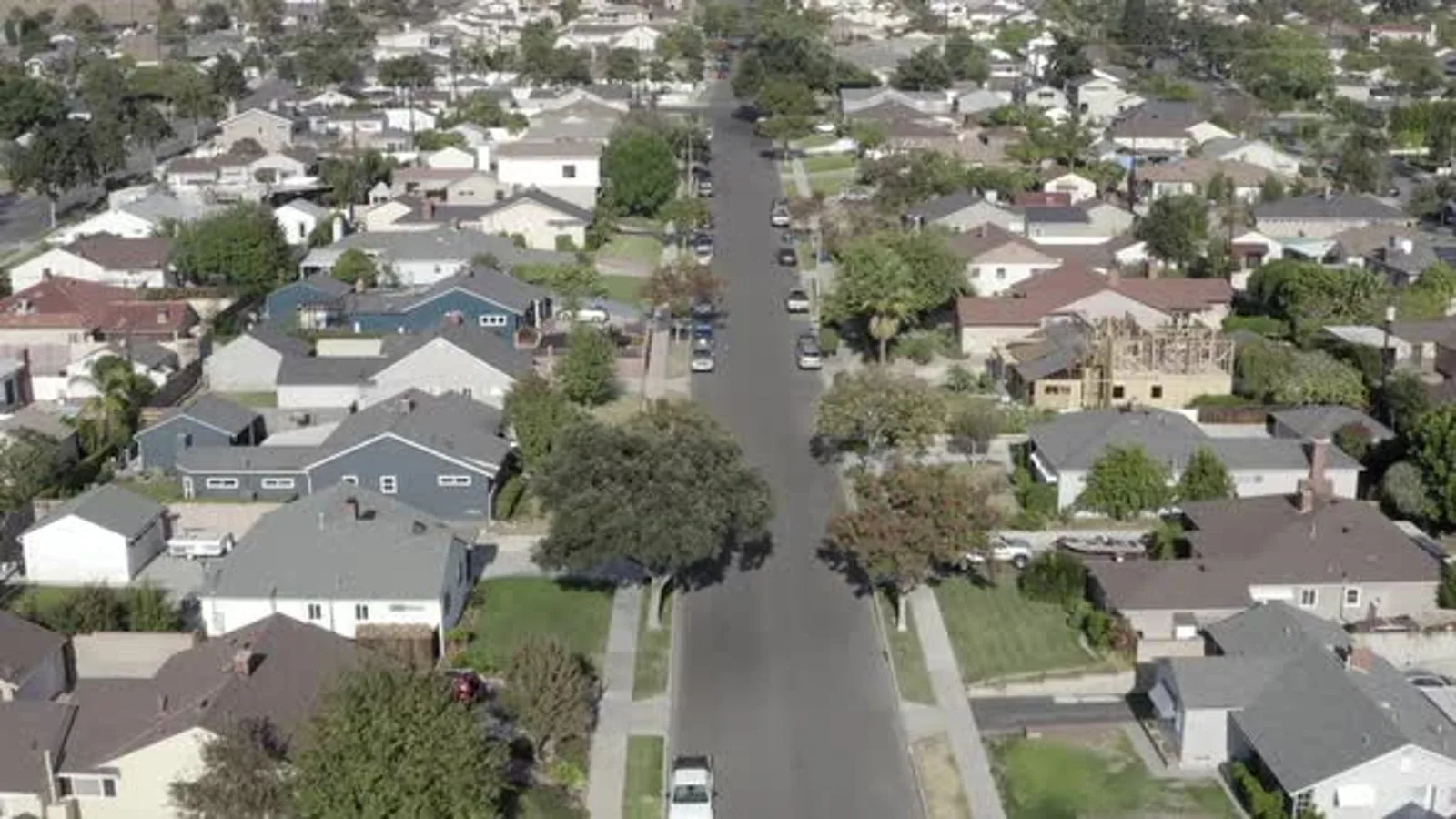
A Mission Hills commercial roof needs a work plan that distinguishes corridor activity from the property itself. Mission Hills is one of three communities in the larger Mission Hills-Panorama City-North Hills area. Commercial uses cluster near Sepulveda Boulevard, Roscoe Boulevard, Van Nuys Boulevard and Lassen Street, while the area's industrial acreage is concentrated along a southern rail corridor. We confirm the building's access, roof sections and operations before setting a repair boundary or schedule.
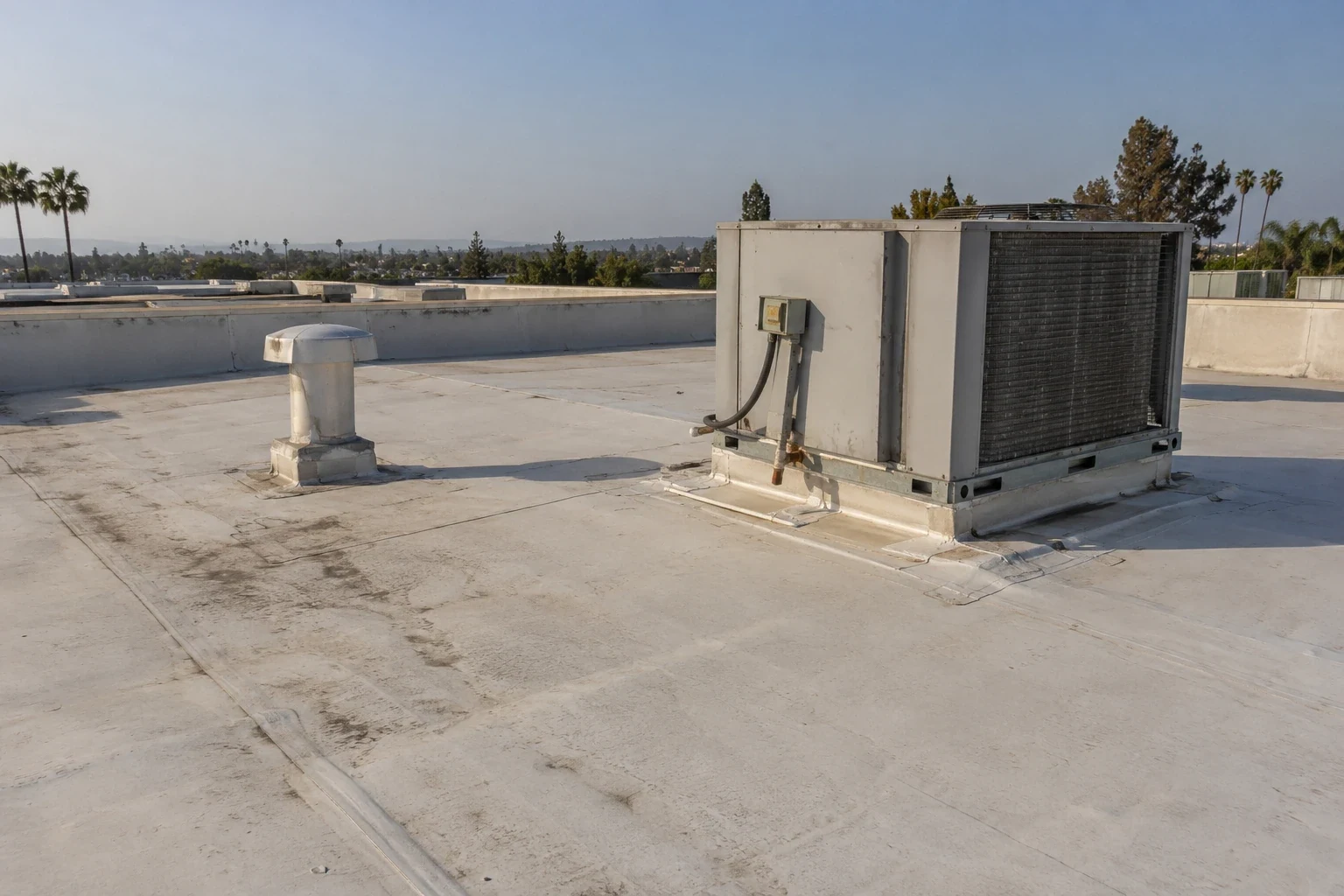
Our first visit maps seams, drains, walls, curbs, penetrations and prior repairs by section. A reported interior stain helps direct the review, but it does not establish where water entered. We compare the roof plan, leak timing and visible details, then separate confirmed findings from follow-up needs. A commercial roof inspection gives ownership a current field record, and a photo-based condition report makes each decision traceable.
Read the Commercial Pattern Carefully
Sepulveda, Roscoe, Van Nuys and Lassen are commercial corridors in the broader Mission Hills-Panorama City-North Hills area. They help the property team identify its route and operating context, but they do not tell us what roofing system sits on a particular building. We ask for roof plans and prior work records, then verify the assembly where it is accessible. The site contact confirms delivery times, secure entry and any floor that needs protection before a crew crosses the property.
Industrial acreage near the Southern Pacific Railroad corridor adds a different access question from a building serving a road-facing commercial use. We do not assume a facility's loading pattern from its land-use label. We walk the entry route, note where materials can be staged and identify which roof sections can be reached without interfering with operations. A Panorama City regional commercial area and Pacoima's broader corridors have separate property records; each owner still supplies the building-specific route and approval contact.
Trace the Report to a Roof Section
At a Mission Hills property, the room where water appears, the time it appears and the nearest roof feature belong in the first inspection note. A leak below a curb or wall transition can follow more than one path before it reaches the occupied floor. We compare the report with the roof plan, inspect the surrounding seams and drainage details, and mark the observed area separately from a suspected entry point. Corridor names help locate the request, but they cannot substitute for that roof-by-roof trace.
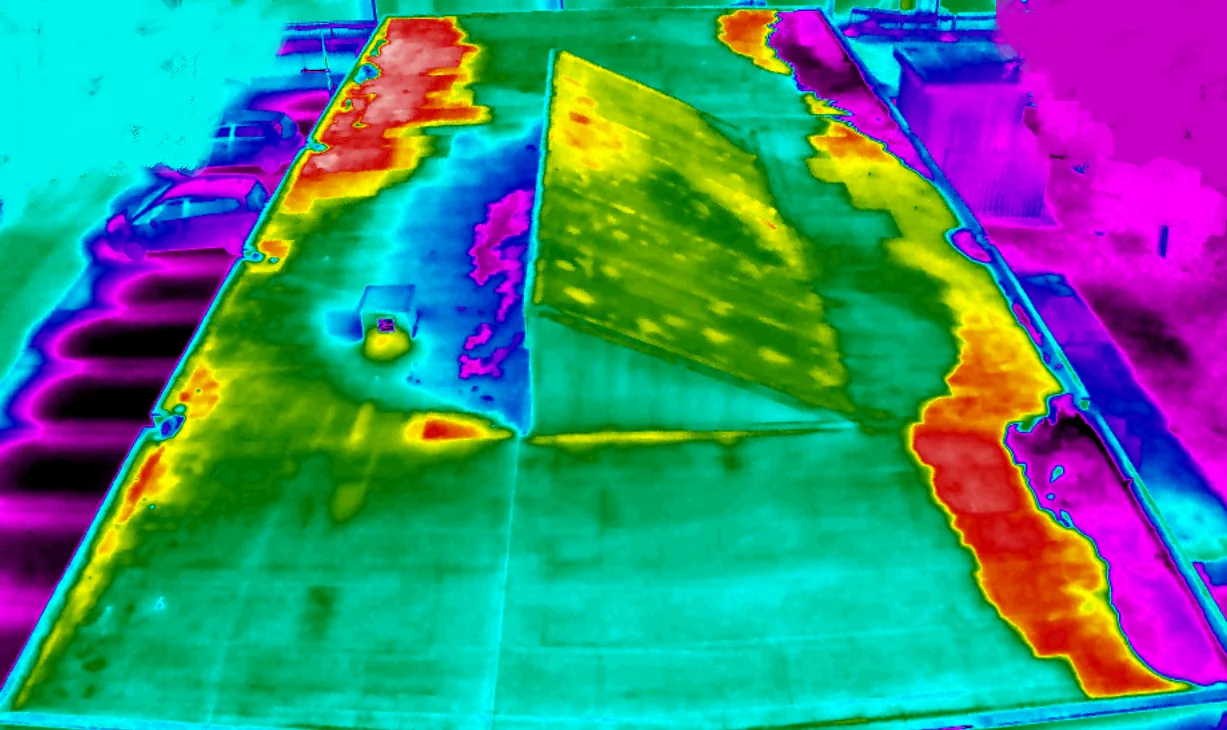
Industrial land sits in the southern portion of the Mission Hills-Panorama City-North Hills area near a rail corridor. On a property with loading or service activity, we ask which path must stay open while the roof is checked and where a lift or material can be staged. When the assembly is concealed, an infrared moisture survey may guide a test location, but any opening and its restoration need owner approval. We record the inspection limit and next evidence needed before extending a repair boundary.
Check Drainage and Interfaces
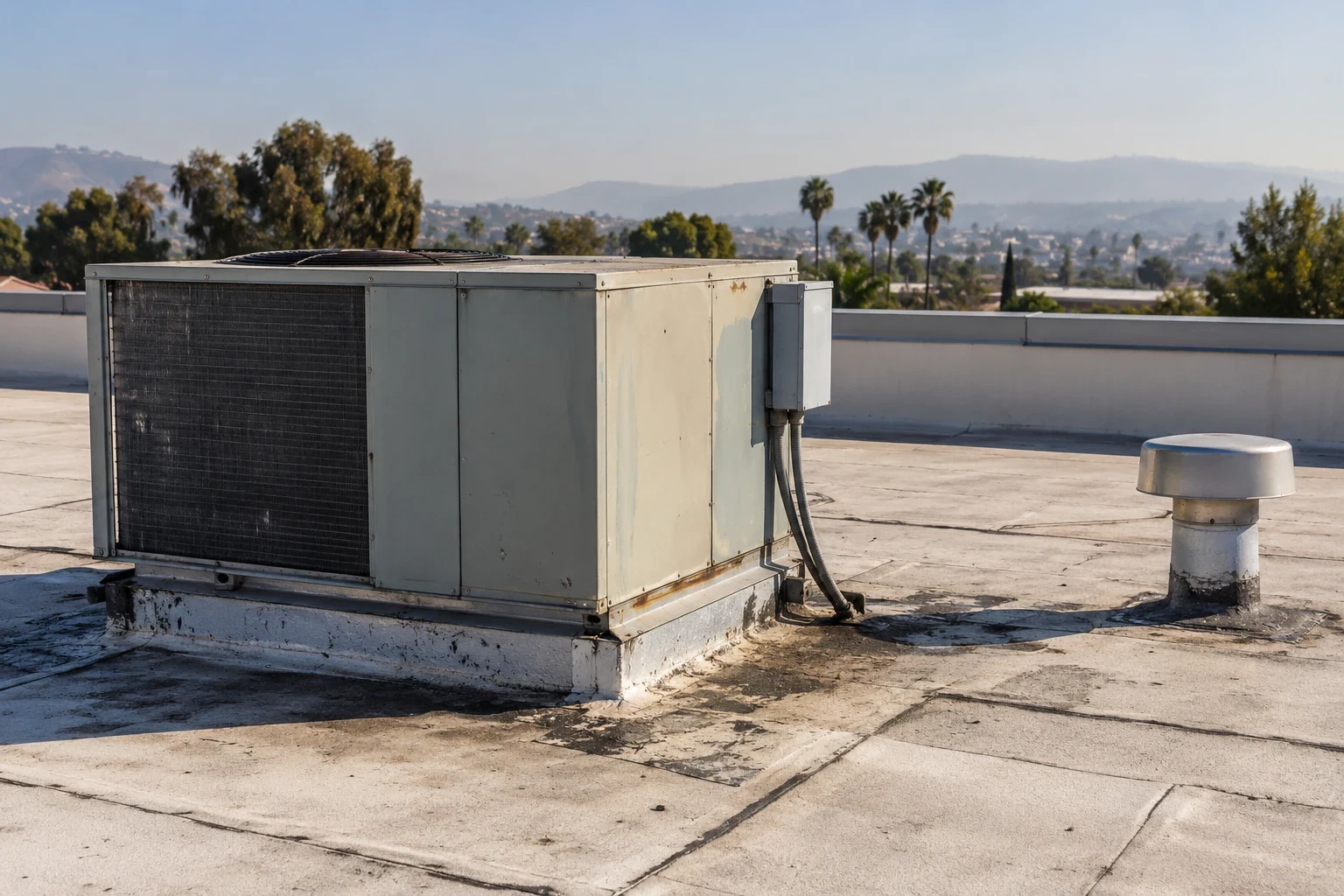
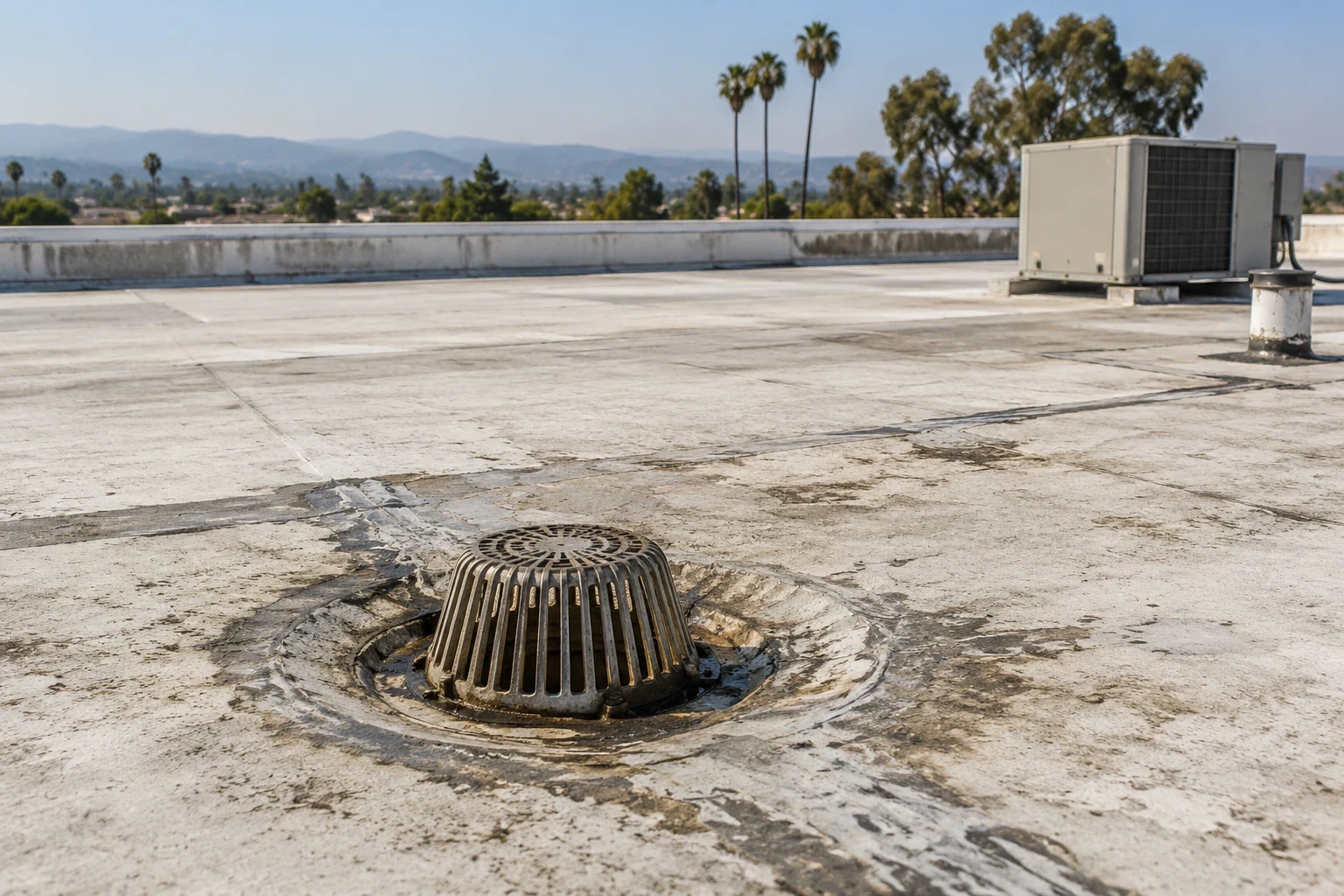
Commercial work near major streets and rail infrastructure depends on clear access, but the roof decision still turns on the assembly and water path. We inspect primary drains, scuppers, overflows, low areas and the flashing around each outlet. A blocked drain may need service; a failed bowl or inadequate slope may require a different scope. We record where water collects and whether the condition persists after normal drainage time. That evidence helps avoid pricing a membrane patch when the outlet or transition is the actual issue.
Edges, walls and curbs also need a section-specific review. We check whether metal is secure, flashing is compatible with the membrane and equipment supports disturb the roof surface. A drainage inspection can define outlet work, while a repair scope can set the boundary around a confirmed defect. If failures cross multiple sections, we compare a repair with a broader renewal evaluation rather than allowing a series of small work orders to hide a system-level condition.
Coordinate the Work Window
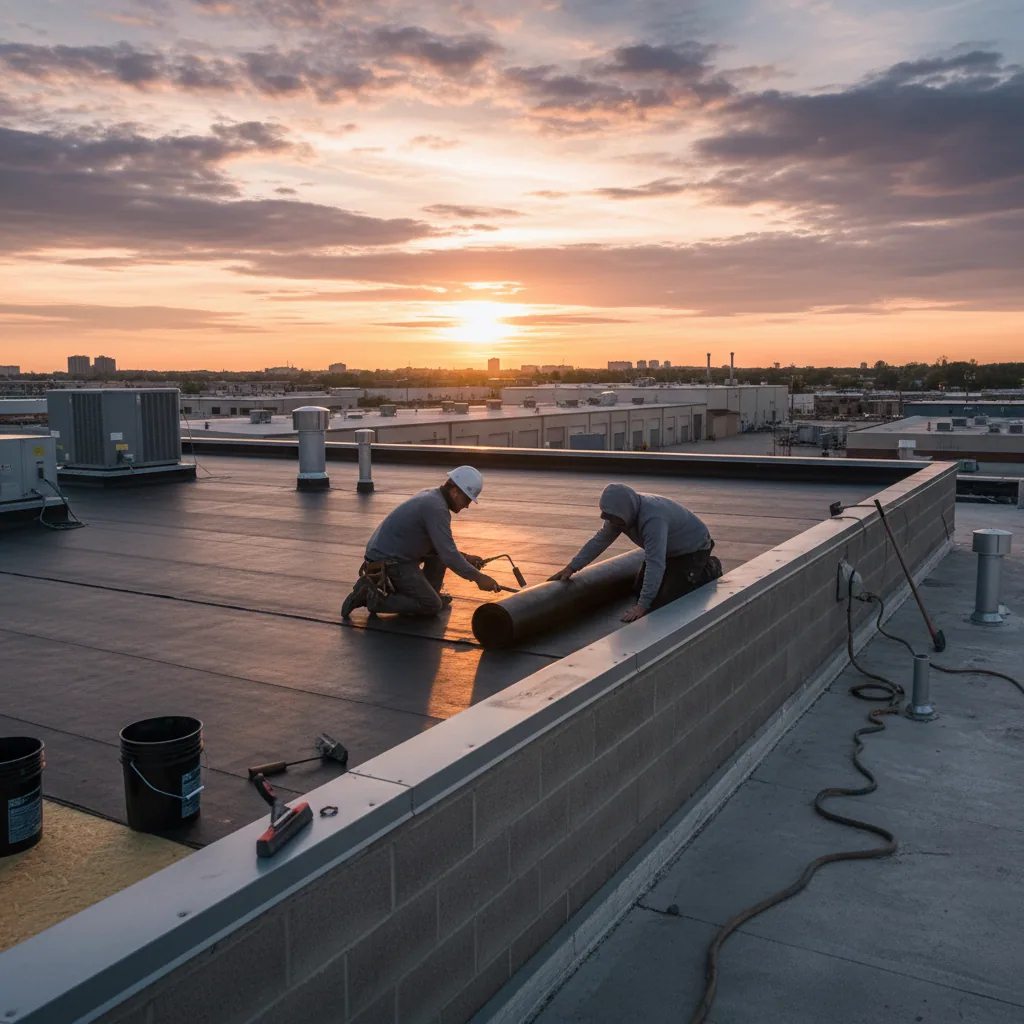
The schedule lists the roof section, entry path, staging area, interior protection, tenant contact and daily closeout point. We ask whether deliveries, production, public access or equipment service restricts a particular hour. If the property shares access with other operations, the facility director approves the route before materials arrive. The crew secures any open area at the end of a shift and reports conditions that changed the planned boundary. Those steps keep the scope connected to the building's actual operating window.
In Burbank, summer averages peak at 85.8 F in July and 88.3 F in August; a Mission Hills roof still needs its own exposure check. We carry those source-market numbers only as a seasonal planning reference; the surface temperature and forecast at a Mission Hills property govern the day's work. Site conditions and the forecast govern crew safety, material handling and dry-in decisions. We schedule each section around those conditions and the facility's requirements, then record the go or hold decision. A phased occupied-building plan can keep access and interior protection visible when work must proceed around operations.
Where a roof sits beside an active service route, we agree on a material staging point that does not narrow a fire lane or block a delivery path. The property representative confirms access and any posted restriction before equipment arrives. We keep removed material controlled and identify the area that must be clear at closeout. If the approved route changes during the day, the foreman checks with the site contact before moving lifts or supplies to another entrance.
Choose the Scope That Fits the Evidence
If a failure is isolated and surrounding material is stable, a repair may be appropriate. Where moisture, seam movement or weak attachment appears across more than one section, testing or replacement comparison may better answer the owner's question. We show the observed boundary, material assumptions, access conditions and exclusions. A recover must be evaluated against existing layers, deck, drainage and system requirements. It is not a shortcut to place another assembly over conditions that were never confirmed.
The decision file should set out immediate protection, defined repair, investigation and renewal as separate actions. We explain which option can be authorized now and which needs another record, test or design check. A replacement assessment can use the same marked roof plan as a repair proposal. The capital review then compares timing, phasing, material lead time and work access. Schedule a site walk with the roof plan, leak log, repair invoices and the person authorized to approve testing or a scope change.
Commercial Roofing Questions
Which roads help identify a Mission Hills service location?
The broader community area has commercial uses near Sepulveda, Roscoe, Van Nuys and Lassen. We use the property address and approved entry instructions to plan the visit, not a corridor name alone.
Does the rail corridor mean my building is industrial?
No. The plan area places industrial acreage in its southern portion, but the individual property use and roof assembly must be verified at the site. We keep that distinction in the report.
Can a roof leak be repaired from the closest point above the stain?
Not without tracing the path. Water can move through an assembly before reaching the interior, so we inspect nearby details and mark confirmed evidence separately from a likely source.
What should the site contact prepare before inspection?
Provide roof plans, leak reports, prior repairs, entry or escort rules, and hours when loading or tenant access must stay open. We confirm the scope and access route before starting.
When should a repair be compared with replacement?
When findings extend across sections, moisture or attachment remains uncertain, or repeat repairs have not resolved the condition. We define the evidence and compare options without assuming age alone decides.