Commercial Roofing in Highland Park, Los Angeles, CA
Commercial roof work in Highland Park, Los Angeles, CA starts with the route to the roof and the business schedule below it. Figueroa Street carries both transportation and commercial activity, while York Boulevard and Monte Vista Street are other named business streets in the area. We map access, roof sections, active leaks and staging before setting a repair boundary. That gives an owner a practical choice between a focused fix, a further test and a broader renewal review.
We inspect seams, penetrations, curbs, drains, walls and edge metal, then mark what can be confirmed from the surface. If water appears indoors, its room location is a clue rather than a roof diagnosis. We trace the report against the roof plan and previous work. A commercial roof inspection can establish that condition map, while a written roof report keeps photographs and follow-up decisions together.
Plan Access Along the Commercial Streets
Figueroa's combination of business activity and transportation use can make a roof visit dependent on the property entrance, receiving time and equipment route. We confirm where a ladder, lift or material delivery can be staged, then ask which entrances, sidewalks or loading areas must remain open. The street name does not establish a particular building's access rules, so the site contact approves the sequence. Our crew can keep roof work within the agreed operating window and stop if access conditions change.
York Boulevard and Monte Vista Street are additional commercial streets in Highland Park. A roof along one corridor may have a different service entrance or tenant schedule than another. We map the route from approved entry to each roof section, note any escort or key requirement and identify a daily secure point. For owners coordinating more than one location, a separate Pasadena roof schedule should retain its own property contact and access record. We do not carry one site's work window into another just because both are in the same portfolio.
Use the First Walk to Bound the Work
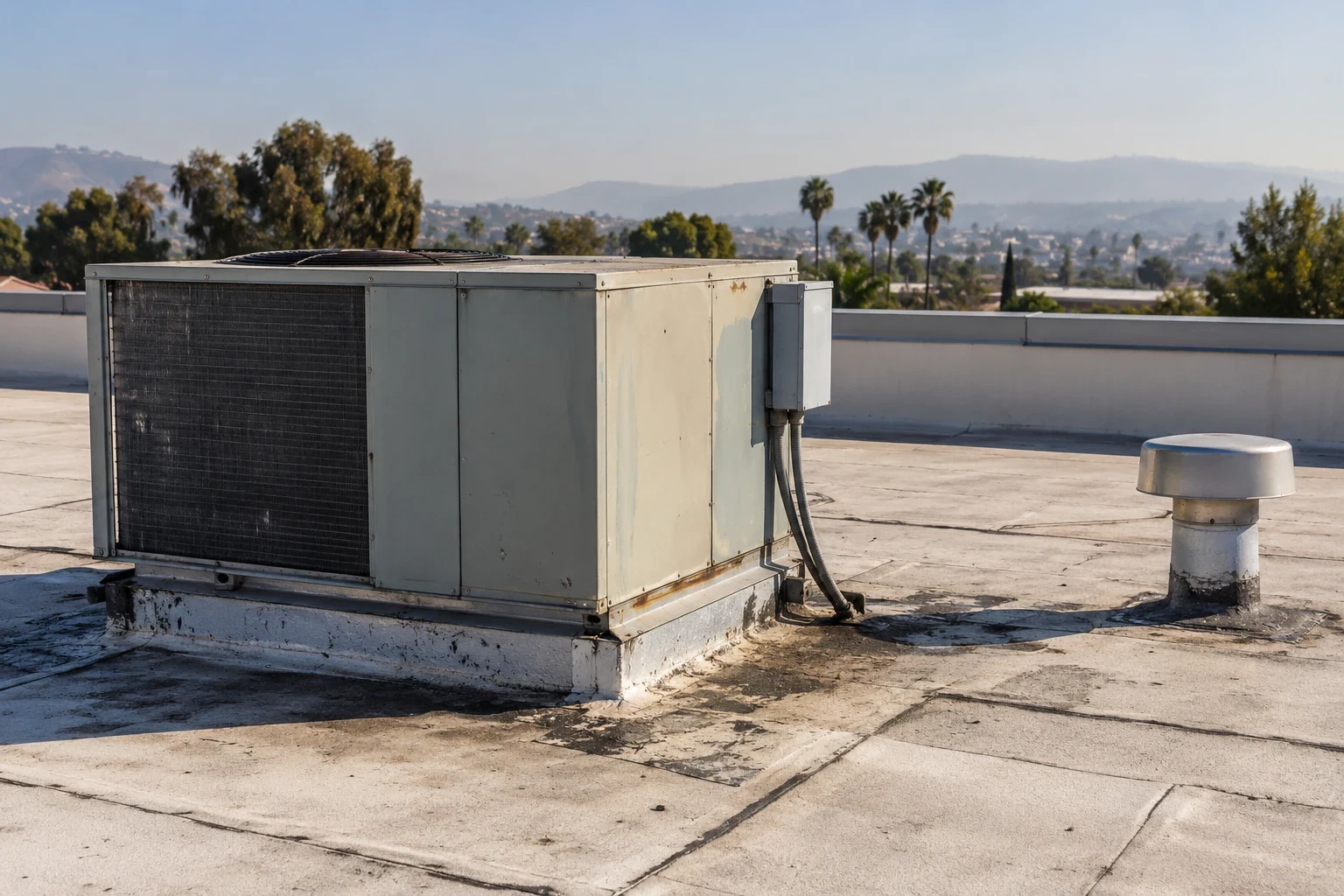
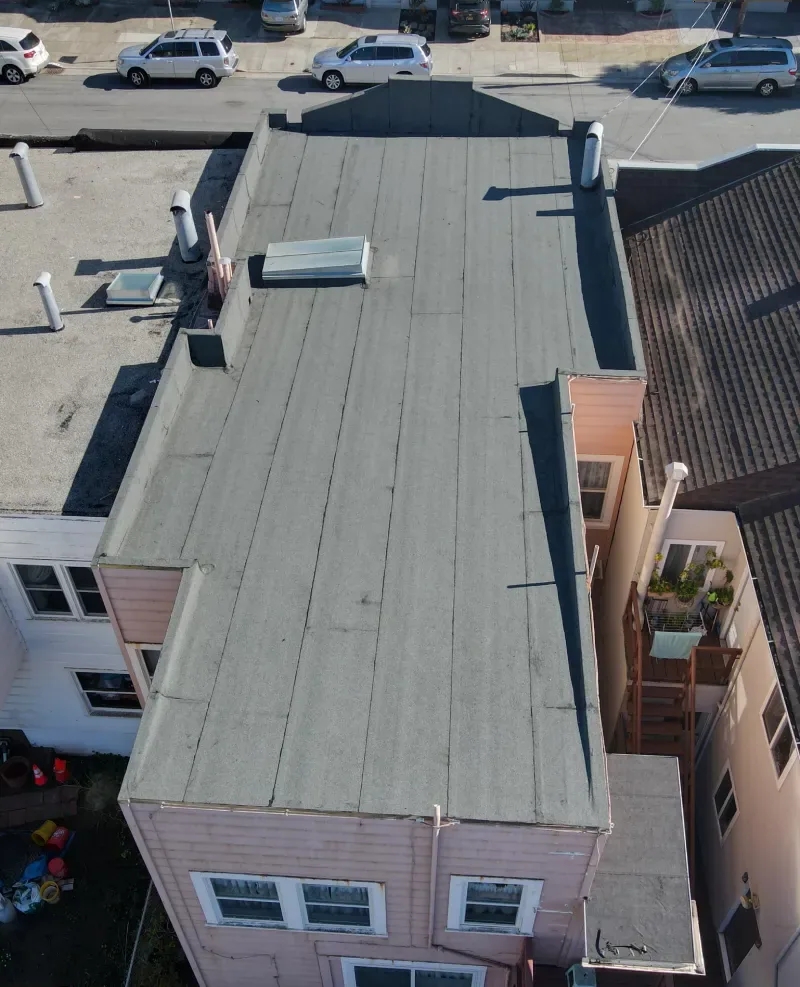
The first walk starts with a roof plan or a field sketch, followed by a section-by-section review of membrane, seams, drains, curbs, penetrations, walls and edges. We mark visible wear, open details, previous patches and areas that need closer examination. If a roof has several elevations or additions, each boundary is labeled before a repair is priced. A photo should show the condition and enough context to place it on the plan. That lets ownership compare the finding with an interior report without treating a stain as proof of a roof opening.
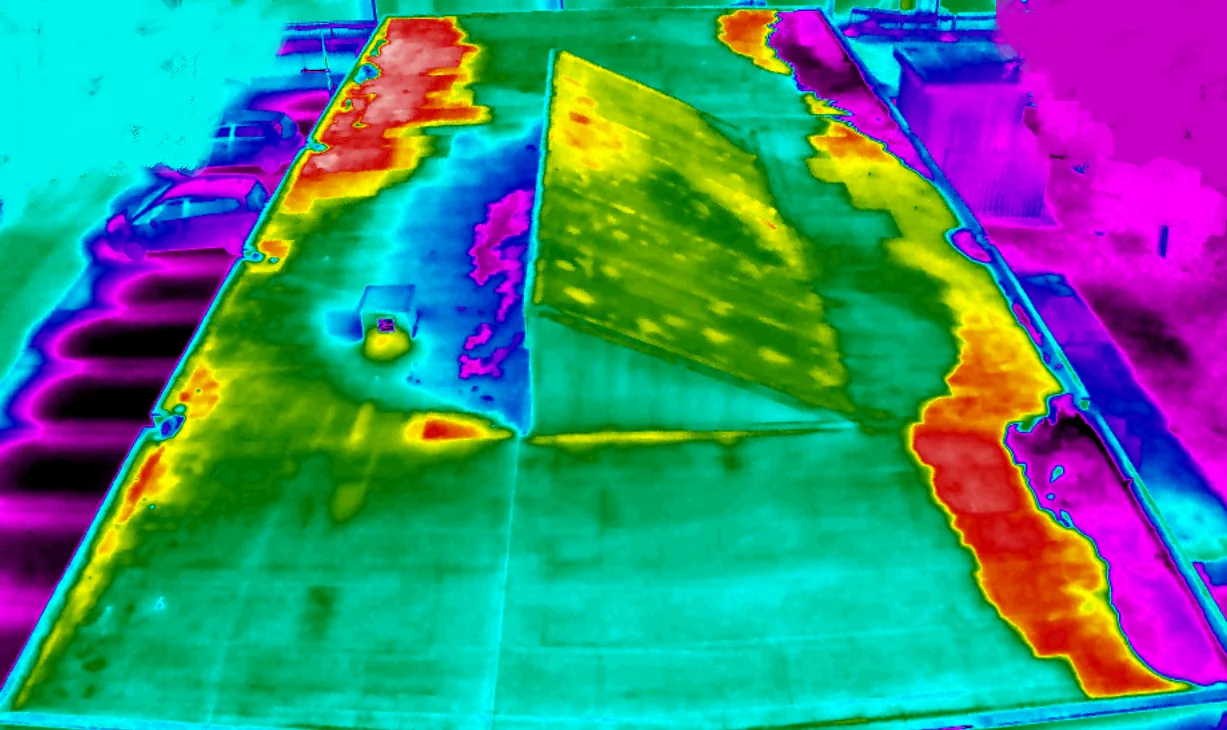
Where the assembly is concealed or moisture is uncertain, we describe the next check rather than overstating what a surface visit established. An infrared pattern may guide follow-up, but it does not by itself confirm wet insulation. A moisture survey can identify where an approved test should be considered. We separate that investigation from any immediate protection or repair so the owner can authorize the right scope in the right sequence. The closeout record notes which roof sections were reachable and which were not reviewed.
Match the Repair to the Observed Detail
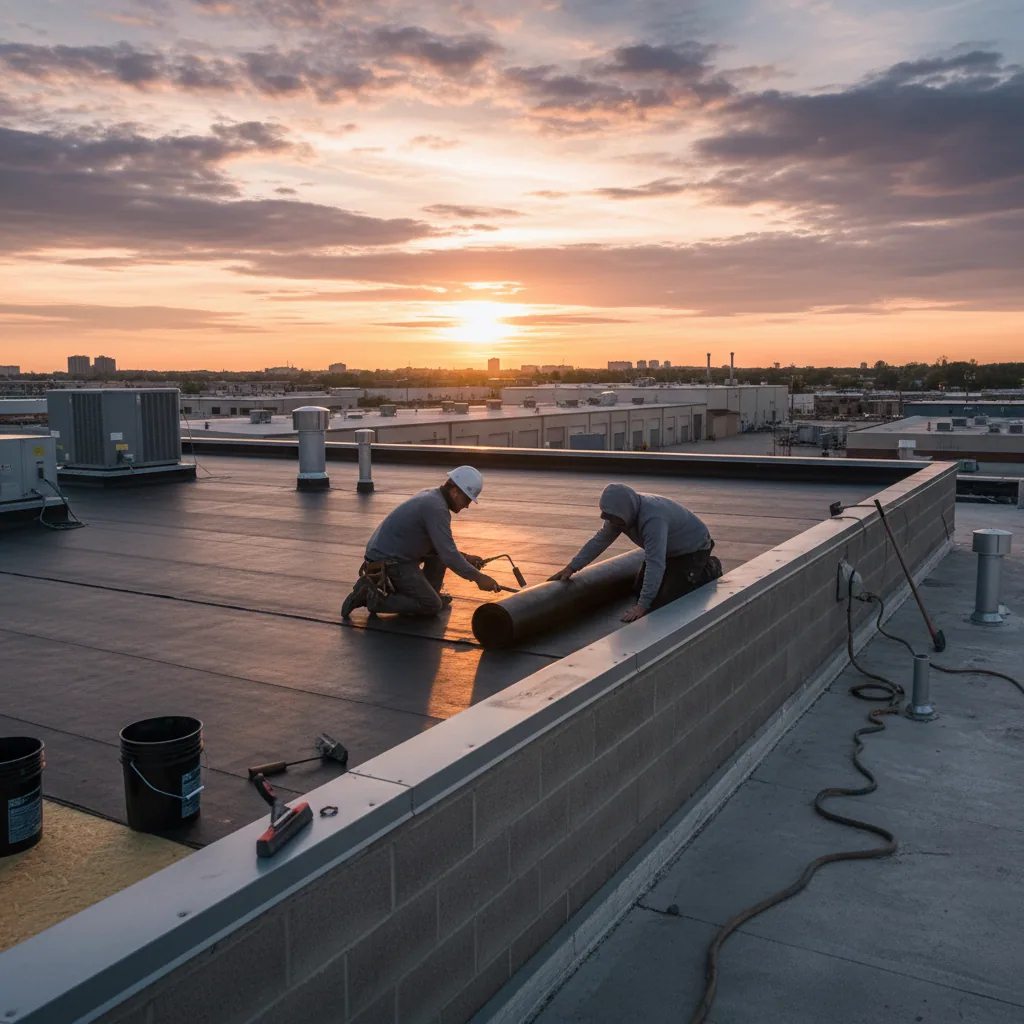
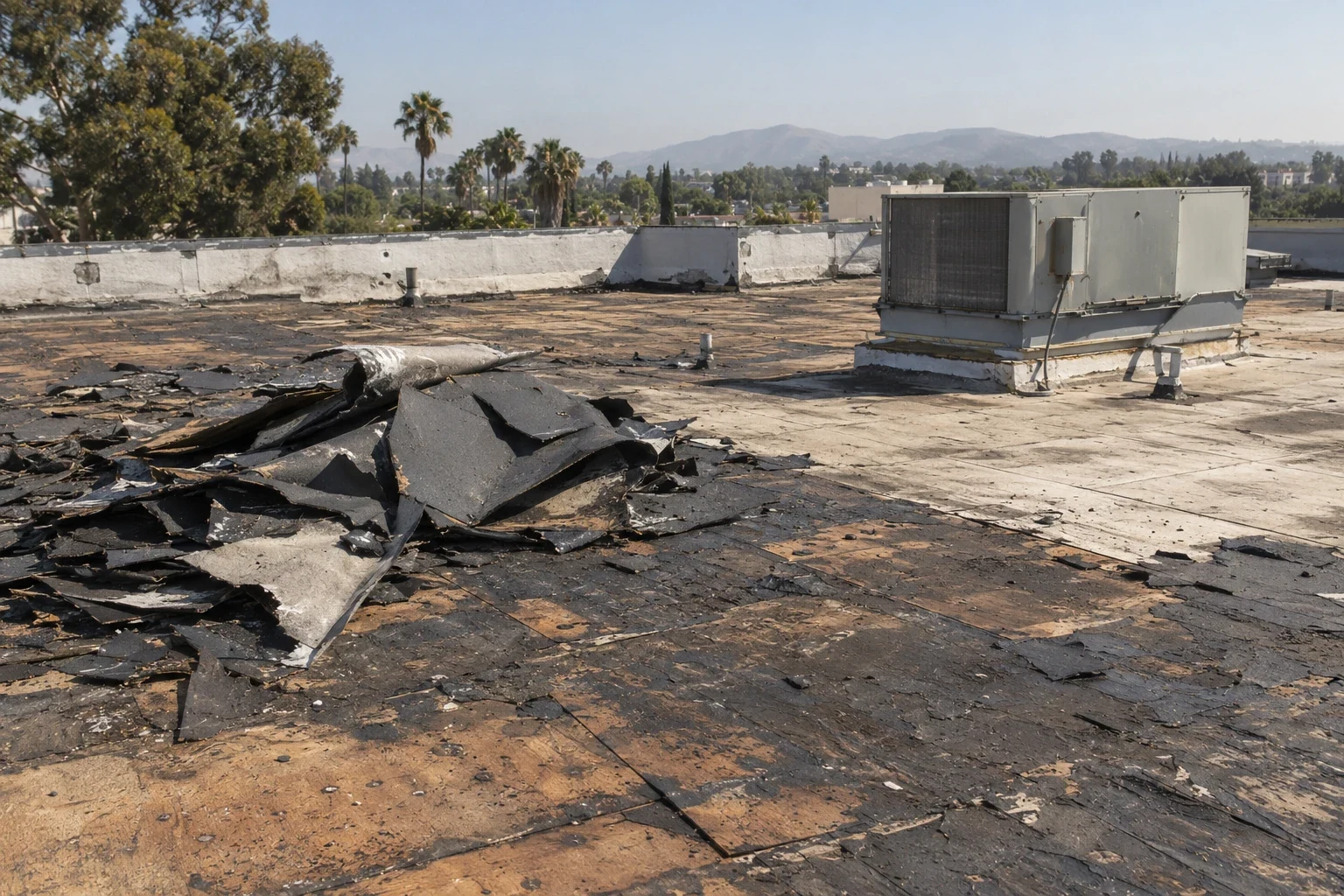
An open seam, puncture, failed curb flashing and deteriorated coating call for different preparation and materials. We identify the membrane or metal system where records and field details support it, then define the repair boundary. The proposal states what is removed, repaired, reinforced or replaced, plus the access and protection needed below. If the substrate is wet or the existing material cannot be confirmed, that uncertainty stays in the scope. The owner can decide whether to test, stabilize or revise the repair before work extends beyond the approved section.
Figueroa, York and Monte Vista give the property team clear corridor references, but the actual roof map controls where work occurs. We check drain paths and adjacent details so water is not diverted toward a new low point. A defined repair scope can address an isolated failure; a flashing review can follow a wall or curb transition. If recurring conditions extend across sections, compare that repair with a replacement evaluation before setting capital timing.
Set the Work Window and Daily Closeout
A roof schedule should identify the work zone, staging location, entrance, daily water-tight boundary and contact for a change in conditions. We coordinate noise, interior protection, deliveries and tenant notifications with the property representative. If an active business cannot accept a lift or material drop during a particular period, we sequence the section around that restriction. The plan includes a stop point for weather or unsafe access and explains how the area will be secured before the crew leaves.
Burbank's July average high reaches 85.8 F; August averages 88.3 F, a regional dispatch cue only. Those Burbank readings are market context, not a measurement for a Highland Park roof. It still informs our seasonal planning conversation, while actual site conditions and the daily forecast govern safe work. A North Hollywood property in the broader service area also receives its own access plan; we do not assume the corridor schedule transfers between buildings.
Before the visit, the facility contact can also identify any sensitive equipment below an active work zone and the person who can approve temporary interior protection. We confirm whether roof access crosses a tenant area and where tools or removed material may be held. These details help the crew enter and leave without blocking a customer route or leaving an opening at the end of a shift. We record the agreed boundary in the work order.
Choose a Repair or Renewal Decision
For a roof reached from Figueroa Street, York Boulevard or Monte Vista Street, the repair limit should follow the condition map rather than the street name. A single failed curb with sound material around it may support a narrow correction. Several wet zones, open laps across a roof section or moving edge metal can change that choice. We identify where the evidence changes from one condition to another and keep the first authorization inside the area that was inspected.
Capital timing also follows how the property can be reached and which approvals control the work. We compare the cost drivers for preparation, protection, equipment access, drainage correction and closeout, then state which assumptions could change after testing. A capital review can place a near-term correction beside a renewal decision without mixing their scopes. For ownership tracking several buildings, a roof portfolio file can keep each roof-section map and next inspection date distinct. Bring the roof plan, leak notes, repair invoices and access rules to the review.
Commercial Roofing Questions
How should an owner report a leak from a Highland Park building?
Send the room or area, time observed, roof plan if available and any prior repair note. We compare those details with visible roof conditions and mark what is confirmed versus what still needs testing.
Does Figueroa Street traffic decide the work schedule?
It is one access condition to review, not a substitute for the property manager's rules. We confirm staging, deliveries, pedestrian paths and tenant hours for the specific building before assigning a crew.
What if the roof cannot be entered during business hours?
We coordinate an approved alternate window, escort or lift plan with the site contact. If a section remains inaccessible, the report identifies it as unreviewed instead of extending nearby findings to it.
When is a local repair no longer enough?
Repeated failures across roof sections, broad moisture, unstable attachment or an unresolved drainage issue can prompt a broader evaluation. We document the evidence and compare a repair with testing or renewal.
What should closeout include after the work?
We provide the completed scope, roof-section reference, dated photos, materials recorded, unresolved conditions and any return visit. The facility contact can then match the work to the approved boundary.